Socket Weld vs Threaded Tee: Which Fitting Is Best for You?
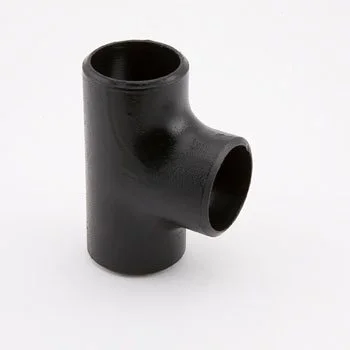
Choosing a tee fitting is not simply a matter of comparing two connection methods. The right choice depends on how the piping system will operate, how the fitting will be installed, how often the line may need modification, and what standards govern the project. Threaded tees and socket weld tees can both provide reliable branch connections, but they are designed around different installation requirements. A threaded tee has internal or exterior pipe threads for a mechanical connection, whereas a socket weld tee accepts the pipe into a socket and then is linked by welding. This variation impacts installation, inspection, maintenance, space required, and compatibility of the connection for certain services. Socket weld tees may be a useful alternative for situations where compact construction, durable connections, and controlled manufacturing are necessary. Threaded tees, however, might be desirable if installation has to be rapid and the pipe may have to be disassembled or altered at a later date. Don’t think of each relationship as superior all the time. The one that fits best is the one that meets the design circumstances and project requirements.
How Do Socket Weld and Threaded Tees Actually Connect?
To start with, it's important to understand the joint itself, as many of the practical differences between the two fittings are related to the way they connect.
Socket weld tees create a permanent welded joint
A socket weld tee has a socket recessed for the insertion of pipe before welding. The pipe is within the socket, and a fillet weld is produced around the exterior of the joint. Correct fit-up, cleanliness, alignment, welding method, and inspection are critical for obtaining the desired joint quality.
The mechanical junction does not depend upon pipe threads to make the connection. Once the weld is complete and approved, the fitting becomes part of a permanent pipe arrangement. This feature may be useful in systems where frequent disassembly is not required.
However, it cannot be said that socket welding is leak-proof by nature or is applicable for all harsh service. The ultimate performance is affected by fit-up, pipe material, welding technique, welder qualification, joint design, inspection requirements, and operational circumstances. The acceptability of the connection will be governed by the appropriate piping code and the project specification.
ASME B16.11 provides critical specifications for forged socket-welding fittings, including pressure ratings, dimensions, tolerances, labeling, and materials. The standard applies to socket-welding and threaded forged fittings, which is especially important for defining this sort of tee.
Threaded Tees Depend on Proper Thread Engagement
A threaded tee is attached to pipe by mating threads. The connection may be a tapered pipe thread such as NPT, depending on the piping system, but the actual thread type should always be validated with the project specification.
The benefit is simple: no field welding operation is needed to make the connection. The pipe is threaded correctly, the fitment is fitted using the prescribed sealing technique, and the connection may be disassembled later if the system design allows it.
This makes threaded tees beneficial in many low-pressure or utility applications where a speedy installation and future access are more vital than making a permanent welded union.
But the quality of the thread is essential. Incorrect thread sizes, broken threads, lack of thread engagement, overtightening, or inappropriate sealing compound may all influence the joint performance. ASME B1.20.1 specifies dimensions and gaging for the most popular inch pipe threads, including NPT and various related thread types.
The argument is that threaded connections and socket weld tees are not only “easy connections.” If the final pipe system is to be dependable, they still need to be properly prepared and installed.
When Are Socket Weld Tees the More Practical Choice?
The decision to use socket weld tees often becomes clearer when the project requires a compact, permanent connection and the piping specification allows socket-welded fittings.
Permanent Connections Can Simplify Long-Term Piping Integrity
A welded connection eliminates the threaded interface between the pipe and fitting. For systems where the branch connection is not expected to be removed during normal maintenance, this can simplify the long-term configuration of the piping assembly.
This is particularly relevant to process piping and industrial equipment where a permanent connection is preferred. Once the joint has been properly fabricated and inspected, there is no need to periodically retighten a threaded connection simply because the connection is threaded.
That does not mean a socket weld tee is maintenance-free. The surrounding pipe system, weld quality, material condition, vibration, thermal cycling, corrosion, and operating environment still influence service life. A well-selected fitting cannot compensate for poor system design or inadequate fabrication.
Compact Geometry Can Be Valuable in Tight Piping Layouts
Socket weld fittings can also be useful where space is limited. They do not require the same external wrench clearance associated with assembling some threaded connections, although adequate access is still needed for welding and inspection.
This can make socket weld construction attractive around compact equipment, instrumentation connections, manifolds, and other areas where piping is closely arranged. The actual benefit depends on the fitting dimensions and the accessibility of the installation location.
There is also an important distinction between a compact fitting and a low-loss fitting. A socket weld connection should not automatically be described as providing a “smooth internal flow path.” The pipe enters a recessed socket, and the internal geometry at the joint can differ from that of a continuous pipe bore. For fluid systems where pressure loss or flow disturbance is critical, engineers should evaluate the complete piping geometry rather than assume that one connection type will always provide better flow.
Controlled Fabrication Is an Advantage for Permanent Industrial Systems
Socket welding requires more controlled fabrication than simply assembling a threaded fitting. Pipe ends and fitting sockets must be prepared correctly, the components must be aligned, and welding must follow the applicable procedure.
That additional work can be an advantage when the project already has established welding, inspection, and quality-control procedures. In a fabrication shop or a properly equipped industrial installation, welding personnel and inspection resources may already be available.
ASME B16.11 itself does not establish all installation welding requirements. Installation welding is governed by the applicable piping code or other project requirements. This distinction matters because the fitting standard and the piping construction code serve different purposes.
When Can a Threaded Tee Make More Sense?
Threaded tees remain useful because not every piping project needs a permanent welded connection, while socket weld tees can be a practical alternative where a secure welded connection is preferred without using a butt weld. In some applications, the ability to assemble and disassemble the piping can be more valuable than the advantages associated with welding.
Faster Assembly Can Reduce Installation Work
Threaded tees can generally be assembled without setting up welding equipment. This can simplify installation in locations where hot work is restricted or where welding equipment is inconvenient to bring to the work area.
For smaller piping systems and utility lines, this can translate into shorter installation times. A maintenance team may also find it easier to replace a threaded fitting without cutting out a welded section of pipe.
The actual installation advantage depends on the condition of the pipe and the quality of the threads. If threads need to be cut or repaired on site, some of the apparent time savings may disappear. The sealing method also needs to be compatible with the fluid, temperature, pressure, and applicable specification.
Easy Disassembly Helps Where Maintenance Access Matters
A threaded tee can be removed when the system design allows the connection to be dismantled. This is useful for piping that is frequently modified, serviced, or reconfigured.
For example, a utility system may require occasional replacement of a branch component or adjustment of the connected equipment. A threaded connection can make that work more straightforward than cutting and rewelding a permanent joint.
However, repeated assembly and disassembly should not be treated as unlimited. Threads can become damaged, sealing surfaces can deteriorate, and improper tightening can affect future joint performance. The expected maintenance cycle should therefore be considered during the original selection.
Threaded Connections Are Not Automatically Suitable for Low-Pressure Service
It is tempting to divide the two options into “socket weld for high pressure” and “threaded for low pressure,” but this is too simplistic.
The suitability of a threaded tee depends on the fitting class, material, size, thread type, fluid service, temperature, pressure, piping code, and project specification. ASME B16.11, for example, assigns different pressure classes to threaded and socket-weld fittings rather than treating all fittings of one connection type as having the same pressure capability.
Engineers should therefore start with the actual design conditions instead of selecting a fitting based only on a general pressure category.
What Should Engineers Check Before Selecting the Tee?
Once the connection principles are understood, the selection should move to the actual operating and project conditions.
Pressure and Temperature Should Be Evaluated Together
Pressure is only one part of the design calculation. Temperature can significantly affect allowable material performance, and the combination of pressure and temperature needs to be evaluated against the applicable fitting rating and piping code.
A socket weld tee is not automatically the correct answer simply because a line operates at elevated pressure. Likewise, a threaded tee should not be rejected solely because the system is industrial.
The fitting rating, pipe schedule, material grade, design temperature, design pressure, and service conditions should all be checked together. This is especially important in process and power piping, where the governing code can impose requirements beyond the fitting manufacturer's dimensional standard.
Pipe Size and Wall Thickness Can Affect the Decision
Connection type also needs to match the pipe size and wall thickness. Socket-welded fittings are commonly associated with smaller-diameter piping, while butt-welded construction becomes more common as pipe size increases, depending on the application and design specification.
The engineer should confirm that the selected tee is manufactured for the required nominal pipe size and that its socket dimensions or threaded ends are compatible with the specified pipe.
Trying to select the fitting first and determine compatibility afterward can lead to unnecessary fabrication changes. A better approach is to define the pipe specification first and then select a fitting that matches it.
Fluid Properties and Service Conditions Matter
The fluid inside the piping system can influence the preferred connection method. Corrosive, toxic, flammable, hazardous, or highly valuable fluids may require stricter controls over joint design, inspection, and leak prevention.
This does not mean that one connection type, including socket weld tees, is automatically approved or prohibited for a particular fluid. Instead, the engineering team should follow the governing piping code and project specification.
ASME B31.3, for example, covers process piping used in industries including petroleum refining, chemical processing, pharmaceutical production, power generation, and other process facilities. Its scope includes materials and components as well as design, fabrication, assembly, examination, inspection, and testing.
Installation Environment Can Change the Preferred Option
A fitting that looks ideal on a drawing may be less convenient at the installation site.
If welding is difficult because of limited access, hot-work restrictions, or insufficient welding facilities, a threaded connection may offer practical benefits where permitted. Conversely, if the system is being fabricated in a controlled workshop with qualified welders and established inspection procedures, socket welding may fit naturally into the production process.
Maintenance access should also be considered. A permanently welded branch connection may be appropriate for a system that is rarely modified, while a threaded connection can be useful where future disassembly is expected and allowed.
How Do Cost and Maintenance Compare Over the Life of the System?
Initial purchase price should not be the only financial consideration when comparing the two fitting types.
Initial Installation Cost Tells Only Part of the Story
Threaded tees may have lower installation costs in some applications because they do not require welding equipment, welding consumables, or the same level of welding inspection.
Socket weld tees may involve additional fabrication costs. Welding personnel, preparation, inspection, and site conditions can all contribute to the installed cost.
However, the difference should be calculated for the complete project rather than based only on the unit price of the tee. If the project already has qualified welding personnel and inspection procedures in place, the additional installation cost may be less significant than expected.
Maintenance and Downtime Should Be Included
A fitting that costs less to install is not necessarily the least expensive option over its entire service life.
For a permanent process line, minimizing unnecessary dismantling and reducing the number of mechanical joints may be important. For a system that is frequently modified, however, the ability to disconnect a threaded fitting can save labor during maintenance.
Downtime is also a financial consideration. If replacing a component requires cutting out and rewelding a permanent connection, the work may take longer than removing a threaded component. On the other hand, if a threaded connection requires repeated maintenance or develops sealing problems, its initial installation advantage may become less important.
The correct comparison therefore includes purchase cost, installation labor, inspection, maintenance frequency, replacement requirements, and potential downtime.
Conclusion
Choosing between threaded tees and socket weld tees is not simply a question of which connection is stronger. The right choice depends on pressure and temperature conditions, pipe size, material, fluid service, installation environment, maintenance requirements, applicable standards, and the expected service life of the system.
Socket weld tees are often well suited to permanent industrial piping where controlled welding and a compact connection are preferred. Threaded tees can be advantageous when fast assembly, easier disassembly, or future modification is important and the applicable design requirements permit threaded construction.
For buyers and engineers, the safest approach is to start with the piping specification and then select the fitting connection that satisfies those requirements. ASME B16.11 provides an important reference for forged socket-welding and threaded fittings, while the applicable ASME B31 piping code and project specification determine how the fittings should be used within the complete system.
A reliable fitting supplier should also be able to provide clear information about material grade, dimensions, pressure class, manufacturing requirements, inspection, traceability, and relevant documentation. By evaluating the complete installation rather than focusing only on the initial fitting price or connection method, you can choose a tee that is technically appropriate, easier to maintain, and better aligned with the long-term requirements of the piping system.
Reach out to Cangzhou Oudi Pipe Manufacture Co., Ltd. for assistance. For professional guidance and top-notch fittings, email oudi-04@oudiguandao.com.
FAQ
1. What is the main difference between socket weld and threaded tees?
Socket weld tees require welding for installation, offering stronger, leak-resistant connections, while threaded tees use threaded connections for easier installation and disassembly.
2. In which applications are socket weld tees preferred?
Socket weld tees are preferred in high-pressure, high-temperature applications and industries like oil and gas, chemical processing, and power generation.
3. Are threaded tees more cost-effective than socket weld tees?
Initially, threaded tees may be more cost-effective, but socket weld tees often provide better long-term value in high-stress applications due to their durability and reduced maintenance needs.
4. Do socket weld tees require special installation skills?
Yes, socket weld tees require skilled welders and specialized welding equipment for proper installation.
References
1. ASME B16.11: Forged Fittings, Socket-Welding, and Threaded
2. Petroleum and Natural Gas Industries — Pipeline Transportation Systems (ISO 13623:2017)
3. Piping Handbook, Seventh Edition by Mohinder L. Nayyar
4. Process Piping: The Complete Guide to ASME B31.3 by Charles Becht IV
5. Valve and Actuator Technology by Wayne Ulanski
6. Piping Systems Manual by Brian Silowash

Need help finding the right solution with our experts. Please contact us.
SINCE 1998 Your Reliable Pipeline Manufacturer