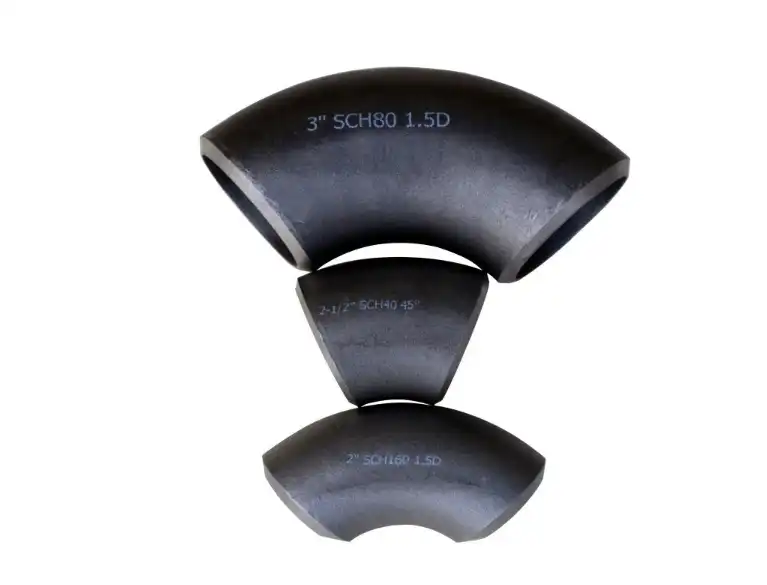
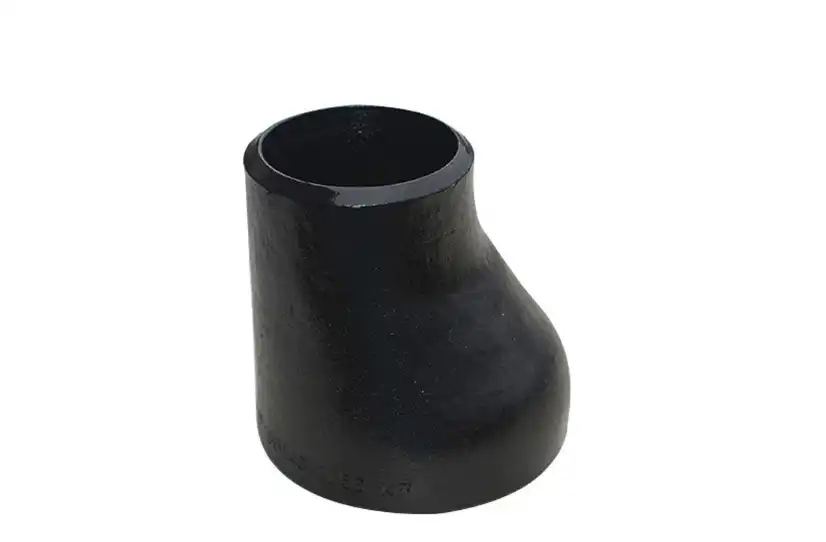
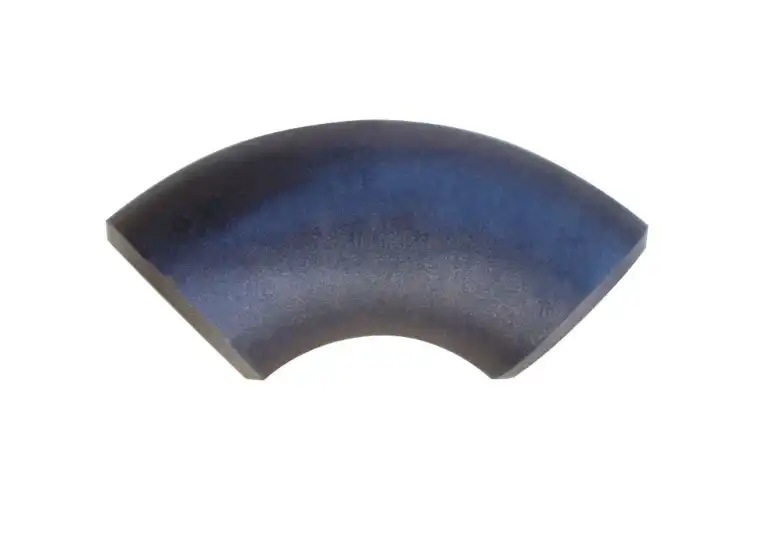
Steel Concentric Pipe Reducer Installation Guide for Industrial Use
Installing a Steel Concentric Pipe Reducer properly makes sure that industrial pipe systems have the best flow dynamics, structural integrity, and long-term dependability. This fitting is necessary for vertical uses in oil pipelines, chemical plants, power plants, and water treatment structures because it joins pipes of different diameters while keeping the centerline the same. When installed correctly, turbulence is kept to a minimum, pressure loss is stopped, and ANSI, ASME, and ISO standards for industrial pipeline safety and performance are met.
Understanding Steel Concentric Pipe Reducers
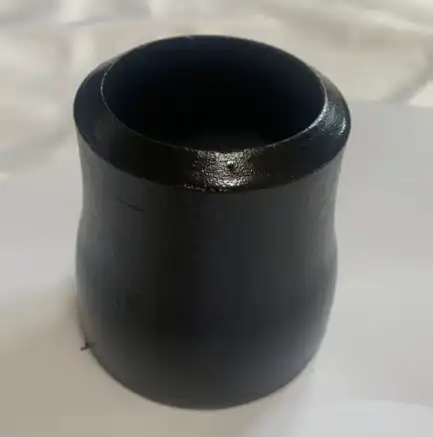
A Steel Concentric Pipe Reducer is a cone-shaped pipe fitting that makes the change between two different pipe sizes smooth while keeping both ends straight along the centre line. This even shape makes it possible for a fluid or gas to move easily from a larger to a smaller diameter, which lowers turbulence and keeps velocity profiles the same. Instead of eccentric reducers, which move the axis out of the way to stop air pockets in horizontal lines, Steel Concentric Pipe Reducers are mostly used in vertical pipe configurations where air buildup is not a problem.
Material Standards and Specifications
The choice of material has a big effect on how well and how long Steel Concentric Pipe Reducers work. Standardised forms of carbon steel that meet ASTM A234 WPB requirements are commonly used in industrial settings because they are strong and inexpensive. Stainless steels that meet ASTM A403 WP304 or WP316L standards are better at resisting corrosion in chemical handling and sea settings. Alloy steel types like ASTM A234 WP11 and WP22 work really well in high-temperature tasks like making steam and handling hydrocarbons, where temperature changes and pressure changes happen all the time.
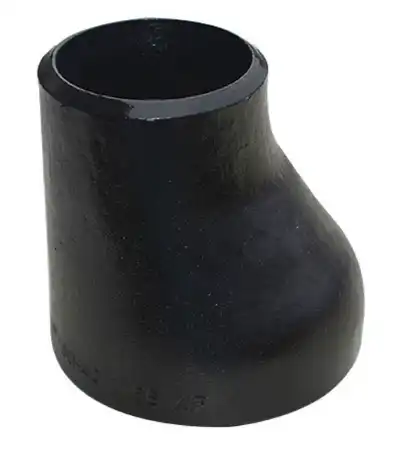
ASME B16.9 sets standard face-to-face widths and wall thickness plans from NPS 1/2 to NPS 48. This helps make sure that measurements are correct. Schedule 40, Schedule 80, XS (Extra Strong), and XXS (Double Extra Strong) wall thickness grades must match the pipes they join to make sure they can be welded together and meet the required pressure levels. Bevelled ends that are set to an angle of 37.5° ±2.5° make deep entry welding easier. This makes joints that don't leak and can handle the stresses of operation.
Core Benefits for Industrial Applications
Steel Concentric Pipe Reducers make pipeline design better in ways that can be measured. The uniform curve spreads the hoop stress out evenly, which makes the structure stronger when the pressure is higher than 1500 PSI. This even stress distribution lowers the chance of fatigue breaking at the transition zone, which happens a lot when fits aren't chosen correctly. The smooth inside shape reduces wear and rust when the flow speed changes, which increases the service life in abrasive slurry transport and corrosive chemical flows.
In vertical pump discharge lines, Steel Concentric Pipe Reducers keep the axis aligned, which is very important for supporting hanging and managing heat expansion. Power plants use these fittings in superheater lines to keep flow symmetrical and stop areas from getting too hot or wearing away. The self-cleaning flow dynamics of Steel Concentric Pipe Reducer designs are good for wastewater treatment plants because the cylindrical shape keeps solid particles from building up, which could block flow or help bacteria grow.
Step-by-Step Installation Guide for Industrial Use
For work to go smoothly, it needs to be carefully planned, carried out, and checked over and over again afterwards. Each step takes care of a different set of technical issues to make sure the Steel Concentric Pipe Reducer fits perfectly into the flow system.
Pre-Installation Preparation
Start by carefully checking the Steel Concentric Pipe Reducer and the pipes that connect to it. Check the Steel Concentric Pipe Reducer's measures against the pipe's requirements, making sure that the major and minor diameters and wall thickness chart are all correct. Compare the material grade marks on the Material Test Certificate (MTC) with the lines on the material to avoid galvanic corrosion caused by metals that don't match. Check the bevelled ends for damage, burrs, or other flaws that could make the weld less good.
Gather the important tools and equipment, like an OSHA-compliant welding machine that is set for the grade of material, alignment clamps or magnetic squares, measurement tools like outside circle callipers and wall thickness gauges, and safety gear that meets OSHA standards. Set up access to ultrasonic testing devices or radiography tools for non-destructive testing if the project requirements or code compliance say so.
Alignment and Positioning Techniques
The right alignment stops uneven stress and makes sure that the weld penetrates evenly. Place the Steel Concentric Pipe Reducer so that its middle lines up with the pipeline's vertical axis. To temporarily hold the fitting in place, use alignment clamps and make sure that both the inlet and exit ends are in line with the connecting pipes. A magnetic square or laser adjustment tool makes sure that everything is straight and stops angles from changing.
Keep the gap between the weld joints the same, about 1/16 to 1/8 inch, so that the weld metal can settle properly. To keep the Steel Concentric Pipe Reducer in place while the final welding is done, tack weld four evenly spaced points around the outside. These tack welds spread out thermal expansion evenly, which lowers the chance of bending or twisting when the heat input goes up during full-pass welding.
Welding and Joining Best Practices
Pick the right welding method based on the type of material and the thickness of the wall. Shielded Metal Arc Welding (SMAW) is good for field setups where mobility is important. Gas Tungsten Arc Welding (GTAW), on the other hand, gives better root pass quality for stainless steel jobs that need to be resistant to corrosion. Flux-Cored Arc Welding (FCAW) makes thick-walled carbon steel parts more productive.
To avoid breaking and lessen thermal shock, heat the base metal according to the material's instructions. For wall widths greater than 1 inch, ASTM A234 WPB usually calls for preheating to 150–200°F. To get full entry without burn-through, do the root pass with managed heat input. To make sure there is full fusion and no porosity, the next fill passes should meet by about a third.
Temperature control between passes is very important. For carbon steel, keep temperatures below 500°F to keep the tensile qualities. Slowly letting the metal cool is better than quickly cooling it, which can cause lingering stress. If you need to improve the surface finish or make it easier to check, grind the final cap pass smooth.
Troubleshooting Common Installation Challenges
Misalignment during welding is often caused by not doing enough tack welding or heat warping. If the Steel Concentric Pipe Reducer moves, stop welding right away, let it cool, and use adjustment tools to move it back into place before continuing. If the weld bead has holes in it, it means that the shielding gas isn't covering it well enough or that there is contamination. Clean the bevel sides well, increase the gas flow rates or change the electrode angles.
Cracking in the heat-affected zone could mean that the cooling rate is too fast or that hydrogen is weakening the material. For materials that are likely to crack, raise the preheating temperatures and think about using low-hydrogen electrodes. If you measure the dimensions and see that the wall thickness changes at the transition zone, check with the maker to see if tapered bores or bored-to-match configurations apply. These features work with pipe plans further downstream.
Post-Installation Testing and Maintenance
To make sure the joint is solid, test the atmospheric pressure at 1.5 times the original pressure. Keep an eye out for leaks at the weld gaps and keep the test pressure on for as long as ASME B31.3 or the relevant pipe code says to. Ultrasonic or radiography screening is an example of non-destructive testing that can find problems below the surface that can't be seen with the naked eye.
In a compliance box, put together test results, weld processes, and material certifications so that regulators can look them over and for future maintenance staff to use as a guide. Set up a regular checkup plan that includes looking for corrosion, erosion, or mechanical damage. Every six months, ultrasonic thickness readings show how much the wall is wearing away in corrosive conditions. This lets replacements happen before they fail.
Comparing Steel Concentric Pipe Reducers with Other Options
To choose the best type of Steel Concentric Pipe Reducer, you have to look at its flow features, installation limitations, material properties, and prices over its entire life. Each version of the design meets different operating needs.
Concentric vs. Eccentric Reducer Selection
The main difference is in how the centerlines are aligned. Steel Concentric Pipe Reducers keep their shared axis, which makes a cone-shaped outline that works well for vertical lines where gravity helps drain and air pockets are not likely to form. When you move an eccentric reducer away from the axis, it makes a flat side (top or bottom) that keeps vapour from building up in horizontal pump suction lines. Vapour buildup causes cavitation and impeller damage when air gets trapped.
Performance of Steel vs. Plastic Reducer
Plastic reducers made from PVC, CPVC, or polypropylene don't rust and are lighter, but they can only be used in low-stress settings because of their pressure and temperature values. Steel Concentric Pipe Reducers can handle temperatures up to 1000°F and pressures over 2000 PSI, which is why they are essential for processing hydrocarbons, distributing steam, and making chemicals under high pressure.
Stainless Steel vs. Carbon Steel Trade-offs
Reducers made of stainless steel that meet ASTM A403 standards don't rust, pit, or corrode in crevices in chloride-rich settings like offshore platforms and food processing. It makes a passive oxide layer that fixes itself when it gets scratched because of the chromium. Carbon steel reducers made to ASTM A234 WPB standards have the same mechanical strength but cost less to make. They can be used in non-corrosive applications or in places that are coated or protected from corrosion with cathodic protection.
Key Selection Criteria for Procurement
Check the pressure values against the design conditions of the system, such as short-term pressure spikes and water hammer situations. Make sure that the wall thickness plans fit the pipes that link them so that stress doesn't build up at the joints. Check that the material works with the process fluids by looking at the temperature, pH, and amounts of contaminants that make rust or erosion happen faster.
Procurement Guide: Buying Steel Concentric Pipe Reducers
To meet project deadlines and stay within budget, strategic buying strikes a balance between quality, cost, and the dependability of the supply chain. To make smart buying choices, you need to know how the market works, what your suppliers can do, and how you can customise the product.
Identifying Reputable Suppliers
Find the difference between original equipment makers (OEM) and wholesalers by looking at their infrastructure for production and quality control. OEM suppliers have direct control over the metals used, the standards for sizes, and the testing procedures. This makes sure that all Steel Concentric Pipe Reducers are the same. Check that the providers you're considering have the right licenses and certifications, such as ISO 9001 quality management systems and manufacturing licenses for pressure-retaining parts that are special to your area.
Ask for samples of the goods or go to the factories to see how advanced the equipment is. Having high-tech production tools like CNC mandrel bending systems and automatic ultrasound testing stations shows that the company has put money into improving quality and capacity. Look at customer examples from people in the same business as you to get an idea of how responsive, helpful, and on-time the company is.
Price Drivers and Lead Time Considerations
The prices of materials change with the price of commodities around the world, especially for metals that contain molybdenum and stainless steels that are high in nickel. Unit prices go up because larger diameter Steel Concentric Pipe Reducers use proportionally more raw materials. Schedules for wall thickness also have an effect on cost; for example, XXS fittings need a lot more material than Schedule 40 versions. Buying in bulk can help you save money because it lowers the cost of setting up your factory and buying materials for each unit.
Lead times depend on how quickly you can get materials and how busy your factory is. Steel Concentric Pipe Reducers made of standard carbon steel that come in popular sizes usually ship in two to four weeks. Six to eight weeks are needed for custom sizes, rare metal, or special heat processes. We keep a yearly production capacity of 16,000 tonnes, which lets us quickly fill orders for both stock items and engineered-to-order combinations. Planning buying cycles around project goals helps avoid delays and late fees that cost a lot of money.
Bulk Purchase Benefits and Customization Options
Buying in bulk lowers unit costs and makes managing supplies easier. Suppliers can optimise production runs with the help of volume agreements, which lowers the manufacturing extra costs for each fitting. Shipping in bulk also lowers the cost of freight per unit, especially for foreign transfers where the rate of utilisation of containers affects the cost of logistics.
Customisation lets you meet specific application needs that normal catalogue things can't. Bored-to-match designs make the inside diameter smaller to match the plans of pipes further downstream, which makes sure that flow changes go smoothly. For example, low-temperature carbon steel (ASTM A420 WPL6) can be used in cold environments, and high-nickel alloys (Incoloy, Inconel) are very resistant to rust. These materials can be used in specialised processes. Our engineering team works with clients to create custom solutions. They do this by giving them technical drawings and material certifications that help them follow the rules and make sure the solutions work.
Oudi: Your Partner in Industrial Pipe Fittings
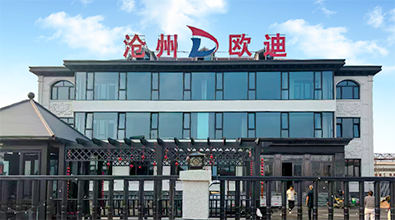
We have been making Steel Concentric Pipe Reducers out of carbon steel, stainless steel, and alloy steel that meet strict international standards since 1998. Our 66,600-square-meter plant is in Cangzhou, Hebei Province, which is the center of China's pipe fitting industry. It combines cutting-edge production technology with thorough quality control systems. Dimensional checking, Positive Material Identification (PMI) testing, and non-destructive examination are all done on every Steel Concentric Pipe Reducer to make sure it arrives without any problems.
From NPS 1/2 to NPS 48, our product line includes all types of buttwelding fittings, such as elbows, tees, flanges, caps and Steel Concentric Pipe Reducers. Oil and gas, chemical processing, power production, shipbuilding, and water infrastructure are some of the main businesses we work with. We export to Europe, the Americas, Africa, Southeast Asia, and the Middle East. We've worked on projects all over the world, so we know how to deal with different regulatory environments and customer standards. We can also offer solutions that fit the needs of each project.
Conclusion
Installing Steel Concentric Pipe Reducers correctly is a key part of making sure that industrial pipe systems are safe, effective, and long-lasting. By knowing the properties of the material, the normal sizes, and the needs of the application, you can make a choice that balances efficiency and cost. Tough assembly steps, like exact alignment, controlled welding, and thorough testing, make sure that the joint is strong and meets industry standards. When you compare different types of reducers based on their flow features, material compatibility, and lifecycle costs, you can make better design choices. Strategic buying from qualified makers with a track record of global delivery reduces supply chain risks and makes sure that project teams have access to technical support throughout the execution phase.
FAQ
How do Steel Concentric Pipe Reducers perform in high-pressure environments?
Because the stress is spread evenly across the cylindrical transition, Steel Concentric Pipe Reducers can handle high-pressure service. Because the design is symmetrical, there are no load collection points that could cause fatigue cracking. As long as the wall thickness plans for materials like ASTM A234 WPB and alloy steels tested to ASME B16.9 standards are correct, they can safely handle pressures above 1500 PSI. Before the structure is put into service, it is tested hydrostatically at 1.5 times the original pressure to make sure it is solid.
What makes circular reducers different from eccentric reducers?
Steel Concentric Pipe Reducers line up the centerlines of both the inlet and exit pipes, making a cone form that works well for vertical pipes where air buildup is not a problem. When eccentric reducers are used in pump pressure situations where cavitation is a risk, they move the centerlines away from each other, making a flat side that keeps vapour from getting trapped in horizontal lines. Choosing the right type depends on how the pipeline is orientated and the properties of the fluid.
Can circular reducers be changed to fit certain needs?
As part of the customisation choices, the inside diameters can be bored to match and then taper to meet the schedules of pipes further downstream, making sure that the flow changes smoothly. Extreme temperatures, corrosive surroundings, or cryogenic conditions can be handled by certain types of materials. Engineered solutions that are made to fit the needs of each project are backed up by technical models and full paperwork for material traceability.
Partner with Oudi for Reliable Steel Concentric Pipe Reducer Supply
To find high-quality Steel Concentric Pipe Reducers, you need to find a company you can trust that has a global supply chain and a track record of success. Oudi makes parts that are exactly the right size and shape to meet ASTM, ASME, and ISO standards. They have a lot of quality certifications and have been in the business for over 20 years. Our large product catalogue has Steel Concentric Pipe Reducers made of carbon steel, stainless steel, and alloy steel in all standard and special sizes, so they can be used in a wide range of industrial settings.
We know that on-time delivery, consistent quality, and quick expert help are key to the success of a project. Our yearly production capacity of 16,000 tonnes helps with both big building projects and custom-engineered orders. Contact our team at oudi-04@oudiguandao.com for a personalised consultation, thorough quotes, and help choosing materials that meet your unique business needs. You can look through our product catalogue to see all of our buttwelding fittings, flanges, and other parts made for tough industrial settings.
References
1. American Society of Mechanical Engineers. ASME B16.9: Factory-Made Wrought Buttwelding Fittings. ASME International, 2018.
2. ASTM International. ASTM A234/A234M: Standard Specification for Piping Fittings of Wrought Carbon Steel and Alloy Steel for Moderate and High Temperature Service. ASTM International, 2019.
3. ASTM International. ASTM A403/A403M: Standard Specification for Wrought Austenitic Stainless Steel Piping Fittings. ASTM International, 2020.
4. American Society of Mechanical Engineers. ASME B31.3: Process Piping Design and Construction. ASME International, 2020.
5. Nayyar, Mohinder L. Piping Handbook. 8th ed., McGraw-Hill Education, 2016.
6. Ellenberger, J. Paul, and Chuse, Robert. Pressure Vessels: The ASME Code Simplified. 9th ed., McGraw-Hill Education, 2013.

Need help finding the right solution with our experts. Please contact us.
SINCE 1998 Your Reliable Pipeline Manufacturer