Steel Concentric Pipe Reducer Price Comparison & Supplier Insights
It is important to understand the differences between Steel Concentric Pipe Reducers when looking for industrial pipe parts. In factories, power plants, and water treatment plants, these fittings are the main way that width changes happen in vertical pipe systems. To make choices that protect both budgets and working timelines, procurement professionals need clear price information and source reliability measures in today's competitive market. The global market has a lot of choices, but it's still hard for engineering teams in charge of multimillion-dollar building projects to find makers whose products are both of ISO-certified quality and low cost.
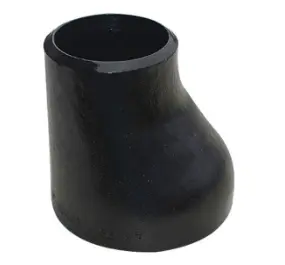
Understanding Steel Concentric Pipe Reducers
A cone-shaped fitting called a Steel Concentric Pipe Reducer is at the heart of efficient pipe design. It connects pipes of different sizes while keeping the centerlines perfectly lined. This symmetrical design keeps the flow patterns even, which is important for vertical uses, unlike eccentric designs that move the centre.
Core Design Characteristics and Material Standards
The basic structure of these reducers is designed to meet exact metallurgy standards. Carbon steel types made to ASTM A234 WPB standards are most common in public water systems where cost is an issue. They work reliably at pressures up to 1500 PSI. When acidic condensates or chloride-rich fluids risk the stability of pipes, they need to be made of stainless steel that meets ASTM A403 WP304 or 316L standards. Grades of alloy steel, like ASTM A234 WP11 and WP22, are used in systems that make steam at temperatures above 1000°F.
Dimensional agreement with ASME B16.9 makes sure that parts from different makers can be used together. Prices start at NPS 1/2 and go up to NPS 48. The wall thickness is based on schedule numbers (SCH 40, SCH 80, XS, XXS) that match the specs of the connected pipe. The face-to-face length stays the same based on the major diameter. This makes it easier for workers working on complicated retrofits to handle their inventory and put together parts in the field.
Functional Applications Across Industrial Sectors
The main place where vertical pump discharge lines are used is in industrial sites. The centred shape stops air pockets from forming, which could damage equipment further downstream through cavitation. Power plants use these fittings between the steps of the superheater. It is important to keep the pipe centerline straight for estimates of thermal expansion and to make sure the hangers are lined up correctly.
The self-cleaning qualities of the conical shift are good for wastewater systems. Solid particles in sludge transport systems move easily and don't build up in corners, which can happen when eccentric fittings are not positioned correctly. The uniform taper makes the flow coefficients reliable, so hydraulic engineers can confidently model them during the design steps of a system.
Manufacturing Methods and Quality Implications
When hot-pierced billets are used to make seamless reducers, the grain structure stays continuous better because there is no lengthwise weld seam to act as a stress collection point. Although this way of making things costs more, it's more reliable in important business applications where failure would have serious effects. For lower-pressure systems, welded versions made from plate rolling are more cost-effective, but they need to be properly heated after welding to get rid of any leftover stresses.
Full-penetration butt welds that make structural ties that won't leak are made easier by the bevelled end preparation, which is usually 37.5° ±2.5° for walls less than 22mm. For deep penetration welding to work on parts with thicker walls, complex bevels may be needed. Some high-pressure systems call for "bored to match" designs, in which the inside sizes taper to perfectly match the pipe schedules further downstream. This makes the flow transfer better and reduces erosion caused by turbulence.
Price Comparison of Steel Concentric Pipe Reducers
Understanding how costs are structured helps buying teams deal well and avoid making quality sacrifices that cause failures to happen too soon.
Material Cost Drivers and Market Dynamics
At the moment, Steel Concentric Pipe Reducer carbon steel reducers for standard NPS 2 to NPS 6 sizes in SCH 40 specification cost between $15 and $85 per unit, based on the number of units ordered and where the supplier is located. 304L stainless steel versions cost 280 to 320% more, while NPS 4 fittings cost about $95 to $180 each in small amounts. The price difference is due to the higher cost of the raw materials and the more complicated production needed to keep the metal from hardening during cold pressing.
For high-temperature use, alloy steel types with chromium and molybdenum add another 40–60% on top of carbon steel. A WP11 reducer in NPS 8 SCH 80 usually costs between $210 and $280. This is because the material is expensive, and special heat treatment methods are needed to get the right mechanical qualities.
Manufacturing Method and Size Impact
For all types of materials, seamless building costs 25–40% more than soldered options. The investment is worth it when the costs of inspecting the weld seams and the chance of rejecting them more than make up for the initial price. Custom fabrications for non-standard size changes or special thickness needs can double standard prices, but for high-volume users, the long-term benefits of less inventory often make this method worth it.
The cost of parts with larger diameters goes up in a way that isn't constant. When carbon steel SCH 40 seamless construction goes from NPS 10 to NPS 20, unit prices go up by 380–420% instead of the expected 200% based on material amount alone. This is because of the limits of the forming tools and the lower production volumes needed for custom sizes.
Volume Discounts and Supply Chain Considerations
When you buy in bulk, you can save a lot of money. Manufacturers offer 18–25% discounts for orders of 100 or more units that are the same. When you place an annual blanket order with planned releases, you can get extra discounts of 8–12% and be sure that you have enough inventory during busy building seasons. For stock sizes in common materials, lead times are three weeks. For special fabrications made of alloy steel that need mill certifications, they are ten to fourteen weeks.
Total landing costs are affected by freight costs in a big way. Shipped in containers from Asian factories to the U.S., at the moment, sites on the Gulf Coast add $0.35 to $0.55 per pound, which makes local sourcing competitive for immediate needs even though unit prices are higher. Changes in trade policies and tariffs cause prices to go up and down, but smart buyers protect themselves by having a wide range of suppliers in different areas.
Supplier Insights and How to Choose the Right Supplier
When looking for manufacturing partners, it's important to look at more than just public price lists. Consistency in quality and response to customer needs directly affects the results of a project.
Certification Requirements and Quality Systems
ISO 9001:2015 approval is the bare minimum for a quality management system. It proves that production processes are controlled in a planned way, from receiving raw materials to the final review. Getting a special equipment-making licence from the government in a key export market shows that you follow the rules for welding procedures and pressure vessels. When applying for jobs in regulated fields like oil refining and nuclear power production, these qualifications become even more important.
Full mill test reports (MTRs) that include ASTM material certifications and list the chemical makeup and mechanical qualities of the material make it possible to track and control liability. Positive Material Identification (PMI) using X-ray fluorescence analysis ensures that the given goods are the right grades. This stops catastrophic failures from happening because of accidentally using the wrong material. Third-party inspection services check the required surface finish and size limits before shipping, which lowers the risk of refusal in the field.
Oudi's Manufacturing Capabilities and Track Record
Our Cangzhou factory has been making pipe fittings that meet American, Japanese, German, and British standards since 1998. These fittings are made from carbon steel, stainless steel, and alloy steel. The yearly production capacity of 16,000 tonnes ensures a steady supply, even when demand spikes in the industry, putting a strain on rivals' stockpiles. Its strategic position, 120 kilometres from Tianjin Port, makes it easy to load containers, and the seven-day wait time between loading and vessel departure is ideal for projects that need to be finished on time.
Our quality infrastructure includes ultrasound testing tools for finding flaws below the surface, hydrostatic test tools for checking pressure ratings up to 1.5 times the design values, and Charpy V-notch impact testing tools for making sure low-temperature toughness meets standard needs. Every Steel Concentric Pipe Reducer is checked for its dimensions against ASME B16.9 standards, with extra care given to the transition zone where high stress levels require precise wall thickness control. Getting raw materials from approved mills with long histories in the field of metalworking removes variations in composition that weaken the integrity of the weld.
Evaluating Supplier Responsiveness and Logistics Performance
Professional makers are different from commodity providers because they acknowledge orders within 24 hours and have detailed production schedules with tracking of milestones. Being able to handle split shipments that fit with the order of building cuts down on the need for on-site storage and operating capital that is wasted on extra inventory. Accurate customs paperwork and early discussion about ship plans keep expensive demurrage fees from happening at destination ports.
Different sellers have very different minimum order amounts (MOQs). For example, some need commitments of 500 units for things that aren't in stock, while others will take smaller pilot orders. By negotiating open MOQ terms with suppliers during the qualification process, you can test how well the material works in real-world service conditions before committing to large-scale buying. Strategic partners are different from transactional sellers because they offer after-sales support, such as access to metallurgists for failure analysis advice and a desire to speed up replacement shipments.
Steel Concentric Pipe Reducer vs Alternatives: Making the Right Purchase Decision
Fitting selection should be based on application-specific needs, not just price, because choosing the wrong parts can cause problems that cost a lot more in the long run than they save in the short term.
Concentric Versus Eccentric Configuration Selection
The main difference is in how the midline is aligned and how it affects the flow pattern. Steel Concentric Pipe Reducers keep the axial alignment and work well for vertical runs where gravity keeps the vapour from building up. Different types that are eccentric and have a flat top or bottom work well with horizontal pipes, where one edge stays level to keep air pockets out of liquid systems or condensate traps out of gas lines.
Material Selection Trade-Offs
Carbon steel has good mechanical qualities and can be welded. It is also very cheap, so it can be used in non-corrosive media below 800°F. 316L types of stainless steel don't crack when exposed to chloride stress corrosion in coastal areas, and they have clean surfaces that are needed in pharmaceutical manufacturing. When lifetime costs like repair downtime and replacement frequency are taken into account, the material premium turns out to be a good deal.
Installation Complexity and Maintenance Requirements
Welded connections need experienced welders who are certified to the right code sections (like ASME Section IX) and have process qualification records that show what parameters are allowed for each grade of material. To keep the root pass from sugaring and oxidising, which weakens the rust resistance of stainless steel joints, inert gas must be pumped through them. When compared to carbon steel systems, these extra process controls raise the cost of labour in the field by 30 to 45 per cent.
Installation and Maintenance Best Practices
Correct field practices improve the performance of components and stop them from breaking down too soon, which could risk the security of the system.
Pre-Installation Inspection and Preparation
A visual inspection should make sure that there are no surface flaws, such as cracks, laminations, or gouges that are bigger than 5% of the stated wall thickness. Dimensional checks make sure that the length from end to end meets the requirements and that the sharp angles are within the allowed ranges. Cleaning the insides gets rid of mill scale, welding slag, and other dirt and debris that could cause rust or stop flow.
Stress that builds up at the weld interface can be avoided by matching the fitting plan to the width of the pipe wall next to it. When plans don't match up, sudden section changes happen where bending moments are concentrated. This speeds up the start of fatigue cracks under cyclic loading. When schedule conflicts are unavoidable, grinding the thicker part down to a thinner one makes a smooth shift that spreads stresses more evenly.
Welding Procedure Compliance
The amount of heat needed depends on the carbon equivalent of the material and the thickness of the part. For carbon steels with walls thicker than 1 inch, the temperature range is usually between 200°F and 400°F. Keeping interpass temperatures within certain ranges stops hydrogen-assisted cracking in metals that are prone to it. When thick-walled pressure tanks and piping systems work above 650°F, a post-weld heat treatment at 1100°F to 1250°F can ease any remaining stresses.
Radiography or ultrasonic tests are used for non-destructive inspection to check the quality of the weld before the system is pressurised. The ASME B31.3 Process Piping Code sets acceptance standards based on the level of service. For example, important uses need a 100% volumetric inspection. Weld maps and NDE reports are examples of paperwork that become part of the lasting building record and can be used in the future for reference during inspections and turnarounds.
Operational Monitoring and Inspection Intervals
During the first six months of running, ultrasonic thickness measurements set baseline corrosion rates that help plan long-term upkeep. Rapid metal loss at the transition zone of the Steel Concentric Pipe Reducer suggests erosion from rough flow or contact, which suggests that the design could be changed by adding more wall thickness or changing how the flow is conditioned upstream. Trending with data lets you plan for replacement before the wall thins too much.
During planned shutdowns, a visual check is done to look for external rust under the insulation, stress corrosion cracks in sensitised stainless steels, and mechanical damage from problems with the pipe supports. Dye penetrant tests on the surfaces of austenitic stainless steel can find small cracks that can't be seen with the human eye. Fixing small flaws with localised grinding and repair welding stops them from spreading to the point where the whole part needs to be replaced.
Conclusion
To find the right Steel Concentric Pipe Reducer, you have to weigh the technical specs, price, and supplier's skills in order to meet project goals. The choice of material between carbon, stainless, and alloy steel types is based on the temperature, pressure, and toxic media that the product will be exposed to. The way something is made affects both its cost and its dependability. For important uses, seamless building offers better integrity. When judging a supplier, you shouldn't just look at price; you should also look at quality certifications, production ability, and quick technical help. Understanding the unique needs of the application, especially the difference between circular and eccentric designs, helps you avoid mistakes that can cost a lot of money during installation. The best ways to weld and regular inspections make sure that parts last as long as possible and that the system stays safe and reliable for decades.
FAQ
What delivery lead times should I expect for custom reducer specifications?
Standard sizes in SCH 40 carbon steel usually ship three to four weeks after the order is confirmed. It takes eight to twelve weeks for custom Steel Concentric Pipe Reducer sizes or special materials like alloy steel WP22, because of the time it takes to get the raw materials and do the special heat treatment processes. For pressing needs, you may be able to get faster production, but there are usually extra fees of 15 to 25 per cent.
Can reducers be customised for non-standard pipeline transitions?
Manufacturers can make unique mixtures of major and minor diameters that aren't in the ASME B16.9 standard numbers. Giving thorough plans with end measurements, wall thicknesses, and face-to-face lengths makes it possible to fabricate exactly what the project needs. Depending on how complicated the design is, the minimum order quantity for special sizes is usually between 20 and 50 pieces.
How do pressure ratings influence material and design choices?
For higher pressure classes, walls need to be bigger, and materials need to be harder. In some cases, a Class 1500 application might need alloy steel with higher tensile strength. On the other hand, normal carbon steel types are usually used in Class 300 systems. Design pressure, temperature, and safety factors work together to figure out the right specs based on the ASME B31 code.
Partner with Oudi for Reliable Steel Concentric Pipe Reducer Supply
Since 1998, Oudi has been making precise pipe fittings for use in chemical plants, oil factories, power plants, and water infrastructure projects all over the world. Our production system is ISO 9001-certified, and we have special equipment manufacturing licenses that make sure every circular reducer meets international standards like ASME B16.9 material specifications and ASME B16.9 size requirements. The 66,600-square-meter centre in Cangzhou has both high-tech forming tools and a wide range of checking tools, such as acoustic testing, PMI analysis, and hydrostatic pressure proof.
As a well-known company that makes Steel Concentric Pipe Reducers, we keep a ready supply of standard sizes and can also meet special needs with short wait times. Our expert team helps you choose the right material, figure out the pressure grade, and make suggestions on the best way to weld so that the fitting works best in your situation. The full range of products, including flanges, elbows, tees, and caps, makes it possible to buy everything in one place, which speeds up transportation and lowers administrative costs.
You can talk to our tech support team about your project needs at oudi-04@oudiguandao.com. We give you thorough quotes that include material certifications, production dates, and shipping plans that are made to fit the time frame of your project. Over 300 happy customers in 40 countries trust Oudi to provide high-quality pipe parts that meet exact requirements while staying within their budget. Let us show you how 25 years of excellent production can help you build your next building project's supply chain.
References
1. American Society of Mechanical Engineers. (2020). ASME B16.9: Factory-Made Wrought Buttwelding Fittings. New York: ASME Press.
2. ASTM International. (2019). ASTM A234/A234M: Standard Specification for Piping Fittings of Wrought Carbon Steel and Alloy Steel for Moderate and High Temperature Service. West Conshohocken: ASTM International.
3. Nayyar, M. L. (2021). Piping Handbook (8th ed.). New York: McGraw-Hill Education.
4. Singh, R. K., & Solanki, V. S. (2018). Industrial Piping and Equipment Estimation Manual. Cambridge: Gulf Professional Publishing.
5. Ellenberger, J. P. (2017). Piping and Pipeline Calculations Manual: Construction, Design, Fabrication, and Examination (2nd ed.). Oxford: Butterworth-Heinemann.
6. American Society of Mechanical Engineers. (2018). ASME B31.3: Process Piping Code. New York: ASME Press.

Need help finding the right solution with our experts. Please contact us.

SINCE 1998 Your Reliable Pipeline Manufacturer



