What Does Schedule 40 Mean for Pipe Tee Fittings?
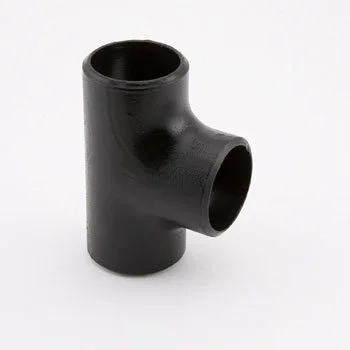
When buying or specifying pipe tee fittings, the term "Schedule 40" often appears alongside nominal pipe size, material grade, and connection type. However, Schedule 40 does not simply mean that a tee has a certain pressure rating or that every Schedule 40 product has the same wall thickness. It identifies a particular wall thickness series associated with a nominal pipe size, while the actual service capability of the fitting depends on several other factors. A Schedule 40 tee is generally selected when a piping system requires a branch connection and the wall thickness associated with Schedule 40 is suitable for the design conditions. A tee has three apertures and may be an equal tee, where all three connections are the same nominal size, or a decreasing tee, where the branch connection is less than the run. The fitting enables a pipe system to split one flow channel into two or to merge flow from a branch into the main line. Schedule designation is only one aspect of the product specification; thus, it is crucial to understand what Schedule 40 really tells you. Whether a certain tee is appropriate for an installation depends upon the material, nominal pipe size, operational temperature, pressure, fluid properties, relevant standards, and manner of connection. For engineers, contractors, and buying teams, this difference helps avoid the frequent error of using Schedule 40 as a catch-all pressure class.
How Schedule 40 Defines the Tee's Wall Thickness?
Schedule Is a Wall Thickness Designation
Schedule 40 is basically a method of defining a nominal wall thickness series for a particular nominal pipe size. It doesn’t say what the form of the tee is, what it’s made of, or the specific pressure capabilities of any product that carries that classification.
What is noteworthy is that the wall thickness that goes with Schedule 40 varies when the nominal pipe size increases. Both are Schedule 40; however, a 1" pipe and a 4" pipe do not have the same absolute wall thickness. Each nominal size has its own dimensions per the appropriate dimensional standard.
It would thus be incorrect to suggest that a Schedule 40 tee is of a constant wall thickness. The nominal size and the dimensional standard applicable to the specific product must be used to calculate the right wall thickness. The fitting must also be dimensionally suitable with the pipe and other components it will be linked to.
This difference is especially crucial when a purchase specification mentions simply “Schedule 40 tee. A supplier may not be able to identify the right product from that description alone. The buyer may additionally have to state the nominal size, material, fitting type, end connection, relevant standard, and other project requirements.
Why Wall Thickness Matters in a Tee Fitting?
Wall thickness of a fitting has an effect on its mechanical properties, as the fitting must be able to resist the internal pressure and stresses created by the piping system. In addition, a branch connection might cause local tensions at the junction of the branch and the main line, and it is not possible to judge the design of the tee by looking at just one wall dimension.
A thicker wall will tend to provide a larger material thickness between the fluid flow and the exterior surface. That does not imply a thicker schedule inevitably dictates the total service rating. Also important are the material strength, the temperature, the production requirements, the shape, and the respective product standard.
The tee dimension must thus be considered as part of a comprehensive technical specification and not as a separate quantity. Before installation, the dimensional data should be verified with the appropriate standard and actual pipe dimensions when a specific Schedule 40 tee is specified in a project.

What Pressure Rating Means for a Schedule 40 Tee?
Schedule 40 Does Not Equal One Fixed PSI Rating
One of the most popular misconceptions regarding Schedule 40 is that the designation itself is a set pressure rating. No, it doesn’t.”
You cannot immediately assume that a steel Schedule 40 tee is rated for the same pressure as a PVC Schedule 40 tee just because they both have the same schedule designation. They may have entirely different materials, production standards, temperature restrictions, and product requirements.
Even within one material category, the pressure capacity depends on size and operating temperature. So a statement such as “Schedule 40 is 150 psi” is not a good generic definition.
For a real pipe project, the pressure capacity should be obtained from the necessary product specification, material standard, manufacturer documentation, or engineering calculation. The permissible pressure may also depend on the temperature at which the system is operated, in the case of high-temperature operation, compared to the pressure under ambient settings.
Temperature and Material Must Be Considered Together
Temperature is a key parameter to evaluate pressure capacity. The mechanical characteristics of materials do not always remain the same when the operating temperature changes, and a fitting that seems adequate at room temperature may have different permitted conditions at a higher service temperature.
Material choice is just as crucial. Steel, stainless steel, PVC, copper, and other materials have their own mechanical and chemical properties. A tee delivering water in a building service system may have quite different needs than a tee carrying a process fluid in an industrial facility.
The fluid itself is also important. Even if the pressure and temperature seem to be within the dimensions range of Schedule 40, a material with suitable resistance may be required if the medium is corrosive or chemically aggressive. So a schedule should be seen as one specification among others, not a comprehensive representation of service capacity.
Choosing the Right Material for a Schedule 40 Tee
Steel and Stainless Steel Tee Applications
Steel Schedule 40 tees are typically used for pipe systems where mechanical strength and longevity are critical. Steel fittings are utilized in industrial, commercial, utility, and process applications according to the material grade and appropriate standard.
But “steel” is not a full material specification by itself. Varying grades have varying chemical composition and mechanical qualities, and the grade picked has to be consistent with the design requirements of the system. For industrial purchases, consequently, the material grade should be explicitly specified rather than the Schedule 40 classification.
Stainless steel tees may be chosen if corrosion resistance is a critical requirement. The suitable grade of stainless steel depends on the fluid, temperature, concentration, and environmental conditions. Thus, the selection of a stainless steel Schedule 40 tee should be made with an eye on its dimensional requirements and its material compatibility with the service.
PVC and Other Nonmetallic Materials
Schedule 40 is also often used in the descriptions of several nonmetallic pipe goods, notably PVC systems. In these applications, the phrase "Schedule 40" is still a dimensional wall thickness series, but the pressure capacity must be determined from the material and product specification.
This is an essential difference since plastic materials may react differently to temperature and to long-term service conditions than metallic materials. Do not use the same assumptions in evaluating a PVC Schedule 40 tee as you would a carbon steel tee.
It connects differently as well. PVC tees may be solvent cemented or employ various connecting techniques depending on the product system. Metallic tees may be threaded, socket, butt-weld, or other connected. The pipe and fitting connection system should be the same throughout the installation.
Where Schedule 40 Tee Fittings Are Commonly Used?
Residential and Commercial Piping
Schedule 40 tee fittings can be found in many residential and commercial piping systems when their material and pressure characteristics match the application. A tee provides a practical way to create a branch from a main pipe, making it useful when water or another permitted fluid needs to be distributed to another part of the system.
In building projects, the correct tee is normally selected together with the pipe size, material, joining method, and applicable plumbing requirements. A fitting that physically connects to a pipe is not necessarily suitable for every service condition, so dimensional compatibility should not be confused with system approval.
Industrial and Utility Systems
Industrial piping systems can also use Schedule 40 tees when the selected product meets the project's pressure, temperature, material, and dimensional requirements. Applications may include general utility piping, water systems, compressed service lines, HVAC-related piping, and other systems where the selected material and fitting standard are appropriate.
For industrial projects, however, the selection process generally requires more information than simply choosing a schedule. Engineering teams may need to evaluate design pressure, design temperature, corrosion allowance, fluid characteristics, joining method, inspection requirements, and applicable project specifications.
This is especially relevant for chemical processing, oil and gas, power, and other demanding environments. A Schedule 40 designation should never be treated as proof that a fitting is automatically suitable for a particular industrial service.
Schedule 40 vs. Schedule 80 Tee Fittings
How the Wall Thickness Changes?
Schedule 40 and Schedule 80 represent different wall thickness series. For the same nominal pipe size, Schedule 80 generally has a thicker wall than Schedule 40. This difference changes the available internal diameter and can also influence the mechanical and pressure characteristics of the piping component.
For example, a nominal 2-inch pipe has different wall thickness values under different schedule designations. The difference may appear relatively small when looking at one fitting, but it becomes important when designing an entire piping system because it affects the internal flow passage, component dimensions, weight, and material requirements.
The exact dimensions should always be taken from the applicable dimensional standard rather than from a generalized schedule chart when the information is being used for engineering or purchasing.
When a Higher Schedule May Be Appropriate?
A higher schedule may be considered when the piping system requires greater wall thickness or when the design conditions call for a different dimensional series. Schedule 80 is one example, but the correct choice depends on the actual system requirements rather than the assumption that "a higher schedule is always better.”
Using a thicker-wall tee where it is not required can increase material cost and weight and may also reduce the available internal diameter. On the other hand, selecting a wall thickness that does not meet the system requirements can create an engineering and procurement problem.
The right approach is to begin with the design conditions and applicable standard, then select the fitting specification that satisfies those requirements. A Schedule 40 tee can be an appropriate choice for many systems, but it should be selected because it meets the application rather than simply because it is a commonly used designation.
What Buyers Should Check Before Ordering a Schedule 40 Tee?
Confirm Size, Material, and Tee Configuration
A purchasing description should provide enough information for the supplier to identify the intended fitting without relying on assumptions. Nominal pipe size is essential because the wall thickness associated with Schedule 40 changes according to size.
The buyer should also identify whether the fitting is an equal tee or a reducing tee. An equal tee has the same nominal size at the run and branch, while a reducing tee provides a smaller branch connection. These products serve different piping configurations and should not be treated as interchangeable.
Material grade is another key specification. A request for a steel Schedule 40 tee, for example, may still require a specific material grade and applicable fitting standard. The required end connection should also be identified, particularly when the project uses butt weld, socket weld, threaded, or another connection type.
Verify Standards and Documentation
For industrial procurement, dimensional and material requirements should be checked against the applicable product and project standards. Depending on the fitting type and application, the specification may include requirements for dimensions, material chemistry, mechanical properties, heat treatment, testing, marking, and inspection documentation.
Purchasers may also need documentation such as a material certificate, dimensional inspection records, test reports, or other quality documents required by the project. These requirements should be established before the order is placed rather than after production is completed.
When purchasing a Schedule 40 tee from an overseas supplier, clear specifications are especially useful because they reduce the possibility of misunderstandings between the buyer, manufacturer, engineering team, and end user. Providing the complete size, material, standard, connection, quantity, and documentation requirements allows the supplier to quote a product against defined technical requirements.
Check Compatibility With the Complete Piping System
A tee does not operate independently. It becomes part of a larger piping assembly that includes straight pipe, valves, reducers, flanges, elbows, supports, and other components. The dimensions and connection types of these components must be compatible.
For example, a tee with the correct nominal size may still be unsuitable if its end connection does not match the adjoining pipe or if the material specification does not satisfy the project requirements. The internal diameter can also be relevant where flow capacity is important.
Before installation, the fitting should therefore be checked against the piping drawings and project specifications. This step is particularly important when different manufacturers or different material systems are being used within the same project.
Conclusion
A Schedule 40 tee is a pipe tee fitting manufactured or specified according to a Schedule 40 wall thickness series for a particular nominal pipe size. The designation is useful for identifying the dimensional relationship between pipe size and wall thickness, but it should not be interpreted as a universal pressure rating or a complete statement of product performance.
The actual suitability of a Schedule 40 tee depends on the combination of nominal size, material, operating pressure, operating temperature, fluid characteristics, connection type, applicable standards, and project requirements. Steel, stainless steel, PVC, and other materials can all have different service characteristics even when a similar Schedule 40 designation is used.
Schedule 80 provides a thicker wall series for the same nominal pipe size and may be appropriate where the system requires different mechanical or pressure characteristics. However, selecting Schedule 80 simply because it has a thicker wall is not always the most economical or technically appropriate solution. The fitting should be matched to the actual design conditions.
For engineers and purchasing teams, the most reliable approach is to treat Schedule 40 as one part of the fitting specification rather than as a standalone performance rating. Confirming the tee type, nominal size, material grade, connection, applicable standard, operating conditions, and required quality documentation before ordering can make product selection much more precise and reduce compatibility problems during installation. Please email us at oudi-04@oudiguandao.com if you want to know more about our pipe fittings, such as Schedule 40 tees, or if you have any questions.
FAQ
1. What is the main difference between Schedule 40 and Schedule 80 tee fittings?
The main difference is wall thickness. Schedule 80 tees have thicker walls, providing higher pressure ratings and increased durability compared to Schedule 40 tees.
2. Can Schedule 40 tees be used in all plumbing applications?
While versatile, Schedule 40 tees are not suitable for all applications, especially those involving high pressure or extreme temperatures. Always consult local codes and specifications.
3. Are Schedule 40 tees more cost-effective than Schedule 80 tees?
Generally, yes. Schedule 40 tees are less expensive due to their thinner walls, making them more cost-effective for standard plumbing applications.
4. What materials are commonly used for Schedule 40 tee fittings?
Common materials include PVC, steel, and copper, each suited for different applications based on factors like corrosion resistance and temperature requirements.
References
1. Smith, J. (2019). "Pipe Fitting Standards: A Comprehensive Guide to Schedule 40 and 80." Journal of Plumbing Engineering, 45(3), 78-92.
2. Johnson, R. & Williams, T. (2020). "Comparative Analysis of Schedule 40 and Schedule 80 Fittings in Industrial Applications." Industrial Piping Systems, 12(2), 145-160.
3. Brown, A. (2018). "Material Selection for Schedule 40 Tee Fittings: PVC vs. Steel vs. Copper." Materials in Plumbing, 23(4), 312-328.
4. Davis, M. et al. (2021). "Pressure Ratings and Temperature Effects on Schedule 40 Pipe Fittings." Journal of Fluid Dynamics in Piping, 56(1), 23-39.
5. Wilson, E. (2017). "Cost-Benefit Analysis of Schedule 40 and Schedule 80 Fittings in Commercial Plumbing Systems." Economic Aspects of Plumbing, 8(3), 201-215.
6. Thompson, K. (2022). "Applications and Limitations of Schedule 40 Tee Fittings in Modern Plumbing Design." Advances in Plumbing Technology, 17(2), 89-104.

Need help finding the right solution with our experts. Please contact us.

SINCE 1998 Your Reliable Pipeline Manufacturer



