Why Choose Butt Weld Pipe Tees for Seamless Flow Connections?
Choosing the right branch fitting can make a significant difference to the reliability and operating efficiency of an industrial piping system. Among the available options, butt weld pipe tees are widely used when a pipeline needs to divide or combine flow while maintaining a permanent welded connection. A butt weld tee is welded directly to the pipe. This is different from threaded or mechanically constructed fittings. When correctly fitted, the fitting becomes part of the continuous pipe system, and the branch connection has no threaded joint or detachable gasket. Such a design is especially beneficial in systems subject to pressure, temperature fluctuation, vibration, or severe process conditions. But the significance of a butt weld pipe tee is not only that it is welded. The applicability relies on the pipe arrangement, material, wall thickness, operating circumstances, welding technique, and the dimensional and production requirements. For engineers and purchase teams, this information is more beneficial than the belief that one sort of fitting is superior than another.
How Butt Weld Pipe Tees Improve Piping System Integrity?
A Continuous Connection Supports Structural Reliability
A butt weld tee is a direct welding connection between the fitting and the pipe. When properly built and welded, the junction becomes a member of the pipe assembly, independent of any separate threaded elements or bolted interfaces.
The pressure and temperature of the system are variable during operation, and this trait is useful in industrial systems. Thermal expansion and contraction may create extra strains on pipe components, and vibration can be introduced into the system by pumps, compressors, and other equipment. With these operating circumstances, a well-constructed welded connection may aid in preserving branch connection integrity.
The ultimate joint strength still relies on the whole welding procedure. Weld quality is a function of material compatibility, joint preparation, welding method, welder qualification, heat treatment when necessary, and inspection. For this reason, the fitting should be addressed in conjunction with the installation and manufacturing requirements rather than as a standalone component.
Fewer Mechanical Interfaces Can Simplify Leak Control
When fluids or gasses are transported under pressure, preventing leaks is a significant issue. Threaded connections and other mechanical joints have interfaces that may need seals or gaskets or further tightening during installation and maintenance.
A butt weld tee eliminates the threaded joint between the pipe and the fitting. This may simplify the design of the connection and minimize the number of detachable sealing elements in the pipe system. Reducing possible leakage channels may be a significant design issue for systems handling hydrocarbons, industrial chemicals, steam, or other fluids where leaking might cause operational or environmental difficulties.
Welding does not mean a leak-free system, and butt weld pipe tees can still be affected by weld faults, improper techniques, poor fit-up, or damage in service that may compromise performance. Proper fabrication and inspection therefore remain important factors in achieving the anticipated dependability.
Why Flow Behavior Matters When Selecting a Tee Fitting?
The Smooth Internal Profile Helps Limit Unnecessary Restrictions
A branch connection is a natural change of direction and distribution of fluid within a pipe system. The shape of the tee consequently influences local turbulence, pressure loss, and flow behavior.
However, butt-weld pipe tees, if correctly constructed and fitted to the connected pipe, provide a rather smooth internal transition. This may assist in improving the internal flow route consistency compared to certain connection designs that add extra internal steps or abnormalities.
The advantage is much more pronounced in systems where pressure loss is important to overall operational efficiency. For example, pumping and circulation systems may need a significant amount of energy to overcome resistance in the pipe network. Removing superfluous constraints at fittings may lead to greater hydraulic performance, but the real pressure loss should be calculated for the whole system, not just the tee.
The Right Tee Geometry Depends on the Piping Layout
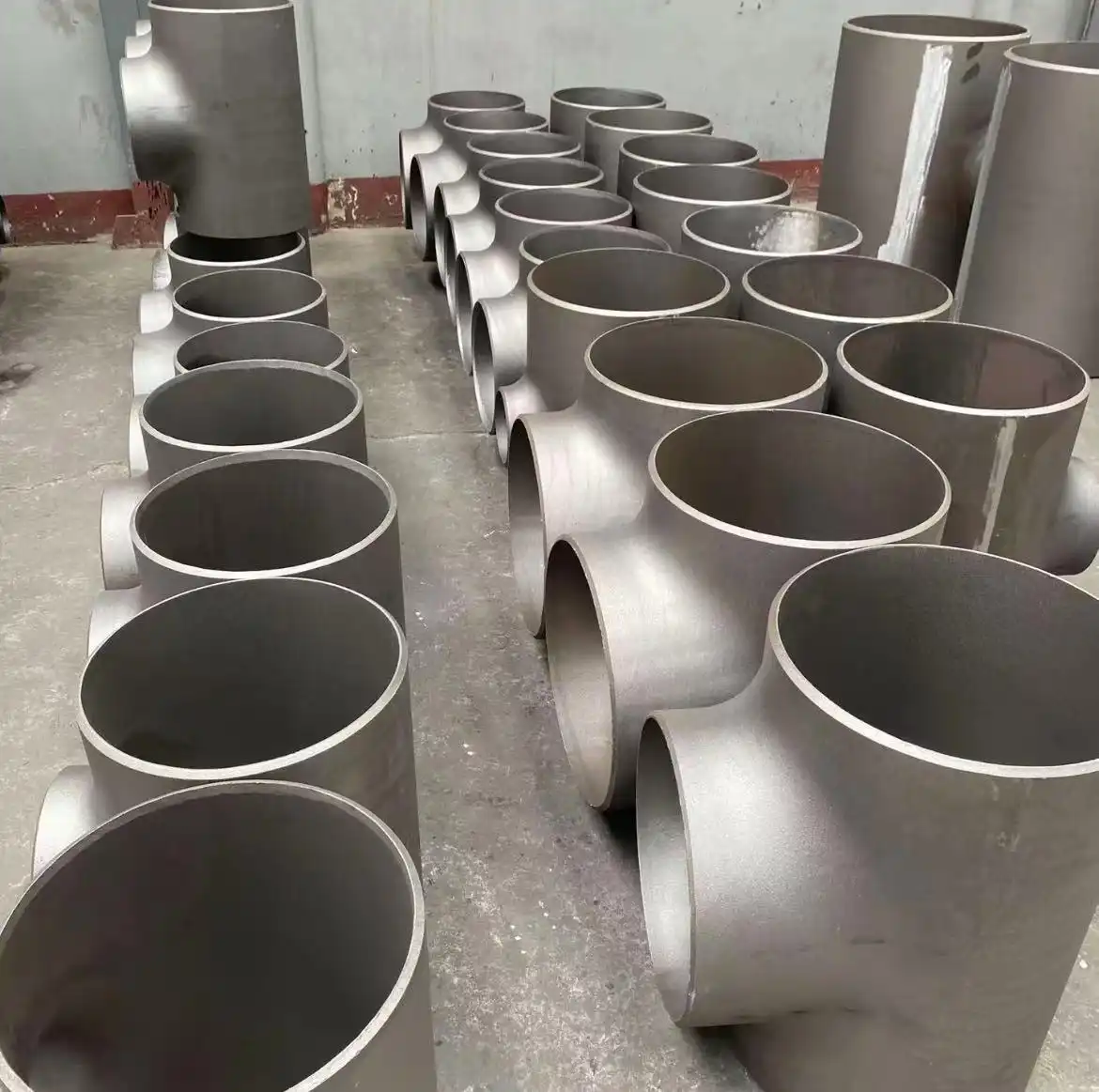
Not all projects need the same kind of shirt. A lower tee has a smaller branch connection. An equal tee has branch and run connections of equal nominal size. The selection must be made on the basis of the needed flow route and the size of the linked pipe.
A reduction tee may be used when a smaller process branch has to be removed from a larger main line. Where the branch and main pipeline must have the same connection size, an equal tee may be more suited.
This is an essential difference for both design and procurement. Ordering a tee based on only the nominal pipe size, without validating the branch arrangement, might lead to getting the wrong part. So while seeking an estimate, engineers should provide the needed run size, branch size, wall thickness, material, and relevant standard.
Where Butt Weld Pipe Tees Offer Practical Advantages?
High-Pressure Oil and Gas Piping
Oil and gas facilities comprise large networks for the transfer of crude oil, natural gas, processed products, steam, water, and other process fluids. Many of these lines are operated under severe pressure and temperature conditions. Reliable branch connections are a key feature of system design.
Butt-weld pipe tees are often specified for these types of applications since they may be used directly in welded pipe systems. Once manufactured and tested to the project criteria applicable, the fitting may offer a durable branch connection without a threaded junction in the process line.
Reliability may be of particular importance at offshore facilities and distant sites where maintenance work may be difficult or costly to schedule. The selection of the fitting, however, must be made on the basis of the actual service circumstances, i.e., the conveyed medium, pressure, temperature, corrosion concerns, and material requirements.
Chemical and Process Piping
Chemical processing facilities may be transporting corrosive, reactive, poisonous, or otherwise sensitive fluids to contamination. So the pipe system must be developed based on mechanical performance and material compatibility.
Where the material of the fitting is compatible with the service medium, a clean welded connection may be provided to process pipework using a butt weld tee. Stainless steel and different alloy materials may be used for corrosion-resistant applications or high-temperature performance, while carbon steel may be suitable for other services.
The selection of materials for butt weld pipe tees should never be made with the premise that stainless steel is always preferable. Suitability of a material is decided by the actual chemical composition, concentration, operating temperature, pressure, and process circumstances. Therefore, the project parameters and material standards should be checked before the purchase of fittings.
Steam and Power Plant Piping
Power production plants include pipe systems for steam, feedwater, cooling water, condensate, fuel, and other services. Some of these systems include high temperature and high pressure, which demand a lot from pipe fittings.
As long as the specified material and design fulfill the acceptable service requirements, butt weld pipe tees may be used in welded piping assemblies used in these settings. For high-temperature applications, engineers need to evaluate the tee based on thermal expansion, material qualities, weld techniques, and inspection needs rather than only the pressure rating.
Traceability and documentation for essential pipework might also become key issues for procurement. Material certifications, dimensional inspection records, welding paperwork, and appropriate non-destructive testing records may be needed depending upon the project requirements.
How Butt Weld Pipe Tees Can Affect Maintenance and Lifecycle Cost?
A Permanent Welded Joint Can Reduce Certain Maintenance Points
One practical advantage of a welded connection is that it does not require routine tightening in the way some mechanical connections may. There is also no gasket at the pipe-to-tee weld itself that needs periodic replacement.
This does not mean that a butt weld pipe tee requires no maintenance. Industrial piping systems still need inspection and monitoring, particularly when they operate under cyclic pressure, high temperature, corrosive service, or significant vibration. Welded areas can also require inspection during fabrication or operation depending on the applicable code and project requirements.
The more accurate benefit is that a properly fabricated welded connection can reduce the number of mechanical sealing components that may require attention over the operating life of the system.
Installation Efficiency Depends on the Project
It is tempting to describe butt welding as automatically faster and cheaper than every other connection method, but that is not always the case. Welding requires qualified personnel, appropriate equipment, preparation, and sometimes post-weld heat treatment or non-destructive testing.
The economic advantage becomes clearer when the complete installation is considered. In a large fabricated piping system, many butt weld fittings can be incorporated into prefabricated pipe sections before they reach the installation site. This approach can improve fabrication control and reduce the amount of field assembly required.
For projects with extensive welded piping, standardizing fitting dimensions and material specifications can also simplify procurement and fabrication. The actual savings depend on labor rates, project location, welding requirements, inspection requirements, and the complexity of the piping system.
Lifecycle Value Comes From More Than the Purchase Price
The initial price of a tee is only one part of its total cost. Procurement teams also need to consider installation labor, welding consumables, inspection, maintenance, replacement requirements, downtime, and the consequences of leakage or premature failure.
A fitting that costs slightly more initially may still provide better lifecycle value if it fits the project specification, supports efficient fabrication, and performs reliably under the intended operating conditions. Conversely, choosing a welded fitting simply because it is marketed as “more durable” does not guarantee lower total cost.
The better approach is to evaluate butt weld pipe tees as part of the entire piping system.
What Should Engineers Check Before Ordering Butt Weld Pipe Tees?
Confirm Size, Wall Thickness, and Branch Configuration
Dimensional compatibility should be one of the first checks during procurement. The tee must match the connected pipe in terms of nominal size, outside diameter, wall thickness, and branch arrangement.
For equal tees, the run and branch sizes are the same. For reducing tees, the branch is smaller than the main run. The selected configuration should correspond to the actual piping drawing and isometric design.
Wall thickness is also important because the fitting needs to be compatible with the pipe and the intended welding procedure. A mismatch can create fabrication difficulties or require additional engineering consideration.
Match the Material to the Service Conditions
Material selection should take into account pressure, temperature, corrosion exposure, fluid composition, and mechanical requirements. Carbon steel, stainless steel, and alloy materials each have different characteristics and should be selected according to the service rather than simply according to price.
For critical applications, buyers should confirm the material grade and required documentation before placing an order. Traceability can be particularly important when the project specification requires certified material records.
Review Manufacturing and Inspection Requirements
A reliable fitting is not defined only by its appearance. Dimensional accuracy, material quality, forming quality, heat treatment where applicable, and inspection all contribute to the finished product.
Depending on the application and specification, buyers may need dimensional inspection reports, material certificates, chemical and mechanical test results, or non-destructive testing records. The specific inspection method should follow the applicable standard and project requirements.
This is also an area where communication between the buyer and supplier can prevent costly mistakes. Providing the pipe size, fitting type, material grade, wall thickness, applicable standard, quantity, and service conditions gives the manufacturer enough information to confirm the correct product.
Why Butt Weld Pipe Tees Remain a Practical Choice?
The main reason to choose a butt weld pipe tee is not simply that it is strong. Its real value comes from how well a welded branch connection fits into the design and operating requirements of an industrial piping system.
When properly selected and fabricated, these fittings can provide a direct connection between the main pipe and branch line, support a relatively smooth internal flow path, and reduce dependence on threaded or gasketed interfaces. They are therefore well suited to many welded piping systems in oil and gas, chemical processing, power generation, water treatment, and other industrial applications.
At the same time, good engineering practice requires more than selecting a fitting based on general advantages. Size, material, wall thickness, pressure, temperature, flow requirements, welding procedures, inspection, and applicable specifications all need to be considered together.
For procurement teams, this broader approach also makes supplier evaluation more meaningful. Instead of comparing prices alone, buyers can compare whether a supplier can provide the required dimensions, material grades, quality documentation, inspection support, and production consistency.
Conclusion
Butt weld pipe tees are a practical solution for industrial piping systems where reliable branch connections, controlled flow paths, and long-term structural integrity are important. Their welded configuration can reduce mechanical interfaces and integrate the fitting directly into the surrounding pipework, making them suitable for many high-pressure and demanding applications.
Their advantages, however, should not be overstated. A butt weld tee does not eliminate every possible leakage or maintenance issue, and welding is not automatically the lowest-cost installation method in every project. Its actual performance depends on correct design, suitable materials, qualified welding procedures, accurate fabrication, and appropriate inspection.
For engineers and purchasing teams, the best selection is therefore the one that matches the complete piping system rather than the fitting alone. By confirming dimensions, material, service conditions, applicable specifications, and quality requirements before ordering, butt weld pipe tees can provide a dependable branch connection and support efficient, maintainable industrial piping systems.
For high-quality butt weld pipe tees and expert guidance on their application, contact Cangzhou Oudi Pipe Manufacture Co., Ltd. at oudi-04@oudiguandao.com.
References
1. Smith, J. (2019). Advanced Piping Design: Optimizing Flow with Butt Weld Fittings. Journal of Industrial Engineering, 45(3), 78-92.
2. Johnson, R., & Williams, T. (2020). Comparative Analysis of Pipe Fitting Types in High-Pressure Systems. International Journal of Mechanical Engineering, 12(2), 145-160.
3. Brown, A. (2018). Cost-Benefit Analysis of Welded vs. Mechanical Pipe Connections in Process Industries. Chemical Engineering Quarterly, 33(4), 201-215.
4. Davis, M., & Thompson, K. (2021). Safety Considerations in High-Temperature Piping Systems: The Role of Butt Weld Fittings. Journal of Process Safety, 18(1), 55-70.
5. Lee, S., & Garcia, R. (2017). Energy Efficiency in Industrial Piping: Impact of Fitting Selection on System Performance. Energy Engineering Review, 29(3), 112-128.
6. Wilson, E. (2022). Advancements in Welding Technologies for Butt Weld Pipe Tees in Critical Applications. Welding Journal, 101(2), 34-49.

Need help finding the right solution with our experts. Please contact us.
SINCE 1998 Your Reliable Pipeline Manufacturer