The Ultimate Guide to Butt Weld Carbon Steel Elbows
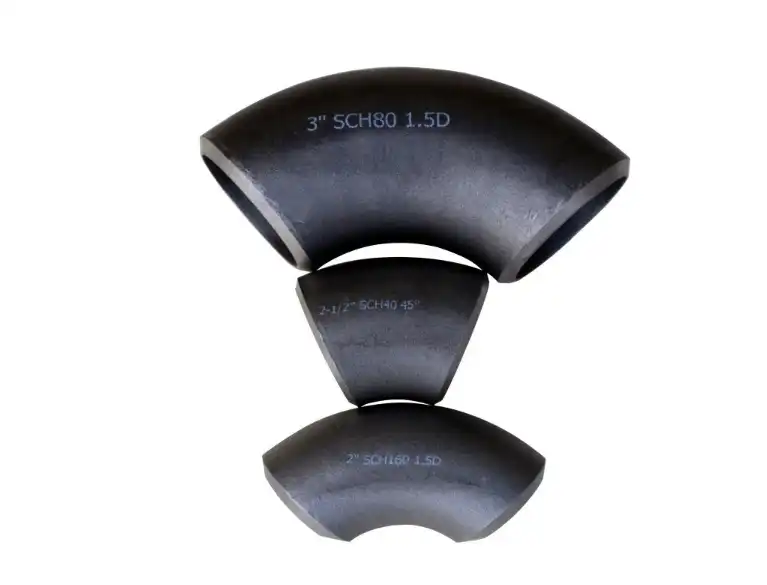
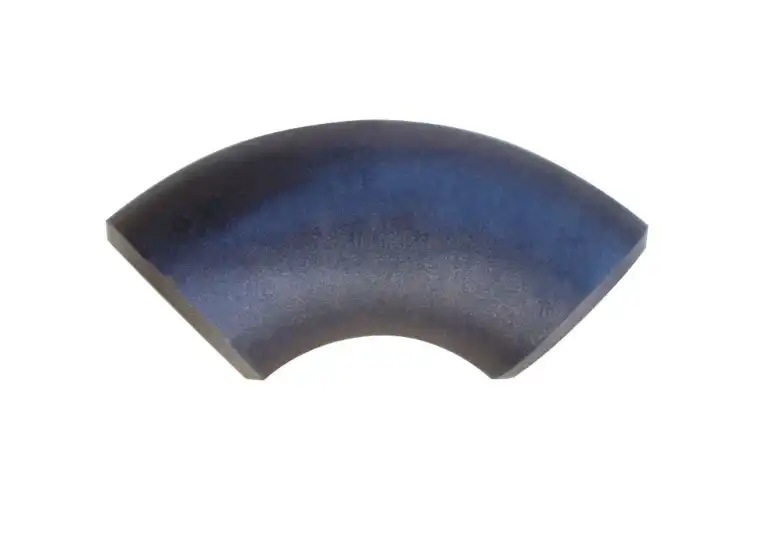
Butt weld carbon steel elbows are basic components in channeling frameworks across different businesses. These welded carbon steel elbow fittings play a vital part in changing the heading of the liquid stream while maintaining up framework's keenness and effectiveness. This comprehensive direct dive into the complexities of butt weld carbon steel elbows, covering everything from details and fabric determination to fabricating forms and quality control. Whether you're a design, temporary worker, or acquisition pro, this article will prepare you with the information required to make educated choices about these fundamental channeling components. We'll investigate the significant ASME benchmarks, fabric properties, creation strategies, and best practices for guaranteeing the most noteworthy quality in welded elbow applications. By the conclusion of this direct, you'll have an exhaustive understanding of butt weld carbon steel elbows and their importance in present-day mechanical channeling systems.

Understanding ASME B16.9: Specifications for Welded Carbon Steel Elbows
Scope and Application of ASME B16.9
ASME B16.9 is the industry standard that administers the details for butt-welding fittings, including carbon steel elbows. This standard covers dimensional necessities, resiliences, and fabric determinations for welded carbon steel elbows utilized in different channeling systems. The scope of ASME B16.9 applies to elbows with ostensible pipe sizes extending from NPS 1/2 to NPS 48, guaranteeing consistency and tradable over diverse producers. Welded carbon steel elbows adjusting to this standard are broadly utilized in high-pressure and high-temperature applications, making them fundamental in businesses such as oil and gas, petrochemical, and power generation.
Dimensional Requirements and Tolerances
ASME B16.9 gives point-by-point dimensional requirements for welded carbon steel elbows, including divider thickness, exterior distance across, and twist span. These determinations guarantee that the elbows keep up appropriate stream characteristics and basic keenness within the channeling framework. The standard moreover diagrams passable resistances for different measurements, which are vital for accomplishing a legitimate fit-up during installation. For welded carbon steel elbows, the resilience on divider thickness is regularly ±12.5% of the ostensible divider thickness, whereas the out-of-roundness resilience is restricted to 8% of the exterior distance across. Following these dimensional prerequisites and resistances is basic for guaranteeing the stability and execution of the channeling system.
Material Requirements and Testing
ASME B16.9 indicates the fabric requirements for welded carbon steel elbows, ordinarily referencing ASTM measures for fabric composition and properties. The standard requires that welded carbon steel elbows undergo different tests to guarantee their quality and compliance with details. These tests may incorporate chemical examination, mechanical property testing, and non-destructive examination methods such as radiographic or ultrasonic testing. The hydrostatic test weight for welded carbon steel elbows is ordinarily 1.5 times the design weight, guaranteeing that the fittings can withstand the expected working conditions. By following these fabric necessities and testing strategies, producers can deliver high-quality welded carbon steel elbows that meet the demanding needs of mechanical applications.
Material Selection: ASTM A234 WPB for Welded Elbow Applications
Chemical Composition and Mechanical Properties
ASTM A234 WPB is the most commonly utilized fabric determination for welded carbon steel elbows. This review offers a fabulous adjustment of quality, ductility, and weldability, making it appropriate for a wide extend of channeling applications. The chemical composition of ASTM A234 WPB incorporates carbon (0.30% max), manganese (0.29-1.06%), phosphorus (0.050% max), sulfur (0.058% max), and silicon (0.10% min). These components contribute to the material's mechanical properties, with a least pliable quality of 60,000 psi (415 MPa) and a least surrender quality of 35,000 psi (240 MPa). Welded carbon steel elbows made from ASTM A234 WPB display amazing sturdiness and resistance to distortion under high-pressure and high-temperature conditions, making them perfect for demanding mechanical environments.
Heat Treatment and Microstructure
The warm treatment handle plays a vital part in creating the craved microstructure and mechanical properties of welded carbon steel elbows. ASTM A234 WPB fabric regularly experiences normalizing warm treatment, which includes warming the steel to a temperature over its basic run (ordinarily around 1600°F or 870°C) and at that point cooling it in a still discuss. This handle refines the grain structure, improves the material's quality and sturdiness, and guarantees uniform properties all through the elbow. The coming about microstructure of welded carbon steel elbows made from ASTM A234 WPB comprises fine-grained ferrite and pearlite, giving an ideal combination of quality and ductility. This microstructure contributes to the material's fabulous weldability and resistance to splitting during manufacture and service.
Corrosion Resistance and Service Life
While ASTM A234 WPB is not inalienably exceedingly corrosion-resistant, welded carbon steel elbows made from this material can offer satisfactory security in numerous applications when appropriately chosen and maintained. In gentle situations, such as those including non-corrosive liquids at direct temperatures, these elbows can give a long service life with negligible erosion concerns. In any case, in more forceful situations, extra measures may be vital to upgrade the erosion resistance of welded carbon steel elbows. These measures may incorporate defensive coatings, cathodic security frameworks, or the utilize of erosion inhibitors in the preparation liquid. Normal review and support programs are basic for observing the condition of welded carbon steel elbows and guaranteeing their continued execution throughout their service life.
Manufacturing and Quality Control: Ensuring Precision in Welded Elbow Production
Forming and Welding Processes
The fabrication of welded carbon steel elbows includes a few basic steps to guarantee exactness and quality. The preparation regularly starts with the choice of a high-quality steel plate or pipe, which is at that point cut to the required size and shape. The cut pieces are at that point shaped into the craved elbow shape utilizing different strategies, such as hot shaping, cold shaping, or a combination of both. Once shaped, the edges of the elbow are arranged for welding, frequently utilizing beveling strategies to guarantee appropriate weld infiltration. The welding handle for carbon steel elbows more often than not utilizes submerged arc welding (SAW) or gas metal arc welding (GMAW) procedures, which give high-quality, reliable welds. All through the shaping and welding forms, strict quality control measures are executed to guarantee that the welded carbon steel elbows meet the required dimensional resistances and basic integrity.
Non-Destructive Testing and Inspection
Quality control for welded carbon steel elbows involves a comprehensive range of non-destructive testing (NDT) and inspection techniques. These methods are crucial for detecting any defects or inconsistencies in the elbows without compromising their structural integrity. Common NDT techniques used for welded carbon steel elbows include radiographic testing (RT), ultrasonic testing (UT), magnetic particle inspection (MPI), and liquid penetrant testing (PT). Each of these methods serves a specific purpose in identifying various types of defects, such as cracks, porosity, or lack of fusion in the weld joints. Visual inspection is also an essential part of the quality control process, allowing for the detection of surface imperfections and dimensional deviations. By employing a combination of these NDT and inspection techniques, manufacturers can ensure that welded carbon steel elbows meet the highest standards of quality and reliability.
Documentation and Traceability
Maintaining comprehensive documentation and ensuring traceability are critical aspects of quality control in the production of welded carbon steel elbows. Each elbow should be marked with unique identifiers that allow for tracking throughout the manufacturing process and beyond. This documentation typically includes material test reports (MTRs), which provide detailed information about the chemical composition and mechanical properties of the steel used. Welding procedure specifications (WPS) and procedure qualification records (PQR) are also essential documents that outline the welding parameters and demonstrate the suitability of the welding process. Inspection and test reports, including NDT results, should be carefully documented and linked to each welded carbon steel elbow. This level of documentation and traceability not only ensures compliance with industry standards but also facilitates troubleshooting and quality assurance throughout the lifecycle of the piping system.
Conclusion
Butt weld carbon steel elbows are indispensable components in modern piping systems, offering reliable performance in demanding industrial applications. By adhering to ASME B16.9 specifications, selecting appropriate materials like ASTM A234 WPB, and implementing rigorous manufacturing and quality control processes, manufacturers can produce high-quality elbows that meet the diverse needs of various industries. As the global demand for efficient and durable piping systems continues to grow, the importance of well-crafted welded carbon steel elbows cannot be overstated. For those seeking top-quality carbon steel pipe fittings, valves, and flanges, Cangzhou Oudi Pipe Manufacture Co., Ltd. has been a leading manufacturer in China since 1998. With their commitment to excellence and comprehensive quality control measures, they continue to serve customers worldwide, providing essential components for critical infrastructure projects. For more information or inquiries, please contact them at oudi-04@oudiguandao.com.
FAQ
Q: What is the primary function of a butt weld carbon steel elbow?
A: Butt weld carbon steel elbows are used to change the direction of fluid flow in piping systems while maintaining system integrity and efficiency.
Q: What is ASME B16.9, and why is it important for welded carbon steel elbows?
A: ASME B16.9 is the industry standard that governs specifications for butt-welding fittings, including carbon steel elbows. It ensures consistency and interchangeability across different manufacturers.
Q: Why is ASTM A234 WPB commonly used for welded carbon steel elbows?
A: ASTM A234 WPB offers an excellent balance of strength, ductility, and weldability, making it suitable for a wide range of piping applications in demanding industrial environments.
Q: What non-destructive testing methods are commonly used for welded carbon steel elbows?
A: Common NDT techniques include radiographic testing (RT), ultrasonic testing (UT), magnetic particle inspection (MPI), and liquid penetrant testing (PT).
Q: How does heat treatment affect welded carbon steel elbows?
A: Heat treatment, typically normalizing, refines the grain structure, improves strength and toughness, and ensures uniform properties throughout the elbow.
References
1. American Society of Mechanical Engineers. (2018). ASME B16.9-2018: Factory-Made Wrought Buttwelding Fittings. New York, NY: ASME.
2. ASTM International. (2019). ASTM A234/A234M-19: Standard Specification for Piping Fittings of Wrought Carbon Steel and Alloy Steel for Moderate and High Temperature Service. West Conshohocken, PA: ASTM International.
3. Nayyar, M. L. (2000). Piping Handbook (7th ed.). New York, NY: McGraw-Hill Education.
4. American Welding Society. (2015). AWS D1.1/D1.1M:2015 Structural Welding Code - Steel. Miami, FL: AWS.
5. Antaki, G. A. (2003). Piping and Pipeline Engineering: Design, Construction, Maintenance, Integrity, and Repair. Boca Raton, FL: CRC Press.
6. Smith, P. (2005). Piping Materials Guide: Selection and Applications. Burlington, MA: Gulf Professional Publishing.

Need help finding the right solution with our experts. Please contact us.

SINCE 1998 Your Reliable Pipeline Manufacturer