Top 10 Steel Concentric Pipe Reducer Factories You Can Trust
When sourcing industrial pipe fittings for critical applications in oil, chemical, or power generation facilities, identifying reliable manufacturers becomes paramount. The Steel Concentric Pipe Reducer market features numerous suppliers, but only a select few consistently deliver certified quality, dimensional precision, and supply chain reliability. This comprehensive guide profiles ten established factories recognized for their manufacturing excellence, advanced inspection protocols, and proven export track records. From large-scale producers with 16,000-ton annual capacities to specialized workshops focusing on high-alloy materials, these manufacturers serve diverse industrial sectors across Europe, the Middle East, Southeast Asia, and the Americas. Understanding their unique strengths—whether in ASME B16.9 compliance, PMI testing capabilities, or multi-material product ranges—empowers procurement teams to make informed decisions that minimize project risks and ensure long-term operational integrity.
Leading Manufacturers Shaping the Industry
Cangzhou Oudi Pipe Manufacture Co., Ltd.
Since 1998, Cangzhou Oudi has been making high-quality pipe fittings in the Lu Shop Industrial Zone in Mengcun Hui Autonomous County, which is also known as "China Fitting." The building is 66,600 square meters and is located close to Tianjin Port (120 kilometres from Tianjin Airport). It is an excellent combination of production and logistics. They make steel pipe fittings and reducers out of carbon steel (ASTM A234 WPB), stainless steel (ASTM A403 WP304/316L), and alloy steel (ASTM A234 WP11/WP22). All of these are made to meet American, Japanese, German, and British standards.
What sets Oudi apart is their high-quality, all-around design. With both an ISO 9001:2000 certification and a People's Republic of China Special Equipment Manufacturing License, they check the whole process, from receiving the raw materials to sending out the produced goods. Their methods for checking dimensions are in line with ASME B16.9 standards. This makes sure that the taper angles, wall thickness at the major and minor ends, and centerline alignment all meet the important requirements for field welding integrity. Ultrasonic testing of transition zones, where stress builds up during pressure shifting, is one type of non-destructive testing that can be done.
Oudi serves over 300 clients in 40 countries and produces 16,000 tonnes of goods every year. It also has the power to handle its own imports and exports. Their circular reducers are used in vertical pump discharge lines at oil factories in the Middle East, in steam generation systems at power plants in Europe, and in Southeast Asia to treat wastewater. Due to their well-known name, fair prices, and expert support services, OUDI has become a chosen partner for EPC companies in charge of large industrial projects. Their research team helps choose the right materials for cold services (like ASTM A420 WPL6 with Charpy V-Notch impact tests at -46°C) and high-temperature uses that need metals that don't creep.
Hebei Haihao High Pressure Flange & Pipe Fitting Group
Haihao is a company that makes large-diameter pipe reducer fittings for oil and gas transport networks. It has several production sites spread out across Hebei Province. They use hot-forming technology to make smooth circular reducers, which keeps the grain structure the same throughout the conical shift. This mechanical uniformity makes it more resistant to wear and rust, which is very important when moving rough petroleum streams.
The plant keeps a large stock of materials, including Grades X42 through X70 line pipe steels and Steel Concentric Pipe Reducer. This lets them meet tight plans for pipeline building quickly. Handheld XRF analysers are used in their PMI testing methods to make sure that the chemical makeup fits the material test reports. This keeps galvanic corrosion problems from happening in pipe systems that use more than one material. Haihao's exports include work on oil fields in Kazakhstan, infrastructure for shale gas in North America, and pipeline developments in Africa. Along with physical inspection reports that can be linked to precise measuring tools, their technical paperwork packages contain hydraulic test certificates that show they are fit for 1.5 times the original pressure.
Tianjin Shengtian Pipe Fitting Co., Ltd.
Strategically positioned near northern China's largest seaport, Shengtian emphasizes rapid delivery for marine and shipbuilding applications. Their concentric reducer product line extends from NPS 1/2 through NPS 48, with wall thickness options spanning Schedule 40 to XXS. The facility operates CNC beveling machines that prepare weld-end profiles meeting DNV and Lloyd's Register specifications for naval construction.
Shengtian's quality management system incorporates real-time production monitoring, with digital calipers and ultrasonic wall thickness gauges at each workstation. This decentralized inspection approach catches dimensional deviations before products advance to subsequent manufacturing stages. Their client base includes European shipyards constructing LNG carriers and Asian fabricators building offshore drilling platforms. The company provides material traceability through heat number coding systems that link finished fittings back to mill test reports from steel suppliers.
Shanxi Guanghui Pipe Industry Co., Ltd.
Guanghui concentrates on alloy steel pipe fittings for high-temperature service environments. Their concentric reducer offerings in Chrome-Moly grades (1Cr-0.5Mo, 2.25Cr-1Mo, 5Cr-0.5Mo) serve petrochemical cracking units and thermal power generation facilities. The manufacturing process includes post-forming heat treatment cycles that optimize microstructure for elevated-temperature strength and oxidation resistance.
The facility's laboratory conducts mechanical property verification through tensile testing and hardness surveys, ensuring yield strength meets ASTM specifications across the fitting's entire geometry. Guanghui maintains strategic partnerships with Japanese and Korean steel mills, securing consistent supplies of premium-grade raw materials. Their technical sales team provides stress analysis support for piping designers evaluating thermal expansion loads and support spacing requirements. Export destinations include refineries in the Middle East Gulf states and chemical plants throughout Southeast Asia's industrial corridors.
Jiangsu Haijie Stainless Steel Product Co., Ltd.
Haijie specializes in corrosion-resistant pipe reducer solutions for aggressive chemical processing environments. Their stainless steel concentric reducer catalog encompasses austenitic grades (304, 304L, 316, 316L), duplex alloys (2205, 2507), and super austenitic materials (904L, AL-6XN). The facility operates solution-annealing furnaces that dissolve carbide precipitates, maximizing intergranular corrosion resistance in welded configurations.
Quality control protocols include ferrite content measurement using magnetic induction instruments—essential for qualifying duplex stainless fittings where phase balance affects mechanical properties. Haijie's pickling and passivation processes remove free iron contamination from machined surfaces, enhancing chloride pitting resistance in marine atmospheres. Their client portfolio spans pharmaceutical manufacturers requiring sanitary-grade fittings, desalination plants handling seawater, and pulp mills processing chlorine dioxide solutions. The company provides complete material traceability documentation complying with European Pressure Equipment Directive (PED) requirements.
Zhejiang Yaang Pipe Industry Co., Ltd.
Yaang operates an integrated manufacturing complex producing both seamless and welded pipe reducer fittings. Their cold-forming capabilities enable fabrication of thin-wall concentric reducers for weight-sensitive applications like rooftop HVAC systems and pharmaceutical clean utilities. The welded product line utilizes automated TIG welding stations with inert gas backing, producing full-penetration joints that meet radiographic inspection standards.
The facility's dimensional inspection department employs coordinate measuring machines (CMMs) for complex geometry verification of Steel Concentric Pipe Reducer, capturing taper angles and concentricity measurements with micrometer precision. Yaang maintains certifications from TÜV Rheinland and Bureau Veritas, facilitating acceptance in European Union markets with stringent conformity assessment requirements. Their logistics network supports consolidated shipments combining multiple fitting types, reducing freight costs for distributors building inventory assortments. Technical support includes CAD drawings in multiple formats and finite element analysis consultation for custom reducer configurations.
Shandong Jinyouli Pipe Technology Development Co., Ltd.
Jinyouli focuses on heavy-wall pipe reducer fittings for ultra-high-pressure applications. Their product range includes concentric reducers in wall classes exceeding XXS, manufactured through rotary piercing and extrusion processes that eliminate longitudinal weld seams. This seamless construction provides isotropic mechanical properties advantageous for cyclic pressure loading encountered in hydraulic fracturing equipment and subsea wellhead systems.
The company's testing laboratory holds CNAS accreditation (China National Accreditation Service for Conformity Assessment), enabling issuance of internationally recognized inspection certificates. Capabilities include positive material identification across the fitting's wall thickness using sectioning techniques, hardness traverses confirming heat treatment uniformity, and macro-etch examination revealing grain flow patterns. Jinyouli's engineering staff collaborates with end-users on material selection for sour gas service, recommending NACE MR0175-compliant grades with controlled hardness levels preventing sulfide stress cracking.
Wuxi Honglei Steel Pipe Co., Ltd.
Honglei specializes in precision-machined concentric reducers for instrumentation and small-bore piping systems. Their CNC turning operations achieve surface finish specifications below 125 microinch Ra, suitable for hygienic applications in food processing and biotechnology industries. The facility produces metric-dimensioned fittings complying with DIN and EN standards, serving European original equipment manufacturers integrating reducers into packaged equipment skids.
Quality assurance protocols emphasize dimensional repeatability, with statistical process control charts monitoring critical parameters across production batches. Honglei's calibration program ensures measurement equipment traceability to national metrology institutes, satisfying audit requirements from automotive and aerospace sector clients. Their quick-turn prototyping services support new product development projects, delivering sample fittings with material certifications for design validation testing. Export activities concentrate on Germany's machine building sector and Scandinavia's process equipment manufacturers.
Guangzhou Derbo Valve Co., Ltd.
While primarily recognized for valve manufacturing, Derbo maintains complementary pipe reducer production supporting complete piping packages. Their concentric reducer offerings integrate design features optimizing flow coefficient transitions, minimizing turbulence that causes premature valve seat erosion in downstream control valves. The engineering approach considers reducer-valve combinations as unified systems, with taper angles selected to condition velocity profiles entering valve inlets.
Derbo's testing facilities include flow loop apparatus measuring pressure drop characteristics across reducer geometries, generating empirical data supporting hydraulic calculations. The company provides integrated quotations bundling reducers with valves and flanges, simplifying procurement for turnkey project contractors. Their quality documentation packages include assembled photographs showing fitting-valve interfaces, plus witness test protocols available for client inspection witness points. Market presence spans Middle Eastern petrochemical complexes, Latin American mining operations, and African infrastructure developments.
Liaoning North Huatai Heavy Industry Equipment Group
North Huatai serves heavy industries requiring large-diameter, thick-wall concentric reducers for primary steel production facilities and utility power generation. Their forge shop manufactures reducers through open-die forging processes, creating components with superior impact resistance and structural integrity compared to welded fabrications. This forging approach proves essential for high-energy piping systems conveying superheated steam at 1000°F and 2400 PSI.
The facility operates spectroscopic analysis equipment verifying alloy chemistry compliance with stringent ASTM compositional requirements. Mechanical testing laboratories conduct Charpy impact evaluations at multiple temperatures, characterizing ductile-to-brittle transition behavior critical for low-temperature service in northern climates. North Huatai's project management team coordinates factory acceptance testing (FAT) witnessed by third-party inspectors representing insurance underwriters and regulatory authorities. Their client roster includes Chinese state-owned enterprises constructing Belt and Road Initiative infrastructure projects requiring Chinese Special Equipment certifications alongside international standards compliance.
Understanding Concentric Reducer Fundamentals
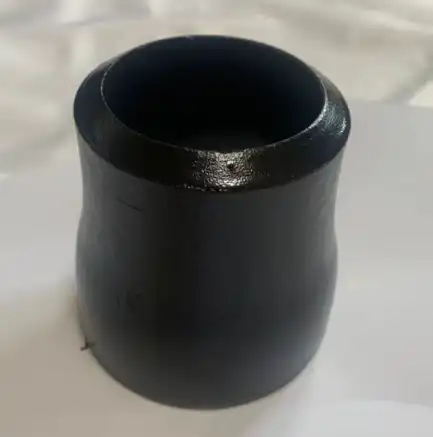
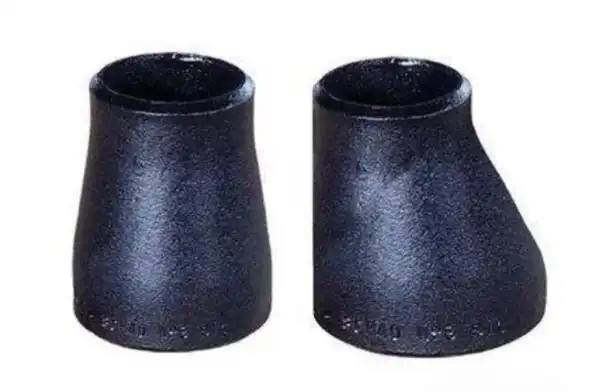
A concentric pipe reducer has a uniform design, which means that the holes at both ends share the same central axis. This circular alignment makes a cylindrical transition section that lowers the flow area easily while keeping the speed distribution the same across the pipe cross-section. The design works best for vertical pipe layouts where there is almost no chance of air getting trapped. This lets water flow naturally without making spaces where gas bubbles can gather.
ASME B16.9 for factory-made metal buttwelding fits sets the length-to-diameter ratios, taper angles, and wall thickness tolerances that control the measurements of circular reducers. Material choice is based on ASTM standards that match parent pipe grades. For regular service, carbon steel grades like A234 WPB are used, while stainless grades like A403 WP316L are used in acidic conditions, and alloy steels like A234 WP22 are used in high temperatures. Usually, bevelled edges cut to 37.5-degree angles with 1/16-inch root faces are used for end preparation. This makes full-penetration groove welds possible, which recover the parent pipe's strength.
The mechanical strength of these parts relies on the metallic qualities that are achieved by carefully shaping and heating the metal. Cold-formed reducers work-harden, which makes them stronger but less flexible, while hot-formed parts stay tough enough to withstand impact loads. With seamless making, there are no longitudinal weld gaps, which can be places where failure starts in systems that are loaded and unloaded over and over again. Quality control methods use go/no-go gauges to check the accuracy of the dimensions, optical emission spectroscopy to confirm the material's chemistry, and ultrasonic testing of the transition taper, where changes in thickness concentrate stress, to find internal flaws.
Critical Quality Verification Parameters
Professional procurement teams evaluating Steel Concentric Pipe Reducer and other steel pipe fitting suppliers scrutinize specific quality control capabilities that directly impact long-term reliability. Dimensional inspection protocols must verify compliance with ASME B16.9 tolerances, particularly the center-to-end length dimension (H) that affects field fit-up clearances and weld gap consistency. Wall thickness measurements at both large and small ends confirm sufficient material remains after forming operations, preventing localized thin spots that compromise pressure containment.
Positive Material Identification testing using handheld XRF analyzers provides rapid verification that chemical composition matches mill test certificates. This non-destructive analysis detects material mix-ups that could result in galvanic corrosion when dissimilar metals contact in piping systems. Carbon equivalent calculations derived from PMI data predict weldability and susceptibility to heat-affected zone cracking, guiding preheat and post-weld heat treatment requirements.
Non-destructive examination techniques appropriate for concentric reducers include ultrasonic testing that reveals subsurface laminations or inclusions within the transition zone. The conical geometry requires specialized UT techniques compensating for varying wall thickness and surface angles. Radiographic testing provides permanent film records documenting internal soundness, particularly valuable for code-stamped fittings requiring authorized inspector approval. Magnetic particle inspection detects surface-breaking cracks in ferromagnetic materials, applied after final machining to verify handling damage hasn't occurred.
Mechanical property verification through destructive sampling ensures fittings exhibit adequate strength and toughness. Tensile tests measure yield and ultimate strength, confirming heat treatment achieved target values. Charpy V-Notch impact testing evaluates fracture resistance at minimum design temperatures, critical for cryogenic LNG service or winterized outdoor installations. Hardness surveys across weld heat-affected zones identify localized property variations that might affect serviceability.
Application Engineering Considerations
Within pipe system plans, concentrators play specific roles where their uniform shape offers useful benefits. Constant setups are used in vertical pump discharge systems to keep the centerlines of the pipes aligned. This makes the design of the support hangers easier and keeps the pump nozzle loading estimates the same. The smooth change in speed reduces hydraulic shock when the flow direction changes at bends further downstream from the reduction. This keeps erosion and rust damage to a minimum.
In power plants that use high-pressure steam, there are circular reducers between the turbine extractions that work at different pressures. The slow decrease in diameter stops flow separation and turbulence, which would lead to lower pressure and problems with sound reverberation. For these uses, choosing the right material is important because it needs to keep its creep strength at temperatures between 950°F and 1050°F. This means Chrome-Moly alloy steels with long-term creep rupture stress data to support fitness-for-service tests are needed.
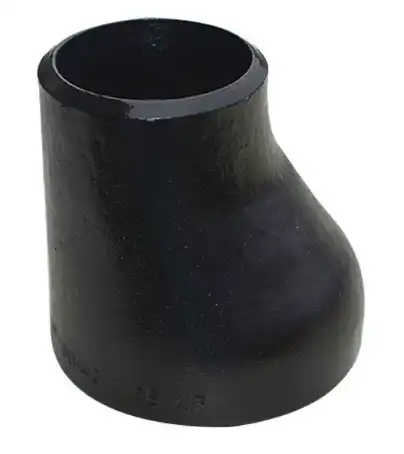
Concentric reducers in vertical downflow lines help wastewater treatment plants deal with sludge slurries because they clean themselves. The uniform curve stops solids from building up, which can happen when irregular designs are not orientated correctly. But horizontal runs carrying fluids with particles usually need eccentric reducers that are installed flat-side-down to avoid settling beds that block flow.
When working with harsh chemicals like sulphuric acid, caustic solutions, or chlorinated hydrocarbons, the chemical processing industry needs circular reducers made from metals that don't rust. The smooth transition shape gets rid of cracks where concentration cells can start pitting erosion. For these uses, the surface finish usually needs to be electropolished or mechanically polished to Ra values below 32 microinches. This reduces the amount of surface area where germs can stick in pharmacy clean-in-place systems.
Emerging Industry Trends
The global pipe reducer fitting market continues evolving, driven by infrastructure investments in emerging economies and replacement cycles in mature industrial regions. Manufacturers increasingly adopt automation technologies including robotic welding cells and machine vision inspection systems that enhance consistency while reducing labor dependency. Digital manufacturing initiatives integrate enterprise resource planning systems with production equipment, enabling real-time order tracking and predictive maintenance scheduling.
Sustainability considerations influence material selection trends, with recycled steel content in carbon steel fittings exceeding 90 percent in some facilities. Energy-efficient manufacturing processes, including induction heating and waste heat recovery systems, reduce carbon footprints, addressing customer environmental procurement criteria. Supply chain transparency initiatives utilize blockchain technology for material traceability, documenting the journey from raw material smelting through finished product delivery.
Technical innovation focuses on computational fluid dynamics modeling that optimizes reducer taper geometries for specific applications, minimizing turbulence-induced pressure losses. Additive manufacturing techniques are emerging for prototype development and low-volume specialty fittings, though wrought and forged products remain dominant for pressure-retaining applications. The convergence of international standards continues, with ISO 15590 harmonizing requirements across ASME, DIN, and JIS specifications to facilitate global procurement.
Partner with Oudi for Reliable Steel Concentric Pipe Reducer Supply
Selecting the right Steel Concentric Pipe Reducer manufacturer directly impacts project timelines, budget adherence, and operational safety. Cangzhou Oudi Pipe Manufacture Co., Ltd. delivers the comprehensive quality assurance, material diversity, and technical support that complex industrial projects demand. With ISO 9001 certification, Special Equipment Manufacturing License, and 25 years of continuous production excellence, Oudi provides the confidence that comes from proven reliability.
Our 16,000-ton annual capacity ensures consistent availability even during market supply constraints, while our complete product range eliminates the complications of managing multiple vendors. From ASTM A234 WPB carbon steel for general service to exotic alloys for extreme conditions, our material portfolio matches your specifications. Advanced inspection equipment including ultrasonic flaw detectors, PMI analyzers, and dimensional measurement systems ensures every fitting meets exacting standards before shipment.
Global logistics experience serving clients across Europe, the Americas, Africa, Southeast Asia, and the Middle East means we understand international shipping documentation, customs requirements, and packaging standards protecting products during transit. Our engineering team provides technical consultation on material selection, dimensional specifications, and quality control witness points, acting as an extension of your procurement organization.
Contact our export team at oudi-04@oudiguandao.com to discuss your concentric reducer requirements. Whether you're sourcing a single container for inventory replenishment or scheduling deliveries for a multi-year construction project, Oudi combines manufacturing capability with customer service commitment. Request quotations including material test certificates, dimensional inspection reports, and delivery schedules tailored to your project milestones.
References
1. American Society of Mechanical Engineers. ASME B16.9: Factory-Made Wrought Buttwelding Fittings. New York: ASME Press, 2018.
2. Boyer, Howard E., and Timothy L. Gall, eds. Metals Handbook: Desk Edition, Second Edition. Materials Park, OH: ASM International, 1998.
3. International Organization for Standardization. ISO 15590: Petroleum and Natural Gas Industries—Induction Bends, Fittings and Flanges for Pipeline Transportation Systems. Geneva: ISO, 2009.
4. Nayyar, Mohinder L., ed. Piping Handbook, Seventh Edition. New York: McGraw-Hill, 2000.
5. Singh, Kuldip, and M. S. Sohal. Manufacturing Processes for Engineering Materials, Fifth Edition. Upper Saddle River, NJ: Pearson Education, 2008.
6. Xu, Liangyuan, and Wang Jianhua. Quality Control Technology for Steel Pipe Fittings in Oil and Gas Industries. Beijing: Petroleum Industry Press, 2015.

Need help finding the right solution with our experts. Please contact us.

SINCE 1998 Your Reliable Pipeline Manufacturer



