Understanding 45°, 90°, and 180° Carbon Steel Elbows: Applications and Benefits
Carbon steel elbows are essential fittings for directing fluid through industrial piping systems without requiring the entire pipeline to follow a straight route. Among the most frequently specified configurations are 45°, 90°, and 180° elbows, each of which creates a different change in direction and can affect the layout, flow behaviour, and installation requirements of a piping system. Understanding these differences is important when engineers and procurement teams select fittings for applications such as oil and gas processing, power generation, chemical production, water handling, and general industrial piping. Carbon steel elbows are not selected by angle alone. Also, the right fitting relies on the pipe size, wall thickness, bend radius, material grade, pressure and temperature conditions, connection requirements and the properties of the medium being conveyed. A 90° elbow could be useful if a pipeline has to make a tight bend, whereas a 45° arrangement would provide a less abrupt change in direction. Normally a 180° return bend is used when the pipe layout necessitates the flow to change its direction. The consideration of these aspects in a simultaneous manner provides a more solid foundation for engineers to build a pipe arrangement that is practical, maintainable and suitable for its operating circumstances.
How 45°, 90°, and 180° Elbows Change Piping Layouts?
45° Elbows for Gradual Direction Changes
A 45° elbow bends a pipeline by 1/2 of a 90° turn. This is beneficial in applications where the architecture requires a less abrupt change in direction. In certain systems this layout may assist in generating a smoother routeing route and may lessen the local disturbance associated with a steeper curve. However, the real pressure loss advantage relies on the elbow radius, pipe diameter, flow velocity and other features of the system, and not only the angle.
Engineers may also join two 45° elbows for a certain routeing angle. This method may provide more flexibility around equipment, structural parts or existing pipes, but the extra fittings also mean more connections and possible pressure losses. Therefore, the selection should be made based on the whole pipe arrangement, not presuming that more gradual bends are always better.
90° Elbows for Compact Routeing
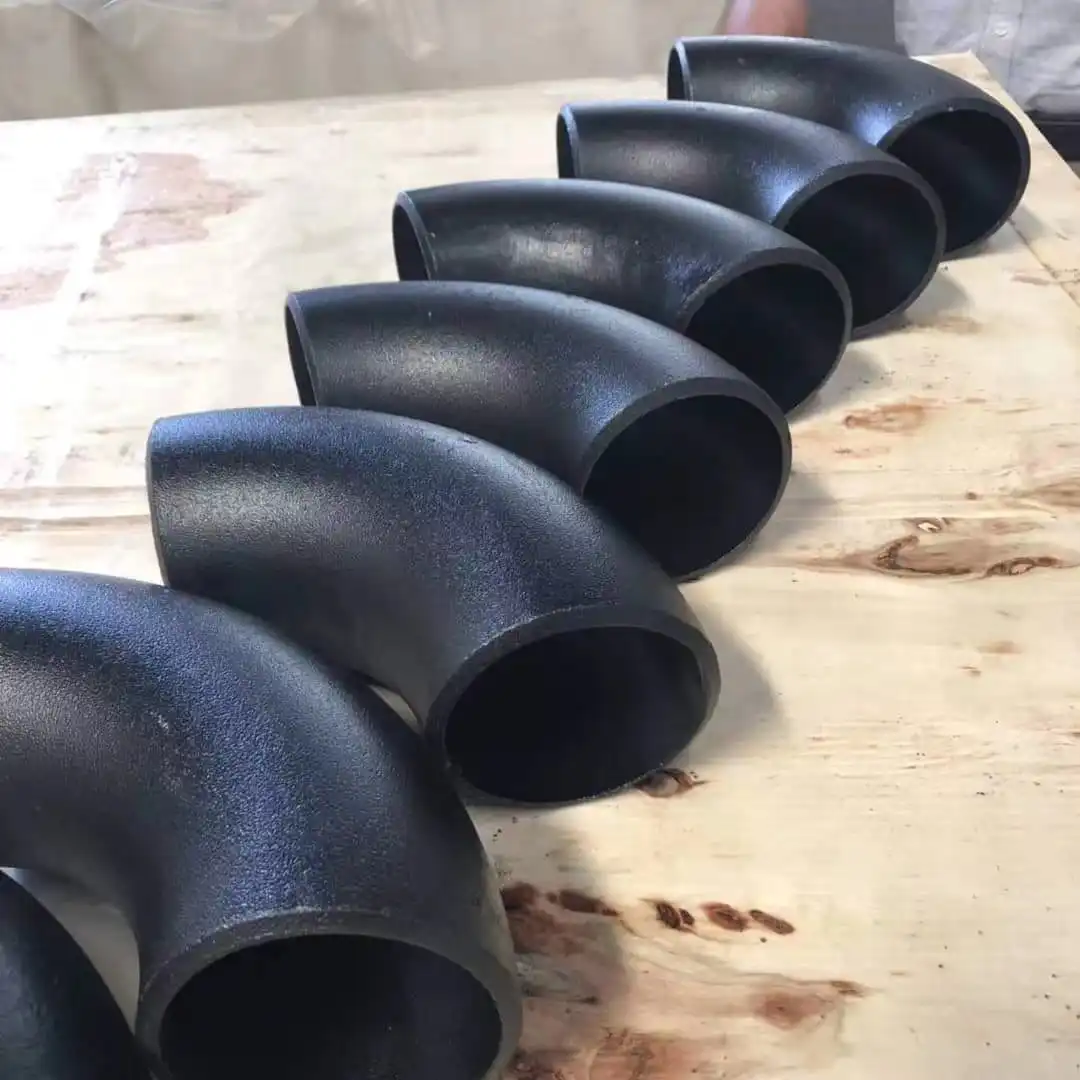
The 90° elbow is one of the most common connectors used in industrial pipes, allowing the pipeline to perform a right-angle bend without having to change direction along the path for a lengthy distance. This may be especially beneficial around pumps, tanks, vessels, heat exchangers, structural supports and other equipment when installation space is at a premium.
The radius is very important for the performance of a 90-degree elbow. Long radius elbows often give a smoother flow channel than the short radius arrangement. The proper configuration depends on the application and the relevant piping standard. When selecting a radius and elbow shape, the engineers may be particularly concerned with pressure loss, erosion potential, vibration and noise in high-flow systems.
90° elbows are readily accessible in varied sizes, wall thicknesses, materials and connection arrangements. Hence, it may be used in many industrial pipe systems. Their frequent usage should not be taken as a presumption that every right-angle bend should automatically be made with a 90° elbow. However, the most appropriate method still depends on layout limitations and operational circumstances.
180° Elbows for Return Flow Arrangements
In good applications, the flow channel may be reversed by using a 180° elbow (sometimes called a return bend) to achieve a U-shaped routeing configuration. This arrangement is notably applicable for heat exchangers, boiler-related pipes and tube assemblies when several flow channels need to be installed in a restricted area.
Designing a 180° elbow is not just a matter of making a greater angle. The bend radius, pipe size, forming process, wall thickness distribution and connection geometry all may affect the fitting as suited for the intended service. Designers should additionally examine the interaction of the return arrangement with thermal expansion and mechanical stresses in systems with repetitive thermal cycling.
A 180° layout may lead to a small installation, but compactness is not the only benefit. The major rationale for employing this sort of fitting is often to provide a regulated return channel within the overall pipe or equipment configuration.
Where Different Elbow Angles Are Used in Industry?
Oil, Gas, and Petrochemical Processing
There are large networks for the transfer of crude oil, refined products, natural gas, water, steam, and process chemicals at oil and gas plants. Such systems generally include vessels, pumps, compressors, storage equipment, and processing units at different altitudes and orientations, which means that directional fittings are required to link the various portions of the pipeline.
Often a 90° elbow is considered if the pipe must curve around equipment or change elevation in a rather tight layout. A 45° elbow may be the choice if the layout lends itself to a more gradual directional change or where two fittings may be employed to provide a certain routing angle. 180° returns are utilized in heat-transfer and process equipment when the pipe or tubing must change direction in a confined location.
Selection of materials is very essential when choosing carbon steel elbows for these circumstances. Carbon steel may offer good mechanical strength and economy for many applications, but the grade of material must be selected to fit the operating temperature, pressure, and fluid condition. Where corrosive duty is predicted, extra material, a liner, a coating, or corrosion control needs may need to be addressed.
Power Generation and Steam Systems
Interconnected piping systems are used in power plants to carry feedwater, steam, condensate, cooling water, and other process fluids. The dimensions and material requirements of elbows are especially essential due to the capacity of these systems to work under severe conditions of pressure and temperature.
90° elbows are typically utilized when steam or water lines must change direction around equipment and structural components. In cases when a gentler directional change is desired, the plan may include 45° elbows. Return bends are also used in heat-transfer equipment when tubes or flow tunnels have to change direction.
For these applications, the elbow should be considered as part of the overall pressure containment system. Fitting appropriateness is affected by wall thickness, material grade, temperature capabilities, welding requirements, inspection methods, and relevant standards. An inappropriate pressure or temperature rating, even if the angle is right, would not make for a viable engineering option in a fitting.
Water Treatment and Industrial Water Systems
Water treatment plants include pipelines for raw water, processed water, wastewater, chemicals, backwash systems, and utility services. In pump stations and treatment units, 90° elbows may facilitate connections if equipment is placed at right angles to the main pipeline. In larger water lines, 45° fittings may be used if the layout enables a more gradual change in direction.
Corrosion protection is a particular concern in water applications. Carbon steel may be effectively utilized in suitable services, but exposure to moisture, oxygen, chemicals, or treated water can affect its service life. Coatings, linings, corrosion allowances, or other protective measures may consequently be necessary depending on the application.
The choices should also consider access for maintenance. Even if an elbow will physically fit in a tight area, it may nevertheless lead to problems if it makes inspection, valve access, or future replacement more complex. Good pipe design, consequently, takes into account both the initial installation and the long-term maintenance of the system.
What Should Engineers Consider Before Selecting an Elbow?
Installation Space and Routing Requirements
Space is one of the first practical factors in the choice of elbow angle. A 90° elbow is used to make a straight change in direction when two lines of pipe must meet at a right angle, as in compact equipment layouts. A 45° elbow offers additional flexibility in routing when a smooth transition is desired or when the pipeline has to skirt a barrier without a sharp bend.
But the actual size of the fitting is as important as the nominal angle. The long radius variant may need more room for installation than the short radius version; however, the shape may be preferred in systems where flow behavior and pressure loss are crucial. Engineers must consequently consider the center-to-end dimensions and overall envelope of the elbow during the planning stage.
Flow Rate, Velocity, and Pressure Loss
Physical routing needs should be considered along with fluid behavior. The extent of the local pressure loss due to a change in direction relies on the fitting geometry and the operating circumstances. Pressure drop that results is influenced by the diameter of the pipe, rate of flow, density of the fluid, viscosity, and velocity.
Engineers may want to consider a comparison of various carbon steel elbows with different radii and designs for high-flow applications to determine an appropriate compromise between installation requirements and hydraulic performance. A 45° elbow may give a less abrupt change of direction, while a long-radius 90° elbow may be a reasonable compromise when a complete right-angle turn is needed.
Where erosion is a problem in service, velocity and fluid composition have considerable significance. The presence of solid particles transported by the fluid during changes of direction may enhance wear, and the local flow pattern around an elbow may affect the location of wear. Material selection and elbow geometry should be examined jointly, not only the fitting angle as a standalone feature.
Pressure, Temperature, and Material Grade
When selecting a carbon steel elbow, operating pressure and temperature are important considerations. The fitting should have enough pressure containment capacity for the intended service. The material qualities of the fitting shall be acceptable for the operating temperature range.
Not all carbon steels have the same mechanical or thermal properties, and material quality is also something to consider. Before buying, engineers should check the needed material specification with the applicable pipe code or component standard. The appropriate wall thickness should also be determined by the design circumstances and not only chosen because it is commercially accessible.
Thermal expansion is of interest in systems with large temperature variations. The elbow is integrated into the overall pipe design and may therefore impact the distribution of heat movement within the system. Depending on the application, proper supports, guides, anchors, flexible sections, and routing arrangements may be necessary.
Why Carbon Steel Elbows Remain Widely Used?
A Practical Balance of Strength and Cost
Carbon steel is widely used in industrial piping because it provides a practical combination of mechanical strength, availability, manufacturability, and cost. For many non-corrosive or appropriately protected services, it can meet the performance requirements without the higher material cost associated with some specialty alloys.
This balance is particularly useful in large piping projects where many fittings are required. Standardized carbon steel elbows can simplify procurement and help maintain consistency across a piping system, provided that the selected material grade and dimensions meet the project specification.
Flexibility in Industrial Piping Design
The availability of 45°, 90°, and 180° configurations gives designers several ways to develop practical routing arrangements. Instead of forcing the entire pipeline into a rigid geometric pattern, engineers can use different elbow configurations to work around equipment, platforms, structural supports, and other services.
This flexibility becomes increasingly valuable in retrofit projects. Existing facilities often have limited installation space, and a new pipeline may need to connect to equipment without interfering with existing systems. Combining different elbow angles can help create a workable route while keeping the number of unnecessary changes in direction under control.
Durability When Properly Specified
The durability of a carbon steel elbow depends on more than the material name. Wall thickness, material grade, manufacturing quality, operating conditions, corrosion environment, installation quality, and maintenance practices all influence service life.
A properly specified elbow can withstand the mechanical demands associated with many industrial piping applications. Nevertheless, designers should not assume that carbon steel is inherently resistant to every service environment. Corrosive fluids, external moisture, high temperatures, cyclic loading, and abrasive particles can all affect performance. Selecting the correct material and protective measures is therefore essential.
Manufacturing and Quality Factors That Affect Elbow Performance
Dimensional Accuracy and Wall Thickness
For carbon steel elbows to integrate properly into a piping system, their dimensions need to match the design requirements. Important characteristics include nominal size, outside diameter, center-to-end dimensions, wall thickness, end preparation, and overall geometry.
During forming, maintaining appropriate wall-thickness distribution is particularly important because bending can change the thickness around different areas of the fitting. Quality control should therefore verify critical dimensions after manufacturing rather than relying only on the original material specification.
Surface Condition and Inspection
Surface quality can provide useful information about the condition of the fitting. Visible cracks, excessive forming marks, dents, corrosion, or other unacceptable defects should be identified during inspection. Depending on the application and project requirements, additional inspection or non-destructive examination may also be specified.
For safety-critical or high-pressure systems, buyers should establish inspection requirements before production begins. Clear documentation can include material certificates, dimensional inspection records, test reports, and other quality documents required by the project.
Matching the Fitting to the Piping Standard
A technically suitable elbow still needs to match the requirements of the piping system. Buyers should verify the applicable dimensional and material standards, connection type, pressure class where relevant, radius, and end configuration before placing an order.
Providing the supplier with complete technical information reduces the risk of receiving a fitting that has the correct nominal angle but does not match the rest of the piping system. For customized projects, it is also useful to confirm drawings and inspection requirements before manufacturing starts.
Conclusion
A clear understanding of 45°, 90°, and 180° carbon steel elbows helps engineers develop piping systems that balance routing flexibility, hydraulic performance, installation requirements, and long-term service conditions. Each angle serves a different purpose, and the most appropriate choice depends on the complete system rather than on the elbow angle alone.
45° elbows can support gradual directional changes and flexible routing, while 90° elbows provide a practical solution for compact right-angle connections. 180° return bends are more specialized and are useful when a piping or tube arrangement requires the flow to reverse direction. Beyond these basic differences, factors such as radius, material grade, wall thickness, pressure, temperature, corrosion environment, and applicable standards should be considered before an elbow is specified.
For industrial projects, a well-selected fitting is one that works as part of the entire piping system rather than simply meeting a dimensional requirement. By evaluating operating conditions, layout constraints, manufacturing quality, and documentation requirements together, engineers and buyers can make more informed decisions and obtain carbon steel elbows that are properly matched to the demands of their applications.
We provide high-quality carbon steel elbows and pipe components; if you have any queries, please contact us at oudi-04@oudiguandao.com. Feel free to contact our knowledgeable team with any questions you may have about industrial pipes.
References
1. Smith, J. A. (2019). Piping Systems Engineering: Design and Applications. Industrial Press.
2. Johnson, R. B. (2020). Carbon Steel Fittings in Modern Industrial Applications. Journal of Piping Technology, 45(3), 78-92.
3. Thompson, L. M. (2018). Fluid Dynamics in Industrial Piping Systems. Springer.
4. Wilson, E. C. (2021). Material Selection for Process Piping: A Comprehensive Guide. Chemical Engineering, 128(5), 45-53.
5. Anderson, K. P., & Davis, R. T. (2017). Optimizing Flow Efficiency in Industrial Piping Networks. International Journal of Fluid Mechanics, 22(2), 112-126.
6. Brown, S. L. (2022). Advances in Carbon Steel Elbow Design for High-Pressure Applications. Proceedings of the International Conference on Piping Engineering, 156-170.

Need help finding the right solution with our experts. Please contact us.

SINCE 1998 Your Reliable Pipeline Manufacturer



