Welding Procedures for ASTM A234 WPB Carbon Steel Fittings

To get the best results when welding ASTM A234 WPB Carbon Steel Fittings in an industrial setting, you need to know a lot about technology and follow the steps very carefully. ASTM A234 guidelines say that these carbon steel parts must be welded in a certain way that takes into account the makeup of the material, how it reacts to heat, and the situation in which it will be used. To weld correctly, you need to prepare before the weld, control the heat, pick the right tools, and check the work after the weld. Taking these steps makes sure that the structure stays strong and that the parts always work in tough industrial settings.

Introduction to ASTM A234 WPB Carbon Steel Fittings and Welding Essentials
In the oil and gas, chemical processing, and power generation industries, pressure pipe systems use a lot of carbon steel fittings. The ASTM A234 WPB standard spells out specific requirements for high-quality carbon steel fittings. For example, the standard says that the manganese content should be between 0.29 and 1.06%, and the carbon content should not be more than 0.30%. Being able to weld and having good mechanical properties are always the same.
Chemical Composition and Material Properties
It's important to know that WPB valves have a minimum tensile strength of 485 MPa (70 ksi) and yield strengths that make sure they work properly at normal working pressures. The material is made up of silicon that is up to 0.35% and sulfur and phosphorus that are both less than 0.035%. This makes it easier to join and less likely that it will break when hot.
Common Fitting Types and Applications
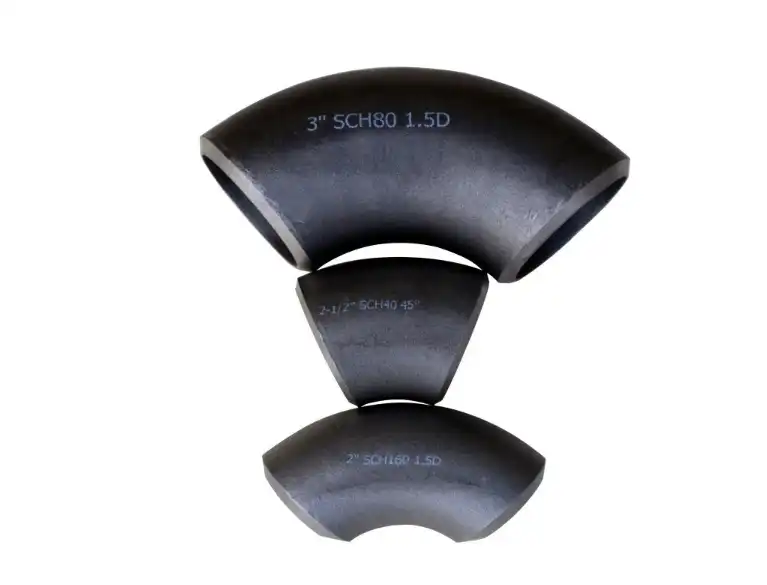
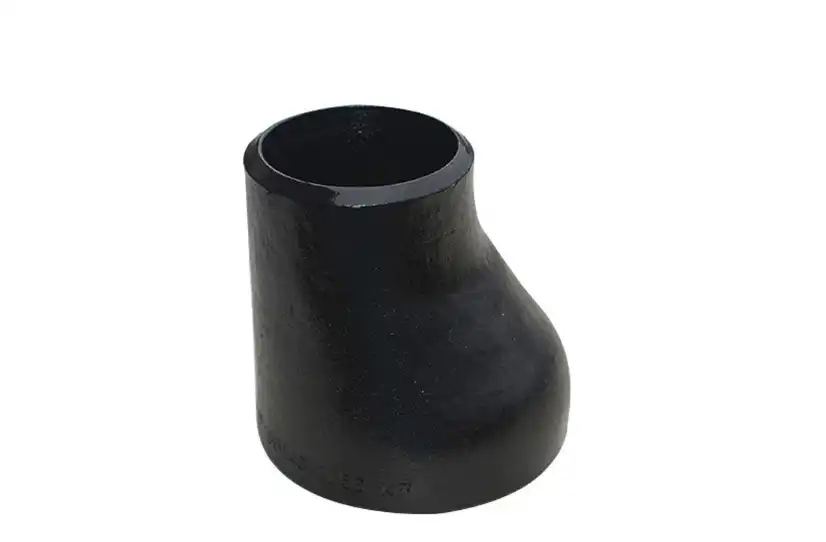
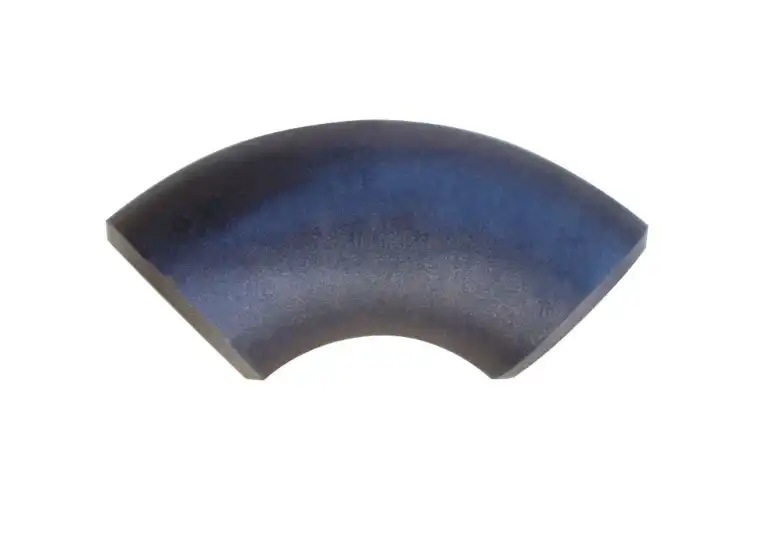
The standard covers many kinds of fittings, such as caps, tees, elbows, and reducers. All of these must be made to exact measures. For complicated pipe systems, these fittings are very important because they let you change the flow direction, where the flow goes, and where the system ends, all while keeping the pressure stable during operation cycles. Procurement professionals can set realistic goals for quality and performance if they know how the features of the material affect the welding needs. It helps people make smart decisions about which sources to work with, how to check, and what standards should be met before welded parts can be used in mission-critical scenarios.
Key Considerations in Welding ASTM A234 WPB Carbon Steel Fittings
There is a lot you need to know about the material, like its tensile strength, yield strength, and temperature expansion factors, to set the right welding settings for ASTM A234 WPB fittings. This number, which is usually between 0.40 and 0.43%, tells you how hot to heat the metal and how fast it cools down while you're welding.
Pre-Welding Preparation Requirements
It's important to clean the surface well before welding to get rid of mill scale, rust, oil, and other things that could hurt the joint. Controlling the warming temperature, which for larger parts is generally kept between 65°C and 150°F (65°C to 95°C), lowers the chance of thermal stress and damage caused by hydrogen. To get the right entry and fusion, the root opening and bevel angles must be followed during joint preparation.
Welding Process Selection and Compatibility
It has been shown that three main types of welding work well with WPB fittings:
- Shielded metal arc welding (SMAW) is very useful in the field when E7018 electrodes are used. These electrodes have a low hydrogen level and good dynamic properties. With stable lines and consistent entry, this method always gives correct results in a variety of conditions.
- Gas Tungsten Arc Welding (GTAW) lets you have a lot of control over root pass jobs. This is very helpful when there is an important service problem that needs an X-ray. It's possible to fine-tune the amount of heat used, and the welded metal is smoother, but it might not be as useful as other ways.
- Gas Metal Arc Welding, or GMAW, is a way to make a lot of things quickly and evenly. ER70S-6 filler metals are used because they fit the properties of the base material and make an arc that is smooth with little spatter.
The process that is chosen depends on what the application needs, how easy it is to use, and how fast it needs to work. Each method has its own benefits when used properly, within the limits that have been set and the skill level of the user.
Step-by-Step Welding Procedure for ASTM A234 WPB Fittings
Before welding on carbon steel parts, they need to go through full pre-welding inspections to make sure the sizes are right, the material is approved, and the surface is in good enough shape. The parameters are controlled properly by checking the tools, and the choice of products is based on the specifications of the base material and the service's needs.
Pre-Welding Inspection and Setup
There is a first check where the outside diameter, wall thickness, and bevel angle of the fitting are compared to the right standards. Material tracking papers show that the grade is met, and a visual check shows that the surface has flaws that need to be fixed before welding can start. Part of getting tools ready is making sure that the amperage is correct, that gas flows properly for secured processes, and that the electrode or wire meets the requirements. The right gap sizes and alignment limits are set by joint fit-up methods. If needed, a backing ring is installed to make sure that the roots are constantly strengthened.
Welding Execution Protocol
It's important to pay close attention to the entry depth and profile precision during a root pass. Most of the time, 90 to 130 amperes are used for SMAW uses with 3/32" E7018 electrodes, and the travel speed stays between 8 and 12 inches per minute, depending on the joint design and position needs. Fill pass methods build on the root pass by adding layers in an organized way that keeps the temperature below 205°C (400°F) between passes. Each pass is cleaned well to get rid of slag and rust before the next layer is put on. This makes sure that the fusion between passes is perfect. Controlling the amount of energy that goes into a process stops too much grain growth and keeps the mechanical qualities that are wanted. Most of the time, numbers between 25 and 40 kJ/inch are fine, but for some projects, tighter control limits may be needed.
Post-Weld Treatment and Inspection
Post-weld heat treatment might be needed for some tasks. To do this, the part is typically put through stress release cycles at 1150°F (620°C) for set amounts of time. Visual inspection, liquid penetrant inspection, and radiographic or ultrasound examination, as needed by the rules, are all examples of non-destructive testing methods. Problems like porosity, incomplete fusion, and cracking can be fixed with organized methods for assessment and repair. Documentation rules make sure that everything can be found and that quality control methods are used.
Comparison and Procurement Insights for ASTM A234 WPB Fittings
It's helpful for people who buy things from other stores to know how ASTM A234 WPB is different from standards such as A105 forged carbon steel and A420 low temperature service materials. WPB valves, for instance, are easier to weld than A105 parts and can handle a wider range of temperatures than carbon steel options.
Critical Procurement Criteria
For certification, you need things like material test results, certificates for dimensional checking, and proof that the quality of the manufacturing process meets the standards. When looking at different suppliers, it is important to make sure that they have the right ISO 9001 certification, licenses to make special tools, and documented welding process qualifications for the job. ASTM A234 WPB fittings must include steps for inspecting materials as they come in, checks for the production process, and tests that need to be done on the end product. Most of the time, suppliers with more advanced production tools, like automated welding systems and full NDT facilities, offer more stability and trustworthiness than traditional manufacturing operations.
Strategic Purchasing Considerations
The minimum order number optimization makes sure that there is enough safety stock for important maintenance jobs and that inventory costs are balanced with the benefits of volume pricing. Long-term supply deals often offer stable prices and first choice when the market is tight, which is very helpful for large projects. When you buy a lot of something, you should think about how long it will last, how much room you need, and how quickly you need to finish the job. When you work with a good supplier, you can get professional help, faster delivery choices, and ways to solve problems together that improve the general efficiency of your operations and procurement.
Company Introduction and ASTM A234 WPB Fittings Offering
Since 1998, Cangzhou Oudi Pipe Manufacture Co., Ltd. has been one of the best places to get carbon steel pipe fittings. They work out of a 66,600-square-meter, state-of-the-art building in Mengcun Hui Autonomous County. It's easy for us to get to Tianjin Port, and we're close to major transportation networks, which helps us help customers all over the world with their shipping needs.
Manufacturing Capabilities and Certifications
From 1/2" to 72", we can make all different types of ASTM A234 WPB fittings, such as elbows, tees, reducers, and caps. We can make up to 16,000 tons of these parts every year because we have high-tech tools for making them and strict quality control systems that make sure they are all of high quality. The company has permits from the People's Republic of China to make special tools and is certified by ISO 9001:2000 as a quality management system. As part of our quality assurance processes, we have full checking systems in place from the time we receive raw materials until we give finished goods. These are backed up by the ability to do non-destructive testing that goes above and beyond what is needed by industry standards.
Technical Support and Custom Solutions
When customers need help with certain welding processes, our engineering team makes qualified welding procedure specs (WPS) and procedure qualification records (PQR) just for them. They can get the best results from welding while still following all the rules and codes because they know these things. Because our production methods are flexible and we have committed project management support, we can make custom-fitting solutions that meet specific size needs, different material grades, and quick delivery times. We've sold to more than 300 customers in over 40 countries, which shows that we can meet the wants and high standards of people from everywhere.
Conclusion
Are you ready to make your pipe system more reliable with high-quality ASTM A234 WPB fittings? Oudi has the best carbon steel fittings, as well as full expert help and tried-and-true welding methods that make sure they work perfectly in tough situations. Our certified production methods, big inventory, and ability to ship goods all over the world make it possible for projects to go smoothly. Send an email to oudi-04@oudiguandao.com to talk to our technology team about your needs and get full instructions on how to weld. As a reputable ASTM A234 WPB fittings maker, we can offer you low prices for large orders while still upholding the highest quality standards. This will help you reach your goals for operational excellence.
FAQ
What preheat temperature is required for welding ASTM A234 WPB fittings?
The temperature should be between 150°F and 200°F (65°C and 95°C) for pieces that are more than 1 inch thick. Thinner pieces might not need to be heated up unless the temperature outside drops below 32°F (0°C). As long as the interpass temperature stays below 400°F (205°C), the microstructure won't change in bad ways.
Which welding electrodes provide optimal results with WPB fittings?
When used in SMAW, E7018 low-hydrogen electrodes have better dynamic qualities and are less likely to crack. For GTAW processes, ER70S-6 filler metals fit the chemistry of the base material and give great arc properties. Electrodes that are stored in hot ovens stay dry, which is important for good welding results.
How can I verify supplier certification and quality credentials?
Suppliers you can trust will give you material test papers, paperwork for ISO certification, and proof of your production license if you ask. Checking customer references, auditing the quality management system, and being able to look at your facility are all signs that the provider is dedicated to delivering consistent quality and following best practices for ongoing growth.
What inspection methods are required after welding WPB fittings?
The main way is to look at it, and liquid penetrant testing is used to find flaws on the surface. For important jobs, X-rays or ultrasounds may be needed, and hydraulic testing makes sure the structure can handle pressure. The inspection acceptance factors are in line with the appropriate code standards and the project's requirements.
Can ASTM A234 WPB fittings be welded to different carbon steel grades?
Most types of carbon steel pipe, like A106 Grade B and A53 Grade B pipe, work well with WPB fittings. If there are big chemistry differences, the welding process should take them into account. The choice of filling metal makes sure that the strengths of the different materials are matched correctly.
References
1. American Society for Testing and Materials. "Standard Specification for Piping Fittings of Wrought Carbon Steel and Alloy Steel for Moderate and High Temperature Service." ASTM A234/A234M-19, West Conshohocken, PA, 2019.
2. American Welding Society. "Structural Welding Code - Steel." AWS D1.1/D1.1M:2020, Miami, FL, 2020.
3. American Society of Mechanical Engineers. "Process Piping." ASME B31.3-2018, New York, NY, 2018.
4. Linnert, G.E. "Welding Metallurgy: Carbon and Alloy Steels, Volume 1." 4th Edition, American Welding Society, Miami, FL, 1994.
5. Bower, John R. "Pipeline Welding Procedures." Industrial Press Inc., New York, NY, 2017.
6. International Institute of Welding. "Welding and Allied Processes - Guidelines for Personnel Requirements for the Specification and Qualification of Steel Welding Procedures for Metallic Materials." ISO 15614-1:2017, Geneva, Switzerland, 2017.

Need help finding the right solution with our experts. Please contact us.

SINCE 1998 Your Reliable Pipeline Manufacturer