What are the types of Carbon Steel Tee?
According to its unique T-shape, a CS pipe tee is an important branch link fitting in industrial pipe systems. It has three openings for fluid or gas flow. There are different kinds of these parts, and each one is used for a different purpose. There are two main types: Equal Tees and Reducing Tees. Equal tees have three holes that are all the same size, while reducing shirts have one smaller branch outlet to fit pipes of different sizes. Other types include butt-welded, threaded, and socket-welded versions, which all have different ways of being installed. The types of construction—seamless and welded—also make these parts different, which affects how much pressure they can handle and how much they cost in a wide range of industry settings.
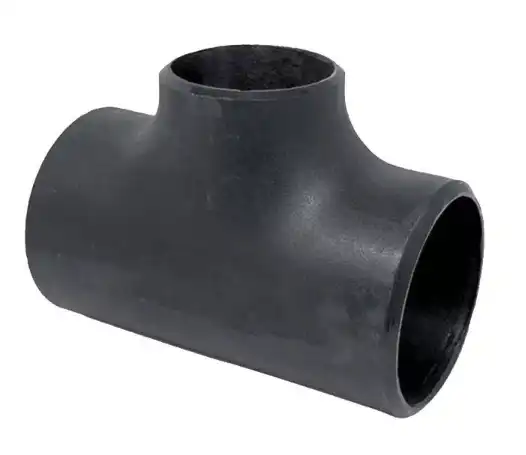
Understanding Carbon Steel Tee and Its Key Specifications
Carbon steel pipe tees are important parts of complicated pipe networks in many different industries. These CS pipe tee links make it easy to change directions and join different lines, so systems can easily split or combine fluid streams. The strength of their structures comes from carefully choosing carbon steel types that are strong enough to hold up under stress while also being easy to work with and affordable.
Material Grades That Define Performance
ASTM A234 WPB is the standard for wrought carbon steel parts used in moderate and high-temperature service and is the material grade that is most often asked for. The weldability of this grade is good, and it works reliably in pressure systems that go up to 400°F. ASTM A105 is another standard that is widely used. It is usually used for forged carbon steel parts that need better mechanical properties. These choices of materials have a direct effect on how well parts work under stress, how well they hold up against changes in temperature, and how long they last in corrosive settings. When considering material grades, procurement teams should think about the required working temperatures, pressures, and the chemical makeup of the media being carried to make sure they are compatible with the needs of the system.
Dimensional Standards and International Compliance
When describing carbon steel tees, exact measurements are still very important. Some important measures are nominal pipe size (NPS), which tells you the width of the pipes that link them, wall thickness, which is broken down by schedule numbers (Schedule 40, 80, 160), and center-to-end dimensions, which tell you how much space you need. Tolerances for making butt-welded parts are set by international standards like ASME B16.9. European standards are set by DIN 2615, and global standards are set by ISO 5252. These standards make sure that parts from different makers and places can be used together. Once engineers understand these dimensional frames, they can choose fittings that work well with current infrastructure and meet the rules in different places. To avoid expensive changes in the field, the specification process should take into account things like thermal expansion, pressure levels, and the amount of room available for fitting.
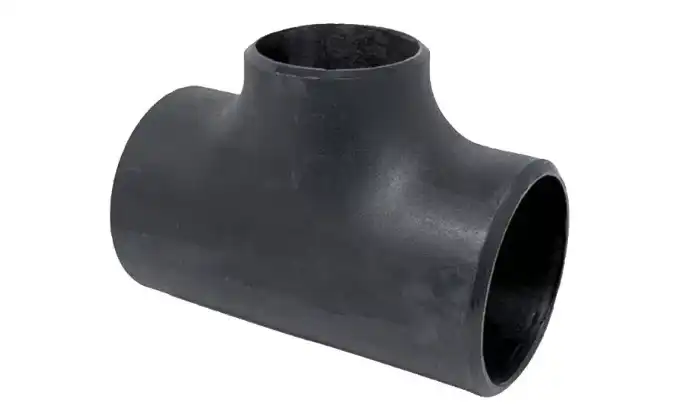
Types of Carbon Steel Pipe Tee — Classification and Features
Although CS Pipe Tee products are grouped into more than one category, this is because industrial plumbing systems have a lot of different needs. Each type has different construction methods, pressure needs, and flow traits that affect how well the system works as a whole.
Butt Welded Tees for High-Pressure Applications
Because they are more structurally stable, butt-welded tees are the most common type used in high-pressure and important service situations. Welding makes a strong metal link between the fitting and the pipe next to it, so there are no possible leak lines like there are with mechanical connections. The ends of these parts are beveled to make it easier to prepare the weld properly. This makes sure that the welds are fully penetrated and meet strict testing standards. Butt-welded setups are great for systems that work above 600 psi or handle dangerous fluids because they don't have any threads or socket recesses. This means that stress concentration places are lower. Hot forming methods that keep the grain structure and mechanical qualities are often used in manufacturing processes. While qualified welders and radiographic tests are needed for installation, the long-term dependability makes the original investment worth it in harsh settings like petrochemical plants and power plants.
Threaded and Socket Welded Options for Flexibility
Threaded tees are much easier to put in systems that need to be taken apart often or that are working at lower pressures. The internal threads meet NPT (National Pipe Thread) standards, which means they can be installed with normal tools and don't need any special welding equipment. This way of connecting is especially useful in situations that need a lot of upkeep or where hot work restrictions make welding impossible. Socket-welded tees are a middle ground. They have deep holes that can hold pipe ends for fillet welding. When compared to butt welding, this style makes alignment easier during installation and needs less skilled labor. The socket design works well with pipes with a diameter of less than 2 inches because the depth of the socket gives enough support. Both types of connections have specific uses in industrial piping, matching how quickly they can be installed with the limits of pressure and the need for long-term upkeep.
Equal Versus Reducing T's for Flow Management
Equal tees make sure that all three holes are the same size, so the flow is the same throughout the branch link. This setup works well in situations where minimizing pressure drop is important or where changes to the system in the future might need to redistribute flow. Reducing tees have a smaller branch exit that lets you join lines with less capacity without having to buy separate reducer fittings. The change in size happens inside the tee body, which brings parts together and lowers the number of possible leak places. The choice between these designs is based on hydraulic estimates that look at flow rates, pressure losses, and the needs of equipment further downstream. Reducing tees saves money because they get rid of the need for extra fittings and welds. However, engineers must make sure that the flow change doesn't cause problems with turbulence or erosion. For proper design, you need to know how the system works and what kinds of future expansions might change the way flows are distributed.
Seamless Versus Welded Construction Methods
Seamless tees are made from solid bar stock by hot piercing and forming, which gets rid of the need for lengthwise weld joints. This way of making things makes parts with uniform wall thickness and isotropic material qualities that can handle higher pressure values and harsher cyclic loading. Since there are no weld gaps, there is no possible failure plane. This is why seamless construction is better for high temperatures and important services. Welded tees, which are made by shaping and connecting steel plates together, are cheaper and work well in less demanding situations. Modern welding methods and heat treatment after welding make parts that are solid and meet most industry needs at much lower costs. The decision between seamless and welded construction is based on how much risk is acceptable, how well the performance needs to be met, and how much money is available. For high-stakes systems, seamless standards are usually the best choice, while welded options are reliable enough for everyday use.
Comparing Carbon Steel Tee With Other Pipe Fittings
Knowing how CS Pipe Tee components stack up against other materials and shapes helps procurement workers get the best deal on both short-term prices and long-term value. Each type of material has its own benefits that are best for a certain set of working conditions and budgets.
Carbon Steel Versus Stainless Steel Material Selection
For the most part, both materials do similar things, but their efficiency is very different. When corrosive media are not present or are managed by protective coats and cathodic protection systems, carbon steel tees are the most cost-effective choice. While stainless steel options are much more expensive, they don't rust, so you don't have to keep coating them. This also means they last longer in chemically aggressive settings. Stainless steel's chromium makeup makes a passive oxide layer that fixes itself when it gets broken. This gives it security that carbon steel can't match without outside help. Stainless materials are usually worth the extra cost in fields that work with acids or chlorides or in marine settings. Carbon steel is still the most cost-effective choice for oil and gas pipes, water distribution systems, and steam services where corrosion rates can be kept under control with standard security methods. Total cost of ownership estimates should be used to make an important choice. These should include coating upkeep, inspection regularity, and replacement intervals over the expected system lifespan.
Functional Differences Between Tees and Elbows
Both fits change the direction of flow, but they have very different main functions. Tees make branch links that split or join flow streams, which allows distribution networks and process stream mixing to happen. Elbows just change the flow direction by changing the angle without adding branch points. They do this to meet the needs of changing directions that are limited by space or equipment orientation. Both types of fittings are usually used together in a piping system. Elbows help the system get around obstacles and change elevations, while tees set up distribution places and link nodes. Trying to use one instead of the other causes problems with how things work. For example, using tees where elbows will do adds extra connection points and raises the pressure drop, and elbows can't meet branching needs. The right way to build a system makes sure that each type of fitting does its job, which improves hydraulic performance and cuts down on the number of parts needed.
Forged Tees for Enhanced Structural Properties
Forged pipe tees are deformed mechanically by compressive forces that smooth out the grain structure and get rid of the hollow spaces inside that are present in cast alternatives. Fittings made with this method have better mechanical qualities, such as higher tensile strength, better impact resistance, and better wear performance. Forging also lets you precisely control the dimensions and finish the surface, which makes the next steps easier. Because of these better qualities, forged standards are acceptable in high-pressure situations, shock-loading situations, and low-temperature situations where material hardness is important. Standard tees made from carbon steel that are formed and welded meet most industry needs and are less expensive. The choice to use forged parts is based on performance requirements that can't be met with normal manufacturing methods. Forged parts are usually 30% to 100% more expensive than standard fittings, so they are more of a focused answer than a standard requirement.
Procurement Guide — How to Choose, Source, and Purchase Carbon Steel Tee?
For buying CS Pipe Tee components, you need to pay attention to technical requirements, seller standards, and logistical issues that affect the overall success of the project. Because global supply lines are so complicated, they need systematic evaluation standards that balance managing costs with making sure quality is maintained.
Essential Selection Criteria for Industrial Applications
The main decision factor is the pressure number, which is found by figuring out the highest working pressure that can be applied based on the material grade, wall thickness, and operating temperature. Engineers have to think about pressure spikes and temperature changes that happen quickly and are above normal working conditions. The quality of the material should match the situations it will be used in. For example, ASTM A234 WPB is good for general uses, while higher grades are better for high temperatures or needs for more strength. Choosing the right connection type balances installation options with performance needs. Butt-welded fittings are best for permanent installations in important services, while threaded choices give you more options for systems that need a lot of maintenance. To make sure the pipes fit correctly and to avoid having to make changes in the field, the dimensional requirements must match the current plumbing schedules and connection standards. Documentation needs, like material test records and dimensional inspection certificates, make sure that the product meets the standards and can be tracked for quality control.
Supplier Evaluation and Certification Verification
Manufacturers with a good reputation keep their ISO 9001 license, which shows that they use systematic quality management practices to make sure that the standard of their products stays high. Special equipment manufacturing licenses show that you have been permitted by the government to make safety-approved parts that are under pressure. Suppliers that work with foreign customers should show that they know how to use a number of different standards systems, such as ASME, DIN, JIS, and BS, so they can make fittings that meet the needs of a wide range of projects. When a big project needs thousands of parts, production capacity becomes very important. Suppliers who don't have enough capacity face delivery delays that throw off building plans. Destructive testing, measurement verification, and non-destructive examination are some of the inspection methods that can be used to make sure that goods meet specifications before they are shipped. Suppliers with a lot of experience offer expert support throughout the whole procurement process. They can help clarify specifications and offer alternatives when standard goods can't meet special needs.
Pricing Strategies and Bulk Ordering Advantages
The price of a carbon steel tee changes based on the cost of the raw materials, how hard it is to make, and how many are ordered. Base prices reflect the market for steel as a whole, with extra fees for unique materials, non-standard sizes, or faster delivery. When you order in bulk, you can usually get discounts of 15 to 30 percent because makers can improve production runs and lower the cost of handling each unit. Prices are locked in and supplies are guaranteed by annual supply deals. This protects projects from changes in the market and lets suppliers plan their capacity based on expected demand. Online distributors make things easier and offer a wide range of products, but they might not offer expert help or the ability to make changes. Local sellers can deliver quickly and offer personalized service, but they may charge more and have less stock. International buying from production hubs can cut costs by a lot, but it can also cause wait times to grow, shipping to become more complicated, and communication problems. The best way to buy things is usually to use more than one source. For example, you could form ties with main suppliers for your standard needs and keep in touch with specialty providers for your unique needs.
Logistics and Customization Considerations
Lead times for normal carbon steel tees are usually between 4 and 8 weeks, but can be longer or shorter based on the supplier's stock and the schedule for production. Custom specs that call for non-standard sizes or materials push back delivery by 10 to 16 weeks while makers buy materials and set up production equipment. Shipping goods across international borders can take longer, require more steps to clear customs, and may be subject to import taxes that increase the total cost of landing. When it comes to fittings, packing is important because the right protection keeps them from getting damaged during shipping, but too much packaging makes big orders more expensive to ship. Just-in-time delivery methods cut down on the amount of storage that needs to be done on-site, but they require exact coordination between when suppliers ship goods and when building starts. Many providers offer services that add value, such as beveling, coating application, and testing. These services help to streamline the supply chain and lower the need for field work. Global customers benefit from providers who have exported before and know what paperwork is needed, how to load containers most efficiently, and the rules for international shipping that make it easy to do business across borders.
Installation, Welding, and Maintenance Best Practices for CS Pipe Tee
Correct CS pipe tee fitting methods and regular repair schedules have a direct effect on how well carbon steel pipe tees work and how long they last. To keep the integrity of the system throughout the design lifetime, these practices must be in line with industry norms and manufacturer suggestions.
Approved Welding Procedures and Quality Control
Before starting the welding process, the butt welding needs to be prepared by cleaning, beveling, and aligning. Welding methods must follow ASME Section IX or similar rules that say what kinds of filling materials are okay, how much heat to use, and the order of the passes. For thick-wall fits or cold environments, preheating may be needed to stop hydrogen cracking and ensure proper fusion. Temperature control at the interpass keeps the metal's qualities and stops it from getting too hot, which could weaken it. After welding, using heat to ease residual stresses is important for heavy-wall uses and important services where stress corrosion cracking is a worry. Non-destructive testing, like radiography, ultrasonic examination, or magnetic particle inspection, checks the quality of the weld and finds flaws inside or on the surface that could affect its performance. Critical welds should only be done by experienced welders who have been certified by well-known programs. The project specs and relevant codes will determine how often and what kind of tests are needed.
Corrosion Protection and Maintenance Schedules
Because carbon steel is easily corroded, it needs to be protected in a way that fits its working surroundings. Coatings on the outside, like epoxy, polyurethane, or fusion-bonded systems, keep out wetness from the air and earth. Choosing a covering means thinking about the temperatures it will be used at, the UV light it will be exposed to, and the wear and tear it will have to handle. For underground or submerged pipes, cathodic protection through sacrificial anodes or impressed current devices keeps the pipes safe electrochemically. Chemical inhibitors, protected linings, or material upgrades may be used to stop internal rust when coating application is not an option. Based on the rate of rust found through coupon testing or ultrasonic thickness tracking, regular inspections should be set up. Maintenance plans include touch-ups for the coating, replacement of the anode, and system stability checks that find damage before it happens. By writing down what was found during inspections and repair tasks, we can make historical records that help reliability engineers figure out how long a system will last.
Troubleshooting Common Operational Issues
Most leaks at tee connections are caused by welds that don't go deep enough, gaskets that aren't installed correctly on flanged connections, or thread glue that doesn't work in threaded assemblies. Systematic leak detection during hydraulic testing finds issues before the system is put into service. Stress buildup around tees can lead to fatigue cracking in systems that are vibrating or changing temperatures. Using the right support spacing and expansion joint placement can lower these stresses. When fast-moving streams hit tee walls, especially where the branches meet, erosion happens. During planning, computational fluid dynamics analysis finds high-risk areas that need better materials or changes to the shape of the structure. If there is too much pressure drop through reducing tees, it could mean that the pipes are not the right size or that the flow regimes are changing. Field readings should be compared to hydraulic calculations to confirm performance. If these problems are fixed quickly, they won't get worse and cause system failures that need to be shut down quickly and cost a lot to fix.
Conclusion
Carbon steel tees remain an important part of many industrial pipe systems because they can be used in a variety of ways to join branches. Knowing the different kinds—from butt-welded to threaded, equal to reducing, and seamless to welded—helps buying workers match the features of fittings with the needs of specific operations. The effectiveness and lifecycle prices of a CS pipe tee are determined by its material grades, dimensional standards, and production methods. When making a choice, it's important to think about things like pressure levels, corrosion environments, and fitting ways that work with the needs of the project. Reliable supply chains are made by working with qualified sellers who keep their certifications, output capacity, and technical know-how up to date. Paying attention to the right way to weld, protect against rust, and do regular maintenance can make fittings last longer and systems more reliable, giving you value for a long time.
FAQ
What welding method works best for carbon steel tees?
Butt welding is the best way to connect carbon steel tees when they need to be strong and reliable in high-pressure or important situations. Full-penetration welds are made with this method, which gets rid of any possible leak routes. Socket welding is used for lines with a smaller diameter when alignment is more important than strength. Threaded connections work well with low-pressure devices that need to be taken apart every so often. The best way to weld a CS pipe tee relies on the pipe size, pressure grade, how important the service is, and the tools that are available for installation.
How do I choose between equal and reducing tees?
Equal tees are useful because they keep the flow rate the same across all branches, which reduces pressure drop and keeps future freedom. Reducing the tees allows links to smaller branch lines, so you don't need separate reducer fits. This makes installation easier. The choice is based on the hydraulic needs that can be found by looking at flow rates, pressure limits, and the specs of equipment further downstream. When defining tee setups, system designers should think about both the current working needs and any changes that might be needed in the future.
Can carbon steel tees handle high-pressure applications?
When rated correctly, carbon steel tees made to ASTM A234 WPB standards can be relied on to work with high-pressure systems. How much pressure a pipe can hold relies on the type of material used, the wall thickness (schedule number), the temperature at which it is used, and the way it was made. When it comes to pressure levels, seamless construction is better than welded construction. For proper specification, you need to figure out the allowed pressure based on ASME B31.3 or other relevant codes, taking into account working conditions and safety factors. Certified material test results make sure that the mechanical qualities meet the standards of the specification.
Partner With Oudi for Reliable Carbon Steel Pipe Tee Solutions
As a company, Oudi has been making high-quality CS Pipe Tee and other pipe fitting products since 1998. Our factory in Cangzhou's well-known fitting manufacturing zone makes 16,000 tons of goods every year for over 300 customers in over 40 countries in Europe, the Americas, Africa, Southeast Asia, and the Middle East. We keep our ISO 9001:2000 certification and licenses to make special tools, which show that we are dedicated to quality excellence. We use high-tech inspection tools and full-process quality control to make sure that every fitting meets international standards like ASME, DIN, JIS, and BS. This includes checking the raw materials and testing the final product. Our professional team is here to help you through the whole process of buying carbon steel tees, whether you need standard sizes or unique shapes for specific uses. As a well-known supplier, we can give you low prices for large orders, flexible delivery times, and full support after the sale. Email us at oudi-04@oudiguandao.com to talk about your unique needs and find out how our experience can make your project more reliable and cost-effective.
References
1. American Society of Mechanical Engineers. (2020). ASME B16.9: Factory-Made Wrought Buttwelding Fittings. New York: ASME Press.
2. ASTM International. (2019). ASTM A234 / A234M: Standard Specification for Piping Fittings of Wrought Carbon Steel and Alloy Steel for Moderate and High-Temperature Service. West Conshohocken: ASTM International.
3. Nayyar, M. L. (2018). Piping Handbook, 8th Edition. New York: McGraw-Hill Education.
4. Mohitpour, M., Golshan, H., & Murray, A. (2007). Pipeline Design and Construction: A Practical Approach, 3rd Edition. New York: ASME Press.
5. Singh, R. K. (2017). Industrial Piping and Equipment Estimation Manual. Oxford: Gulf Professional Publishing.
6. Parisher, R. A., & Rhea, R. A. (2021). Pipe Drafting and Design, 4th Edition. Cambridge: Gulf Professional Publishing.

Need help finding the right solution with our experts. Please contact us.

SINCE 1998 Your Reliable Pipeline Manufacturer



