What Certifications Should a Concentric Reducer Carbon Steel Meet?
It is not extra to know about the appropriate certifications when buying a Concentric Reducer Carbon Steel part for industrial pipe systems. A circular reducer joins pipes with different sizes while keeping the middle the same. This makes sure that the fluid flow is smooth in vertical situations. These parts have to meet strict worldwide standards in order to meet the needs of the oil, chemical, natural gas, and water conservation businesses. The right certificates protect your business from failures that could cause expensive downtime, safety issues, or fines from the government. They make sure that the materials are genuine, the measurements are correct, they can withstand pressure, and they can be tracked. Certified reducers give you peace of mind that the part will work properly under certain situations, which is important for long-term operating success.
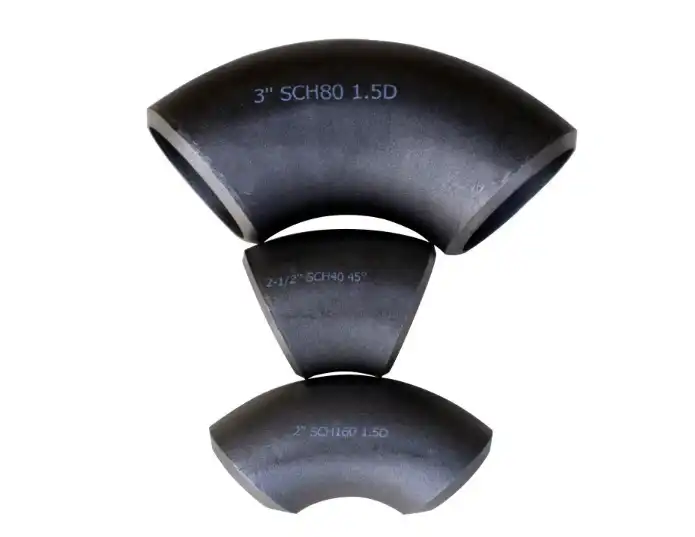
Understanding the Importance of Certifications for Carbon Steel Concentric Reducers
Certifications serve as the backbone of quality assurance in industrial piping components. When you're sourcing a concentric reducer carbon steel fitting, certifications validate that the product has been manufactured, tested, and documented according to recognised international standards. This validation is critical because these fittings operate under high pressure, extreme temperatures, and corrosive environments where any weakness can trigger catastrophic failures.
Why Certifications Matter in High-Stakes Applications
Products that aren't approved put your projects at risk in many ways. If the material makeup of a part hasn't been checked, it might have flaws that make the structure less strong. If the dimensions aren't checked properly, a reducer might not line up right during field welding, which could lead to leaks or stress concentration spots. Not following the rules can completely stop projects, especially when working with European PED standards or North American ASME codes. Certifications make it clear that buyers and sellers can trust each other. They show in writing that the company has spent money on quality control, checking the raw materials, and testing procedures. When buying from foreign sources, where it's not always possible to visit the plant directly, this openness is especially helpful.
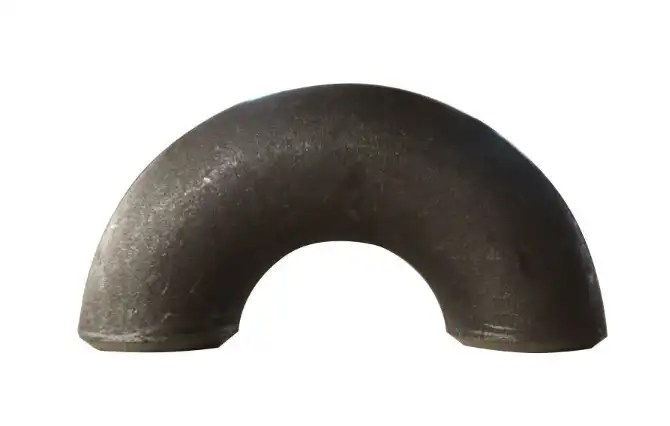
Common Certification Categories
There are three main types of certifications that industrial pipe fittings need: material standards (which confirm the chemical makeup and mechanical features), measurement standards (which confirm the accuracy of size and tolerances), and manufacturing process certifications (which confirm the production quality systems). All of these together make a full quality picture that lets you make smart choices about what to buy.
Core Certifications Every Carbon Steel Concentric Reducer Should Comply With
Understanding which certifications are mandatory versus recommended helps you build specifications that balance compliance with cost-effectiveness. The following certifications represent the global standard for industrial-grade reducers.
ISO 9001 Quality Management Certification
Getting ISO 9001 approval shows that a company uses a structured strategy for managing quality. This standard doesn't directly say what the product needs to do, but it does make sure that the methods for getting materials, controlling production, inspecting, and fixing problems are always the same. If a seller has ISO 9001 certification, you can be sure that quality is built into everything they do, not just checked at the end. Since the beginning, Oudi has kept its ISO 9001:2000 certification, which makes sure that every Concentric Reducer Carbon Steel reducer that leaves our plant follows the quality processes that have been written down.
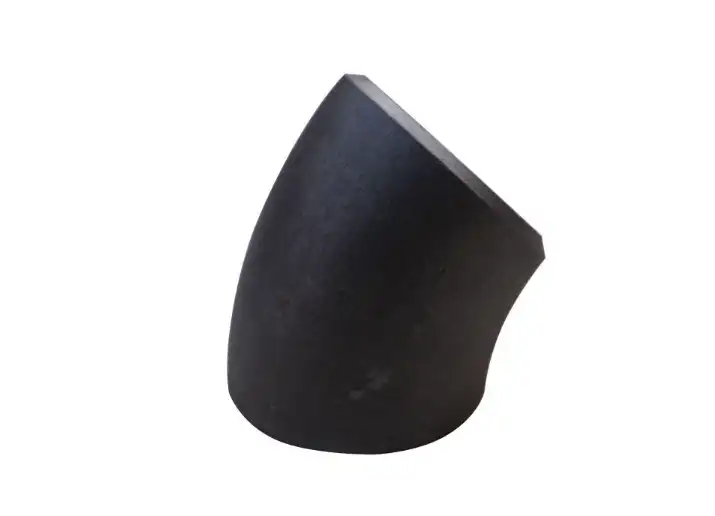
ASTM A234 Material Specification
The main standard for wrought carbon steel and alloy steel parts used in mild and high-temperature work is ASTM A234. In this standard, the maximum chemical makeup, minimum mechanical properties, and heat treatment steps are spelt out. WPB (Wrought Product, Grade B), which is the most popular grade, can be used in a wide range of situations from -29°C to 400°C. The standard also says that reducers made by cold or hot methods must go through a stress-relief heat treatment above 595°C. This removes any remaining pressures that could cause the parts to crack too soon.
ASME B16.9 Dimensional Standard
The ASME B16.9 standard sets the sizes, limits, and testing requirements for butt-welding parts made in a plant. This standard makes sure that a 6-inch to 4-inch reducer made by one company will work with one made by another. This makes it possible for products to be used interchangeably in global supply lines. The standard says what the face-to-face length should be based on the major diameter, the consistency of the wall thickness, and the bevel angles, which are usually 37.5° ±2.5° for widths less than 22mm. As long as your fitting meets ASME B16.9 standards, it will work with current pipe systems without needing to be changed in the field.
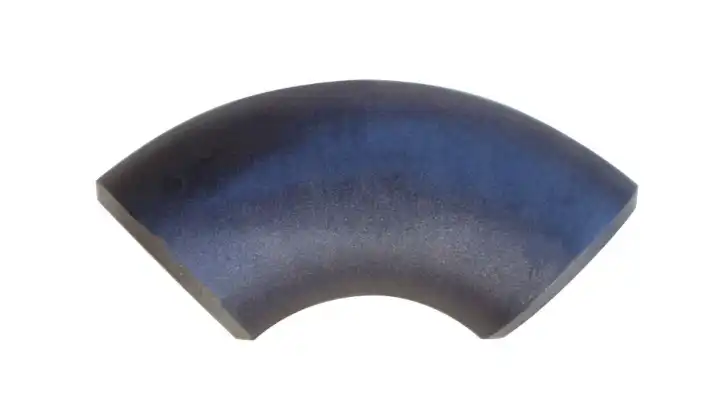
Pressure Equipment Directive (PED) for European Markets
If you want to sell pressure tools in a European Union member state, you have to follow the PED (2014/68/EU). The CE mark shows that concentric reducers used in systems with pressure-volume levels higher than certain limits must meet important safety standards. PED compliance includes checking the design, keeping track of the materials, keeping an eye on the manufacturing process, and having informed bodies do a final review. The rule sorts equipment into four groups based on how dangerous it is, with stricter conformity assessment processes needed for the higher groups. Exporters to Europe need to make sure that their reducers have the right PED paperwork so that they don't get turned away at customs.
API Standards for Oil and Gas Applications
The American Petroleum Institute (API) sets stringent requirements for components used in oil and gas extraction, refining, and transportation. API 5L covers line pipe specifications, while API 6A addresses wellhead and Christmas tree equipment. Although API standards primarily target specialised equipment, many end-users in the petroleum sector require reducer suppliers to demonstrate familiarity with API testing protocols, particularly for sour service environments containing hydrogen sulfide (H2S). NACE MR0175/ISO 15156 compliance becomes essential in these applications, requiring hardness limits below 22 HRC to prevent sulfide stress cracking.
Mill Test Reports and Material Traceability
Material tracking paperwork gives batch-specific proof in addition to measurement and system approvals. The chemical analysis and mechanical test results for the specific heat of the steel used in your reducer are written down on Mill Test Reports (MTR) or Mill Test Certificates (MTC). The carbon content, manganese, sulphur, chrome, nickel amounts, tensile strength, yield strength, and stretch numbers are all in this report. Positive Material Identification (PMI) with mobile XRF analysers makes sure that the supplied product fits the MTR. This stops material mix-ups that could bring in alloys that don't work well together.
These certificates cover the most important buying factors, including the genuineness of the material, its dimensions, its ability to withstand pressure, and its ability to be tracked. They are the basis for Concentric Reducer Carbon Steel pipe systems that are safe, effective, and up to code in a wide range of industry settings.
Comparing Certification Requirements Across Different Markets and Industries
Certification landscapes vary significantly by geography and application sector, requiring procurement professionals to adapt their specifications accordingly.
Regional Certification Variations
In the European market, it's important to follow PED rules and EN standards that are based on DIN standards, especially EN 10253 for butt-welding fits. For compatibility evaluation, these standards often need a third-party informed body to be involved. In North America, ASME and ASTM standards are most important, and ANSI standards control sizes and limits. For pressure equipment placed in Canadian areas, the Canadian Registration Number (CRN) is needed. This adds another level of regional compliance. International standards are being used more and more in Asia-Pacific markets. However, some countries, like Japan, still use JIS standards, and China uses GB national standards, which are similar to but not the same as ASME specs.
Industry-Specific Certification Demands
The oil and gas industry needs the most thorough certification packages. These packages usually include API standards, NACE compliance for toxic conditions, and third-party inspections by companies like Lloyd's Register or Bureau Veritas. Chemical processing companies need to make sure that their alloys don't rust and may ask for alloys that aren't carbon steel. Facilities that treat water and make electricity focus on long-term sturdiness and physical stability, putting a lot of weight on heat treatment records and ultrasound testing results. Applications for building ships need classification society approvals from groups like ABS, DNV, or RINA. These groups have their own proof processes that are separate from standard licenses.
Third-Party Inspection and Testing
A lot of end users require third-party inspection (TPI) or testing (TT) to independently check what suppliers say. These services check the steps used in making, watch the tests, and look over the paperwork before shipping. The inspection agency gives certificates that say the products meet the requirements of the buy order. This adds an important level of proof and keeps non-conforming products from getting into your supply chain.
How to Verify and Ensure Certification Authenticity Before Procurement
Counterfeit certifications and fraudulent documentation pose real risks in global supply chains. Implementing verification procedures protects your procurement integrity.
Document Review Essentials
Ask for full paperwork packages that include original certificates (not copies), MTRs with lab stamps, heat treatment charts with time and temperature records, and NDT reports. Real certificates have unique markers like certificate numbers that can be tracked back to the organisations that issued them, the names of authorised signers and their roles, the dates they were issued, and, if necessary, the dates they expire. When you can, compare certificate numbers to records of the granting body.
Red Flags Indicating Fraudulent Certifications
Watch out for certificates that use general language and don't include specific technical data, papers that don't have unique numbers or can't be tracked, certificates that are given before the manufacturing dates, and providers that won't give you the contact information for certification bodies. Certificates that show the same test results for multiple batches make it look like the data was faked instead of being real.
Leveraging Certification Databases
Many certification bodies maintain online verification systems. ISO certificate authenticity can be checked through issuing registrar websites. ASME maintains a certificate holder database accessible to the public. PED notified bodies publish lists of approved manufacturers. Spending ten minutes verifying credentials can prevent costly mistakes.
Supplier Audit Best Practices
When possible, conduct factory audits examining production equipment, testing facilities, calibration records, and quality management documentation. Observe actual production runs, review rejected product handling procedures, and interview quality control personnel. Our facility in Cangzhou welcomes customer audits, providing transparent access to our production lines, testing laboratories equipped with advanced detection equipment, and documentation systems that track every fitting from raw material receipt through final shipment.
Impact of Certifications on Quality, Safety, and Procurement Decisions
Certifications for Concentric Reducer Carbon Steel translate directly into operational outcomes that affect your bottom line and project success.
Quality and Durability Correlation
Certified reducers manufactured according to ASTM A234 with proper heat treatment exhibit superior grain structure, enhancing resistance to fatigue cracking and erosion-corrosion. The mandatory stress-relief process eliminates internal stresses that could cause delayed cracking months after installation. Dimensional compliance per ASME B16.9 ensures proper weld joint geometry, reducing stress concentration and improving weld integrity. These quality factors extend service life, reducing replacement frequency and maintenance costs.
Safety and Risk Management
Pressure equipment failures can result in injuries, environmental damage, and operational shutdowns. Certified reducers tested to 1.5 times design pressure provide documented safety margins. Material traceability prevents the inadvertent use of incompatible alloys that might fail in specific environments. Proper certifications enable accurate risk assessment and insurance coverage, as many policies require documented compliance with recognised standards.
Procurement Strategy Implications
Even though certified goods may cost a little more at first, certified parts usually have a lower total cost of ownership. Lower failure rates mean less money spent on maintenance, and faster government decisions speed up project timelines. Suppliers with a lot of certifications usually have better technical support and can help you choose the right specs for your application. Supply chain security is created by working with approved providers. This is especially helpful when expanding operations or entering new markets.
Case Application
A petroleum plant in Europe just bought 200 circular reducers to improve their high-pressure steam system. The buying team made sure that the new equipment would work with the old equipment by selecting PED Category III compliance, ASME B16.9 measurements, and ASTM A234 WPB material with full MTRs and third-party inspection. The approved reducers worked perfectly during setup and beginning operation, which proved that the money spent on well-documented parts was well spent. This job was a big improvement over the last one, where non-certified parts meant that work had to be redone in the field, which pushed back the start date by three weeks.
Conclusion
To get approval for circular reducer carbon steel parts, you need to know about worldwide standards, regional requirements, and demands that are specific to your business. The right certificates confirm the quality of the materials, the accuracy of the measurements, and the purity of the production process. This keeps your operations safe from failures and regulatory violations. You can make purchase specifications that balance quality, safety, and cost-effectiveness by putting ISO 9001 quality systems, ASTM material specifications, ASME measurement standards, PED compliance for European markets, and full material tracking at the top of your list of priorities. Verification methods like reviewing documents, checking databases, and auditing suppliers are also used to make sure that fake licenses are not issued. This leads to more reliable operations, lower risk, and sure choices about purchases that support the long-term success of the project.
FAQ
1. What distinguishes ASTM from ASME certifications for concentric reducers?
ASTM A234 specifies material composition, mechanical properties, and heat treatment requirements—essentially what the reducer is made from and its physical characteristics. ASME B16.9 defines dimensions, tolerances, and testing methods—how the reducer is shaped and measured. Both standards work together: ASTM ensures the material will withstand service conditions, while ASME ensures the fitting will physically connect with your piping system. Quality reducers carry both certifications.
2. Can I use non-PED-certified reducers in European installations?
Using non-PED-certified pressure equipment in EU commercial installations violates legal requirements and exposes your company to liability. The Pressure Equipment Directive mandates CE marking for equipment above specified thresholds. Installation of non-compliant components can result in project rejections, fines, and insurance coverage denial. Always verify PED compliance when sourcing for European projects.
3. How often do certifications require renewal or revalidation?
Material specifications like ASTM A234 and dimensional standards like ASME B16.9 don't expire—they're product certifications issued at manufacture. ISO 9001 quality management system certifications require surveillance audits and renewal every three years. PED conformity assessments apply to individual products or production batches. Mill Test Reports are batch-specific and don't require renewal. When evaluating suppliers, verify their ISO certification remains current by checking the issue and expiration dates.
Partner with Oudi—Your Certified Concentric Reducer Carbon Steel Supplier
At Oudi, we've specialised in manufacturing premium pipe fittings since 1998, serving over 300 customers across 40 countries with certified concentric reducer carbon steel components that meet the most demanding specifications. Our facility in Cangzhou operates under ISO 9001:2000 quality management certification and holds the People's Republic of China special equipment manufacturing license, ensuring every reducer undergoes rigorous quality control from raw material verification through final inspection.
Our annual production capacity of 16,000 tons supports consistent supply for projects of any scale. We manufacture Concentric Reducer Carbon Steel to American (ANSI), Japanese (JIS), German (DIN), and British (BS) standards, providing complete material traceability with Mill Test Reports and supporting third-party inspection when required. Advanced detection equipment enables ultrasonic testing, dimensional verification, and positive material identification, confirming that every fitting meets your specifications.
Whether you're sourcing reducers for oil refineries, chemical plants, natural gas infrastructure, or water conservancy projects, our technical team can guide you through certification requirements specific to your application and target market. We understand the procurement challenges you face in balancing quality, compliance, and cost-effectiveness.
Contact our specialised team at oudi-04@oudiguandao.com to discuss your requirements, request detailed product specifications, or obtain a customised quote for certified concentric reducer carbon steel fittings. Let our 25 years of export experience work for your next project, delivering the reliability and documentation your operations demand.
References
1. American Society of Mechanical Engineers. (2018). ASME B16.9: Factory-Made Wrought Buttwelding Fittings. ASME International Standards.
2. ASTM International. (2020). ASTM A234/A234M: Standard Specification for Piping Fittings of Wrought Carbon Steel and Alloy Steel for Moderate and High Temperature Service. ASTM Standards Collection.
3. European Commission. (2014). Directive 2014/68/EU on the Harmonisation of the Laws of the Member States Relating to the Making Available on the Market of Pressure Equipment. Official Journal of the European Union.
4. NACE International. (2015). NACE MR0175/ISO 15156: Petroleum and Natural Gas Industries—Materials for Use in H2S-Containing Environments in Oil and Gas Production. NACE Standard.
5. International Organisation for Standardisation. (2015). ISO 9001:2015 Quality Management Systems—Requirements. ISO Standards Catalogue.
6. American Petroleum Institute. (2019). API Specification 5L: Specification for Line Pipe. API Publishing Services.

Need help finding the right solution with our experts. Please contact us.

SINCE 1998 Your Reliable Pipeline Manufacturer



