What Is a Carbon Steel Concentric Reducer?
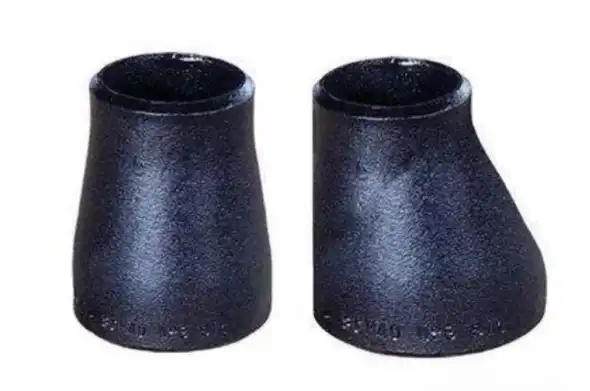
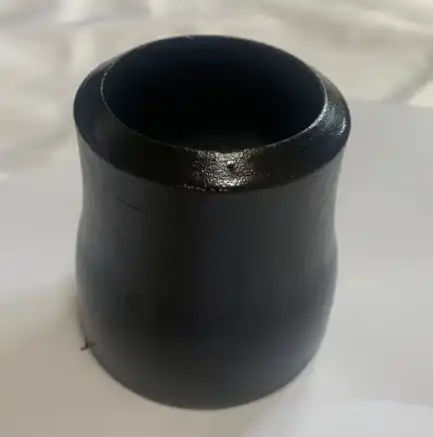
A Concentric Reducer Carbon Steel is a cone-shaped pipe fitting that joins two pipes with different sizes so that they share a centerline. This design makes a smooth transition from a bigger pipe to a smaller one so that fluid or gas can run without any problems. Instead of moving the midpoint to get rid of air pockets like eccentric reducers do, concentric reducers keep both ends lined up on the same axis. Because of this, they are necessary in vertical pipe systems where keeping the structure balanced and reducing noise are very important for safety and efficiency.
Understanding Carbon Steel Concentric Reducers
What Defines a Concentric Reducer?
In industrial pipe networks, a concentric reducer is used as a transfer fitting. Its uniform, cone-shaped shape makes the pipe diameter smaller all the way around, keeping the centerline alignment between the inlet and exit. This shape is very important for pipe systems that need to have smooth flow without any dead spots or places where particles could settle. The symmetrical design spreads stress evenly across the fitting, making it better able to handle the high pressures and temperature changes that happen in places like chemical plants, oil pipelines, and power plants.
Seamless vs. Welded Construction
The way that carbon steel reducers are made has a big effect on how well they work. Seamless reducers are made from a single piece of metal and don't have any welds. This makes them stronger and more resistant to pressure. People often ask for these for high-pressure steam lines or other important uses where failure could put people in danger. When you join metal sections together to make a welded reducer, on the other hand, you get a cheaper option for lower-pressure environments that still has good structural stability. Both types are compatible with a wide range of pipe systems because they meet ASME B16.9 standards for sizes from NPS 1/2 to NPS 48.
Key Specifications and Standards
Dimensional accuracy and material compliance are non-negotiable in industrial applications. Concentric reducers manufactured to ASTM A234 WPB specifications ensure consistent carbon steel composition, delivering predictable mechanical properties like tensile strength and yield resistance. Wall thickness follows Schedule designations—SCH 40, SCH 80, XS, and XXS—matching the adjoining pipes to maintain uniform pressure ratings throughout the system. End preparations typically feature beveled edges for butt welding, creating leak-proof connections that withstand operational stresses. Compliance with ISO 9001 and special equipment manufacturing licenses further validates production quality, giving procurement teams confidence in long-term reliability.
Uses and Benefits of Carbon Steel Concentric Reducers
Industrial Applications Across Sectors
These fittings play indispensable roles in multiple heavy industries. In oil and gas operations, they manage flow transitions in vertical pump discharge lines, handling pressures exceeding 1500 PSI while preventing cavitation. Chemical processing plants rely on them to connect reactor vessels with transport piping, where precise flow control prevents contamination and ensures batch consistency. Power generation facilities use concentric reducers in steam distribution systems, where maintaining the centerline prevents thermal expansion issues that could misalign support structures. Water conservancy projects employ them in vertical sludge transport, where the symmetrical taper promotes self-cleaning action, reducing maintenance frequency. Beyond these core sectors, shipbuilding operations integrate carbon steel reducers into ballast and fuel systems, while boiler manufacturers depend on them for feedwater piping that must endure constant temperature fluctuations. The versatility stems from carbon steel's balance of strength, workability, Concentric Reducer Carbon Steel and cost-efficiency, making it suitable for both critical and routine applications.
Advantages Over Alternative Materials
Carbon steel remains the preferred material for many industrial users despite the availability of stainless steel and alloy options. The primary advantage lies in cost-effectiveness; carbon steel reducers deliver robust performance at approximately 40-60% of the price of stainless steel equivalents. Their tensile strength—typically ranging from 60,000 to 85,000 PSI depending on grade—adequately serves most applications without the premium associated with exotic alloys. Material selection also considers environmental factors. In non-corrosive environments or where protective coatings can be applied, carbon steel provides decades of service life. A refinery in Southeast Asia reported 20+ years of continuous operation with ASTM A234 WPB reducers in crude oil transport lines, demonstrating the material's longevity when properly specified. These real-world performance records build confidence among engineering teams specifying fittings for new projects or retrofits.
Flow Dynamics and Structural Integrity
The concentric design optimizes fluid dynamics by providing a gradual velocity transition. As fluid enters the reducer from the larger diameter, the cone shape accelerates flow smoothly without creating the turbulence that leads to erosion and energy loss. This characteristic is particularly valuable in vertical steam lines, where turbulent flow could damage pipe walls through erosion-corrosion, a phenomenon that occurs when protective oxide layers are stripped away by chaotic fluid movement. Structural benefits extend to installation and maintenance. By keeping the pipe centerline constant, concentric reducers simplify support bracket placement and reduce vibration-induced stress. This alignment prevents the bending moments that can develop when eccentric fittings are incorrectly installed in horizontal runs, a mistake that often leads to premature joint failure and unplanned downtime.
Comparing Carbon Steel Concentric Reducers with Alternatives
Carbon Steel vs. Stainless Steel
Material choice involves balancing performance requirements against budget constraints. Stainless steel concentric reducers, manufactured to ASTM A403 WP304 or 316L specifications, offer superior corrosion resistance, making them essential in food processing or pharmaceutical applications where product purity cannot be compromised. Carbon steel, however, dominates in environments where corrosion can be controlled through coatings, cathodic protection, or simply because the process fluid is non-corrosive. Durability comparisons show carbon steel performs admirably in dry or non-acidic conditions. A chemical plant in North America documented equivalent service life between carbon and stainless steel reducers in anhydrous ammonia service, where corrosion risk was minimal. The cost savings—approximately $200 per fitting for a 6-inch reducer—added up to significant budget relief across a 500-fitting installation, allowing reallocation of funds to instrumentation upgrades.
Concentric vs. Eccentric Design
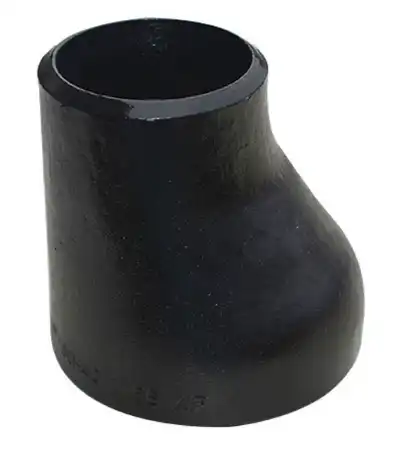
Knowing when to use each type stops mistakes that cost a lot of money during installation. One side of an eccentric reducer stays flat, while the other side's axis is offset. This design is very important for horizontal pump flow lines, where the flat side facing up keeps air from building up and causing pump cavitation. Because they are symmetrical, concentrator reducers are used for vertical lines where air trapping is not a problem and keeping the centerline straight makes support structures easier to build. However, using them in the wrong way can cause operating problems. Putting in a circular reducer in a horizontal suction line can make an air pocket at the top of the cone, which can hurt the pump's performance and even cause damage to the machine. On the other hand, using an eccentric fitting in a vertical steam line makes estimates for hanger placement and thermal expansion more complicated than they need to be. These problems can't happen with clear specification standards, and our technical team at Oudi helps with applications to Concentric Reducer Carbon Steel make sure the right choice is made.
Seamless vs. Welded Performance
This choice is based on the pressure values and the severity of the application. Seamless carbon steel reducers can handle higher pressures—often Class 3000 and above—because they don't have any weld gaps, which could be weak spots. For high-temperature use, like superheated steam at 900°F and 2000 PSI, seamless construction is needed because weld zones may go through chemical changes that make the material less strong. A power plant in Europe chose seamless reducers for its reheat steam system because they have been trouble-free for 15 years, which made up for the 30% higher cost compared to welded alternatives. Welded reducers work great in moderate-pressure situations (usually Class 150 to 600) where cost control is very important. With today's welding methods and post-weld heat treatment, joints are almost as strong as the base material. This means they can be used for water distribution, low-pressure gas transfer, and other similar tasks. Our factory takes care of both production lines, so customers can get the best specs based on how the machines will actually work instead of over-engineering out of caution.
Procurement Considerations for Carbon Steel Concentric Reducers
Material Certifications and Documentation
Material compliance checks keep you safe from low-quality goods that could put safety and uptime at risk. Suppliers you can trust give you mill test results that prove the chemical makeup and mechanical properties, which can be tracked back to specific heat numbers. ASTM A234 compliance makes sure that the amount of carbon, manganese, and other alloying elements stay within certain ranges. This guarantees that the power and ability to weld will stay the same. ISO 9001 certification shows that a supplier has quality control systems in place that cover everything from receiving raw materials to inspecting finished goods. Procurement teams should ask for copies of manufacturing licenses, especially for parts that go into pressure vessels. In many places, making reducers for high-pressure use needs special equipment manufacturing approval. This makes sure that the places where the reducers are made meet government standards. These papers, which are sometimes forgotten, protect you legally and give you peace of mind that the fittings will work as planned.
Lead Times and Customization Options
Standard sizes—most often NPS 2 through NPS 24 in common schedules—often ship from stock within two to three weeks from reputable sources. Manufacturing lead times of 6 to 10 weeks are needed for larger diameters, unusual schedules, or custom lengths, based on how deep the production queue is. It's important to know these deadlines in order to plan a project, especially for EPC contracts where installing pipes is on the critical path. Custom manufacturing skills are what set prompt suppliers apart from commodity vendors. Reducers with non-standard measurement ratios or end preparations other than standard bevels are sometimes needed for projects. These requests are met by our facility, which changes production tools to fit individual needs. For a water treatment project in the Middle East, they needed reducers with longer tangent lengths so that certain welding procedures could be used. Our engineering team worked with their contractors to deliver fittings that didn't need to be changed in the field, which cut down on installation time and improved the quality of the weld.
Pricing Dynamics and Bulk Advantages
Prices are affected by the cost of materials, the difficulty of production, and the number of orders. A normal 6-inch x 4-inch SCH 40 carbon steel concentric reducer costs between $45 and $75 per piece when ordered in small amounts. The price drops by 15 to 25 percent for orders over 100 pieces because the setup costs are spread out over more units. When you buy in bulk, you can save a lot of money. Seamless versions cost 25–40% more than welded versions because they require special production techniques. A contractor from South America ordered 800 fittings of different sizes for three jobs that were going on at the same time. Volume prices cut the cost of each piece by 22%, which saved $12,000 and paid for better inspection tools. Payment terms also get better as you place more orders. If you have a history with a seller, you can often get net-60 terms instead of COD, which is what most small orders require.
Supplier Evaluation Criteria
When choosing factory partners, you need to do more than just compare prices. When possible, factory checks show how well production is going and how strict quality control is. By following inspection steps like measuring, testing under pressure, and non-destructive examination, you can be sure that the goods you receive will meet your needs. Client references can tell you a lot about how well you deliver on time and how quickly you respond to problems. The size of your distribution network affects how reliable your deliveries are. Lead times are more reliable from suppliers who keep warehouses in the area or work with well-known logistics companies than from suppliers whose only factories are far away. We have distribution agreements in place in North America, Europe, and Southeast Asia. This lets us keep inventory close to major project hubs and respond quickly to pressing needs.
Manufacturing Process and Quality Assurance
Production Methods Overview
There are different ways to make carbon steel concentric reducers, Concentric Reducer Carbon Steel and each one works best for a certain set of sizes and performance needs. In hot forming, pipe pieces are heated to forging temperatures and then shaped into cones with hydraulic presses and mandrels. With this method, smooth reducers up to NPS 24 can be made. The starting pipe choice controls the wall thickness. When room-temperature metal is shaped by incremental pressing, work-hardening and increasing yield strength, cold forming is used for smaller sizes and thinner walls. Welded reducers start with a flat plate that is cut into patterns and rolled into cones. The seam is then welded using submerged arc or TIG processes. Post-weld heat treatment removes any remaining stresses and levels out the heat-affected area, restoring the qualities of the material that were changed during welding. This process has more steps and requires more work, but it can handle bigger diameters (up to NPS 48 and beyond) that can't be made with seamless manufacturing.
Inspection and Testing Protocols
Verification of the raw materials is the first step in quality assurance. Spectroscopic analysis shows that the chemical composition matches the grades that were requested. This keeps materials that don't mix from being mixed. Using calibrated gauges for dimensional inspection makes sure that the wall thickness, diameter tolerances, and length are all within the limits set by ASME B16.9. These limits are usually ±1/32 inch for diameters less than 12 inches. Pressure testing then confirms the structural stability. In hydrostatic tests, each reducer is put under pressures that are 1.5 times its rated working pressure for as long as the relevant codes say it has to be kept for. Non-destructive testing methods, like X-rays for welded fittings and ultrasounds for seamless ones, can find problems inside that can't be seen with the naked eye. As required by ISO 9001, our facility keeps radiographic equipment and certified inspectors in good working order. For critical applications, 100% inspection is done, and sampling methods are used for standard products.
Technological Advancements in Manufacturing
Computer-controlled forming equipment is used in modern factories to improve accuracy in dimensions and cut down on scrap. CNC-guided presses change the force and position of the die in real time to account for changes in the material's properties that would cause measurements to shift when done by hand. Automated welding systems keep the heat input steady, making weld beads that are all the same and have few flaws. Laser scanning technology has changed the way final checking is done. Three-dimensional scanners take pictures of the whole area and compare them to computer-aided design (CAD) models with micrometer-level accuracy. This technology finds small flaws—like out-of-roundness or curve irregularities—that might affect how well the parts fit together during installation. When we put these processes in place, our dimensional rejection rate dropped by 60%. This made customers happier and cut down on the cost of rework.
Conclusion
Carbon steel concentric reducers are important parts of industrial pipe systems because they reliably change the width of pipes while keeping the flow efficient and structural integrity. Their symmetrical shape makes them perfect for vertical use in water management, chemical processing, oil and gas, and power generation industries, where axis alignment and pressure handling are very important. Choosing between carbon steel and stainless steel as a material and between seamless and welded construction lets you get the best performance and cost for your needs. The success of procurement relies on checking the certifications of materials, figuring out what the suppliers can do, and knowing how to make things in a way that keeps quality high. If you buy these fittings from a certified maker and follow the right specifications, they will last for decades without any problems, helping to keep operations safe and reliable in harsh industrial settings.
FAQ
1. What distinguishes concentric reducers from eccentric types?
Concentric reducers maintain a common centerline between both ends, creating symmetrical flow transitions ideal for vertical piping. Eccentric reducers offset the centerline, with one side flat, preventing air accumulation in horizontal pump suction lines. Choosing correctly prevents operational issues like cavitation or air binding.
2. Can carbon steel reducers handle high-pressure applications?
Absolutely. Seamless carbon steel reducers manufactured to ASTM A234 WPB standards routinely handle pressures exceeding 2000 PSI in steam and hydrocarbon service. Pressure ratings depend on wall thickness (schedule number) and temperature; proper specification matched to operating conditions ensures safe, reliable performance.
3. How do I verify supplier quality and authenticity?
Request mill test reports showing material composition and mechanical properties, ISO 9001 certificates, and manufacturing licenses for pressure equipment. Reference checks with existing clients and, when possible, factory audits provide additional assurance. Reputable suppliers welcome transparency and provide documentation readily.
Partner with Oudi for Reliable Carbon Steel Concentric Reducer Supply
Our company has served the global industrial piping community since 1998, manufacturing premium-quality fittings that meet the rigorous demands of oil, chemical, natural gas, and water conservancy sectors. With ISO 9001:2000 certification and special Concentric Reducer Carbon Steel equipment manufacturing licenses, our 66,600-square-meter facility in Cangzhou produces 16,000 tons annually of carbon steel, stainless steel, and alloy steel components—including Concentric Reducer Carbon Steel in all standard sizes and schedules. Advanced inspection equipment and full-process quality control, from raw material verification through non-destructive testing of finished goods, ensure every fitting meets international standards including ANSI, JIS, DIN, and BS. Over 300 customers across 40+ countries—from Europe and the Americas to Africa, Southeast Asia, and the Middle East—trust our supply reliability and competitive pricing. Whether you need stock sizes delivered within weeks or custom specifications for complex projects, our technical team provides application support and quotations tailored to your requirements. Contact our procurement experts at oudi-04@oudiguandao.com to discuss your next project and experience why discerning buyers choose Oudi as their preferred Concentric Reducer Carbon Steel supplier.
References
1. American Society of Mechanical Engineers. "ASME B16.9: Factory-Made Wrought Buttwelding Fittings." 2018 Edition, New York.
2. ASTM International. "ASTM A234/A234M: Standard Specification for Piping Fittings of Wrought Carbon Steel and Alloy Steel for Moderate and High Temperature Service." West Conshohocken, PA, 2021.
3. Nayyar, Mohinder L. "Piping Handbook." 8th Edition, McGraw-Hill Education, 2019.
4. Baumeister, Theodore, et al. "Marks' Standard Handbook for Mechanical Engineers." 12th Edition, McGraw-Hill, 2018.
5. Singh, Ramesh. "Pipeline Integrity Handbook: Risk Management and Evaluation." Gulf Professional Publishing, 2017.
6. Ellenberger, J. Phillip. "Piping and Pipeline Calculations Manual: Construction, Design Fabrication and Examination." Butterworth-Heinemann, 2014.

Need help finding the right solution with our experts. Please contact us.

SINCE 1998 Your Reliable Pipeline Manufacturer



