What Is a Socket Weld Pipe Tee Used For?
A Socket Weld Pipe Tee is used to create a 90-degree branch connection in piping systems, allowing fluid or gas to split or merge at a junction point. This forged fitting features recessed sockets at each opening where pipes are inserted and permanently fillet-welded, creating a structurally sound connection ideal for high-pressure applications in oil, chemical, natural gas, and water conservancy industries. Governed by ASME B16.11 standards, these tees eliminate the leakage risks common with threaded connections while providing superior strength in small-bore piping systems typically ranging from ½ inch to 2 inches in diameter.
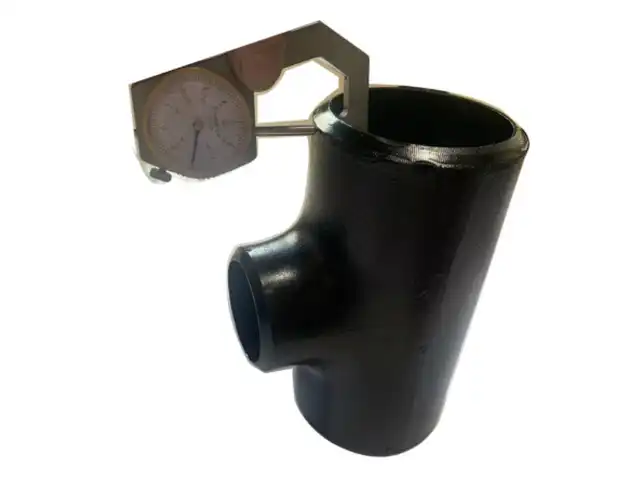
Understanding Socket Weld Pipe Tees and Their Applications
Socket weld pipe tees represent an evolution in small-bore piping technology, addressing specific limitations of threaded and butt-welded connections. The defining characteristic is the recessed socket machined into each opening, which serves as both an alignment guide and a welding preparation. When a pipe is inserted into this socket, a small gap remains at the bottom—typically 1/16 inch per ASME B16.11—to allow for thermal expansion and prevent stress cracking during the welding process.
Material Composition and Standards Compliance
The choice of material for these parts is the first step in making sure they work well. Carbon steel types that meet ASTM A105 standards have great strength-to-cost ratios for general industry uses. This is why they are commonly used in HVAC and water treatment systems. Grades of stainless steel like ASTM A182 F304 and F316 are very resistant to corrosion, which is very important in chemical processing settings where aggressive media would quickly wear down carbon steel. Some types of alloy steel, like ASTM A182 F11 and F22, can handle the high temperatures and creep that happen in steam generation and hydrocarbon cracking units. The way the steel is made has a big impact on how well it works. Forging forms a continuous grain flow through the fitting body, which makes it much more resistant to impact than cast options. This metal's edge is very important in situations where hydraulic shock, vibration from nearby rotating equipment, or changes in temperature could cause cracks to spread in cast structures.
Primary Industrial Applications
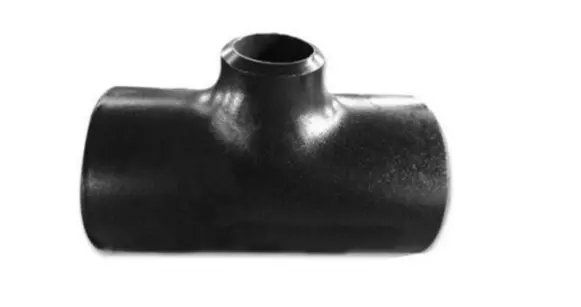
Socket weld tees are the most popular choice for certain types of applications because their form solves common operational issues. These fittings connect instrument lines that carry process samples or air control signals in oil and gas production facilities. When working with flammable hydrocarbons, the socket weld design prevents fugitive emissions, which is a safety risk and a matter of regulatory compliance. Chemical injection skids on offshore platforms use these tees to add corrosion inhibitors or scale prevention chemicals to the main production streams. When fillet welding, a smooth interior profile is made that doesn't allow erosion-corrosion to happen. This is a type of failure that happens quickly to threaded connections when abrasive slurries flow at high speeds. Power plants use socket weld tees in steam trap assemblies and condensate return systems where temperatures are higher than 500°C, and there are changes in pressure during startup and shutdown. Socket weld tees are especially useful for high-pressure industrial systems because they are strong. These fittings go with pipe schedules 80, 160, and XXS, and come in pressure classes 3000, 6000, and 9000. Because they can handle high pressures, they are essential for hydraulic power plants, supercritical CO2 systems, and hydrogen compression stations where pressures regularly reach 5,000 PSI.
Core Performance Advantages
The socket form makes installation easier and cheaper, and it also makes the joints stronger. Welders like that Socket Weld Pipe. The socket holds the pipe in place precisely without the need for tack welds or other outside tools. This is helpful when working in crowded pipe racks or small areas where positioning clamps wouldn't work. The pre-machined socket also makes the root gap more uniform, which improves the quality of the welds across multiple joints and lowers the skill gap between welding teams. The fillet weld's geometry and metallurgical properties cause it to be leak-resistant. The fusion link between the pipe and fitting makes a solid structure without any leak paths, unlike threaded connections that depend on mechanical interference and sealants. This strength can handle the changes in temperature and stress loads that make threaded joints loosen over time. The lack of internal weld beads, which is a typical problem in small-diameter butt welds, stops flow turbulence and pressure drop, keeping the hydraulic efficiency high. Corrosion resistance is more than just choosing the right material; it also includes design elements. The fillet weld's smooth outside shape doesn't have any cracks where water and corrosive substances can gather. This is especially important for sites that are offshore or near the coast, where chloride can cause stress corrosion cracks in stainless steel fittings at threaded interfaces. Galvanic corrosion happens when metals that are not the same touch each other in threaded systems. The continuous weld stops this from happening.
Technical Deep Dive: Dimensions, Design Standards, and Installation Guidelines
Standard Dimensions and Size Specifications
The size rules for socket weld fittings are set by ASME B16.11. This makes sure that all makers around the world follow the same rules. The standard lists the outside diameters, wall thicknesses, and socket boring depths that work with normal weight, extra strong, and double extra strong pipe schedules. Socket depths usually range from 9.5 mm for ½ inch fittings to 22.4 mm for 2 inch sizes. This gives enough engagement length for structural welds while keeping material costs low. Centre-to-end dimensions show how much space fittings take up in pipe layouts, which affects the overall system design and support spacing. From the branch centerline to the run outlet face of a typical 1-inch socket weld tee, which is about 38 mm long, there are some differences due to pressure class and material grade. When designers figure out thermal expansion loops, valve spacing, and equipment tip connections, they need to take these sizes into account so that they don't get in the way during assembly. Wall thickness is directly related to pressure rating and material strength. In 1-inch sizes, Class 3000 carbon steel fittings usually have walls that are 7.14 mm thick. Class 6000 fittings have walls that are 9.53 mm thick, and Class 9000 fittings have walls that are 12.70 mm thick. These small increases allow for higher hoop stress due to internal pressure while still meeting the safety standards set by the ASME B31.3 pipe code.
Installation Procedures and Welding Techniques
Preparing the area well is the first step in a proper installation. The inside of the socket and the outside of the pipe need to be cleaned of mill scale, rust, oil, and other things that could make it harder to weld and cause porosity flaws. When it comes to reliability, mechanical methods like wire brushing work better than chemical solvents, which can leave behind leftovers that burn off during welding and cause hydrogen cracking in low-alloy steels. When fitting the socket, the critical gap at the bottom needs extra care. Installers should push the pipe all the way to the bottom of the hole and then pull it out about 1/16 inch before tacking. This space lets the pipe expand when it's heated up during welding and keeps the root from locking, which would leave leftover stresses that make cracks more likely to happen during service. Before welding starts, the proper gap is checked visually or with a feeler gauge. The method for a fillet weld needs to be changed depending on the type of material and the thickness of the wall. Depending on the width of the material and the temperature of the environment, carbon steel fittings usually use E7018 electrodes or ER70S-6 filler wire that has been heated to temperatures between 95°C and 205°C. Stainless steel types need low-carbon filler metals like ER308L or ER316L to stop the formation of chromium carbide, which leads to intergranular rust. The final weld quality is affected by the welding current, the travel speed, and the interpass temperature. All of these factors must be in line with the qualified welding process standards.
Quality Inspection and Pressure Testing
Nondestructive examination checks the quality of the weld without hurting the finished joint. Visual inspection, which looks for flaws on the surface like cracks, holes, and incomplete fusion, is the main requirement for most commercial uses. When magnetic particle screening doesn't work on stainless steel or non-magnetic alloy fittings, liquid penetrant testing is a better way to find surface cracks. Radiographic study can show internal flaws in critical service applications, but it's harder to understand fillet welds than butt welds because of their shape. Hydrostatic testing confirms that finished piping systems can hold pressure. Test pressures are usually 1.5 times the design pressure and are kept there long enough to find leaks at welded and threaded connections. Recording test results is an important part of keeping permanent quality records that authorities and insurance companies need, especially for systems that work with dangerous materials or in areas with a lot of people. Material traceability during fabrication and installation makes sure that the right grades are put into service. Fittings come with mill test reports that show the chemical make-up and mechanical properties that have been checked by outside testing labs. Cross-referencing the heat numbers stamped on fittings with these documents proves that they are in line with the project specifications. This step stops catastrophic failures that can happen when inferior materials are used instead of the specified alloys.
Comparative Analysis: Socket Weld Pipe Tee vs Alternative Pipe Tees
Different tee configurations work best for different operating needs and installation limitations. When specification engineers know about these differences, they can make better system designs by matching fitting features to real-world service conditions instead of just going with what they're used to. Butt weld tees are most common in large-diameter, high-pressure situations where pipe sizes are more than 2 inches. The full-penetration slot weld is the strongest type of weld, and it can be checked for quality with X-rays. For installation, the pipe ends need to be precisely prepared with beveling tools and alignment fixtures to keep the fit right while welding. Butt welding usually costs 40–60% more than socket welding, but the price difference isn't noticeable when you look at large-diameter pipe that needs a lot of work, no matter what kind of fitting is used. Lap joint tees with stub ends allow for flexible flange alignment and make it easier to take apart for maintenance. The stub end is permanently welded to the pipe, and the backing flange can turn easily, Socket Weld Pipe Tee which makes it easier to line up the bolt holes during installation. This layout works well for places that need to be opened up a lot for cleaning or checking, like filter housings and heat exchanger connections. Compared to socket weld options in permanent piping arrangements, the extra parts and assembly steps make the cost of materials and labour higher.
Selection Criteria for Optimal Performance
The main thing that determines whether to socket weld or butt weld is the pipe width. Socket weld fittings are usually used for standard pipe sizes of 2 inches or less, and butt weld fittings are used above this size. The reasoning comes from welding metallurgy: getting the right penetration and avoiding burn-through gets harder as the pipe wall thickness drops below 3 mm. This is why the socket design's built-in reinforcement is useful. Operating pressure affects fitting choice by interacting with pressure class, material grade, and wall thickness. For systems with pressures above 2,500 PSI, socket weld valves add extra material to the welded joint, which protects against hoop stress. Comparing fittings with the same or higher pressure ratings shows that socket weld fittings often weigh less than flanged options while providing the same or higher strength. This means that they require less structural support and lower installation costs. The installation environment affects the practicality of different fitting types. Socket weld fittings are great for tight spaces like pipe tunnels and equipment areas with a lot of people because they are small and can be installed without much room being needed. On the other hand, field builders in open areas with lots of room for laydowns may prefer butt weld systems because they allow for quick prefabrication and radiographic inspection before erection.
Procurement Insights for B2B Clients
Strategic sourcing of socket weld fittings requires balancing technical specifications, quality assurance, commercial terms, and supply chain reliability. My experience working with international procurement teams reveals that systematic evaluation across these dimensions consistently yields superior project outcomes compared to lowest-price purchasing strategies.
Manufacturer Qualification and Certification
ISO 9001 certification is a basic way to make sure that makers have documented quality management systems that cover things like controlling the design, making sure the process works, and dealing with problems that don't meet standards. This certification isn't enough for important uses; it needs to be paired with specific product certifications and manufacturing licenses that apply to pressure tools. The People's Republic of China Special Equipment Manufacturing License, which is like the ASME certification in the U.S., shows that a company follows the rules and can make things, which is checked by outside auditors. Material traceability systems tell the difference between trustworthy manufacturers and suppliers who offer cheap goods of questionable quality. Reliable sources give mill test results that can be linked to specific heat numbers, spectrographic analysis that shows the chemical make-up, and tensile and impact testing that shows the mechanical properties. When looking at wholesalers, asking for sample paperwork before placing an order shows how well-equipped their quality system is and how willing they are to meet customer verification needs. Production capacity impacts how reliably deliveries happen and how competitive prices are. Facilities that make more than 10,000 tonnes of goods a year usually benefit from economies of scale that lower unit costs while keeping enough stock on hand for regular configurations. With an annual capacity of 16,000 tonnes, Oudi can meet the needs of large projects without the production problems and delivery delays that smaller manufacturers often experience during busy building seasons.
Cost Optimisation Strategies
Through annual supply agreements or blanket purchase orders, you can get better prices when you combine volume across multiple tasks or longer time frames. Many manufacturers give discounts of 5–15% when committed volumes go above minimum levels. However, these deals depend on being able to accurately predict demand and keep enough inventory on hand. Cost savings from buying in bulk often outweigh the costs of keeping inventory over the course of a typical industrial construction cycle. The grade of the material has a big effect on unit pricing, with carbon steel parts costing three to four times as much as stainless steel fittings and exotic alloys like Inconel costing ten to fifteen times more. A critical analysis should be done by engineering teams to see if specifications require premium materials to be used throughout entire systems or if strategic use of carbon steel in benign services and Socket Weld Pipe Tee corrosive sections achieves the same level of performance at a much lower cost. Standardisation lowers the cost of procurement and inventory by limiting the number of different sizes, pressure classes, and material grades that are required across projects. A normal petrochemical plant could cut the number of socket weld fitting SKUs from 150 to 40 through disciplined standardisation. This would increase purchasing power, make warehouse management easier, and lower the risk of obsolete parts when project needs change.
Lead Times and Delivery Logistics
Standard shapes made of popular materials like ASTM A105 carbon steel and A182 F316 stainless steel usually ship within two to four weeks from well-known companies that keep stock. Custom specifications that need unique alloys, special heat treatments, or non-standard sizes make lead times 8 to 12 weeks long while makers buy raw materials and plan production campaigns. Early involvement with suppliers during the engineering stages of a project helps find long-lead items that need to be ordered ahead of time to avoid scheduling delays during construction. Shipping items internationally adds to the time needed, on top of the manufacturing time. Ocean freight from factories in China to the U.S. The average transit time from Gulf Coast ports is 25 to 35 days, plus the time needed to clear customs and get to end destinations by land. Air freight cuts travel time to 5–7 days but raises handling costs by 400–600%. It only makes economic sense for critical-path items that could delay projects or cause production to stop. Packaging standards affect how the product is received and how ready it is to be installed. Good makers use protective wrapping, end caps, and bundling to keep threads from getting damaged, sockets from getting dirty, and surfaces from rusting while they are being shipped and stored. By including packaging requirements in buy orders, especially for stainless steel parts that can get chloride on them, you can avoid having to pay a lot of money for repairs and replacements after delivery.
Best Practices and Future Trends in Socket Weld Pipe Tee Usage
Maintenance and Inspection Protocols
Regular inspections should be in line with a risk-based assessment that takes into account fluid service, working conditions, and what would happen if something went wrong. Systems that deal with flammable or dangerous materials need to be inspected visually once a year and then nondestructively every three to five years. Systems that deal with harmless materials, like cooling water, may go five to ten years between inspections. Recording what was found during inspections creates historical records that are used to help plan preventative maintenance and manage the lifecycle of components. Ultrasonic thickness measurement finds wall loss from internal corrosion or external degradation before leaks happen. Setting up baseline measurements during the initial building stage makes it possible to keep track of corrosion rates quantitatively, which helps with accurate calculations of remaining life and planning for replacement. Trending analysis over multiple inspection cycles shows whether corrosion moves in a straight line or speeds up because of changes in the process conditions. This helps with decisions about what materials to upgrade during turnarounds. Leak detection and repair programs reduce the amount of fugitive emissions from piping systems, which helps with both safety and environmental issues. Optical gas imaging cameras can find hydrocarbon leaks that can't be seen with the naked eye. This lets repairs be done before they become illegal. Monitoring acoustic emissions can find active crack growth in important systems so that they can be fixed before they break through the wall and cause leaks or fires.
Emerging Technology Developments
In corrosive environments where upgrading materials would be too expensive, advanced coating techniques make things last longer. Fusion-bonded epoxy and fluoropolymer coatings protect carbon steel fittings from damage, letting them be used in places where stainless steel or rare metals were once needed. These coatings can withstand temperatures up to 200°C and acids, bases, and solvents. They have a service life of 15 to 20 years, which is often longer than the time it takes for processing facilities to lose value. Automated welding technology makes socket weld installation more consistent and cheaper by cutting down on labour costs. Orbital welding systems that use tungsten inert gas methods get rid of the differences that people have, making fillet welds that are always uniform enough to pass X-ray examination. Capital costs mean that the technology can only be used by high-volume fabrication shops and big projects. However, compared to manual processes, it improves productivity by 30–40% and virtually eliminates weld repairs. Digital twin modelling combines designs for piping systems with operational data to find the best maintenance strategies and estimate how long the systems will last. Machine learning systems use sensors that measure things like pressure, temperature, vibration, and corrosion rates to find patterns that aren't normal. These patterns show that failures are about to happen. Surface finish and mechanical properties limits mean that it can only be used in non-critical situations for now, but as technology keeps improving, the range of possible uses keeps growing.
Conclusion
Socket weld pipe tees work well in small-bore, high-pressure pipe uses in chemical processing, power generation, water infrastructure and oil and gas industries. Their forged construction, standard sizes according to ASME B16.11, and fillet-welded connections make them more leak-proof than threaded options while making fitting faster than with butt-welded designs. Material choices include carbon steel, stainless steel, and alloy grades. This lets you find the best specification that balances cost, corrosion protection, and temperature capability. Strategic procurement that focuses on manufacturer certification, material traceability, and supply chain stability makes sure that the project is a success and keeps costs low by standardising and collecting large amounts of goods. Socket weld fittings will continue to be important parts of industrial systems as they move toward higher pressures, more aggressive chemicals, and longer service intervals. This is because new coating technologies, automated installation methods, and predictive maintenance strategies will help keep assets valuable throughout their operational lifetimes.
FAQ
1. What industries commonly use socket weld pipe tees?
Socket weld pipe tees find extensive application in oil and gas production facilities, petrochemical refineries, chemical processing plants, power generation stations, and water treatment infrastructure. These fittings excel in high-pressure instrument lines, chemical injection systems, steam distribution networks, and any small-bore application where leak-tight integrity proves critical. The forged construction and welded joints make them particularly suitable for services handling flammable hydrocarbons, toxic chemicals, or operating above 300°C where threaded connections fail prematurely.
2. How do socket weld tees differ from butt weld tees?
Socket weld tees feature recessed sockets that receive pipe ends for fillet welding, while butt weld tees require bevelled pipe ends and full-penetration groove welds. Socket weld designs suit nominal pipe sizes 2 inches and smaller, offering easier alignment and faster installation in confined spaces. Butt weld configurations dominate larger diameters where their full-penetration welds provide maximum strength and allow complete radiographic inspection, though requiring more extensive pipe preparation and skilled welding labour.
3. What pressure ratings are available for socket weld pipe tees?
Socket weld pipe tees are manufactured in pressure classes 3000, 6000, and 9000, corresponding to pipe schedules 80, 160, and XXS respectively. Class 3000 fittings typically handle pressures to 3,000 PSI in carbon steel at ambient temperatures, while Class 6000 extends to 6,000 PSI, and Class 9000 reaches 9,000 PSI. Actual pressure-temperature ratings vary based on material grade, with stainless steel and alloy variants offering different capabilities defined by ASME B16.34 standards.
Partner with Oudi for Reliable Socket Weld Pipe Tee Solutions
Selecting the right socket weld pipe tee manufacturer impacts project success through product quality, delivery reliability, Socket Weld Pipe Tee and technical support throughout procurement and installation phases. Oudi has served over 300 industrial clients across 40 countries since 1998, delivering pipe fittings that meet ANSI, JIS, DIN, and BS standards with ISO 9001 certification and Special Equipment Manufacturing License compliance. Our 16,000-ton annual production capacity ensures consistent availability of carbon steel, stainless steel, and alloy steel fittings across comprehensive size ranges. Engineering teams benefit from our technical consultation on material selection, pressure class specification, and installation best practices, backed by advanced inspection equipment verifying dimensional accuracy and mechanical properties. Contact our specialists at oudi-04@oudiguandao.com to discuss your project requirements and receive competitive quotations from a proven socket weld pipe tee supplier committed to quality and customer success.
References
1. American Society of Mechanical Engineers. (2021). ASME B16.11: Forged Fittings, Socket-Welding and Threaded. New York: ASME Press.
2. Becht, C., & Roberts, W. (2018). Pressure Vessel and Piping Design: Collected Papers 1927-1959. New York: Professional Engineering Publishing.
3. Ellenberger, J. P., & Chuse, R. (2019). Piping and Pipeline Engineering: Design, Construction, Maintenance, Integrity, and Repair. Boca Raton: CRC Press.
4. Mohitpour, M., Golshan, H., & Murray, A. (2020). Pipeline Design and Construction: A Practical Approach (4th ed.). New York: ASME Press.
5. Nayyar, M. L. (2019). Piping Handbook (8th ed.). New York: McGraw-Hill Education.
6. Singh, A., & Solanki, K. (2017). Welding Metallurgy and Weldability of Stainless Steels. Hoboken: John Wiley & Sons.

Need help finding the right solution with our experts. Please contact us.

SINCE 1998 Your Reliable Pipeline Manufacturer



