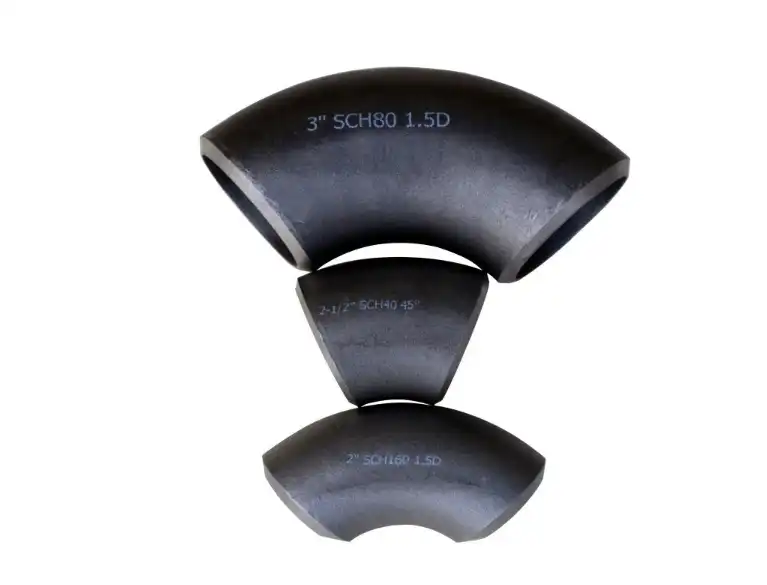
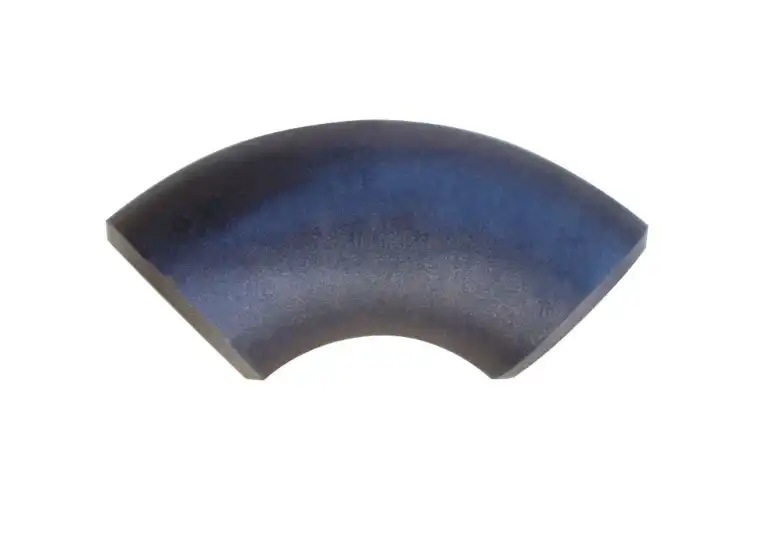
What Is a Steel Pipe Reducer and How Does It Work in Pipeline Systems
Pipeline systems often need to connect pipes with different diameters while maintaining a controlled and reliable flow path. A steel pipe reducer is designed for this purpose. It provides a transition between a larger pipe and a smaller pipe, allowing engineers to change the line size without creating an abrupt connection that could cause unnecessary flow disturbance. Steel pipe reducers are widely used in oil and gas pipelines, refineries, chemical processing plants, power generation facilities, water treatment systems, and general industrial piping. The layout and service circumstances will let the engineer choose either a concentric or an eccentric reducer. The optimal option depends on pipe orientation, fluid characteristics, drainage needs, pump suction circumstances, pressure loss, available space, and appropriate piping standards. It is crucial to understand how a reducer works when planning or buying pipe components. A reducer isn't only a fitting that adjusts pipe size. The shape impacts the fluid velocity, the local pressure loss, the flow behavior, and the mechanical connection between various parts of a pipeline. Material grade, wall thickness, end dimensions, manufacturing standard, and installation standards must also be identical to the rest of the system.
Understanding the Role of a Steel Pipe Reducer in a Pipeline
A reducer is a device for a regulated transition from one pipe diameter to another. Connecting pipes of various diameters might involve difficult manufacturing and a sudden shift in the flow path without an appropriate transition fitting.
If the volumetric flow rate is the same but the pipe is smaller, then the average velocity of the fluid will usually rise, since the cross-sectional area accessible is decreased. The continuity equation describes this connection. Therefore, the reducer changes the velocity profile and also adds to the total pressure loss of the pipe segment.
The shape of the reducer is important, as a badly built or wrongly chosen transition may lead to excessive turbulence, flow separation, vibration, or extra pressure loss. A well-designed reducer causes the transition to be smoother and helps the whole pipe system work as it should.
It is also vital to realize that a reducer is NOT a pressure control valve. It modifies the flow area and hence influences the velocity and pressure characteristics, but it does not control downstream pressure independently as a control valve or pressure-lowering valve would. This difference is especially essential for engineers evaluating the hydraulic performance of a pipeline.
Choosing Between Concentric and Eccentric Reducers
Where Concentric Reducers Work Best?
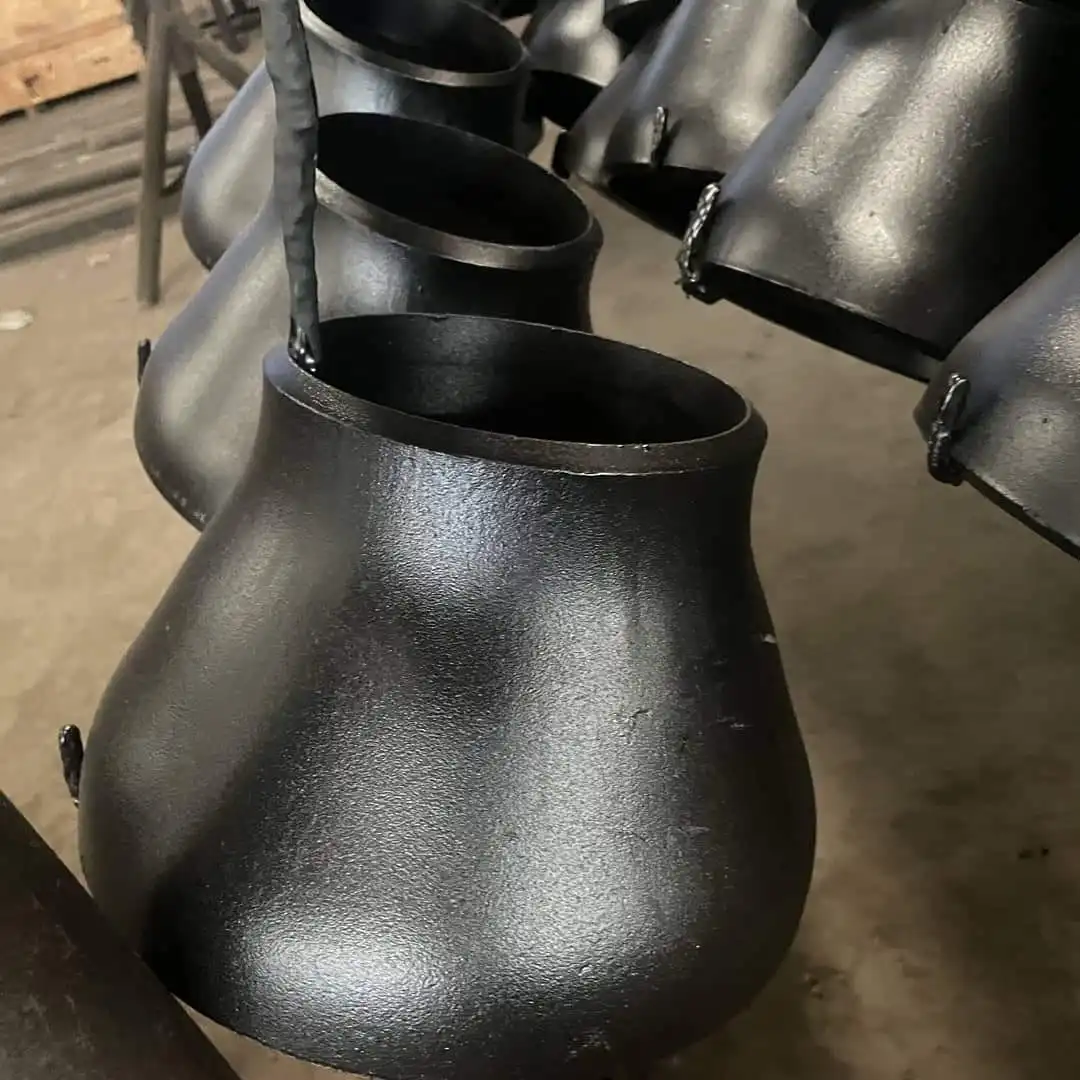
A concentric reducer has a shared center line between the bigger and smaller pipe ends. Its symmetrical design makes it a simple option when the piping layout does not need the flow channel to stay in line with one side of the pipe.
Concentric reducers are often used for vertical pipework because the symmetrical design is suitable when gravity and drainage do not impose a unique need for an offset flow channel. They may also be employed on horizontal pipework if the system designer deems that the concentric transition offers the proper hydraulic and installation characteristics.
A plus for the concentric design is its straightforward geometry. The transition from one diameter to another may be constructed in a progressive manner and consistently, and the fitting is reasonably easy to match with neighboring pipe sections. This makes it an alternative for many general-purpose industrial applications.
But concentric reducers are widespread, and steel pipe reducers are not always right for every setup. However, before choosing the fitting, the engineers still need to analyze the pressure drop, fluid velocity, pipe support, equipment connections, and overall pipeline layout.
When an Eccentric Reducer Is the Better Choice?
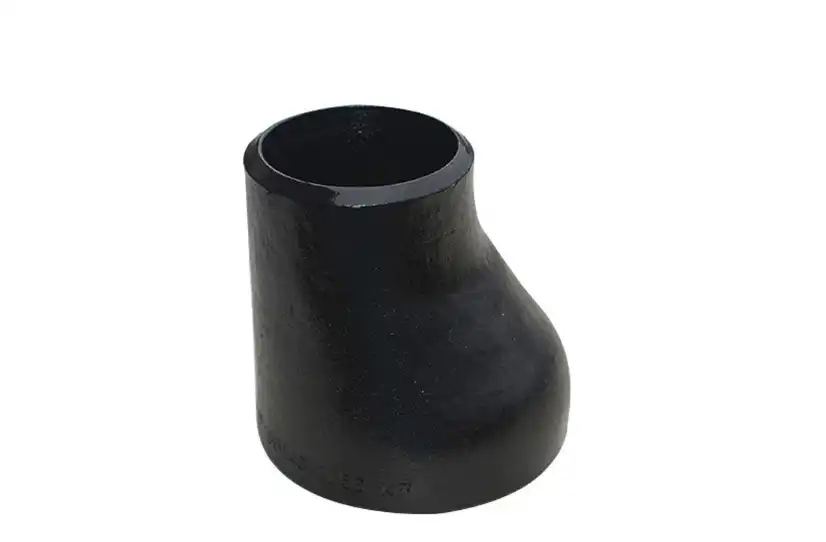
The centerlines of an eccentric reducer are offset, so one side is relatively flat while the other side follows the tapered transition. This shape allows engineers additional flexibility in locating the reducer in a horizontal pipeline.
Eccentric reducers are especially beneficial when there are concerns about liquid drainage, air removal, or pump suction conditions. For example, at a pump suction connection, the eccentric reducer may be positioned to minimize the likelihood of an air pocket at the pump intake. Other systems may pick the orientation to facilitate drainage or to keep the pipe bottom at the appropriate elevation.
That is why it is not technically acceptable to always point the flat side of every eccentric reducer down. Proper orientation is a function of service, pipe arrangement, fluid phase, equipment connections, and technical requirements.
Eccentric reducers are often used when it is desirable to have a constant pipe elevation or eliminate the formation of undesirable pockets inside the line. They are thus especially useful in process pipes where the properties of liquids and gasses have to be carefully examined.
Why Custom Reducers May Be Required?
Standard reducers will work for many typical combinations of pipe diameters and wall thicknesses. But there are occasionally unexpected needs for industrial operations. Sometimes a project may need a non-standard reduction ratio, a peculiar material, an odd wall thickness, specialized end measurements, or a geometry that cannot be achieved with a regular fitting.
For these cases, custom steel pipe reducers may be supplied. The design may be customized to fit existing pipelines, equipment nozzles, space constraints, or project-specific requirements. Customizing may be particularly beneficial for plant retrofits and replacements when current pipe sizes do not perfectly match the available standard fittings.
A custom reducer cannot be considered a normal reducer with varied dimensions. The design must take into account the material qualities, fabrication requirements, welding circumstances, operating pressure and temperature, corrosion concerns, and any regulations or project standards. Here the connection between purchaser, pipe engineer, and manufacturer becomes vital.
How Reducer Geometry Affects Flow Through the Pipeline?
Diameter Changes Influence Fluid Velocity
The most immediate consequence of a reducer is the alteration in flow area. The smaller the internal pipe area, the higher the average velocity of the fluid. This is assuming the volumetric flow rate stays the same.
For example, a process line that goes from a bigger-diameter pipe to a smaller-diameter pipe has less cross-sectional area for the fluid to travel through. The velocity increase may be deliberate or it may need to be regulated depending on the service.
In certain operations higher velocity may be advantageous, but in excess it might cause pressure loss, erosion, vibration, or noise. The tolerance range is very dependent on the fluid, temperature, solids content, material, and operating circumstances. Hence, the choice of a reducer should be part of the whole hydraulic system and not be seen as an isolated component.
Pressure Loss Depends on the Whole Flow Arrangement
Because the pressure behavior is not simply described by pressure always growing or dropping when the pipe width is changed, because steel pipe reducers affect the pressure loss.
The pressure behavior in a real pipeline is a function of flow velocity, fluid characteristics, elevation, friction, the geometry of fittings, the upstream and downstream circumstances, and the presence of additional components. The reducer introduces a local loss, which must be taken into account by engineers calculating the overall pressure drop of the system.
A gradual and proper transition may assist to prevent needless disruptions as opposed to a sudden shift in diameter. This is of more importance in systems with limited available pump head or when energy usage is tightly monitored.
Flow Conditions Matter for Process Reliability
The influence of a reducer is not just on pressure and speed. The changes in the flow direction and velocity profile might affect the behavior of the fluid downstream of the fitting.
In clean liquid service, the primary concerns may be hydraulic loss and velocity. In abrasive slurry service, high velocity might result in erosion. In gas or two-phase service, the reducer shape and orientation might influence phase distribution and the chance for liquid buildup.
Thus, the same reducer setup might have a different behavior in various applications. What suits well in a water treatment line does not necessarily fit well in a high-temperature steam line, abrasive slurry system, or process gas pipeline.
What Should Engineers Check Before Ordering a Steel Pipe Reducer?
Material Grade Must Match the Service
Material selection should begin with the fluid and operating environment rather than with price alone. Carbon steel is widely used for general industrial piping because it provides a useful combination of strength, availability, and cost. Stainless steel may be preferred when corrosion resistance is a major concern, while alloy steels may be required for elevated temperature or other demanding conditions.
The reducer material should be compatible with the adjoining pipe, fittings, and welding procedure. Engineers should also consider corrosion mechanisms, operating temperature, pressure, fluid chemistry, and any project-specific material requirements.
For common carbon and alloy steel butt-welding fittings, ASTM A234 is one relevant material specification, while dimensional requirements for many factory-made wrought butt-welding fittings are covered by ASME B16.9. The applicable standards should always be confirmed against the project's design code and purchasing specification rather than assumed from the fitting name alone.
Diameter, Wall Thickness, and End Dimensions Need to Match
Pipe diameter is only one part of the reducer specification. The wall thickness or schedule also matters because the reducer must connect correctly to the pipe and meet the mechanical requirements of the system.
A purchasing specification may therefore need to identify the larger nominal pipe size, smaller nominal pipe size, wall thickness or schedule, material grade, reducer type, connection dimensions, and applicable standard.
This information is particularly important when the reducer will be welded directly to existing pipe. Even if the nominal sizes appear correct, differences in wall thickness or end preparation can create fabrication problems and additional work at the installation site.
Pressure and Temperature Should Be Evaluated Together
Operating pressure and temperature affect material selection and mechanical performance. A reducer used in a low-pressure water line has very different requirements from one installed in a high-temperature process system.
The design should consider the maximum and minimum operating temperatures, design pressure, transient conditions, thermal expansion, and the applicable piping code. If the system experiences frequent temperature cycling, the mechanical behavior of the fitting and adjacent welds may also require additional consideration.
This is one reason a supplier should receive the actual project specification instead of only a request such as “one carbon steel reducer.” The more complete the technical information, the easier it is to confirm whether the proposed steel pipe reducers are appropriate.
Installation Details That Can Affect Reducer Performance
Proper Alignment Reduces Installation Problems
A reducer should be properly aligned with the connected pipe before welding or other permanent connection work begins. Poor alignment can introduce additional stress into the piping system and make installation more difficult.
For eccentric reducers, orientation deserves particular attention. The required position of the offset depends on the purpose of the reducer and the surrounding equipment. Pump suction lines, drainable liquid lines, process piping, and gas systems may have different requirements.
The installation drawing or piping isometric should therefore determine the orientation rather than relying on a general rule that applies to every system.
Welding and Joint Preparation Need Attention
For butt-welding reducers, the end preparation and dimensions should be compatible with the connected pipe and the applicable welding procedure. The quality of the weld is important because the fitting itself can meet the required specification while the completed joint still becomes a weak point if fabrication is poorly controlled.
Before welding, installers should verify dimensions, alignment, cleanliness, material identification, and the applicable welding procedure. After welding, the project may require visual inspection, nondestructive examination, pressure testing, or other quality checks depending on the service and governing code.
Pipe Supports Should Account for the Fitting
Reducers also form part of the mechanical structure of the pipeline. Changes in diameter can alter the local weight distribution, and the connected piping may experience thermal movement or vibration.
Proper support and restraint should therefore be considered as part of the overall piping design. The reducer should not be expected to compensate for inadequate pipe support. In systems carrying heavy fluids, high-temperature media, or abrasive materials, mechanical loads and vibration deserve particular attention.
Where Steel Pipe Reducers Are Commonly Used?
Steel reducers are used across a broad range of industrial applications because changes in pipe diameter are common in process and utility systems.
In oil and gas facilities, reducers can be found in gathering systems, processing units, transmission lines, and supporting utility piping. The required material and design depend on the transported medium, pressure, temperature, corrosion environment, and project specifications.
In chemical plants, reducer selection can be more closely tied to fluid compatibility and corrosion resistance. Stainless steel or other specialized materials may be required when the process medium is aggressive or when contamination must be minimized.
Water treatment facilities also use reducers throughout process and utility piping. In these systems, engineers may prioritize corrosion resistance, hydraulic performance, ease of maintenance, and compatibility with pumps, valves, and other equipment.
Power plants and industrial manufacturing facilities use reducers in cooling water, steam, compressed air, process water, and other utility systems. The operating conditions can vary significantly even within the same facility, so reducer selection should always be based on the specific line service.
Conclusion
Steel pipe reducers are an important part of industrial piping because they provide a practical transition between pipes of different diameters while allowing engineers to manage changes in flow area and velocity. Concentric reducers are suitable for many general applications, while eccentric reducers offer advantages when drainage, pipe elevation, pump suction, or air pocket control needs to be considered. Custom designs can address unusual dimensions and project-specific requirements that standard fittings cannot accommodate.
Selecting the right reducer requires more than identifying the large and small pipe sizes. Material compatibility, wall thickness, operating pressure and temperature, applicable standards, installation orientation, welding requirements, and the characteristics of the transported fluid all influence the final choice. A correctly specified fitting can make installation easier and help avoid unnecessary hydraulic, mechanical, and maintenance problems throughout the service life of the pipeline.
Cangzhou Oudi Pipe Manufacture Co., Ltd. supplies carbon steel, stainless steel, concentric, and eccentric reducers for industrial piping applications. The company can support projects requiring different materials, dimensions, and reducer configurations, with products manufactured according to applicable international pipeline standards. By providing project requirements such as pipe sizes, material grade, schedule, operating conditions, and applicable specifications, customers can work with the engineering team to identify a suitable reducer for their application. Contact us at oudi-04@oudiguandao.com for technical support, quotations, or product information.
FAQ
1. How do steel pipe reducers assist in the regulation of pressure within pipeline systems?
Steel pipe reducers facilitate a progressive transition between pipe diameters, thereby reducing turbulence and managing pressure fluctuations within the system.
2. When selecting the material for a steel pipe reducer, what factors should be taken into account?
The chemical composition of transported fluids, operating temperatures, pressure conditions, and compatibility with the existing pipe system are all critical factors.
3. In what ways do steel pipe reducers aid in the conservation of energy in pipeline systems?
Steel pipe reducers contribute to the reduction of operational costs and pumping requirements by reducing energy losses caused by friction and turbulence.
4. What is the significance of the proper installation of steel pipe reducers?
The optimal performance, prevention of leakage, and reduction of tension on the connectors and connected pipelines are all guaranteed by proper installation.
References
1. Smith, J. (2019). "Advanced Piping Design: Principles and Applications of Steel Pipe Reducers." Journal of Industrial Engineering, 45(3), 278-295.
2. Johnson, A., & Brown, R. (2020). "Fluid Dynamics in Pipeline Systems: The Role of Steel Pipe Reducers." International Journal of Mechanical Engineering, 12(2), 156-170.
3. Thompson, E. (2018). "Materials Science in Piping: Selecting the Right Steel for Pipe Reducers." Materials Today, 21(4), 412-425.
4. Garcia, M., et al. (2021). "Energy Efficiency in Industrial Pipelines: A Comprehensive Study of Steel Pipe Reducers." Energy and Buildings, 203, 109423.
5. Wilson, K. (2017). "Installation Best Practices for Steel Pipe Fittings and Reducers." Handbook of Piping Engineering, 3rd Edition, Wiley & Sons.
6. Lee, S., & Park, C. (2022). "Maintenance Strategies for Long-lasting Pipeline Systems: Focus on Steel Pipe Reducers." Journal of Maintenance Engineering, 18(1), 45-60.

Need help finding the right solution with our experts. Please contact us.
SINCE 1998 Your Reliable Pipeline Manufacturer