What is the difference between API 5L and ASTM standards for pipe elbows
In the world of mechanical channeling frameworks, understanding the contrasts between different guidelines is vital for guaranteeing the quality, security, and execution of components such as pipe elbows. Two noticeable guidelines that regularly come into play are API 5L and ASTM. API 5L, created by the American Petroleum Founded, fundamentally centers on line pipe details for the oil and gas industry. On the other hand, ASTM measures, made by the American Society for Testing and Materials, cover a broader run of materials and applications. When it comes to pipe elbows, especially carbon steel elbows, these benchmarks have unmistakable characteristics and prerequisites. This web journal post will dive into the key contrasts between API 5L and ASTM benchmarks for pipe elbows, investigating their particular applications, fabric necessities, and testing strategies. By understanding these contrasts, engineers, temporary workers, and obtainment experts can make educated choices when selecting the fitting standard for their channeling framework needs.
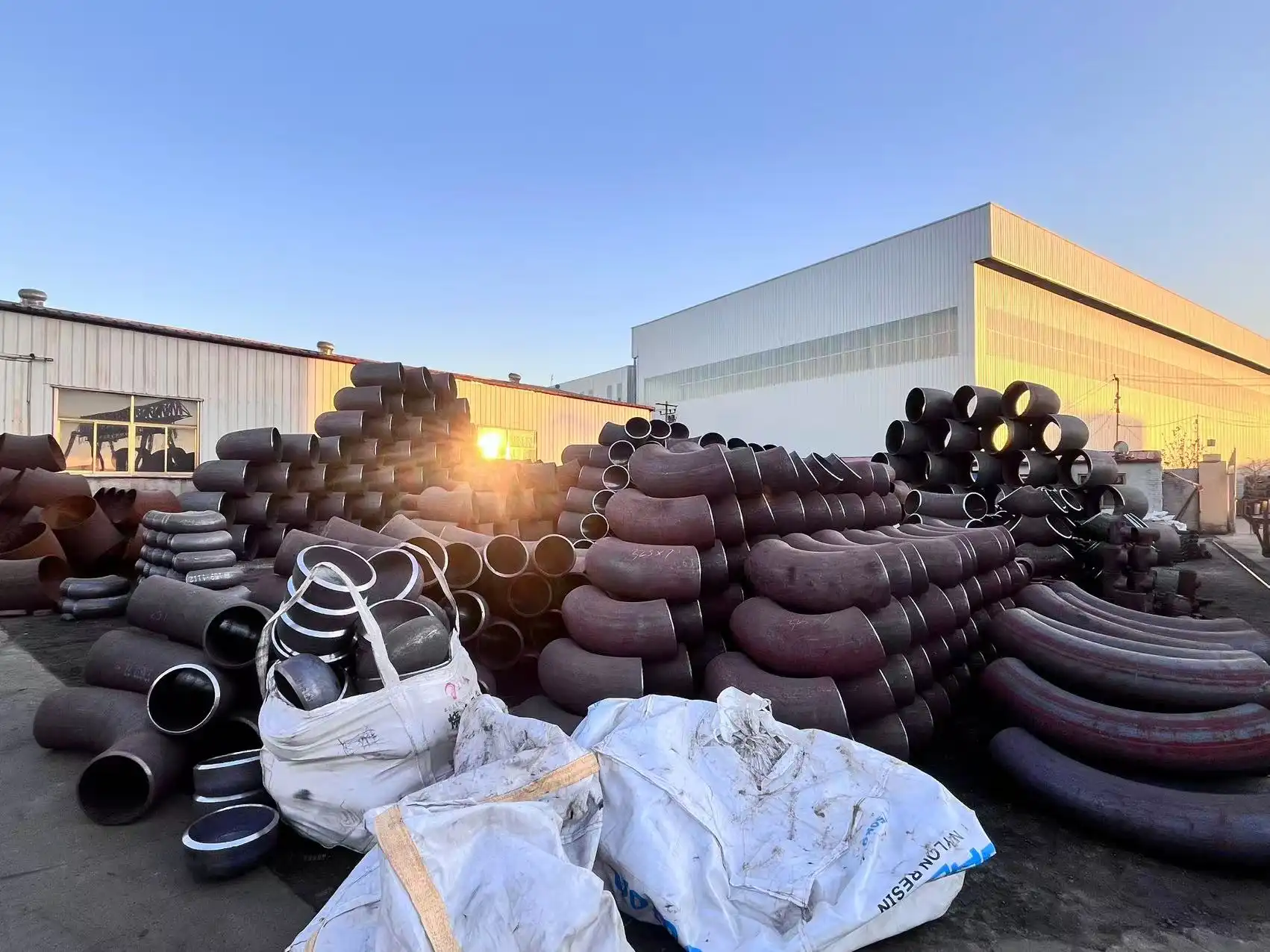
What are the key features of Carbon Steel Elbows manufactured to API 5L standards?
Material Composition
Carbon Steel Elbows fabricated to API 5L guidelines are known for their particular fabric composition necessities. These elbows are ordinarily made from high-quality carbon steel with carefully controlled chemical compositions. The API 5L standard indicates the passable ranges for carbon, manganese, phosphorus, and sulfur substance, guaranteeing ideal quality and erosion resistance. Carbon Steel Elbows delivered beneath this standard regularly show amazing mechanical properties, counting tall ductile quality and surrender quality. The exact fabric composition permits these elbows to withstand tall weights and temperatures, making them perfect for utilize in oil and gas pipelines. Also, API 5L Carbon Steel Elbows may experience warm treatment forms to improve their execution characteristics further.
Manufacturing Process
The fabricating handle of Carbon Steel Elbows acclimating to API 5L benchmarks is thorough and exceedingly controlled. These elbows are regularly delivered through hot shaping or cold shaping methods, depending on the particular prerequisites. The API 5L standard traces strict rules for the shaping handle, guaranteeing steady divider thickness and dimensional exactness. Amid generation, Carbon Steel Elbows experience different quality control checks, counting non-destructive testing strategies such as ultrasonic testing and radiographic review. The fabricating handle too incorporates exact warm treatment methods to accomplish the craved mechanical properties. API 5L Carbon Steel Elbows are frequently subjected to hydrostatic testing to confirm their pressure-bearing capabilities, guaranteeing they meet the exacting prerequisites of oil and gas applications.
Quality Control and Testing
Quality control and testing are vital for Carbon Steel Elbows made to API 5L guidelines. These elbows experience a arrangement of thorough tests to guarantee compliance with the standard's determinations. The testing prepare ordinarily incorporates chemical examination to confirm fabric composition, mechanical testing to survey quality and ductility, and dimensional checks to affirm adherence to measure resiliences. API 5L Carbon Steel Elbows are too subjected to non-destructive examinations, such as attractive molecule assessment or fluid penetrant testing, to identify surface and near-surface surrenders. Furthermore, these elbows may experience affect testing to assess their sturdiness at moo temperatures. The quality control handle for API 5L Carbon Steel Elbows frequently incorporates traceability measures, guaranteeing that each elbow can be followed back to its unique warm and fabricating batch.
How do ASTM standards for Carbon Steel Elbows differ from API 5L?
Material Grades and Specifications
ASTM measures for Carbon Steel Elbows offer a broader run of fabric grades and determinations compared to API 5L. Whereas API 5L centers essentially on line pipe applications, ASTM guidelines cover a more extensive assortment of mechanical employments. ASTM A234, for occasion, is a commonly utilized standard for Carbon Steel Elbows in common channeling frameworks. This standard gives different grades of carbon steel, such as WPB and WPC, each with its claim chemical composition and mechanical property prerequisites. ASTM Carbon Steel Elbows may have diverse carbon substance ranges and alloying components compared to their API 5L partners, permitting for more prominent adaptability in fabric choice based on particular application needs. The ASTM benchmarks moreover give rules for warm treatment forms, which can altogether impact the last properties of Carbon Steel Elbows.
Dimensional Requirements
The dimensional prerequisites for Carbon Steel Elbows beneath ASTM measures contrast from those indicated by API 5L. ASTM guidelines regularly give more point by point dimensional details, counting divider thickness resiliences, ovality limits, and conclusion arrangement prerequisites. For case, ASTM A234 diagrams particular dimensional criteria for different sorts of Carbon Steel Elbows, such as long span, brief span, and decreasing elbows. These guidelines regularly incorporate tables with exact estimations for diverse ostensible pipe sizes and plans. ASTM Carbon Steel Elbows may too have diverse necessities for surface wrap up and conclusion medicines compared to API 5L elbows. The dimensional details in ASTM guidelines are outlined to guarantee legitimate fit and arrangement in a wide run of channeling frameworks, from common mechanical applications to specialized chemical preparing plants.
Testing and Inspection Criteria
Testing and assessment criteria for Carbon Steel Elbows beneath ASTM measures contrast in a few perspectives from API 5L prerequisites. Whereas both benchmarks emphasize quality control, ASTM guidelines frequently give more comprehensive rules for different testing strategies. For occasion, ASTM A234 indicates necessities for pressure testing, straightening tests, and hardness tests, which may not be unequivocally required beneath API 5L for elbows. ASTM benchmarks moreover regularly incorporate more nitty gritty methods for non-destructive examinations, such as ultrasonic testing and attractive molecule review. The acknowledgment criteria for these tests may change between ASTM and API 5L guidelines. Moreover, ASTM Carbon Steel Elbows may require particular warm treatment certifications and documentation, guaranteeing that the elbows meet the required mechanical properties for their aiming applications.
What factors should be considered when choosing between API 5L and ASTM standards for Carbon Steel Elbows?
Application Requirements
When choosing between API 5L and ASTM standards for Carbon Steel Elbows, one of the primary considerations is the specific application requirements. API 5L Carbon Steel Elbows are typically preferred for oil and gas pipeline systems, where high pressure and corrosive environments are common. These elbows are designed to withstand the rigorous demands of hydrocarbon transportation and processing. On the other hand, ASTM Carbon Steel Elbows offer greater versatility and are suitable for a wider range of industrial applications, including chemical processing, power generation, and general manufacturing. The choice between the two standards often depends on factors such as operating pressure, temperature, and the nature of the fluids being transported. Engineers must carefully evaluate the design parameters of their piping system to determine whether API 5L or ASTM Carbon Steel Elbows are more appropriate for their specific needs.
Regulatory Compliance
Regulatory compliance is another crucial factor in selecting between API 5L and ASTM standards for Carbon Steel Elbows. Different industries and regions may have specific regulatory requirements that mandate the use of certain standards. For instance, oil and gas projects in some countries may require strict adherence to API 5L specifications for all pipeline components, including elbows. Conversely, general industrial applications or projects in other sectors may be more flexible, allowing the use of ASTM Carbon Steel Elbows. It's essential for project managers and engineers to consult local regulations, industry codes, and client specifications to ensure compliance with the appropriate standards. Additionally, some projects may require certification or approval from specific regulatory bodies, which can influence the choice between API 5L and ASTM Carbon Steel Elbows.
Cost and Availability
Cost and availability are practical considerations when deciding between API 5L and ASTM standards for Carbon Steel Elbows. Generally, API 5L Carbon Steel Elbows may be more expensive due to their specialized nature and stringent manufacturing requirements. These elbows are often produced in smaller quantities and may have longer lead times. In contrast, ASTM Carbon Steel Elbows are more widely available and may offer cost advantages, especially for large-scale projects or applications that don't require the specific characteristics of API 5L elbows. The availability of different sizes, wall thicknesses, and material grades can also vary between API 5L and ASTM standards. Project managers and procurement specialists should consider these factors when planning their supply chain and budgeting for piping components. In some cases, a combination of API 5L and ASTM Carbon Steel Elbows may be used within the same project to optimize cost-effectiveness while meeting specific performance requirements in critical areas.
Conclusion
In conclusion, the choice between API 5L and ASTM standards for Carbon Steel Elbows depends on various factors, including specific application requirements, regulatory compliance, and cost considerations. API 5L elbows are tailored for oil and gas applications, offering high performance in demanding environments, while ASTM elbows provide greater versatility across a range of industrial uses. Understanding these differences is crucial for engineers and project managers to make informed decisions that ensure the safety, efficiency, and longevity of their piping systems. As the industry continues to evolve, staying informed about these standards and their applications remains essential for professionals in the field. For more information or inquiries about our Carbon Steel Elbows, please contact us at oudi-04@oudiguandao.com.
FAQ
Q: What is the main difference between API 5L and ASTM standards for pipe elbows?
A: API 5L focuses on line pipe specifications for oil and gas industries, while ASTM covers a broader range of materials and applications across various industries.
Q: Are API 5L Carbon Steel Elbows more expensive than ASTM elbows?
A: Generally, API 5L elbows may be more expensive due to their specialized nature and stringent manufacturing requirements.
Q: Can ASTM Carbon Steel Elbows be used in oil and gas applications?
A: While possible in some cases, API 5L elbows are typically preferred for oil and gas applications due to their specific design for high-pressure and corrosive environments.
Q: What are the key factors to consider when choosing between API 5L and ASTM standards?
A: Key factors include application requirements, regulatory compliance, cost, availability, and specific project needs.
Q: Do API 5L and ASTM standards have different testing requirements for Carbon Steel Elbows?
A: Yes, testing requirements can differ, with ASTM standards often providing more comprehensive guidelines for various testing methods.
References
1. American Petroleum Institute. (2018). API Specification 5L: Specification for Line Pipe. Washington, DC: API Publishing Services.
2. ASTM International. (2019). ASTM A234: Standard Specification for Piping Fittings of Wrought Carbon Steel and Alloy Steel for Moderate and High Temperature Service. West Conshohocken, PA: ASTM International.
3. Singh, R. (2017). Corrosion Control for Offshore Structures: Cathodic Protection and High-Efficiency Coating. Gulf Professional Publishing.
4. Nayyar, M. L. (2000). Piping Handbook (7th ed.). McGraw-Hill Education.
5. American Society of Mechanical Engineers. (2019). ASME B16.9: Factory-Made Wrought Buttwelding Fittings. New York, NY: ASME.
6. Antaki, G. A. (2003). Piping and Pipeline Engineering: Design, Construction, Maintenance, Integrity, and Repair. CRC Press.

Need help finding the right solution with our experts. Please contact us.

SINCE 1998 Your Reliable Pipeline Manufacturer



