What Makes a Pipe Tee Fitting Compliant with ASME B16.9
A pipe tee fitting used in a butt-welded piping system needs more than the correct nominal size to be considered compliant with ASME B16.9. Its dimensions, tolerances, end preparation, material specification, marking, and applicable inspection requirements all need to be checked against the relevant project and product standards. ASME B16.9 is the standard for factory-made wrought buttwelding fittings, covering products such as tees, elbows, reducers, caps, and other fittings within its scope. ASME identifies the standard as covering overall dimensions, tolerances, ratings, testing, and markings for factory-made wrought buttwelding fittings in sizes from NPS 1/2 through NPS 48. For engineers and purchasers, this distinction matters because compliance is not simply a matter of stamping “ASME B16.9” on a fitting. A pipe tee must actually match the dimensional requirements of the applicable standard, while its material properties may need to comply with a separate material specification such as ASTM A234. The same principle applies when purchasing related fittings such as ASME B16.9 carbon steel elbows, where the dimensional standard and material specification need to be considered together. Understanding how these requirements work together can help buyers avoid incorrect dimensions, unsuitable materials, incomplete documentation, and problems during installation.
Understanding What ASME B16.9 Actually Covers?
ASME B16.9 is often mentioned as though it were a complete specification for every aspect of a pipe fitting. In practice, it is more useful to view it as a dimensional and product standard for factory-made wrought butt-welding fittings. Its requirements provide a common basis for manufacturing and purchasing fittings so that products from different manufacturers can be selected and installed with greater consistency.
For a pipe tee, this means the standard is particularly relevant to the geometry of the fitting and the dimensions needed to connect it with compatible piping. The run size, branch size, center-to-end dimensions, wall thickness considerations, and end configuration all need to be appropriate for the specified fitting. These dimensions are not simply aesthetic features. They determine whether the tee can be positioned correctly and whether its ends can be prepared and welded to the connected pipe without creating an unexpected mismatch.
It is also important to understand that ASME B16.9 does not replace the material specification. A carbon steel tee may be manufactured to the dimensional requirements of ASME B16.9 while its material is specified according to ASTM A234 or another applicable specification. ASTM A234/A234M covers wrought carbon steel and alloy steel fittings for moderate and elevated temperature service and specifically addresses fittings covered by standards including ASME B16.9.
This distinction is one of the first things an engineer should check when reviewing a supplier's technical documents. Saying that a tee is “ASME B16.9 compliant” without identifying the material grade, size, wall thickness, and applicable project requirements does not provide enough information for a complete technical evaluation.
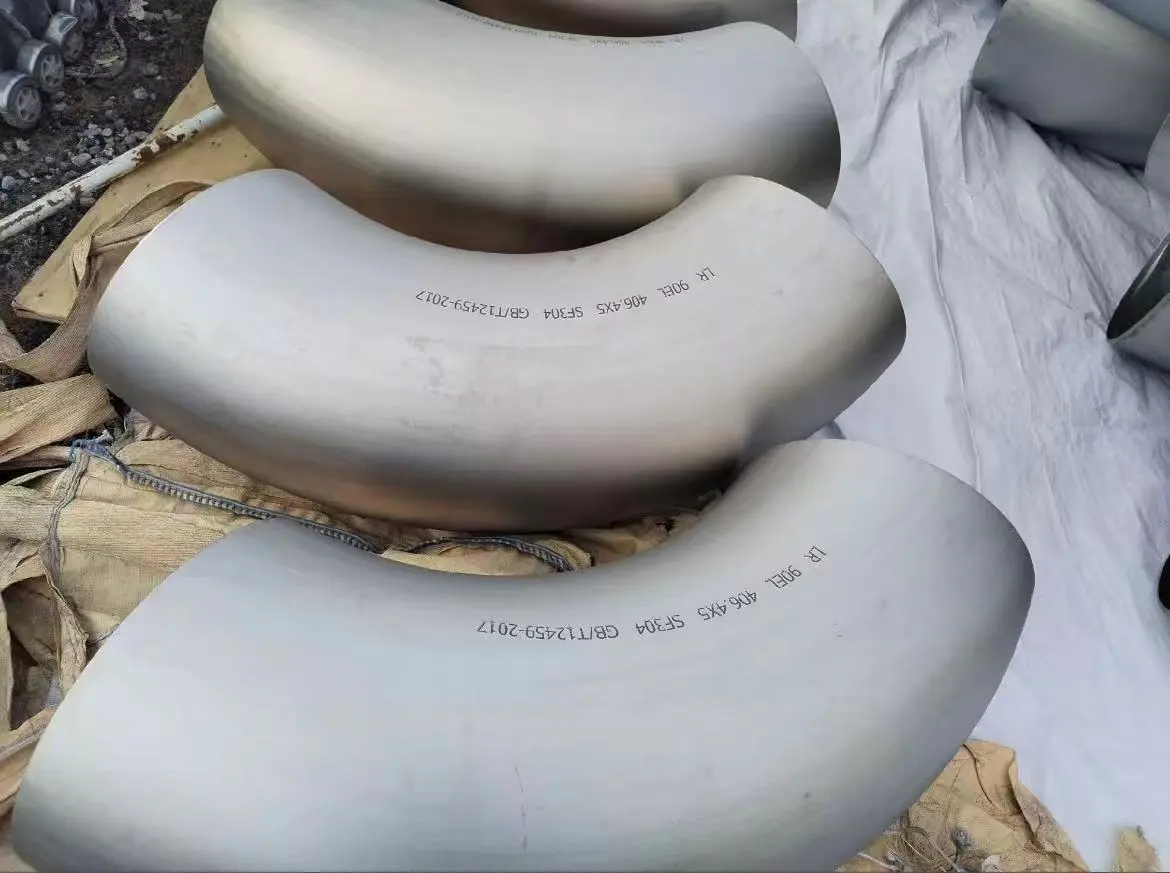
Dimensional Accuracy Is the First Practical Compliance Check
The easiest place to begin when evaluating a pipe tee is its dimensional information. ASME B16.9 establishes dimensional requirements intended to provide consistency between factory-made butt-welding fittings and the piping systems in which they are installed. For this reason, a tee should be checked against the applicable nominal pipe size and fitting configuration rather than judged only by its outside appearance.
Confirm the Run and Branch Sizes
A tee has three connection points, so its dimensional requirements are more complicated than those of a straight pipe component. An equal tee has the same nominal size on the run and branch, while a reducing tee has different sizes. The purchase specification should therefore clearly identify both the run size and branch size.
For example, a reducing tee should not be described only as a “6-inch tee.” The buyer needs to know whether the fitting is intended to connect a 6-inch run to a 4-inch branch, a 6-inch run to a 3-inch branch, or another combination. The nominal sizes determine the required fitting configuration and directly affect installation.
This is also where the difference between a tee and an elbow becomes important. An elbow changes the direction of flow, while a tee provides a branch connection. Although ASME B16.9 carbon steel elbows are covered by the ASME B16.9 product standard, their dimensional characteristics are different. Using dimensional information for an elbow to evaluate a tee would therefore be inappropriate.
Check Center-to-End Dimensions and Overall Geometry
The center-to-end dimensions of a tee determine how far each outlet extends from the fitting's centerline. These dimensions affect the amount of space required for installation and the alignment of the connected pipe.
For a purchaser, dimensional inspection should not stop at nominal size. The supplier's drawing or inspection record should be compared with the specified dimensions for the particular tee configuration. This becomes especially important in prefabricated piping systems, where several fittings are assembled before being delivered to the installation site. Even a relatively small dimensional difference can create alignment problems when multiple components are connected together.
A properly controlled manufacturing process helps maintain consistency between production batches. This is one reason dimensional inspection remains an important part of quality control even when the material itself has already passed chemical and mechanical testing.
Pay Attention to Wall Thickness and Schedule
Wall thickness is another critical part of tee selection. The fitting needs to be compatible with the connected pipe in terms of the specified wall thickness or schedule, subject to the design requirements of the piping system.
However, it is not accurate to treat every schedule designation as a direct requirement created by ASME B16.9 itself. Schedule information is commonly used to identify pipe wall thickness, while the fitting standard establishes the applicable fitting dimensions and tolerances. The actual material and pressure design also depend on the relevant piping code, material specification, temperature, pressure, and project requirements.
For this reason, a buyer should compare the tee designation with the pipe specification rather than assuming that a matching nominal diameter automatically means the two components are suitable for the same service.
Material Compliance Requires More Than the ASME B16.9 Name
One of the most important corrections to the original article is the relationship between ASME B16.9 and material standards. A fitting cannot be fully evaluated by looking at “ASME B16.9” alone. The buyer must also identify the material specification and grade required for the application.
ASTM A234 Is Commonly Used for Carbon Steel Fittings
For wrought carbon steel and alloy steel fittings used in pressure piping, ASTM A234/A234M is a commonly referenced material specification. It covers seamless and welded fittings intended for moderate and elevated temperature service and is specifically written to work with several fitting standards, including ASME B16.9.
For a carbon steel tee manufactured as ASTM A234 WPB, the material documentation should demonstrate compliance with the applicable requirements of that material specification. Chemical composition and mechanical properties are therefore part of the material verification process, rather than being treated as if they were simply dimensional requirements under B16.9.
This distinction gives purchasers a clearer way to review documents. The ASME B16.9 portion of the evaluation should focus heavily on fitting configuration, dimensions, tolerances, end details, marking, and other applicable product requirements, while the ASTM material specification should be checked for the chemical and mechanical requirements of the selected grade.
Review Chemical Composition Through the Material Certificate
Chemical composition is particularly important when ASME B16.9 carbon steel elbows and the tee will be welded into a larger piping system. The material grade needs to be identified and supported by appropriate material documentation.
For ASTM A234 WPB, the relevant material certificate normally provides the heat or cast identification together with chemical and mechanical test results required by the applicable specification. This gives the purchaser a traceable basis for confirming that the supplied material corresponds to the ordered grade.
Instead of simply stating that a tee “has the correct carbon content,” a technically stronger purchasing process checks the actual material certificate against the specified grade and applicable specification. This is more useful because the exact limits depend on the material standard and grade being purchased.
Verify Mechanical Properties and Heat Treatment
Mechanical properties such as tensile strength, yield strength, and elongation are also important for carbon steel fittings. ASTM A234 addresses these requirements for the applicable grades, while manufacturing and heat treatment requirements help establish the required condition of the finished fitting.
The original article presented heat treatment as though ASME B16.9 itself established all of these requirements. That is too broad. In a real procurement process, the applicable material specification, purchase specification, piping code, and service conditions should be considered together.
This approach is particularly important for systems operating at elevated temperatures or under significant pressure. A fitting may have the correct dimensions and still be unsuitable if the selected material grade does not meet the service requirements of the piping system.
Manufacturing Controls Help Maintain Consistent Tee Quality
Once the required material and dimensions have been established, the manufacturing process becomes another important part of compliance. Factory-made wrought fittings can be produced using different forming methods depending on the product design, material, and manufacturing capability. ASTM A234, for example, recognizes forming operations such as hammering, pressing, piercing, extruding, upsetting, rolling, bending, fusion welding, and machining, provided the resulting fitting meets the applicable requirements.
Forming Must Preserve the Required Geometry
The purpose of forming is not simply to create the general shape of a tee. The process must produce a fitting that can meet the required dimensions without introducing harmful imperfections.
During forming, manufacturers need to control factors such as temperature, deformation, tooling condition, and final geometry. Poor process control can result in dimensional deviations, excessive thinning, distortion, or surface imperfections. These problems may not always be obvious when looking at the fitting from a distance, which is why dimensional inspection remains necessary after forming.
For a purchaser, this means that the manufacturing process should be supported by inspection records rather than relying only on a visual claim that the tee was manufactured to ASME B16.9.
End Preparation Must Match the Welding Application
Because ASME B16.9 covers butt-welding fittings, the ends of the tee need to be suitable for connection to the corresponding pipe. End preparation and dimensional consistency directly affect fit-up and welding.
A mismatch between the pipe and fitting can create unnecessary fabrication work at the job site. In a large project, repeated fit-up problems can increase labor costs and delay installation even when the fittings themselves appear to be acceptable.
This is why experienced purchasers normally provide the supplier with complete dimensional and material requirements for ASME B16.9 carbon steel elbows instead of requesting a fitting using only a nominal size. The more clearly the connection requirements are defined, the easier it is for the manufacturer to produce and inspect the correct fitting.
Inspection and Documentation Make Compliance Verifiable
A fitting should not be considered compliant simply because a supplier states that it meets ASME B16.9. Compliance needs to be supported by records that allow the buyer to verify what was manufactured and what was tested.
Dimensional Inspection Should Be Traceable
Dimensional inspection can include verification of the fitting's nominal size, branch configuration, wall thickness, center-to-end dimensions, overall geometry, and other applicable measurements. The exact inspection points should correspond to the product specification and purchase requirements.
For critical projects, the purchaser may request an inspection report showing actual measured values rather than a simple statement that the product passed inspection. This provides much stronger evidence of conformity.
The inspection process is particularly valuable for reducing installation risk. If a tee has a dimensional deviation that is discovered only after it reaches the construction site, replacing it may involve additional transportation, fabrication, and labor costs. Detecting the issue before shipment is normally much more efficient.
Material Test Reports Provide Product Traceability
Material Test Reports, commonly referred to as MTRs, are another important part of documentation for carbon steel fittings. They can provide information about the material heat, chemical composition, mechanical test results, and applicable material specifications.
Traceability becomes more valuable when the piping system is subject to strict quality requirements. The heat number marked on the fitting can be linked to the corresponding material documentation, allowing the purchaser to connect the physical product with its manufacturing records.
This is one area where a supplier's documentation practices can tell a buyer a great deal about the manufacturer's quality system. A manufacturer that can consistently maintain heat traceability, inspection records, and material documentation is generally better positioned to support projects where quality records must be reviewed or retained.
Testing Requirements Should Follow the Applicable Specification
The original article listed UT, MPI, and PT as though they were universally required by ASME B16.9 for carbon steel elbows and tees. That is too absolute.
Non-destructive testing requirements can depend on the applicable product specification, purchaser requirements, project specification, piping code, and service conditions. A buyer should therefore avoid assuming that every ASME B16.9 tee must automatically undergo every NDT method.
Where additional inspection is required, the purchase order should clearly state the applicable testing method, acceptance criteria, inspection extent, and reporting requirements. This prevents disagreements between the supplier and purchaser after manufacturing has already started.
Marking and Identification Should Be Checked Before Shipment
Proper identification is another practical part of purchasing a compliant fitting. Markings allow the physical fitting to be connected with its technical documentation and help prevent different sizes or material grades from being mixed during handling and installation.
Depending on the applicable requirements, identification can include information such as the manufacturer's identification, material designation, nominal size, and other required markings. The exact marking requirements should be checked against the applicable edition of ASME B16.9 and the purchase specification rather than relying on a generic marking list.
For large projects, consistent identification becomes especially important because hundreds or thousands of fittings may be delivered in multiple batches. Clear markings reduce the chance that a tee intended for one line will be installed in another line with different material or dimensional requirements.
Conclusion
Compliance with ASME B16.9 for pipe tee fittings is not based on a single dimension or a label placed on the fitting. A reliable evaluation considers the fitting's configuration, dimensions, tolerances, end preparation, identification, material specification, inspection records, and any additional requirements imposed by the project. ASME B16.9 provides the framework for factory-made wrought butt-welding fittings, while material specifications such as ASTM A234 address the chemical, mechanical, and manufacturing requirements applicable to the selected carbon steel grade.
For buyers and engineers, the most effective approach is to review these requirements together rather than treating ASME B16.9 as a standalone specification for every characteristic of a tee. Checking the dimensional data, confirming the material grade through an MTR, maintaining traceability, and clearly defining additional inspection requirements can significantly reduce installation problems and procurement risks. The same principle applies to related products such as ASME B16.9 carbon steel elbows, where correct dimensional compliance and appropriate material documentation are equally important. A manufacturer that can provide consistent dimensions, traceable materials, clear inspection records, and documentation aligned with the project specification gives purchasers a much stronger basis for selecting fittings for demanding piping applications.
For more information on ASME B16.9 compliant products, including ASME B16.9 carbon steel elbows and other fittings, please contact us at oudi-04@oudiguandao.com.
References
1. American Society of Mechanical Engineers. (2018). ASME B16.9-2018: Factory-Made Wrought Buttwelding Fittings. New York: ASME.
2. Nayyar, M. L. (2000). Piping Handbook (7th ed.). McGraw-Hill Education.
3. Smith, P. (2015). Piping Materials Guide: Selection and Applications. Elsevier.
4. ASTM International. (2019). ASTM A234 / A234M-19: Standard Specification for Piping Fittings of Wrought Carbon Steel and Alloy Steel for Moderate and High-Temperature Service. West Conshohocken, PA: ASTM International.
5. American Welding Society. (2015). AWS D1.1/D1.1M:2015: Structural Welding Code - Steel. Miami: AWS.
6. Antaki, G. A. (2003). Piping and Pipeline Engineering: Design, Construction, Maintenance, Integrity, and Repair. CRC Press.

Need help finding the right solution with our experts. Please contact us.

SINCE 1998 Your Reliable Pipeline Manufacturer



