What Makes Chemical Industry Carbon Steel Elbow Industry Grade?
Industry-grade chemical industry carbon steel elbows meet stringent international standards like ASTM A234, ASME B16.9, and API specifications, ensuring they withstand corrosive chemicals, extreme pressures, and temperature fluctuations. These fittings undergo rigorous heat treatment, dimensional accuracy testing, and non-destructive examination to guarantee mechanical integrity and chemical compatibility. Quality certifications such as ISO 9001 and special equipment manufacturing licenses validate their reliability for critical applications in petrochemical plants, refineries, and chemical processing facilities where safety and durability are non-negotiable.
Understanding Chemical Industry Carbon Steel Elbows
Defining Carbon Steel Elbows in Chemical Applications
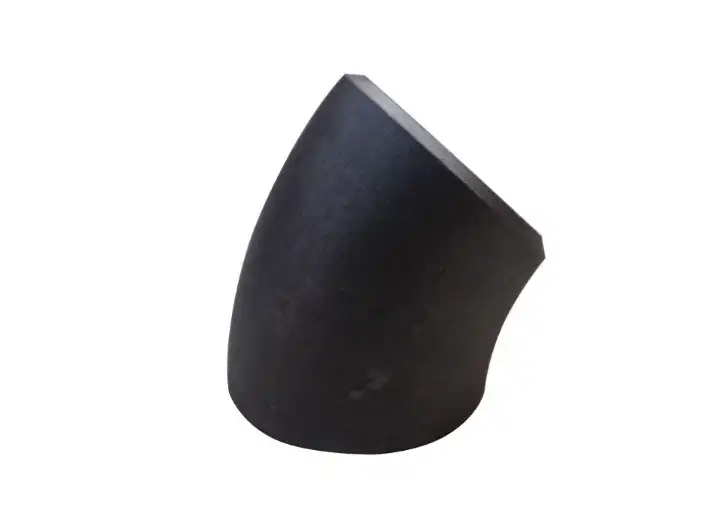
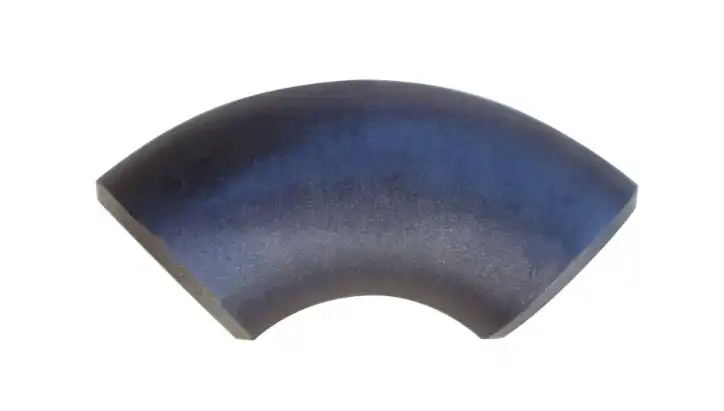
Carbon steel pipe elbows redirect fluid flow in pipeline systems, typically available in 45-degree and 90-degree configurations. In chemical industry contexts, these fittings are manufactured from controlled-composition carbon steel containing 0.05% to 0.30% carbon, with carefully balanced manganese (0.29%-1.06%) for toughness and strictly limited sulfur and phosphorus (<0.035%) to prevent brittleness. The material composition directly impacts chemical resistance and mechanical performance.
We manufacture both butt welding elbows and socket welding elbows at our facility, with primary focus on seamless and straight-seam industrial elbows. These fittings connect pipeline segments through butt welding (BW) or socket welding (SW) processes, each suited for different pressure ratings and installation requirements. Chemical plants commonly specify ASTM A234 WPB grade for general service or specialized grades like WP11 and WP22 for high-temperature applications.
Key Specifications and Material Grades
The ASTM A234 standard covers pipe fittings made of worked carbon steel and alloy steel for chemical industry carbon steel elbow. In chemical uses, WPB (worked Product B) is the most common grade. This grade has a tensile strength between 60,000 and 85,000 psi and a yield strength of at least 35,000 psi, which is strong enough for mild temperature and pressure applications.
The factors of the process determine which materials to use. Standard A234 WPB grade might be used in plants that work with chemicals at room temperature, while grades with higher carbon content are better for high-temperature applications (up to 650°F). We keep a range of specs in stock to meet the needs of different chemical processes and make sure they work with the pipeline designs that our customers have chosen.
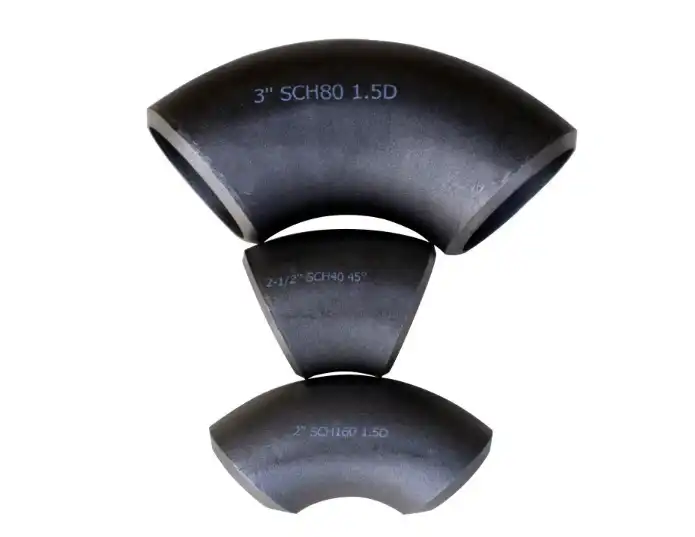
According to ASME B36.10M, pressure rates are based on four classifications: Schedule 40, Schedule 80, Schedule 160, and XXS (double extra strong). Each classification has walls that are stronger to handle higher internal pressures. For tough working conditions, chemical companies usually ask for Schedule 80 or higher.
Types: Seamless vs. Welded Construction
When hot pressing is used, solid pipe is used to make seamless joints that don't have any lengthwise welds. To get the radius and angle we want, we mostly use hot pushing methods, in which pieces of heated pipe are pushed through dies. This design gets rid of weak spots in the weld seams, which means better pressure control and lower leak risks, which are very important when working with dangerous chemicals.
Welded elbows are made by putting pieces of pipe or plates together. They are cheaper for bigger sizes and less important uses. For chemical transfer lines with lower pressure, welding construction works best. However, smooth joints are still the best choice for main process lines where safety must be paramount.
Advanced hot pressing equipment is used in our factory to make both types. The hot pressing method we use makes the elbow's grain structure regular, which improves its tensile qualities compared to cold-formed options. This way of making things makes sure that the standard is the same across our 16,000-ton output capacity every year.
Essential Industry Standards and Specifications
ASME and ASTM Compliance Requirements
ASME B16.9 sets the size requirements for worked butt-welding parts that are made in a factory. It says how much of an error there can be in the outside diameter, wall thickness, center-to-face measurements, and matched bevels. Chemical industry elbows must meet these size requirements to make sure they fit correctly during welding and system assembly. If you don't follow these rules, the stability of the weld and the safety of the system are at risk.
ASTM A234 spells out the chemical make-up, mechanical qualities, and standards for making a material. Chemical tests are used to make sure that the levels of carbon, manganese, silicon, sulphur, and phosphorus are within certain limits. The minimum tensile strength, yield strength, and stretch have been confirmed by mechanical tests. We make sure we strictly follow these standards by inspecting new materials and testing produced products.
Because they share safety concerns, API 5L standards affect how the chemical industry works as well as the oil and gas industries when it comes to pipeline uses. These standards put a lot of weight on material approval, tracking, and quality paperwork. These are all ideas that we've built into our ISO 9001:2000-certified quality management system.
Heat Treatment and Mechanical Properties Enhancement
To normalise the heat process, the elbows are heated to about 1,650°F, kept at that temperature to make the austenite grain structure regular, and then cooled by air. This process fine-tunes the grain size, makes the material tougher, and reduces the stress that was put on it during hot forming. Normalised elbows are better at bending and absorbing pressure, which is useful in the chemical industry.
For high-pressure services of Chemical industry, carbon steel elbows, quenching, and hardening add to their strength. After reaching the austenizing temperature, elbows are quickly cooled (quenched) and then heated (tempered) to certain temperatures to get the right mix of hardness and stiffness. This process gives the material tensile forces of more than 80,000 psi while still letting it bend enough for use and production.
At our plant, we use controlled atmosphere heat treatment ovens that keep an eye on the temperature very closely. Each batch is tested for hardness and, if needed, Charpy V-notch impact to make sure the process worked. These steps separate market goods that don't have the right heat processing from industry-grade parts.
Corrosion Resistance and Surface Treatments
Even though carbon steel doesn't naturally fight rust as well as stainless metals, it can still be used in many chemical applications as long as the surface is properly protected. Black oxide coatings offer only basic protection against rust and work well in dry or slightly acidic conditions. Coatings made of epoxy and plastic protect underground or underwater services better.
The choice of material strikes a balance between resistance to rust, technical needs, and cost. For poisons that don't eat away too easily, carbon steel with protective coats lasts longer and costs less than stainless steel options. Even though it costs more, stainless steel may be worth it in places where corrosion is a big problem.
During customer consultations, we check for chemical compatibility and suggest the right base materials and finishes. Our nondestructive flaw detection tools find surface flaws that could lead to rusting, making sure that only sound parts are put into service. Quality first has won the trust of more than 300 customers in 40 countries.
Comparing Carbon Steel Elbows with Alternatives for Chemical Industry
Carbon Steel vs. Stainless Steel Selection Criteria
Stainless steel elbows offer superior corrosion resistance due to chromium content forming passive oxide layers. Grade 304 stainless resists many organic chemicals and mild acids, while grade 316 with molybdenum addition handles chlorides and more aggressive environments. However, stainless steel costs typically run 3-5 times higher than carbon steel equivalents.
Carbon steel provides greater mechanical strength—tensile strength around 70,000 psi versus 75,000 psi for 304 stainless—at significantly lower cost. This strength advantage suits high-pressure applications where wall thickness would otherwise become excessive. Many chemical plants use carbon steel for main transfer lines and stainless steel only where corrosion exposure demands it.
The decision requires analyzing specific process chemistry, operating temperatures, pressure requirements, and budget constraints. We assist customers in material selection by reviewing process conditions and recommending optimal solutions. Our comprehensive inventory of both carbon and stainless steel fittings supports diverse chemical industry requirements.
Seamless vs. Welded: Performance Trade-offs
Seamless construction eliminates longitudinal weld seams that represent potential weak points under cyclic pressure loading. Chemical processes experiencing pressure fluctuations benefit from seamless elbows' uniform strength in all directions. The absence of weld heat-affected zones also reduces localized corrosion risks.
Welded elbows serve applications where moderate pressure and static loading conditions prevail. Larger diameter fittings (above 24 inches) often use welded construction due to manufacturing limitations and cost considerations. Modern welding procedures and post-weld heat treatment can produce reliable welded elbows for many chemical services.
Our production emphasizes seamless elbows for critical chemical applications, utilizing hot forming processes that maintain pipe integrity throughout the bend. This manufacturing focus aligns with industry best practices prioritizing safety and reliability in hazardous chemical environments.
Long Radius vs. Short Radius Configuration
Long radius elbows feature a centerline radius equal to 1.5 times the nominal pipe diameter, creating gradual directional changes that minimize pressure drop and erosion. Chemical plants handling particulate-laden fluids or high-velocity flows prefer long radius configurations to reduce turbulence and extend service life.
Short radius elbows with centerline radius equal to nominal diameter suit space-constrained installations where gradual bends cannot be accommodated. The sharper turn increases pressure drop and flow turbulence, potentially accelerating erosion in abrasive services. Chemical applications typically specify short radius only when physical space limitations leave no alternative.
We maintain inventory of both configurations in standard sizes, with custom fabrication capabilities for special requirements. Our technical team evaluates customer piping layouts to recommend optimal configurations balancing hydraulic performance, space constraints, and cost efficiency.
Procurement Guide for Carbon Steel Elbows in Chemical Industry
Evaluating Supplier Qualifications and Certifications
Supplier selection begins with verifying quality management system certifications. ISO 9001 certification demonstrates established quality procedures covering material procurement, production control, inspection, and documentation. Our facility achieved ISO 9001:2000 certification, implementing rigorous quality protocols throughout manufacturing operations.
Special equipment manufacturing licenses issued by regulatory authorities validate technical capability and safety compliance. We hold the People's Republic of China special equipment manufacturing license, demonstrating our facility meets stringent requirements for producing pressure-bearing components. This certification undergoes regular audits to maintain compliance with evolving standards.
Technical capability assessment should examine production equipment sophistication and inspection capabilities. Our facility employs advanced forming equipment, heat treatment furnaces with precise temperature control, and comprehensive testing apparatus including ultrasonic flaw detectors, spectrometers, and mechanical testing machines. These capabilities ensure consistent product quality meeting international standards.
Material Certification and Quality Documentation
Mill test reports (MTRs) provide essential material traceability, documenting chemical composition, mechanical properties, and heat treatment details for each production lot. Chemical industry purchasers should require MTRs matching material to applicable ASTM specifications. We provide complete MTRs with every shipment, enabling customers to verify compliance and maintain project documentation.
Dimensional inspection reports confirm finished elbows meet ASME B16.9 tolerances for critical dimensions including outside diameter, wall thickness, center-to-face measurements, and bevel angles. Non-conformances in these dimensions cause fit-up problems during installation and may compromise weld quality. Our inspection procedures include 100% dimensional verification using calibrated measuring instruments.
Nondestructive testing certificates document ultrasonic, radiographic, or magnetic particle inspection results, confirming absence of internal defects or surface cracks. Chemical applications handling hazardous materials should specify appropriate NDT levels. We maintain from-raw-material-to-finished-goods quality control, including comprehensive nondestructive examination capabilities.
Cost Optimization Through Bulk Procurement
Volume purchasing delivers significant unit cost reductions through manufacturing efficiencies and reduced setup overhead. Chemical plants planning major turnarounds or new construction projects benefit from consolidating elbow requirements into larger orders. Our 16,000-ton annual capacity supports substantial project volumes with consistent delivery schedules.
Standardizing on common sizes and specifications simplifies inventory management and reduces procurement complexity. Plants using Schedule 80 fittings predominantly in standard ASTM A234 WPB grade achieve better pricing than specifications mixing multiple schedules and exotic materials. We work with customers identifying standardization opportunities that maintain performance while controlling costs.
Total cost of ownership extends beyond initial purchase price to include installation labor, maintenance requirements, and service life expectancy. Premium-quality elbows with proper heat treatment and thorough inspection may cost slightly more upfront but deliver extended service life and reduced failure risks. Our quality focus provides value through reliability rather than competing solely on low initial price.
Installation, Maintenance, and Best Practices
Proper Installation Techniques and Safety Protocols
Beveled ends on butt-welding elbows must align properly with mating pipe to ensure complete joint penetration during welding. Misalignment creates stress concentrations and potential leak paths. Installation crews should use alignment clamps to maintain concentric fit-up and specified root gap throughout tack welding and final welding passes.
Welding procedures must follow qualified welding procedure specifications (WPS) appropriate for base material grade, wall thickness, and service conditions of the chemical industry carbon steel elbow. Chemical applications typically require preheating carbon steel to 200-300°F before welding to prevent cracking, followed by controlled cooling. Post-weld heat treatment may be specified for pressure-critical services to relieve residual stresses.
Hydrostatic pressure testing after installation verifies system integrity before introducing chemicals. Test pressure typically ranges from 1.5 to 2.0 times design pressure, held for a specified duration while inspecting all joints for leaks. We recommend customers follow ASME B31.3 Process Piping Code requirements governing chemical plant piping installation and testing.
Routine Inspection and Corrosion Prevention
Periodic visual inspection identifies surface corrosion, coating degradation, or mechanical damage requiring attention. Chemical plants should establish inspection intervals based on service severity, with quarterly inspections for aggressive environments and annual reviews for mild services. Early detection enables timely intervention before minor issues escalate to failures.
Ultrasonic thickness measurements track wall loss from internal corrosion, providing quantitative data for remaining life assessment. Thickness readings taken at consistent locations over time reveal corrosion rates, enabling predictive maintenance planning. Elbows experiencing localized thinning below minimum design thickness require replacement before failure occurs.
Protective coating maintenance extends service life in corrosive environments. Damaged coatings should be repaired promptly using compatible materials and proper surface preparation. We recommend customers establish coating maintenance programs including regular inspection and systematic repair to maximize carbon steel elbow longevity in chemical services.
Troubleshooting Common Issues
Leaks at welded joints typically result from incomplete penetration, inadequate fusion, or stress-induced cracking. Suspected weld defects require professional evaluation—often including radiographic or ultrasonic examination—to determine repair feasibility. Some defects necessitate complete joint removal and re-welding using qualified procedures.
Erosion-corrosion appears as localized metal loss in high-velocity flow areas, particularly on the outer radius of elbows where fluid impingement occurs. This degradation mechanism accelerates in services containing solids or operating at elevated temperatures. Affected elbows require replacement, with potential system modifications to reduce velocity or add corrosion inhibitors to prevent recurrence.
External corrosion under insulation (CUI) occurs when moisture penetrates insulation systems, creating persistent wet conditions on pipe surfaces. CUI detection requires removing insulation for direct inspection. Prevention involves proper insulation system design with effective vapor barriers and scheduled insulation condition assessments. Addressing these issues promptly minimizes unplanned downtime and maintains safe chemical plant operations.
Conclusion
Industry-grade carbon steel elbows for chemical applications distinguish themselves through adherence to rigorous material specifications, dimensional standards, and quality verification protocols. ASTM A234 material compliance, ASME B16.9 dimensional accuracy, proper heat treatment, and comprehensive inspection separate premium fittings from commercial alternatives. Successful procurement balances technical requirements against cost considerations, evaluating suppliers based on certifications, manufacturing capabilities, and quality documentation. Installation following qualified procedures and proactive maintenance programs maximizes service life and reliability. Chemical industry professionals benefit from partnering with experienced manufacturers offering certified products, technical support, and consistent quality—ensuring pipeline systems operate safely and efficiently throughout their design life.
FAQ
1. What standards should I verify when purchasing carbon steel elbows for chemical plants?
Verify compliance with ASME B16.9 for dimensions, ASTM A234 for material specifications, and ISO 9001 quality management certification. Request mill test reports documenting chemical composition and mechanical properties, dimensional inspection reports, and nondestructive testing certificates. Confirm the supplier holds relevant manufacturing licenses for pressure equipment production.
2. How does corrosion resistance of carbon steel compare with stainless steel in chemical applications?
Carbon steel offers lower inherent corrosion resistance than stainless steel but remains suitable for many chemical services when properly protected with coatings or when process chemistry permits. Stainless steel costs 3-5 times more, justifying its use primarily in highly corrosive environments. Material selection should consider specific chemical compatibility, operating conditions, and lifecycle cost analysis balancing initial investment against maintenance and replacement expenses.
3. Can carbon steel elbows be customized for specialized chemical process requirements?
Custom fabrication accommodates non-standard dimensions, special material grades, unique pressure ratings, and specific end connections. Manufacturers with advanced forming equipment and engineering support can produce elbows matching precise project specifications. Custom orders typically require longer lead times and may involve minimum quantities, but enable optimal performance in specialized applications where standard products fall short.
Partner with Oudi for Reliable Chemical Industry Carbon Steel Elbow Solutions
Cangzhou Oudi Pipe Manufacture Co., Ltd. has served the chemical processing sector since 1998, delivering certified carbon steel elbows that meet ASTM A234, ASME B16.9, and ISO 9001:2000 standards. Our 16,000-ton annual production capacity, advanced hot forming equipment, and comprehensive quality control—from raw material inspection through nondestructive flaw detection—ensure industry-grade fittings for your critical chemical applications. We've supplied over 300 customers across Europe, the Americas, Africa, Southeast Asia, and the Middle East with products proven in petroleum, chemical, natural gas, and water conservancy installations.
Our technical team provides material selection guidance, custom fabrication capabilities, and complete documentation supporting your project compliance requirements. Whether you need seamless long radius elbows for high-pressure services or specialized grades for temperature extremes, we offer competitive pricing backed by rigorous quality assurance. Connect with our chemical industry carbon steel elbow supplier experts at oudi-04@oudiguandao.com to discuss your specifications and receive detailed quotations. Let us demonstrate how Oudi's commitment to quality and service excellence delivers the reliable piping components your chemical operations demand.
References
1. American Society of Mechanical Engineers. (2018). ASME B16.9: Factory-Made Wrought Buttwelding Fittings. New York: ASME Press.
2. ASTM International. (2020). ASTM A234/A234M-20: Standard Specification for Piping Fittings of Wrought Carbon Steel and Alloy Steel for Moderate and High Temperature Service. West Conshohocken, PA: ASTM International.
3. American Petroleum Institute. (2019). API Standard 5L: Specification for Line Pipe, 46th Edition. Washington, DC: API Publishing Services.
4. Nayyar, M.L. (2019). Piping Handbook, 8th Edition. New York: McGraw-Hill Education.
5. Singh, R.K. & Rizvi, S.A. (2017). Material Selection and Corrosion Control in Chemical Process Industries. Houston: NACE International.
6. Becht, C. & Sims, J.R. (2021). Process Piping Design Handbook: Volume Two - Advanced Piping Design. Houston: Gulf Professional Publishing.

Need help finding the right solution with our experts. Please contact us.

SINCE 1998 Your Reliable Pipeline Manufacturer



