What Certifications Should a Carbon Steel Elbow Supplier Have?
When sourcing industrial pipe fittings, the certifications held by a carbon steel elbow supplier serve as your first line of defense against quality issues, project delays, and regulatory complications. These credentials validate that the manufacturer adheres to strict international standards governing material composition, manufacturing processes, and quality control systems. Reputable suppliers maintain multiple certifications that address everything from chemical properties to workplace safety, enabling procurement professionals to confidently specify components that will perform reliably in demanding applications across oil refineries, chemical plants, shipyards, and power generation facilities.
Understanding the Role of Certifications in the Carbon Steel Elbow Industry
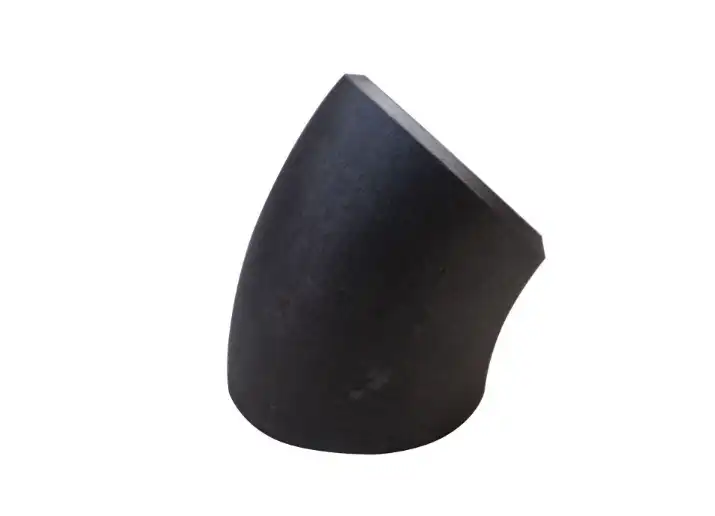
Certifications establish a common language between buyers and sellers in the global pipe fitting market. When an engineer in Chicago specifies ASTM A234 WPB material for a 45-degree carbon steel elbow, and a supplier in China confirms their product meets that standard, both parties share a precise understanding of the mechanical properties, chemical composition, and manufacturing requirements that apply.
Why Industry Standards Matter
International standards groups like ASTM, ASME, DIN, and JIS put out thorough rules for how pipe fittings should be made. ASTM A234 lists the minimum tensile strength, stretch rates, and chemical element ranges that carbon steel parts used in mild and high-temperature service must meet. ASTM A860 covers parts with higher strengths for uses that need better mechanical qualities. These standards make sure that all suppliers follow the same rules, and they let engineers build systems that will work in a way that they can predict.
Codes for designing pressure vessels and pipes are kept up to date by the American Society of Mechanical Engineers (ASME) for carbon steel elbow suppliers. Section IX of these codes talks about who can weld. In EU markets, European Norm (EN) standards do similar things, while Japanese Industrial Standards (JIS) are used all over Asia. Leading makers make sure they follow a lot of different sets of rules so they can serve a lot of different markets easily.
Quality Management Systems
ISO 9001 certification verifies that a manufacturer has implemented systematic quality management practices covering design control, document management, process monitoring, corrective action procedures, and internal auditing. This framework ensures consistent output rather than sporadic quality achieved through heroic individual efforts. Our facility underwent rigorous third-party auditing to achieve ISO 9001:2000 certification, demonstrating our commitment to repeatable manufacturing excellence across our 16,000-ton annual production capacity.
Quality management systems create traceable documentation trails that allow buyers to verify material test reports, dimensional inspection records, and heat treatment charts for specific batches. This traceability proves invaluable when addressing customer inquiries or responding to regulatory audits months or years after installation.
Key Certifications a Trusted Carbon Steel Elbow Supplier Should Have
Distinguishing genuinely qualified manufacturers from marginally capable producers requires understanding which certifications address critical quality factors. The following credentials represent baseline requirements for suppliers serving demanding industrial applications in regulated industries.
Material Standards and Specifications
ASTM A234 remains the most widely referenced standard for carbon steel pipe fittings in the Americas. This specification covers wrought carbon steel and alloy steel fittings intended for moderate and high-temperature service in pressure piping systems. Common grades include WPB (the general-purpose carbon steel grade), WPC (higher-strength alloy steel), and various chromium-molybdenum alloy compositions for elevated temperature applications.
ASTM A860 addresses high-strength fittings manufactured from micro-alloyed steel, offering improved strength-to-weight ratios valuable in offshore platforms and other weight-sensitive installations. European projects frequently specify EN 10253 standards, while Asian markets reference JIS B2311 and B2312. Our production lines accommodate all major international standards, allowing us to serve procurement requirements across Europe, the Americas, Africa, Southeast Asia, and the Middle East without compromising quality or necessitating specification compromises.
Manufacturing Process Certifications
ISO 9001 quality management certification proves that industrial processes are controlled in a planned way, but for important uses, other certificates are needed for extra security. The Pressure Equipment Directive (PED) controls the design and production of equipment in the European Economic Area. It requires precise estimates during the design process, the ability to track materials, and close monitoring of the manufacturing process for parts that hold pressure.
The Chinese government gave our company a licence to make special equipment, which requires us to show that we have the right technical skills, the right production equipment, and trained checking staff. Periodic repeat checks of this license make sure that ongoing safety and quality standards are being met. The welding skills listed in ASME Section IX show that the welders and their methods have been tried and found to meet strict standards for weld quality and mechanical features.
Environmental and Safety Credentials
Modern procurement increasingly emphasizes environmental stewardship and workplace safety as supplier selection criteria. ISO 14001 environmental management certification demonstrates systematic approaches to minimizing environmental impacts through waste reduction, emission controls, and resource efficiency improvements. ISO 45001 (or its predecessor OHSAS 18001) addresses occupational health and safety management, documenting hazard identification, risk assessment, and incident prevention programs.
These certifications matter because they indicate Carbon steel elbow supplier organizational maturity and long-term viability. Manufacturers with robust environmental and safety programs tend to exhibit greater operational discipline across all business functions, resulting in more reliable delivery performance and fewer quality escapes. Companies facing environmental violations or workplace safety incidents often experience production disruptions that cascade into customer delivery delays.
How Certifications Influence Supplier Selection and Procurement Decisions
Procurement professionals use certifications as screening tools to efficiently narrow supplier shortlists before investing time in detailed technical discussions. These credentials provide objective benchmarks that help distinguish capable manufacturers from those making unsupportable quality claims.
Validating Supplier Legitimacy
Certificate verification protects against fraudulent claims. Requesting copies of certification documents and independently verifying them with issuing bodies takes minimal effort compared to the cost of dealing with substandard products discovered after installation. We welcome customer requests to verify our ISO 9001:2000 certification and special equipment manufacturing license, and we routinely provide material test reports certified by third-party inspection agencies for export shipments.
Leading suppliers maintain current certifications and readily share documentation during qualification processes. Reluctance to provide certification copies or vague responses about renewal dates signal potential concerns warranting deeper investigation before awarding purchase orders.
Ensuring Product Performance
Certifications directly correlate with product performance in service. Fittings manufactured to ASTM A234 specifications will exhibit predictable mechanical properties when subjected to internal pressures and temperature cycling. Dimensional tolerances specified in ASME B16.9 ensure proper fit-up during field installation, reducing welding difficulties and minimizing expensive rework.
Our quality control processes align with these certification requirements through comprehensive inspection protocols. We maintain advanced detection equipment enabling full compliance with user testing requirements, including chemical analysis, mechanical testing, dimensional verification, and nondestructive examination. Raw materials undergo incoming inspection before entering production, and finished goods receive final inspection before shipment, ensuring consistent conformance to specification requirements.
Aligning with Project Requirements
Different industries and regions impose varying regulatory requirements. Petroleum refineries operating under American Petroleum Institute (API) standards require different documentation than European power plants complying with PED requirements. Chinese nuclear facilities mandate compliance with specific national standards, while Middle Eastern petrochemical complexes frequently reference a hybrid of American and European specifications.
Suppliers maintaining multiple certifications can efficiently serve projects across these diverse regulatory environments without requiring special manufacturing accommodations. Our experience exporting to more than 40 countries has refined our understanding of regional certification expectations, enabling us to provide appropriate documentation packages that satisfy local regulatory authorities and project quality assurance teams.
Comparison of Certification Types: What Sets Leading Suppliers Apart
Not all certifications carry equal weight in procurement decisions. Understanding the distinction between foundational credentials and specialized certifications helps buyers identify suppliers with genuine technical depth versus those meeting only minimum qualification thresholds.
Global Versus Regional Standards
Leading manufacturers maintain certifications across multiple geographic standard families—American (ASTM, ASME, API), European (EN, DIN, BS), and Asian (JIS, GB)—enabling them to efficiently serve international markets. This multi-standard capability demonstrates technical sophistication and investment in quality infrastructure that exceeds manufacturers focusing solely on domestic markets.
Our facility produces American standard, Japanese standard, German standard, and British standard fittings in carbon steel, stainless steel, and alloy steel configurations. This versatility stems from manufacturing equipment capable of meeting the tightest tolerance requirements across these standard families and quality systems that accommodate varying documentation expectations. Whether your project specifications reference ANSI B16.9, DIN 2605, or JIS B2311, we maintain the technical capabilities and certification credentials to fulfill requirements without compromising quality or extending delivery schedules.
Factory Certifications Versus Product-Specific Testing
Factory certifications like ISO 9001 validate management systems and operational processes but don't directly verify individual product batch quality. Material test reports (MTRs), dimensional inspection records, and nondestructive testing results provide batch-specific quality evidence that complements factory certifications.
Reputable suppliers provide comprehensive documentation packages including certified MTRs showing chemical composition and mechanical properties, dimensional inspection reports confirming conformance to drawing requirements, and NDT reports documenting successful ultrasonic or radiographic examination. We maintain full inspection systems supporting user detection requirements and routinely engage third-party inspection agencies to provide independent verification when customers request additional quality assurance.
The Certification Advantage in Practice
Consider two suppliers both claiming ASTM A234 WPB compliance. The first holds ISO 9001 certification, maintains PED approval, and provides detailed MTRs with third-party verification. The second offers competitive pricing but provides only basic mill certificates without independent verification. The additional certifications held by the first supplier don't merely represent paperwork differences—they document audited quality systems, proven technical capabilities, and accountability structures that significantly reduce procurement risk.
We've served over 300 customers across petroleum, chemical, natural gas, water conservancy, construction, shipbuilding, and electric power industries specifically because our certification portfolio and quality documentation practices provide the assurance procurement professionals require when specifying critical piping components. These relationships endure because our certifications translate into consistent product quality and reliable delivery performance that support customer project success.
Ensuring Your Supplier's Certifications Meet Your Procurement Needs
Effective certification verification requires systematic approaches that extend beyond reviewing documents during initial supplier qualification. Ongoing monitoring ensures continued compliance throughout multi-year supply relationships.
Pre-Qualification Checklist
Start by requesting current copies of relevant certifications and verifying them directly with issuing organizations. ISO certificates include registration numbers that can be validated through accreditation body databases. Confirm that certification scope covers the specific products and services you're procuring—some ISO 9001 certificates apply only to certain product lines or manufacturing locations.
Evaluate whether the Carbon steel elbow supplier maintains certifications appropriate for your target markets. Projects in Europe require PED compliance for pressure equipment. American customers frequently specify ASME code compliance. Verify that material standards align with your engineering specifications—ASTM A234 for standard carbon steel, ASTM A860 for high-strength applications, or specialized alloy grades for corrosive service.
Request sample documentation packages showing typical MTRs, dimensional reports, and NDT records. Quality suppliers maintain standardized documentation formats that facilitate efficient review and approval processes. Our documentation packages include complete traceability from raw material heat numbers through finished product identification markings, enabling customers to verify quality at any point in the supply chain.
Ongoing Compliance Monitoring
Establish periodic audit schedules appropriate to your procurement volume and criticality. High-volume or safety-critical applications warrant annual supplier audits verifying continued certification validity and examining quality records for trends indicating potential concerns. Review certification renewal dates and request updated documents promptly upon expiration to avoid supply disruptions.
Monitor supplier performance metrics including on-time delivery rates, quality rejection rates, and documentation accuracy. Declining performance often precedes certification issues or indicates organizational challenges that may affect future reliability. We maintain transparent communication with customers regarding quality metrics and welcome periodic audits that verify our continued adherence to certification requirements.
Leveraging Certifications During Negotiations
Certifications provide negotiating leverage beyond quality assurance. Suppliers maintaining comprehensive certification portfolios have invested substantially in quality infrastructure, creating switching costs that incentivize competitive pricing to retain valued customers. Use multi-year agreements with volume commitments to negotiate favorable pricing while ensuring supply reliability.
Discuss how certifications affect lead times and minimum order quantities. Certified manufacturers often maintain raw material inventories of certified heats, reducing lead times compared to suppliers sourcing materials after order receipt. Our 16,000-ton annual capacity and systematic inventory management enable responsive delivery even for large orders, while our complete product category coverage reduces procurement complexity by consolidating your pipe fitting requirements with a single certified source.
Conclusion
Certifications represent far more than administrative requirements in the carbon steel pipe fitting industry—they provide objective verification of supplier capabilities, systematic quality controls, and regulatory compliance essential for project success. ISO 9001 quality management certification, material standard compliance (ASTM A234, ASTM A860), specialized manufacturing credentials (PED, ASME Section IX), and environmental safety certifications collectively demonstrate a supplier's technical maturity and long-term reliability.
Our commitment to maintaining comprehensive certifications since 1998 reflects our understanding that these credentials protect both our customers and our reputation. The investment required to achieve and maintain ISO 9001:2000 certification and our special equipment manufacturing license pays dividends through consistent quality output, reduced customer complaints, and strong relationships with procurement professionals worldwide who trust our certifications as accurate representations of our capabilities.
FAQ
1. What are the most important certifications for carbon steel elbow suppliers?
ISO 9001 quality management certification provides foundational assurance of systematic quality controls. Material standards compliance (ASTM A234 for carbon steel fittings) ensures predictable mechanical properties and chemical composition. Specialized credentials like PED certification for European markets or ASME code compliance for American projects address regional regulatory requirements. Environmental certifications (ISO 14001) and safety management systems (ISO 45001) indicate organizational maturity affecting long-term reliability.
2. How often should supplier certifications be renewed?
ISO 9001 certification undergoes annual surveillance audits with full recertification every three years. Material test reports and batch-specific documentation apply to individual production lots rather than following renewal schedules. Procurement teams should verify that supplier certifications remain current throughout supply relationships, requesting updated documents promptly when certifications approach expiration dates to avoid potential supply disruptions.
3. Can products without proper certifications still perform adequately?
Products lacking appropriate certifications may perform satisfactorily or fail catastrophically—the fundamental problem is unpredictability. Certifications provide verified assurance of material properties, manufacturing quality, and dimensional accuracy. Uncertified products introduce unknown risks, particularly dangerous in pressure-containing applications where failure consequences include personnel injury, environmental damage, and expensive production outages. The modest cost premiums associated with certified suppliers represent prudent risk management compared to potential failure costs.
Partner with a Certified Carbon Steel Elbow Manufacturer You Can Trust
Quality certifications matter because they translate directly into product reliability, delivery consistency, and regulatory compliance that protect your project timelines and budgets. At Oudi, we've maintained rigorous certification standards since 1998 specifically to provide the assurance procurement professionals require when sourcing critical piping components. Our ISO 9001:2000 quality management system, special equipment manufacturing license, and comprehensive material standard compliance enable us to serve demanding applications across petroleum, chemical, natural gas, water conservancy, construction, shipbuilding, and electric power industries.
We welcome detailed discussions about your specific certification requirements and application needs. Our technical team can review your project specifications and recommend appropriate products with supporting documentation that satisfies your quality assurance protocols. With 16,000 tons of annual production capacity, complete product category coverage spanning bends, flanges, tees, reducers, and caps in carbon steel, stainless steel, and alloy steel configurations, we offer the reliability and responsiveness that complex industrial projects demand.
Contact our experienced team today at oudi-04@oudiguandao.com to discuss how our certified manufacturing capabilities can support your procurement objectives. We provide competitive pricing backed by verified quality, comprehensive documentation packages that expedite project approvals, and responsive delivery that keeps your construction schedules on track. Discover why over 300 customers across more than 40 countries trust Oudi as their preferred carbon steel elbow supplier for critical industrial applications.
References
1. American Society for Testing and Materials. "ASTM A234/A234M - Standard Specification for Piping Fittings of Wrought Carbon Steel and Alloy Steel for Moderate and High Temperature Service." ASTM International, West Conshohocken, PA, 2021.
2. International Organization for Standardization. "ISO 9001:2015 - Quality Management Systems - Requirements." ISO Standards, Geneva, Switzerland, 2015.
3. American Society of Mechanical Engineers. "ASME Boiler and Pressure Vessel Code, Section IX - Welding and Brazing Qualifications." ASME Standards, New York, NY, 2019.
4. European Commission. "Pressure Equipment Directive 2014/68/EU - Requirements for Design, Manufacture and Conformity Assessment." Official Journal of the European Union, Brussels, Belgium, 2014.
5. Manufacturing Institute. "Quality Certification Impact Study: How ISO Standards Affect Manufacturing Performance and Customer Satisfaction." Industrial Research Publication, Washington, DC, 2020.
6. Pipe Fittings Industry Association. "Global Standards Comparison Guide for Carbon Steel Pipe Fittings: ASTM, DIN, JIS, and EN Specifications." Technical Reference Manual, Houston, TX, 2022.

Need help finding the right solution with our experts. Please contact us.

SINCE 1998 Your Reliable Pipeline Manufacturer



