Which Certifications Matter for Corrosion-resistant carbon steel elbow?
When purchasing pipe fittings for oil refineries, chemical processing facilities, or natural gas infrastructure, the stakes are enormous. One bad elbow might cause leaks, shutdowns, or catastrophic failures. One of the most common challenges faced by procurement engineers and project managers in the U.S. and throughout the world is how to ensure that a corrosion-resistant carbon steel elbow will perform as expected under real-world operating circumstances. The key is in the certificates. Verified certificates are not paperwork formalities; they are quantitative evidence of material integrity, production discipline, and long-term dependability.
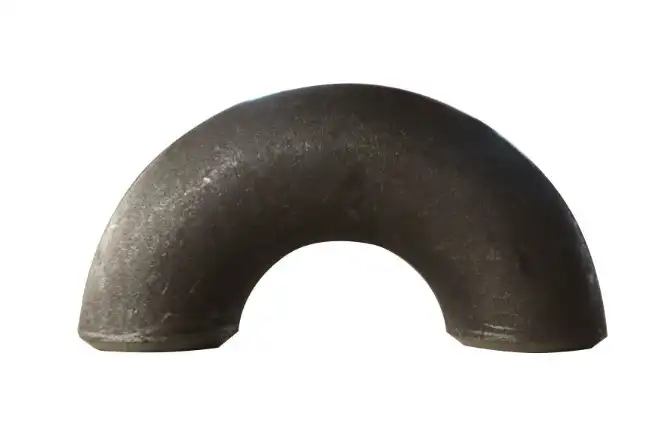
Understanding Corrosion-Resistant Carbon Steel Elbows and Their Certification Needs
A carbon steel pipe elbow changes the direction of the fluid flow in a system (at an angle of 45°, 90°, or 180°) and joins the sections by butt welding or socket welding. The elbow is designed to withstand oxidation, chemical assault, and deterioration from moisture in severe service conditions such as offshore oil platforms, chemical dosing lines, and water treatment facilities. To prevent corrosion, alloy additives, special coatings, or surface treatments are often used during manufacture.
The mechanical requirements are tough. These fittings need to withstand severe temperature cycles, abrasive fluids, and variable loads while maintaining pressure integrity. Without verified production standards and third-party testing, there is no way to reliably certify that a product will operate as advertised. And this is exactly why certifications are so vital in B2B purchase choices.
Key Certifications Relevant to Corrosion-Resistant Carbon Steel Elbows
ISO 9001 — The Foundation of Quality Management
ISO 9001 certification confirms that a manufacturer operates a documented, audited quality management system governing every stage from raw material intake to finished goods dispatch. For buyers in the oil, chemical, and power sectors, this is a non-negotiable baseline. It signals process consistency, traceability, and accountability throughout production.
ASTM and ASME Standards — Material and Dimensional Compliance
ASTM A234 is the governing specification for wrought carbon steel pipe fittings used in pressure and high-temperature service. ASME B16.9 defines dimensional tolerances and testing requirements for factory-made butt-welding fittings. Together, these standards ensure that a corrosion-resistant carbon steel elbow will interface correctly with standard pipe schedules and handle rated pressure without deformation or failure.
API, CE Marking, and Special Equipment Licenses
Depending on your target market, a number of different certifications carry important weight:
- API 5L / API 6A – Verifies compatibility for upstream oil and gas pipelines, ensuring pressure ratings and material traceability in petroleum service environments.
- CE Marking (PED 2014/68/EU) – Required for pressure equipment sold into European markets. Demonstrates conformity with the EU Pressure Equipment Directive.
- China Special Equipment Manufacturing License – Issued by the Chinese government authority, this license allows firms to make pressure-bearing pipe components that fulfill national safety requirements. Oudi has this license as well as the ISO 9001:2000 accreditation, therefore providing a double layer of quality assurance.
- Mill Test Reports (MTRs) – These material certificates provide the chemical composition, mechanical characteristics, and heat treatment information for each manufacturing batch. Traceability in critical applications depends on MTRs.
- NDT Certifications – Non-destructive testing reports (ultrasonic, radiographic, or magnetic particle testing) certify the integrity of the welds and internal soundness without affecting the fitting.
Comparing Certification Impact: Corrosion-Resistant Carbon Steel Elbow vs. Other Materials
Certifications are not uniform across all elbow materials. The scope of testing, the applicable standards, and the procurement implications vary meaningfully depending on material selection.
| Criterion | Carbon Steel Elbow | Stainless Steel Elbow | Alloy Steel Elbow |
|---|---|---|---|
| Key Standard | ASTM A234 / ASME B16.9 | ASTM A403 / ASME B16.9 | ASTM A234 Gr. WP91 / WP5 |
| Corrosion Testing | Coating inspection + MTR | Pitting/crevice corrosion test | High-temp oxidation test |
| NDT Requirement | Required for critical service | Required for all grades | Mandatory + PMI testing |
| Cost Range | Lower | Moderate to high | High |
| Best Application | Oil, gas, and water systems | Chemical, food, marine | Power gen., high-temp lines |
| Supplier License Needed | Special equipment license | Special equipment license | Special equipment license + traceability |
This comparison helps to understand why a corrosion-resistant carbon steel elbow is still the most economical option for most industrial pipe systems with the need for strict certification compliance. That’s why alloy steel is priced higher — that’s the extra performance validation that goes into it. Stainless steel certifications depend mostly on corrosion resistance testing for the alloy grade.
Certification status has a direct impact on supplier reputation and warranty conditions. The procurement risk is much reduced if the supplier is able to supply comprehensive MTRs, NDT reports, and a valid ISO 9001 certificate than if only product datasheets are provided.
How to Verify and Interpret Certifications During Procurement
Procurement experts should examine certification papers with the same diligence they use to contract conditions. Important points to check are the date of certificate issuance and the time of expiration, the name of the accrediting authority, the scope of the product covered, and whether the serial numbers on the test report are the same as the batch received. A valid Mill Test Report shall contain a heat number, chemical analytical findings, tensile and yield strength data, and the signature of the inspector.
Adding a factory audit to your qualifying process will provide a substantial level of comfort when assessing a new supplier. Operational discipline is directly shown by inspection records, raw material storage conditions, and a review of production equipment. All goods at Oudi are subjected to a complete inspection system and nondestructive fault detection before distribution, which is auditable and recorded.
“Custom-ordered Corrosion-resistant carbon steel elbows need special attention. Custom specs – such as non-standard bend radii, specialty coatings, or unusual wall thicknesses – will need verification of conformance to the appropriate standard for that configuration. Make sure you’re requesting test certs for the batch, not for the general product line.
Maintaining Compliance and Prolonging the Lifespan of Corrosion-Resistant Carbon Steel Elbows
Certification doesn’t stop at delivery. The installation, operation, and maintenance have a significant impact on the long-term performance of a carbon steel elbow. The use of approved fittings greatly lowers the possibility of stress corrosion cracking, erosion at the intrados of bends, and premature weld failure.
Here are the key principles that support lifecycle management based on certification:
- Inspection intervals based on your system’s operating pressure and fluid corrosivity – generally every 12 to 24 months in demanding service settings.
- Integrity assessments of coatings to validate that any corrosion protection is intact. This is especially important in weld zones where the heat could have compromised surface treatments.
- Re-certification paperwork for moving elbows to another service classification or system pressure rating.
These approaches immediately result in a cheaper total cost of ownership. Industry statistics from pipeline integrity management studies repeatedly demonstrate that certified, well-maintained pipe fittings minimize unexpected downtime by a quantifiable amount compared to unverified components in similar service. “Certification is not just a box to check once you procure,” say teams in engineering and maintenance who see certification as a continuing asset. These teams report much longer service intervals and fewer emergency repairs.
Conclusion
Getting a corrosion-resistant carbon steel elbow approved is not a bureaucratic obstacle. They are tested proof that a fitting will work safely and consistently under challenging settings. ISO 9001 ASTM A234 ASME B16.9 MTRs NDT Reports, Special Equipment Licenses. The credible assurance framework ensures that Procurement teams that respect these qualifications safeguard their projects, decrease operational risk, and develop sustainable supplier relationships. The most realistic solution to the dependability of industrial plumbing is to check certificates before purchasing and to maintain compliance after installation.
FAQ
1. How often should certifications for carbon steel pipe fittings be recertified?
ISO 9001 certificates are typically valid for three years, subject to annual surveillance audits. Mill Test Reports are batch-specific and do not expire, but must correspond to the actual delivered product. Special equipment manufacturing licenses follow local regulatory renewal schedules, commonly every four to five years.
2. Does a certification guarantee zero corrosion?
No. Certifications confirm that a product meets defined manufacturing and material standards under specified conditions. Actual corrosion behavior depends on operating temperature, fluid chemistry, flow velocity, and environmental exposure. Certified products provide a validated starting point; proper system design and maintenance determine long-term outcomes.
3. What is the typical lead time for certified corrosion-resistant carbon steel elbows?
Lead times vary by specification and order volume. Standard certified elbows conforming to ASTM A234 / ASME B16.9 typically ship within two to four weeks. Custom specifications with additional testing requirements may require six to ten weeks. Suppliers with high production capacity and stocked raw materials can often compress these timelines.
4. Are ASME and ASTM certifications accepted in non-U.S. markets?
Yes. ASME and ASTM standards are recognized internationally across the oil, gas, and chemical industries. Many projects in the Middle East, Southeast Asia, and Europe specify these standards alongside regional requirements such as CE marking or local regulatory approvals.
Partner with Oudi for Certified Carbon Steel Elbow Solutions
Oudi has manufactured certified pipe fittings since 1998, with an annual output of 16,000 tons and active supply to over 300 customers across 40+ countries. Our corrosion-resistant carbon steel elbow manufacturing capabilities cover ANSI, JIS, DIN, and BS standards — all backed by ISO 9001 certification and China's Special Equipment Manufacturing License. Contact us today for quotations, technical consultations, or product samples at oudi-04@oudiguandao.com.
References
1. ASTM International. ASTM A234/A234M: Standard Specification for Piping Fittings of Wrought Carbon Steel and Alloy Steel for Moderate and High Temperature Service. ASTM International, 2023.
2. American Society of Mechanical Engineers. ASME B16.9: Factory-Made Wrought Butt-Welding Fittings. ASME, 2018.
3. American Petroleum Institute. API Specification 5L: Specification for Line Pipe. API, 2018.
4. International Organization for Standardization. ISO 9001:2015 Quality Management Systems — Requirements. ISO, 2015.
5. European Parliament. Pressure Equipment Directive 2014/68/EU. Official Journal of the European Union, 2014.
6. NACE International (now AMPP). SP0169: Control of External Corrosion on Underground or Submerged Metallic Piping Systems. NACE, 2013.

Need help finding the right solution with our experts. Please contact us.

SINCE 1998 Your Reliable Pipeline Manufacturer



