Can a High-temperature carbon steel elbow Boost Piping Safety?
Yes, and the data is hard to ignore. A High-temperature carbon steel elbow accomplishes much more than changing flow direction. It offers structural protection against pressure surges, thermal fatigue, and corrosion-induced failures in challenging situations such as oil refineries, power plants, and natural gas processing facilities. Grades such as ASTM A234 WPB and A420 WPL6 are intended to preserve mechanical integrity at high sustained temperatures, often over 400°C. These elbows, correctly chosen and properly obtained from a qualified manufacturer, greatly minimize the danger of catastrophic pipe failures.
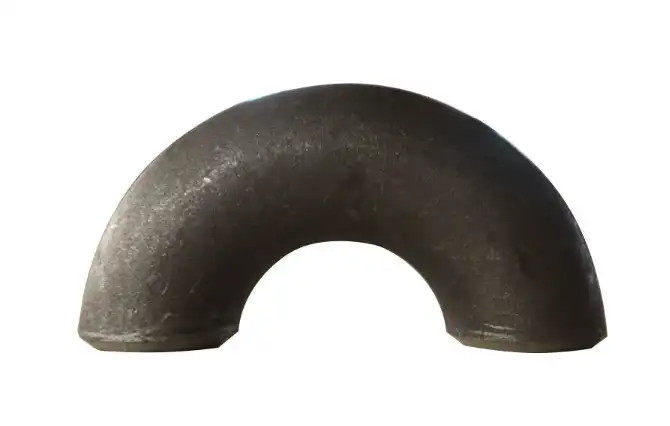
Understanding High-Temperature Carbon Steel Elbows and Their Role in Piping Safety
Elbows made of high-temperature carbon steel turn fluid flow at certain angles — 45°, 90°, or 180° — while enduring the combined strain of heat and pressure. High-temperature grades manage carbon content and alloying elements to withstand oxidation and creep deformation, unlike conventional carbon steel fittings. The manner in which it’s made also counts. Hot-push forming and induction bending retain grain structure integrity, for instance. And post-forming heat treatment – normalizing or stress-relieving – relieves residual internal tensions and reduces the risk of premature cracking.
Typical applications include steam lines in power boilers, high-pressure process headers in petrochemical facilities, and crude oil transfer systems where the operating temperatures often exceed 300°C. In these environments, a failed fitting is more than a maintenance event – it’s a safety issue. Conformance to ASME B16.9, ANSI, DIN, and JIS standards provides dimensional correctness and pressure rating dependability that are must-have criteria for EPC contractors and plant engineers globally.
Why High-Temperature Carbon Steel Elbows Enhance Piping Safety
The performance differential between normal- and high-temperature carbon steel is noticeable under thermal cycling settings. Regular carbon steel begins to lose tensile strength at 370°C, but high-temperature grades may be managed to maintain structural stability by managing the microstructure. The seamless structure removes the weld seams, which are statistically the most prevalent beginning location for stress corrosion cracking in pressurized systems, and results in a more uniform distribution of stress throughout the High-temperature carbon steel elbow body.
The table below illustrates how high-temperature carbon steel compares to alternative materials commonly evaluated by procurement engineers:
| Criteria | High-Temp Carbon Steel | Standard Carbon Steel | Stainless Steel | Alloy Steel |
|---|---|---|---|---|
| Max Operating Temp | ~540°C | ~370°C | ~870°C | ~650°C |
| Tensile Strength | High | Moderate | High | Very High |
| Corrosion Resistance | Moderate | Low | Excellent | Good |
| Cost Index | Low–Medium | Low | High | Very High |
| Typical Application | Refineries, Power Plants | General Plumbing | Chemical Processing | Ultra-High Pressure Lines |
This comparison shows a real-world example: high-temperature carbon steel is an ideal compromise of mechanical properties and cost-effectiveness for the majority of oil, gas, and water conservancy applications. Alloy and stainless steels are more resistant to corrosion, but the premium paid for them is seldom justified when the working circumstances are within the temperature range of carbon steel. When procurement teams link material specifications with real process circumstances, they reliably provide reduced overall lifetime costs while ensuring system integrity.
Key Considerations When Choosing High-Temperature Carbon Steel Elbows
Choosing the appropriate elbow is more than matching a pipe schedule. The material grade, pressure-temperature rating, and production procedure are all direct safety considerations. Forged elbows often provide better performance than welded versions in cyclic pressure applications because of their tighter grain structure. Long-radius elbows minimize turbulence and erosion at the elbow, which is a major benefit in high-fluid-velocity applications.
The main specification requirements that skilled procurement engineers focus on are:
- Material Grade Verification: Confirm that each shipment is accompanied by ASTM or comparable material certification documentation. Grades A234 WPB and A420 are often used for high-temperature pipes in ANSI, DIN, and JIS systems.
- Manufacturing Type: High-pressure and high-temperature service requires seamless High-temperature carbon steel elbows. The lack of weld seams in the MPPs removes a significant structural weak point, therefore decreasing the chance of leaks and increasing inspection intervals.
- Dimensional Compliance: The wall thickness, bend radius, and end preparation (butt weld vs. socket weld) should be in accordance with the design specification of the pipeline to prevent stress accumulation at the joints.
Minimum criteria include supplier certification ISO 9001:2000 and specific equipment production permits. These certificates attest that a supplier’s quality management system, from incoming raw material inspection to completed items, satisfies globally recognized standards.
Together, these standards safeguard against the procurement risk of acquiring dimensionally accurate but metallurgically poor fittings – a condition that never appears until after a system is under strain. Adding a verification layer by sourcing from recognized manufacturers with a track record of export to North America, Europe, and the Middle East.
Enhancing Your Procurement Process to Secure High-Quality Elbows
The more organized the procurement cycle, the lower the unit cost and supply chain risk. Material specifications are confirmed, dimensional drawings are reviewed, quality plans are agreed upon, manufacturing is monitored, third-party or mill inspection is performed, and shipping documents are generated in an industrial pipe fitting inquiry-to-delivery process. In an effort to shorten this cycle and not miss any inspection milestones, you need a supplier with appropriate manufacturing capacity and a mature quality assurance infrastructure.
Cangzhou Oudi Pipe Manufacture Co., Ltd established in 1998, yearly production capacity of 16,000 tons of carbon steel, stainless steel, and alloy steel pipe fittings. The firm is ISO 9001:2000 quality management system certified and has a People’s Republic of China Special Equipment Manufacturing License. Its inspection system encompasses all the stages of manufacturing, using superior nondestructive testing equipment. Oudi is backed by a proven export network that has supplied over 300 customers in 40+ countries, including the United States, Europe, Southeast Asia, Iran, Singapore, and Greece — the sort of worldwide experience that de-risks supplier certification for international procurement teams.
Bulk buying minimizes lead time and unit cost by matching order quantities with manufacturing schedules. Oudi’s manufacturing capacity enables customization based on angle configurations, non-standard wall thickness, and surface treatment needs.
Future Trends and Innovations in High-Temperature Carbon Steel Elbows
Material science advances have resulted in carbon steel formulations with enhanced microstructure that are more resistant to high-cycle fatigue, directly applicable to thermal power and refinery applications that are exposed to frequent start-stop cyclicity. Improved surface coating methods such as thermal spray and ceramic-based treatments are prolonging service life in mildly corrosive high-temperature settings without the cost escalation associated with complete stainless steel specification.
The major manufacturers are integrating non-destructive testing (NDT), such as phased-array ultrasonic testing (PAUT) and automated magnetic particle inspection, as the industry standard. These devices identify subsurface discontinuities before the fittings leave the factory, changing the paradigm of quality assurance from reactive replacement to proactive defect avoidance. Examples include scrap steel recycling programs and energy-efficient heat treatment furnaces that are decreasing manufacturing’s carbon footprint and providing sustainable manufacturing processes that optimize cost structures for producers and purchasers.
Conclusion
A High-temperature carbon steel elbow contributes directly to piping system safety when properly specified, manufactured, and sourced. The combination of appropriate material grade, seamless construction, heat treatment compliance, and dimensional accuracy creates a fitting that performs reliably under the thermal and mechanical loads present in oil, chemical, power, and natural gas environments. Certification verification and supplier due diligence are equally critical — quality on paper must be matched by quality in production. For procurement teams managing safety-critical infrastructure, investing in verified, certified elbows from established manufacturers is not a cost — it is risk mitigation.
FAQ
1. What is the maximum operating temperature for carbon steel elbows used in high-temperature service?
High-temperature carbon steel elbows conforming to ASTM A234 WPB are generally rated for continuous service up to approximately 425°C (800°F). Above this threshold, alloy steel or stainless steel grades are typically specified to maintain mechanical integrity.
2. Are forged elbows more durable than welded elbows in high-temperature applications?
Forged elbows demonstrate superior durability under cyclic thermal and pressure loading. Their dense, continuous grain structure eliminates weld seam vulnerabilities, making them the preferred choice for high-pressure steam lines, refinery headers, and power boiler circuits.
3. What certifications should a high-temperature carbon steel elbow supplier hold?
ISO 9001 quality management certification is the baseline. For applications governed by pressure vessel or special equipment regulations, suppliers should also carry relevant national manufacturing licenses. Material traceability documentation and third-party inspection capability further validate supplier credibility.
4. How do I verify that a supplier exports to markets with stringent quality standards?
Request documented export records, customer references, and copies of relevant inspection certificates. Suppliers with verified exports to North America, Europe, and the Middle East typically maintain documentation practices that align with internationally recognized procurement requirements.
Partner with Oudi for Certified High-Temperature Carbon Steel Elbow Solutions
Oudi has manufactured and exported premium pipe fittings since 1998, serving 300+ customers across 40+ countries. As a trusted High-temperature carbon steel elbow manufacturer, we deliver ISO 9001-certified products — carbon steel, stainless steel, and alloy steel — across ANSI, DIN, JIS, and BS standards. Contact our technical team today for specifications, custom solutions, or a competitive quote. Reach us at oudi-04@oudiguandao.com and let us support your next project with quality you can verify.
References
1. ASME International. ASME B16.9: Factory-Made Wrought Butt-Welding Fittings. 2018.
2. ASTM International. ASTM A234/A234M: Standard Specification for Piping Fittings of Wrought Carbon Steel and Alloy Steel for Moderate and High Temperature Service. 2021.
3. American Petroleum Institute. API 570: Piping Inspection Code — In-Service Inspection, Rating, Repair, and Alteration of Piping Systems. 2016.
4. Journal of Pressure Vessel Technology (ASME). "Thermal Fatigue Behavior of Carbon Steel Pipe Fittings Under Cyclic Temperature Loading." 2020.
5. International Organization for Standardization. ISO 9001:2015 — Quality Management Systems: Requirements. 2015.
6. Materials Performance (NACE International). "Corrosion Mechanisms in High-Temperature Carbon Steel Piping Systems." 2019.

Need help finding the right solution with our experts. Please contact us.

SINCE 1998 Your Reliable Pipeline Manufacturer



