Why Choose an OEM High Temperature Pipe Tee Supplier?
When your pipe system is running at 600°C under 250 bar pressure, the fitting you pick is not a trivial detail – it is the difference between safe operation and catastrophic failure. OEM high temperature pipe tee supplier offers tailored solutions to precise requirements with confirmed material chemistry and accredited quality control systems. OEM vendors support each fitting with verifiable alloy data, dimensional conformity to ASME B16.9, and verified creep-rupture performance, unlike generic aftermarket choices. That level of responsibility is not a choice for procurement managers in the oil, chemical, and power generating sectors; it is the standard.
Understanding High Temperature Pipe Tees and Their Critical Role
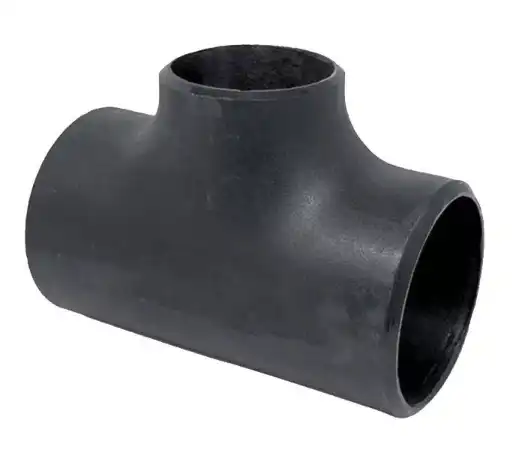
A high-temperature pipe tee is a T-shaped pipe fitting used for branch connections in systems where temperatures are typically over 400°C and may go as high as over 1000°C. At these levels, the structural integrity of standard carbon steel fittings is lost, rendering material selection and precise manufacture non-negotiable
What Makes These Fittings Different
The main technical problem is the resistance to “creep”—the gradual, irreversible distortion under continuous temperature load. Alloys like ASTM A234 WP91 (suitable for continuous operation at up to 600°C), 310S stainless steel, and Nickel-based Inconel 625 are used precisely because they preserve yield strength under severe heat. Chrome-Molybdenum grades also develop a protective oxide which is resistant to scale and hence preserves wall thickness during years of service.
Where They Are Applied
Such fittings are used in supercritical power plants carrying superheated steam from boilers to turbines, in petrochemical ethylene cracking furnaces dealing with volatile hydrocarbons at 850°C, and in industrial exhaust manifolds subjected to thermal shock. Every application requires a fitting that will provide a leak-proof seal where standard steel would fail.
Applicable Standards
Dimensional compliance to ASME B16.9, chemical compliance to ASTM A234/A403, and system compliance to ISO 9001 quality management are all things that may decide whether a fitting is eligible for critical service. These are not bureaucratic check boxes; they represent the minimal safety threshold for high-pressure, high-heat pipe systems.
Why OEM Suppliers Are the Optimal Choice for High Temperature Pipe Tees
The real operational and financial benefits of choosing an OEM supplier over a generic distributor. OEM manufacturers design each fitting to your particular service parameters—pressure class, bore size, wall schedule, and alloy grade. They don’t sell you a catalog item that comes close to your demand.
Customization Calibrated to Your System
OEM manufacturing enables the exact selection of materials, dimensions, and pressure ratings. If your application requires a reducing tee in WP91 for a steam header or a straight high temperature pipe tee in 347H for a chemical processing line, the fitting is made to fit, not modified to fit.
Certified Quality Assurance
Quality assurance at the OEM level is much more than a visual check. This includes PMI (Positive Material Identification) by XRF or OES analysis to confirm alloy chemistry, RT or UT (Radiographic or Ultrasonic Testing) to identify internal defects in the crotch area, hardness testing to confirm correct martensitic structure in P91 grades, and dimensional verification of wall thickness at the branch intersection. Together, these processes avoid the localized stress concentrations that lead to premature failure.
Reduced Long-Term Risk
Field data from power generating and refinery operations indicate that certified OEM fittings routinely minimize unscheduled maintenance intervals and prolong service life. Lower-quality replacements usually pay for themselves several times over the initial investment in a validated OEM product.
Comparing OEM High Temperature Pipe Tees with Alternative Suppliers
Not all “high temperature rated” T-fittings are built to the same quality. If you look closely, you can see the difference between OEM and non-OEM items.
Here are the three biggest differences procurement teams should consider:
- Material Traceability: OEM suppliers provide complete mill test reports and PMI records for each heat of material. Generic providers sometimes cannot provide verifiable paperwork, leaving consumers with little recourse in case of failure.
- NDT coverage: OEM items are tested using volumetric non-destructive testing on the crotch region, the most stressed location of a high temperature pipe tee. Many low-cost alternatives are just surface tested, missing interior gaps or inclusions.
- Post-weld heat treatment: Conformance to: The Chrome-Moly grades need PWHT to reduce residual tension and to avoid stress corrosion cracking. OEM manufacturers record and confirm that procedure, while many third-party sellers skip it altogether.
These disparities translate directly into operational risk. A fitting with no detectable chemical or heat treatment history may seem okay on first inspection, but may fail on thermal cycling during the first year of service. The cost of a plumbing breakdown in a refinery or power plant involving downtime, environmental liability, and safety risk is significantly more than any price savings made during procurement.
Procurement Considerations When Choosing an OEM High Temperature Pipe Tee Supplier
Choosing the correct OEM supplier goes beyond scrolling through a product catalog. To get into a long-term procurement partnership, the supplier needs credentials, manufacturing capacity, and after-sales infrastructure.
Verify Certifications First
Check that the supplier is ISO 9001 certified and that they have specific equipment manufacturing permits awarded by the national authorities, where appropriate. These certifications are an external examination of the quality management system, not a self-declaration.
Assess Production Capacity and Lead Times
The guarantee of continuity of supply comes from a source with proven yearly output (like Oudi’s manufacturing capacity of 16,000 tons). You need a manufacturer with proven throughput for bulk orders such as EPC projects or periodic maintenance turnarounds, not one that would subcontract to satisfy a sudden need.
Evaluate After-Sales Support
A supplier’s trust in its own product is shown by pricing transparency and warranty coverage. Suppliers who spell out warranty conditions and provide technical help after delivery ease the administrative load on the buyer and develop the kind of confidence that keeps procurement contracts flowing for years to come.
Installation and Maintenance Best Practices for OEM High Temperature Pipe Tees
Even the best-specified fitting will underperform if installed incorrectly or neglected during service.
Follow PWHT and Alignment Protocols
Chrome-Moly tees welded in the field should be Post-Weld Heat Treated. By skipping this step, residual stresses are introduced, which increase the risk of cracking during thermal cycling. The proper alignment should also be checked before final weld completion. Angular misalignment at the branch causes bending moments that cause stress concentrations at the crotch.
Schedule Routine Inspection
Regular service intervals must include corrosion monitoring, wall thickness measurement by UT, and ocular examination for surface oxidation. Catching wall thinning or surface scaling early lets you schedule a replacement rather than having to undertake an emergency shutdown.
Address Wear and Thermal Fatigue Proactively
In systems with frequent start-stop cycles, the thermal fatigue at the junction of the branch is accumulated over time. Engineers need to monitor operational cycle counts, combined with calendar-based inspection schedules, to find fittings that are nearing their design fatigue life prior to failure.
Conclusion
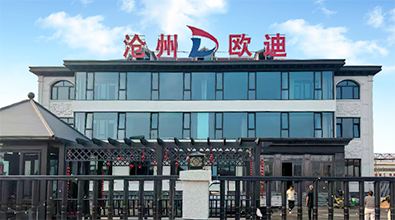
The selection of the OEM supplier of alloy pipe tees in high temperature pipe tee service has long-lasting operational implications. Verified material chemistry, accredited quality management, documented heat treatment, and traceable inspection records are what distinguish a trusted source from a danger. Oudi is a professional manufacturer of carbon steel, stainless steel, and alloy steel pipe fittings, founded in 1998, ISO 9001 certified, has special equipment production licenses, and sells to more than 300 clients in 40 countries. One verified fit at a time. That’s our track record.
FAQ
1. What is the maximum service temperature for ASTM A234 WP91 tees?
WP91 Chrome-Moly steel is rated for continuous service up to 600°C (1112°F). Beyond this point, creep strength drops sharply, and the material is no longer suitable for pressure-retaining service without engineering reassessment.
2. Why is Post-Weld Heat Treatment mandatory for Chrome-Moly tees?
PWHT relieves residual stresses introduced during welding. Without it, Chrome-Moly tees are susceptible to stress corrosion cracking and brittle fracture, particularly under cyclic thermal loading.
3. What is the difference between a forged and a seamless tee for high-temperature service?
Forged tees offer a refined grain structure suited for high-pressure headers. Seamless tees are standard for moderate high-temperature branch connections. Both must conform to ASME B16.9 dimensional standards.
4. Can I use a high-temperature alloy tee for cryogenic applications?
No. High-temperature alloys are optimized for elevated service and may become brittle at sub-zero temperatures. Cryogenic applications require specific low-temperature grades such as LCC or 304L.
5. How does Oudi verify alloy chemistry before shipment?
Oudi applies Positive Material Identification using XRF or OES analysis to confirm that alloy chemistry matches the specified grade. Full mill test reports accompany each shipment.
Get a Quote from Oudi — Your Trusted High Temperature Pipe Tee Manufacturer
Oudi has produced certified alloy and carbon steel pipe fittings since 1998, with 16,000 tons of annual output and active supply relationships across Europe, North America, the Middle East, and Southeast Asia. If your project requires a verified high temperature pipe tee supplier with ISO 9001 certification and documented export experience, contact our team directly at oudi-04@oudiguandao.com. We respond with specifications, certifications, and pricing—no delay, no guesswork.
References
1. ASME International. ASME B16.9: Factory-Made Wrought Buttwelding Fittings. 2018.
2. ASTM International. ASTM A234/A234M: Standard Specification for Piping Fittings of Wrought Carbon Steel and Alloy Steel for Moderate and High Temperature Service. 2021.
3. International Organization for Standardization. ISO 9001:2015 Quality Management Systems — Requirements. 2015.
4. Viswanathan, R. Damage Mechanisms and Life Assessment of High-Temperature Components. ASM International, 1989.
5. Swindeman, R. W., & Pugh, C. E. "Creep of Ferritic Steels for High-Temperature Pressure Vessels." Journal of Pressure Vessel Technology, 1991.
6. Leyens, C., & Peters, M. (Eds.). Titanium and Titanium Alloys: Fundamentals and Applications. Wiley-VCH, 2003. (Referenced for comparative high-temperature alloy behavior in industrial piping contexts.)

Need help finding the right solution with our experts. Please contact us.
SINCE 1998 Your Reliable Pipeline Manufacturer