What Should You Check Before Choosing a Carbon steel elbow supplier?
Before you settle on any carbon steel elbow supplier, you need to check a few things: certifications and standard compliance (ASME/ASTM/ISO), production competence, product variety, and supply chain dependability. A suitable supplier should have ISO 9001 certification, verifiable quality control from raw material to completed items, and proven export expertise. This choice is connected with expensive breakdowns of oil, gas, chemical, or water treatment pipes. Getting it properly saves your project schedule, expenses, and, most importantly, operational safety.
Understanding the Importance of Selecting the Right Carbon Steel Elbow Supplier
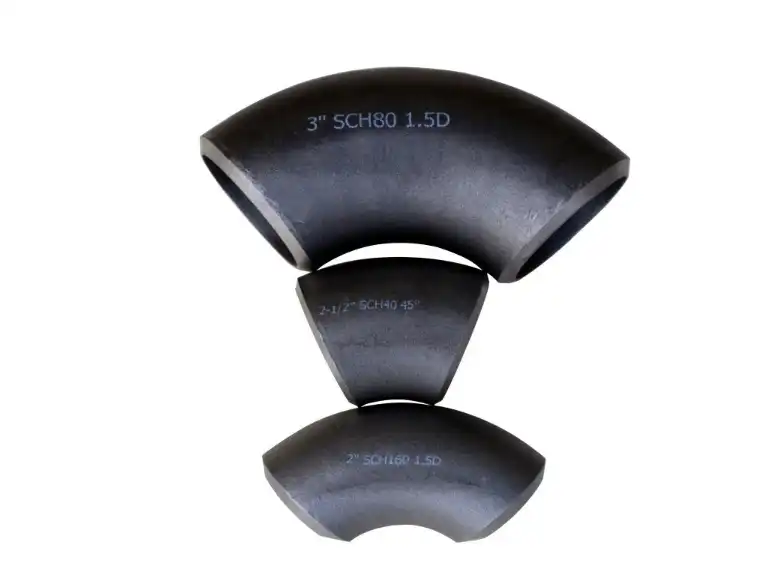
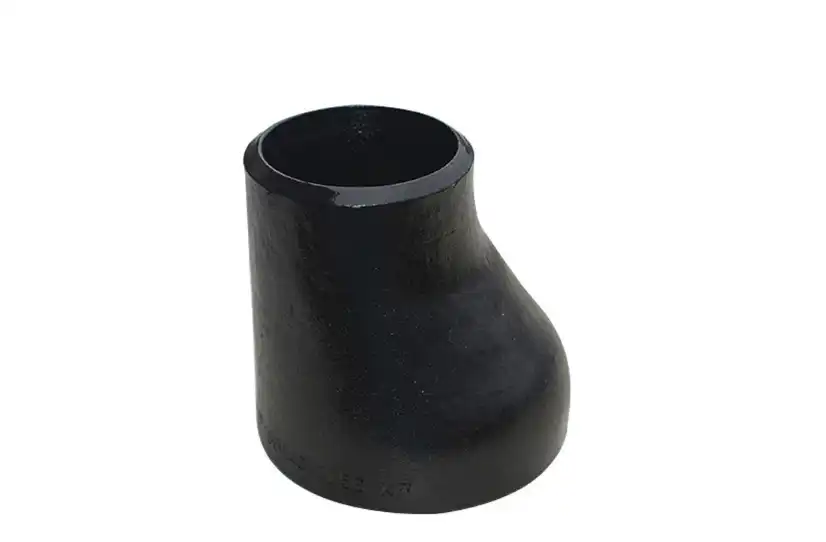
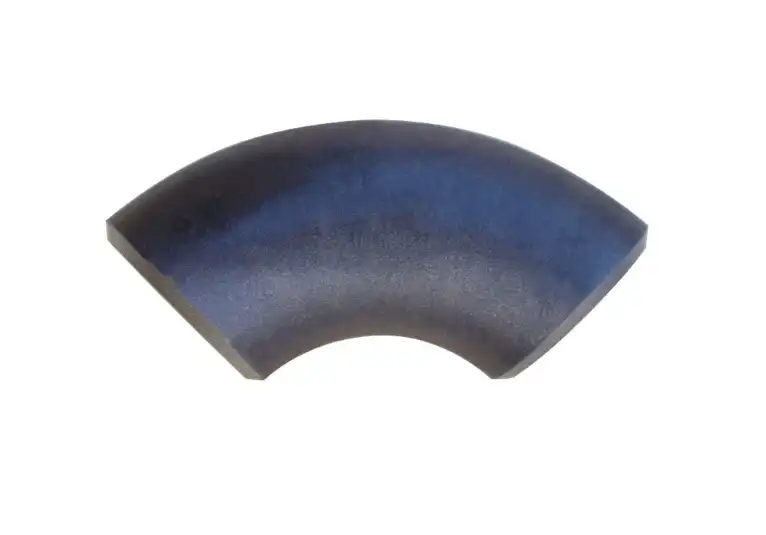
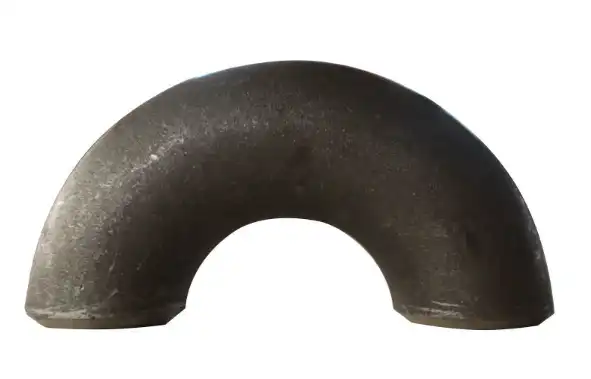
The function of a carbon steel elbow seems easy, but it is not. Its task is to change the direction of the flow of fluid or gas in a pipeline at exact angles of 45°, 90°, or 180°. In high-pressure settings, such as oil refineries, natural gas processing plants, or water treatment facilities, even small dimensional variations or material defects may lead to failures that have major safety and cost implications.
The worldwide pipe fittings market size was valued at over $8.5 billion in 2023 and is anticipated to rise mainly due to infrastructure development in the energy and water sectors. This size brings with it a large difference in supplier quality. Some manufacturers skimp on material grades; others have inconsistent dimensional control. Buyers that bypass comprehensive screening sometimes spend significantly more in rework, downtime, and liabilities than they saved on the original acquisition.
Why Material Grade Matters More Than Price
For extra strength, you may locate carbon steel elbows in ASTM A234 WPB, A420 WPL6, and A860 WPHY grades. Choosing the improper grade for your working pressure or temperature profile shortens the life of the component and may lead to weld joint failures. Always verify that the mill test report (MTR) matches the grade on your purchase order.
The Hidden Cost of Dimensional Inaccuracy
A little difference in wall thickness or bevel angle might cause improper fit-up during field installation. This leads to expensive rework and timetable slips. Ask vendors whether their fittings meet the dimensional requirements of ASME B16.9 (butt-welding) or ASME B16.11 (socket-welding).
Short Radius vs. Long Radius: Knowing the Difference
Short radius (SR) elbows have a radius equal to the pipe diameter to the centerline and are used in compact locations. Most process piping applications choose LR elbows because of the reduced flow resistance. LR elbows have a centerline radius of 1.5 pipe diameters. Please check the sort of system design you have before purchase.
Key Criteria to Evaluate Carbon Steel Elbow Suppliers
When you get down to examining prospective Carbon steel elbow suppliers, having a defined checklist helps avoid expensive oversights. Here are the main assessment criteria I suggest:
- Standard Compliance: Ensure the supplier produces to known standards (e.g., ASME, ASTM, DIN, JIS, BS, etc.). Marketing claims are not enough; third-party test results should accompany products to substantiate compliance.
- Certifications: The minimum requirement is ISO 9001:2015 quality management certification. Some markets have specific equipment manufacturing permits (e.g., those necessary under Chinese national rules for pressure-bearing components) that give an extra level of reassurance.
- Available Product Types: Please verify whether the supplier supplies both seamless and welded elbows. Seamless elbows are ideal for high-pressure and high-temperature applications because of the homogeneous wall thickness.
- Inspection Equipment: Quality-conscious providers will have nondestructive testing (NDT) tools—ultrasonic, magnetic particle, or radiographic inspection—as part of their quality control process.
These parameters are a useful filter that can distinguish between the manufacturers that can really help your project and those who only display items online. Once these foundations are established, you may compare vendors based on your particular application needs.
Comparing Suppliers: How to Analyze and Choose Based on Your Needs
Checking the certification option does not equate to matching a supplier with your real buying requirements. Check their expertise in your business, their production ability, and the technical depth of their personnel.
Industry-Specific Application Experience
A supplier selling to oil and gas operators on a daily basis thinks differently about pressure class selection and material traceability than a supplier selling construction fittings. Ask for references in your industry and check their track record on comparable working circumstances.
Production Capacity and Lead Time Transparency
The more you make each year, the more reliable your supply. A business with a 16,000-ton yearly production can take care of big or rush orders without disturbing the schedules of other clients. Verify lead times for stock goods vs. bespoke specs, and inquire about expedited requests.
After-Sales Support and Technical Guidance
Strong Carbon steel elbow suppliers don’t just leave after shipping. They provide installation suggestions, material certifications on request, and timely technical help if you have issues during construction or commissioning. This kind of service transforms a transactional purchase into a beneficial long-term partnership.
Avoiding Common Pitfalls in Sourcing Carbon Steel Elbows
The pitfalls of bad procurement practices here are usually limited to a few known situations. Knowing them beforehand saves time, money, and headaches.
The most common problem I encounter is accepting supplier-given documentation without independent verification. The certificate of conformity is only as good as the quality system behind it. Request the original mill test record; cross-reference heat data to the actual fitting. Third-party inspection at source for big orders.
Another pitfall is hidden charges. Some providers quote aggressively on the unit price but separately charge for beveling, surface treatment, wooden box packaging, or export documents. Before placing a purchase order, you should ask for a complete landed cost breakdown, which should include freight, export packing, and all relevant duties.
Dimension discrepancies are more prevalent than the typical buyer expects during installation. Always check that the elbow schedule (wall thickness) and the end-connection type (butt-weld, socket-weld, or threaded) are compatible with your pipe specification. A 3” SCH 40 butt-weld elbow won’t mate with SCH 80 pipe without additional machining.
How to Verify and Build Trust with Your Carbon Steel Elbow Supplier
Verification is not a one-time event—it is an ongoing process. Here is how to build and maintain confidence in a supplier relationship.
Start with Certificate Verification
Ask the provider for their ISO 9001 certificate and check the certificate with the granting organization. A regulatory requirement for Chinese producers exporting pressure-bearing fittings, the Special Equipment Manufacturing License (TS certification) is a certificate worth checking.
Request Physical Samples Before Bulk Orders
Request a sample lot before ordering a big lot. Send samples to an outside laboratory for chemical composition analysis, dimensional inspection per ASME B16.9, and hardness testing. This measure costs a fraction of the danger it eliminates.
Evaluate Communication and Documentation Quality
The timeliness of a provider and the clarity of their technical documentation indicate their operating standards. Suppliers that reply quickly with correct data sheets, full MTRs, and well-defined packing lists are considerably less likely to cause downstream issues than those who supply unclear or partial documentation.
Conclusion
To choose the best Carbon steel elbow supplier for carbon steel elbows, you need to evaluate systematically in terms of material standards, certifications, manufacturing capacity, and after-sales assistance. Omitting any of these checks puts your project at risk of quality failures, delays, and budget overruns. Do your homework. Before you commit, check the paperwork, ask for samples, and gauge the technical level of each provider. A supplier with a track record of exports, a verifiable quality control system, and a wide product offering will always win over those that compete just on price.
FAQ
1. What certifications should a carbon steel elbow supplier hold?
At minimum, look for ISO 9001:2015 certification, which confirms a documented quality management system. For pressure-service applications, check whether the supplier holds relevant manufacturing licenses for pressure-bearing components. Products should also conform to ASME B16.9 or equivalent dimensional standards.
2. How can I verify the quality of carbon steel elbows before shipment?
Request mill test reports (MTRs) showing chemical and mechanical properties, and confirm heat numbers match the physical product. For high-value orders, commission a third-party inspection agency—such as SGS, Bureau Veritas, or TÜV—to perform pre-shipment inspection at the factory.
4. What are typical lead times for bulk carbon steel elbow orders?
Standard items in common grades and sizes (e.g., ASTM A234 WPB, 1/2" to 24") typically ship within 2–4 weeks. Custom specifications—special alloys, large diameters, non-standard angles—may require 6–10 weeks. Always confirm lead times in writing and include them in your purchase contract.
5. What is the difference between seamless and welded carbon steel elbows?
Seamless elbows are formed from solid steel without a weld seam, making them better suited for high-pressure and high-temperature service. Welded elbows are formed from plate or pipe and are generally used in lower-pressure applications. Both types are valid; the right choice depends on your system's operating conditions.
Connect with Oudi — Your Trusted Carbon Steel Elbow Supplier and Manufacturer
Oudi has been producing carbon steel pipe fittings since 1998. With 16,000 tons of annual capacity, ISO 9001:2015 certification, and a Special Equipment Manufacturing License, Oudi ships to over 300 customers across 40+ countries. Our product range covers Carbon steel elbow supplier, stainless steel, and alloy steel elbows in American, Japanese, German, and British standards. Contact our team today at oudi-04@oudiguandao.com for a detailed quotation.
References
1. American Society of Mechanical Engineers (ASME). ASME B16.9: Factory-Made Wrought Buttwelding Fittings. ASME, 2018.
2. ASTM International. ASTM A234/A234M: Standard Specification for Piping Fittings of Wrought Carbon Steel and Alloy Steel for Moderate and High Temperature Service. ASTM, 2022.
3. International Organization for Standardization. ISO 9001:2015 Quality Management Systems — Requirements. ISO, 2015.
4. Nayyar, Mohinder L. Piping Handbook, 7th ed. McGraw-Hill, 2000.
5. Smith, Peter, and R. W. Zappe. Valve Selection Handbook, 5th ed. Gulf Professional Publishing, 2004.
6. Grand View Research. Pipe Fittings Market Size, Share & Trends Analysis Report. Grand View Research, 2023.

Need help finding the right solution with our experts. Please contact us.

SINCE 1998 Your Reliable Pipeline Manufacturer