ASME B16.9 Pipe Cap Dimensions: What Should Engineers Know?
When specifying piping system closures, engineers must understand that ASME B16.9 Pipe Cap dimensions directly impact installation precision, pressure ratings, and long-term system integrity. These butt-weld fittings serve as terminal closures in oil, chemical, natural gas, and water conservancy applications where dimensional accuracy prevents leaks and structural failures. The standard defines exact tolerances for outside diameter, wall thickness, and cap depth—parameters that govern welding alignment and pressure containment. Engineers who master these specifications avoid costly field modifications, ensure compatibility across multinational supply chains, and meet stringent quality requirements for heavy industrial projects.
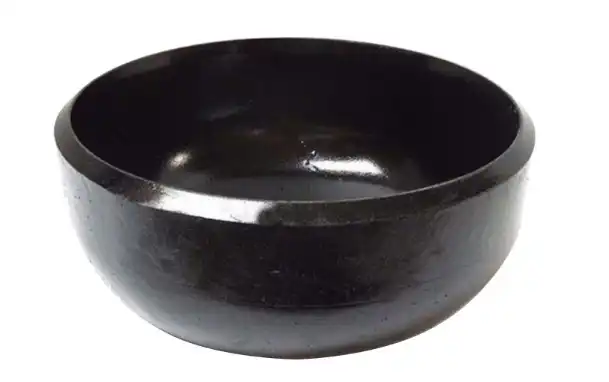
Critical ASME B16.9 Pipe Cap Dimensions Explained
ASME B16.9's dimensional requirements strike a balance between saving money on materials and keeping the structure strong. Dimensional inspection procedures are used to carefully check these parameters, which are the same ones that are used for elbows and tees that meet the same standard. Engineers have to figure out how each measurement affects both the building process and how well the system works.
Nominal Size Ranges and Outside Diameter Consistency
The nominal sizes that ASME B16.9 Pipe Cap accepts range from NPS 1/2 to NPS 48, and the outside widths must match the pipe measurements set by ASME B36.10M. The standard says that the cap OD must line up within ±1% tolerance for sizes NPS 2 and smaller, and within ±0.5% tolerance for larger sizes. This consistency makes it possible to weld without leaks by keeping the cap and pipe in a straight line, which is very important when working with corrosive chemical streams or high-pressure natural gas. Equally tight are the out-of-roundness tolerances, which are usually 1% of the stated outside diameter. This is done to keep stress from building up during welding and service.
Wall Thickness Variations and Schedule Ratings
The pressure capacity and material strength of an ASME B16.9 Pipe Cap are directly related to the thickness of the wall. The standard gives thickness tables that match schedule rates. For example, Schedule 40 caps are used for water systems with mild pressure, Schedule 80 caps are used for oil pipes with higher pressure, and Schedule 160 caps are used for chemical processing in harsh circumstances. Thickness margins usually allow -12.5% from standard (never going over this negative limit) and +unlimited on the positive side. This is to account for differences in manufacturing while keeping the minimum strength. To avoid weak spots, engineers must make sure that the thickness of the cap matches or exceeds the schedule for the connected pipes. Precision forging and ultrasonic tests are used in our production process to keep thickness variations within ±0.3 mm for sizes up to NPS 12.
Cap Height, Depth, and Their Installation Implications
The cap depth, which is the distance from the pipe end to the closed tip of the cap, affects both the amount of material and the space needed for fitting. According to ASME B16.9 Pipe Cap standards, the depth depends on the nominal size, with bigger caps needing proportionally bigger depths to spread the stress. Caps that are too shallow put all the stress at the weld toe, while caps that are too deep waste material and make the weight go up. Installation teams need depth information to plan how to get to work places that are hard to get to, like marine pipes or underground water conservancy systems. The standard also defines end preparation geometry, with typical bevel angles of 37.5° ±2.5° to make full-penetration welds easier. This is an important feature that affects the strength of the joint and cuts down on the need for too much grinding or re-beveling in the field.
Radius of Curvature and Stress Distribution
The closed end of a pipe cap can have either a hemispherical or an elliptical head. The radius of curvature is designed to keep stress concentrations as low as possible when the pressure inside the pipe is high. Hemispherical shapes are better at spreading stress because they handle pressure loads through membrane stresses instead of twisting stresses. Elliptical profiles have smaller radii, which means they need thicker walls to make up for the smaller volume of the material. ASME B16.9 Pipe Cap standards set the minimum radius-to-diameter ratios that are safe and cost-effective. For hemispherical types, these ratios are usually 1.0. When engineers look at pressure tanks or boiler systems, they have to make sure that the cap curvature meets the code requirements for the working pressure class. They also have to make sure that the stress levels stay below the material's yield strength while still allowing for safety factors.
Manufacturing Tolerances for Welding Quality
Tight tolerances make sure that caps bond properly without having to be adjusted in the field. Angular tolerances of ±2.5° on bevel preparation stop misalignment that leads to burn-through or incomplete fusion. Center-to-end dimension tolerances (±1.6 mm for NPS 2–8 and higher for larger sizes) make sure that the length of the fit-up is correct. Tolerances for squareness stop installations from being cocked, which causes bending stresses. ASME-calibrated coordinate measuring machines and go/no-go gauges are used by our quality system to check these parameters. Inspection records are included in the Type 3.1 Material Test Reports we send with every shipment to markets in Europe and North America.
How to Select the Right ASME B16.9 Pipe Cap Based on Dimensions and Materials
Proper selection requires matching size requirements to the working conditions of the system and the fitting limitations. If you make a mistake in this step, it could lead to leaks, pressure rating violations, or costly repairs. Teams in charge of buying things have to find a balance between technical needs and cost, all while following international rules for ASME B16.9 Pipe Caps.
Matching Pipe Size and Dimensional Compatibility
The first step in accurate size matching is to make sure that the current pipe system's NPS and plan are correct. People often get NPS and bore diameter mixed up. The OD of the NPS 6 pipe is 168.3 mm, not 150 mm. To check the OD and wall thickness, engineers must compare pipe specifications to ASME B36.10M tables and then choose caps with the same specs. When linking pipes with different schedules, you might need transition pieces to keep the width from changing quickly, which can cause stress risers. Positive Material Identification (PMI) and dimensional certification are two ways that our technical team helps customers check the specifications of pipes. This keeps mismatches from happening, which has led to problems in water infrastructure in Africa and oil facilities in the Middle East.
Choosing Material Grades Based on Operating Conditions
The choice of material has to take into account the limits of temperature, corrosion resistance, and mechanical strength. ASME B16.9 Pipe Cap made from ASTM A234 WPB carbon steel can be used in a wide range of situations from -29°C to 400°C. They are easy to make and don't cost a lot of money, so they are good for most building and water conservation projects. Stainless steel grades (ASTM A403 WP304/316) can handle high temperatures and chemicals that break down metal, which is important for chemical processing and marine environments. ASTM A234 WP11/WP22 alloy steels can handle high temperatures in power plants and refineries, keeping their creep strength at 550°C and above. To make sure the workplace meets the needs of the project, engineers have to check that it has the right amount of carbon (no more than 0.30% for WPB) and alloying elements (chromium, molybdenum) that affect how it can be welded and how it needs to be heated.
Seamless vs. Welded Caps: Dimensional Stability Considerations
When made from a single piece of forging or extrusion, seamless caps have better uniform dimensions and don't have any weld gaps that could start rusting. This way of building keeps the wall thickness and grain flow consistent, which is very important for high-pressure natural gas transmission and sour service uses. Welded caps, which are made from plate stock and have a lengthwise seam, are cheaper for sizes (NPS 24 and up) where seamless production isn't possible. To find fusion flaws in weld joints, however, they need to be checked more closely using X-rays or ultrasound. We can make both seamless (up to NPS 24) and welded caps. To meet the DIN and BS standards that European buyers expect, all of our welded products go through a 100% RT inspection.
Comparing Buttweld Caps to Alternative Closure Types
ASME B16.9 buttweld caps work great in fixed installations that need to keep the highest level of pressure integrity, like dead-legs in chemical plants or the ends of long-distance pipes. There are other options, such as threaded caps (which can only be used in low-pressure, small-bore situations because of their thread strength limits), slip-on caps (which are easier to install but have lower pressure ratings), and blind flanges under ASME B16.5 (which allow for periodic access but require more material and bolt maintenance). The buttweld design is the best for vital services because it doesn't have the leaky paths that come with threaded connections or the need for gaskets that come with flanged ends. When engineers design a system that focuses on long-term reliability over easy maintenance, they should choose buttweld caps. This is especially true for unmanned offshore platforms or buried pipe systems.
Installation and Manufacturing Insights Related to ASME B16.9 Pipe Cap Dimensions
Whether an ASME B16.9 Pipe Cap works as planned depends on how well its dimensions are maintained during production and fitting. Deviations from the stated tolerances, whether caused by bad shaping, careless handling, or the wrong way to weld, risk the safety of the system and cause expensive breakdowns. Knowing how production methods and installation practices affect sizes helps engineers be clear about what they need and make sure suppliers can meet those needs.
Maintaining Dimensional Integrity During Welding and Fitting
To avoid angular mismatch and keep concentricity, buttweld installation needs to be perfectly aligned. Engineers set gap and bevel preparation limits (usually 1.6 mm ± 0.8 mm) to make sure that full-penetration welds don't burn through. During root pass welding, tack welds must maintain alignment, and welding procedures (WPS) control the heat input to keep the shape from changing. Too much heat makes the cap distort out of round, which lowers the pressure capacity and creates stress concentrations. For an ASME B16.9 Pipe Cap, controlling heat input and alignment is especially important to maintain dimensional accuracy. To keep shrinkage stresses to a minimum, our installation guidelines suggest rotating welding sequences and controlled cooling rates. This is especially important for alloy steel caps that need post-weld heat treatment (PWHT) to make them flexible again and relieve residual stresses.
How Manufacturing Processes Affect Final Dimensions
When billet material is compressed under high pressure in a seamless forging process, the grain structure is aligned, and the wall thickness is kept the same within a 10% tolerance. Controlled cooling in hot forming keeps the dimensions accurate, while stress-relief heating is needed after cold forming for tighter standards. Plate rolling, seam welding, and end forming are all steps in the process of making a welded cap. Each step can introduce some variation in the cap's size. Our factory has CNC-controlled forming tools and automatic welding systems that keep diameter limits of ±0.5 mm, which is proven by statistical process control. Normalizing heat treatment (for carbon steel) and solution annealing (for stainless steel) lower forming stresses and keep dimensions stable, so they don't change while the part is being used.
Quality Control and Certification Requirements
Dimensional verification is an important part of quality assurance, and inspection plans are based on the requirements of ASME B16.9. Important checks include measuring the outside diameter at several cross-sections, using ultrasonic tests to confirm the wall thickness, and using protractors calibrated to ±0.5° to confirm the bevel angle. Non-destructive testing (NDT) methods, such as Magnetic Particle Inspection for carbon steel and Liquid Penetrant Testing for stainless steel, find flaws on the surface that affect the size of the material. We are certified by ISO 9001:2000 and have a special equipment manufacturing license from the People's Republic of China. Each cap is linked to a mill test report, a heat number, and inspection records through traceability systems. Shipments to Europe and North America come with Type 3.1 Material Test Reports, which meet the standards set by EN 10204 for paperwork needed for building oil and chemical plants.
Corrosion Resistance Treatments and Dimensional Durability
Surface treatments keep measurements from wearing away due to erosion and rust, which weaken walls over time. Depending on the environment, carbon steel caps can be coated with phosphate, painted with epoxy, or hot-dip galvanized. Hot-dip galvanizing adds 80–100 microns of thickness, which needs to be taken into account when OD specifications are made. Passivation is a process that removes free iron from stainless steel caps and helps oxide layers form. This keeps the caps' rust protection without changing their size. When alloy steel caps are used at high temperatures, oxide scales form on them that slightly reduce the effective wall thickness. This means that engineers have to add corrosion allowances (usually 1.5–3 mm) to the minimum wall thickness calculations. Our coating specs are in line with NACE standards for oil and gas uses. This means that pipe systems will stay the same size for as long as they are supposed to in marine settings in Southeast Asia and deserts in the Middle East.
Procurement Considerations for ASME B16.9 Pipe Caps
A good procurement process strikes a balance between checking the quality, cutting costs, and making sure the supply chain is reliable. Engineers and buying managers have to rate suppliers based on how well they meet dimensions, make sure certifications are valid, and send goods on time. If you choose the wrong vendor, you could end up with materials that don't meet standards, project delays, and liability issues. This is especially true for foreign deals that involve more than one regulatory authority regarding ASME B16.9 Pipe Caps.
Sourcing Caps with Verified Dimensional Accuracy
When evaluating a supplier, the ability to inspect dimensions and the authenticity of the certification should come first. Ask for proof that measuring tools like calipers, micrometers, and CMM machines have been properly adjusted and can be traced back to national standards. Check that dimensional inspection plans follow the rules in ASME B16.9 and include all the important parameters instead of just picking a few at random. Oudi has a full inspection lab with equipment that is calibrated every year by recognized organizations. This helps us meet the dimensional requirements for our 16,000-ton yearly production capacity with no flaws when sending goods to North American wholesalers and European EPC contractors. Check the quality manuals of your suppliers to make sure that the manufacturing process doesn't go past certain dimensional hold points. ASME B16.9 Pipe Cap products shouldn't be coated or packaged until the dimensions have been checked and recorded.
Evaluating Suppliers: Dimension Conformity and Quality Assurance
Check the supplier's process controls to make sure that all output batches are the same, not just that the sizes are correct. ISO 9001 certification shows that quality management is done in a planned way, and special equipment manufacturing licenses show that pressure vessel parts are made in accordance with the rules. Check past work by calling past customers, especially for projects that are about the same size and type of materials. Do source checks that look at the ability to track raw materials (heat numbers that match mill certificates), inspection records during production, and final test reports. Our open and honest business welcomes customer checks at our Mengcun plant, where people can see how we forge metal, use heat treatment furnaces, and do nondestructive testing (NDT). We've passed inspections by European certification bodies and North American inspection agencies, which have helped us build long-term relationships with distributors who work in the shipbuilding and power generation industries.
Pricing Dynamics: Things to Think About with Size, Thickness, and Material
Prices are based on the amount of materials used, how hard they are to make, and the level of quality. The wall thickness has the biggest effect—Schedule 160 caps have almost twice as much material as Schedule 40 caps, which makes them cost more. Size doesn't have a straight-line effect on price; bigger caps need heavier forging tools and longer heat treatment processes. The price of raw materials affects the cost of the material. For example, stainless steel costs three to four times as much as carbon steel, and unusual metals cost eight to ten times more. Certifications like PMI testing, RT inspection, and PWHT come with extra costs that are worth it because they lower risk. Our pricing system strikes a balance between low prices and good investments. We use our efficient 16,000-ton annual capacity to offer discounts for shipments that are more than 10 tons. Quotes that are clear break down the prices of materials, production, testing, and approval, so customers can get the best deals without sacrificing safety margins.
Minimum Order Quantities, Lead Times, and Customization
The standard ASME B16.9 measurements allow for quick availability of common sizes (NPS 2–12 in Schedule 40/80 carbon steel), with lead times of two to three weeks from stock. Custom manufacturing is needed for sizes that aren't standard, materials that aren't common, or tight tolerances. This can make lead times 6 to 8 weeks longer, depending on the testing and heat treatment needs. Minimum order numbers (MOQs) are a way to balance the needs of customers with the ease of production. For example, normal items may have MOQs of 100 pieces, while custom orders can accept lower quantities at different prices. We keep a strategic stock of WPB carbon steel caps in common sizes so that we can quickly meet the needs of urgent projects in Africa and Southeast Asia, where delays in logistics can affect building plans. Custom dimensional tolerances that are smaller than ASME B16.9 standards are possible with better checking and selection methods. For example, ±0.2 mm OD for precision instrument pipe is possible.
Export Documentation and Regulatory Compliance
For international shipments, you need proof that the dimensions are correct and that the material is of good quality. The following are important papers: Material Test Reports (MTRs) according to EN 10204 Type 3.1, measurement inspection reports with measured values, heat treatment certificates, and NDT records. For a smooth processing process, customs paperwork must correctly list product details like material grade, size range, and compliance with standards. Third-party certifications from Lloyd's Register, TÜV, and ABS provide independent proof that is useful for buying insurance and managing risk. Our export paperwork includes commercial invoices, packing lists with measurements, certificates of origin, and quality certifications, all in English. We help customers in over 40 countries in Europe, the United States, Africa, Southeast Asia, and the Middle East. We keep our export licenses up to date and follow the rules for international trade. This way, we can reliably deliver to projects in Iran, Singapore, and Greece, even though their political situations are complicated.
Conclusion
Engineers can choose parts that fit perfectly into important pipe systems and meet requirements for pressure, temperature, and corrosion resistance when they know the ASME B16.9 Pipe Cap dimensions. Dimensional correctness, which includes everything from outside diameter standards to wall thickness conformity, has a direct effect on how quickly and well a system is put together, how well it welds, and how long it lasts. When choosing materials, you need to think about how well carbon steel, stainless steel, and alloy grades work in different service conditions while also keeping costs in mind. Manufacturing quality controls and licenses make sure that the caps you buy meet the requirements, which lowers the risk and responsibility for the project. Investments in complicated international projects in the oil, chemical, natural gas, water conservation, construction, shipbuilding, electric power, and boiler manufacturing sectors are safe when procurement strategies stress supplier verification, dimensional documentation, and regulatory compliance.
FAQ
What are the main differences between ASME B16.9 and ASME B16.5 pipe caps?
ASME B16.9 covers buttweld pipe caps that need to be permanently welded in place, offering superior pressure integrity through seamless construction and full-penetration welds. These caps suit applications where long-term reliability outweighs maintenance access needs. ASME B16.5 governs flanged closures (blind flanges) with bolt hole patterns enabling periodic disassembly, appropriate for systems requiring regular inspection or cleaning. Dimensional specifications differ fundamentally—ASME B16.5 describes the thickness of the flange, the diameter of the bolt circle, and the gasket seating surfaces, while ASME B16.9 describes the shape of the weld bevel and the depth of the cap.
How can I verify dimensional compliance before purchasing pipe caps?
Request approved dimensional inspection records that include the measured outside diameter, wall thickness, cap depth, bevel angles, and ASME B16.9 tolerance limits. Verify calibration certificates for measurement equipment and confirm ISO 9001 certification. Insist on Type 3.1 Material Test Reports per EN 10204 that include dimensional data traceable to heat numbers. Conduct supplier audits examining inspection processes and equipment. Reputable suppliers, like Oudi, offer full documentation packages and allow third-party inspections before shipment, ensuring dimensional conformity for critical projects.
Are ASME B16.9 pipe caps suitable for high-pressure, high-temperature environments?
Yes, when properly specified. Wall thickness selection per schedule ratings determines pressure capacity—Schedule 160 carbon steel caps can handle pressures above 3000 psi, while alloy steel grades (WP11, WP22) stay strong at temperatures up to 650°C. Engineers need to make sure that the grade of the material meets the temperature limits and that the sizes match the estimates in the ASME B31.3 process piping code. Post-weld heat treatment is needed for high-temperature applications to relieve stresses and restore ductility. Our alloy steel caps serve power generation boilers and chemical reactors operating under extreme conditions, certified to ASME standards with documented mechanical properties and heat treatment records.
Partner with Oudi for Precision-Engineered Pipe Caps
Engineers and procurement managers seeking reliable ASME B16.9 Pipe Cap suppliers for demanding industrial applications can depend on Oudi's 25 years of manufacturing excellence. Our ISO 9001-certified facility in Cangzhou produces 16,000 tons annually of dimensionally precise buttweld fittings in carbon steel, stainless steel, and alloy materials, serving over 300 customers across 40 countries. We maintain strict quality control from raw material verification through final dimensional inspection, backed by Type 3.1 Material Test Reports and special equipment manufacturing licenses. Our competitive pricing reflects efficient production scale without compromising the tight tolerances essential for oil, chemical, natural gas, and water conservancy projects.Customization capabilities accommodate non-standard sizes and material grades, supported by comprehensive NDT testing and heat treatment facilities. Whether you need Schedule 80 carbon steel caps for North American pipeline projects or exotic alloy caps for Middle Eastern refineries, our technical team provides specification guidance and documentation support for seamless international transactions. Contact us at oudi-04@oudiguandao.com to discuss your dimensional requirements and receive detailed quotations. Experience the reliability that has earned Oudi partnerships with EPC contractors, distributors, and plant operators throughout Europe, America, Africa, Southeast Asia, and beyond.
References
1. American Society of Mechanical Engineers. (2018). ASME B16.9: Factory-Made Wrought Buttwelding Fittings. New York: ASME Press.
2. American Society of Mechanical Engineers. (2020). ASME B31.3: Process Piping Code. New York: ASME Press.
3. ASTM International. (2019). ASTM A234/A234M: Standard Specification for Pipe Fittings of Wrought Carbon Steel and Alloy Steel for Moderate and High Temperature Service. West Conshohocken: ASTM International.
4. European Committee for Standardization. (2017). EN 10204: Metallic Products—Types of Inspection Documents. Brussels: CEN.
5. Nayyar, M.L. (2019). Piping Handbook (8th ed.). New York: McGraw-Hill Education.
6. Singh, A. & Kumar, R. (2021). Dimensional Tolerances and Quality Control in Buttweld Pipe Fittings Manufacturing. Journal of Pressure Vessel Technology, 143(4), 041502.

Need help finding the right solution with our experts. Please contact us.

SINCE 1998 Your Reliable Pipeline Manufacturer



