OEM Socket Weld Pipe Tee: Custom Options and Benefits
When sourcing piping components for high-pressure industrial systems, the socket weld pipe tee stands as a critical junction point that demands both precision engineering and reliable performance. Unlike threaded or slip-on alternatives, socket weld tees provide a welded connection that creates hermetic seals capable of withstanding extreme operational conditions. These fittings serve as branching points in small-bore piping networks, typically ranging from ½ inch to 4 inches in diameter, where leak integrity is non-negotiable. Our team at Oudi has manufactured these essential components since 1998, delivering customized solutions that meet the exacting standards of petroleum refineries, chemical processing plants, and power generation facilities across 40 countries.
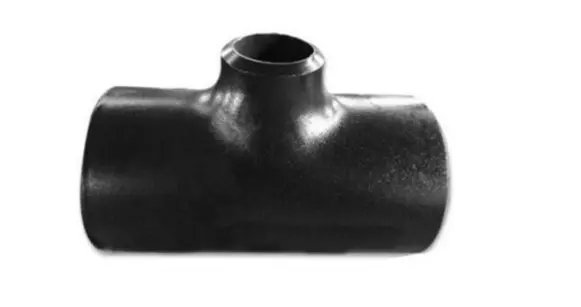
Customization Options for OEM Socket Weld Pipe Tees
By making Socket Weld Pipe Tees fit the needs of a specific project, standard catalog items can be turned into custom-made solutions that solve specific operational problems. Customization by OEM starts with choosing a material that is right for the fluid, the temperature at which it will be used, and the environment it will be exposed to. Our research team is deciding if duplex stainless steel is needed for sulfide stress cracking resistance in sour gas service or if normal carbon steel is enough for networks that carry safe water.
Material Selection for Operational Demands
When temperatures stay below 400°C and corrosion isn't a problem, carbon steel Socket Weld Pipe Tees can be used for a wide range of tasks. Type 316L stainless steel is better at resisting pitting in chloride-rich settings like ocean desalination plants or naval building. Alloy steel grades with chromium and molybdenum keep their creep strength at high temperatures, which are common in the pipes of electric power turbines. Treatments on the surface of things make them last longer. For example, hot-dip galvanizing protects against corrosion in outdoor installations, and electropolishing makes the inside of things smooth so that bacteria can't grow on them in pharmaceutical processing. Our annual production capacity of 16,000 tons can handle both small samples for engineering testing and large orders to meet the needs of EPC contractors working on tight deadlines.
Dimensional Customization and Pressure Ratings
Standard ASME B16.11 sizes work for most uses, but sometimes special projects need to change the socket depths to fit pipes with unusual wall thicknesses or welding methods that aren't standard. Using reducing Socket Weld Pipe Tees with different branch diameters improves the flow distribution in assemblies that feed multiple process streams. Adjusting the pressure grade makes sure that everything works together. For example, a refinery hydrocracker that works at 3000 PSI needs Class 6000 fittings, but a low-pressure liquid return system can work with Class 3000 parts. Our quality management system has been approved to ISO 9001:2000 since 2003. It keeps dimensional limits within 0.1mm to make sure that the parts fit correctly when they are installed in the field, even when the temperature is between -40°C and 600°C.
Certification Compliance and Specialized Fabrication
International projects need proof of the materials' make-up, their mechanical properties, and how they were made. We give out Material Test Certificates that are in line with EN 10204 3.1. These certificates include a heat number connection between providers of raw materials and finished fittings. Positive Material Identification using spectrographic analysis confirms the chemical makeup, which keeps metal systems from becoming cross-contaminated, which can be very expensive. Our Special Equipment Manufacturing License from the People's Republic of China, along with our compliance with ASME standards, meets the rules for installing pressure vessels in the European Union and North America. Nondestructive testing with ultrasound examination can find flaws in the casting on the inside, and magnetic particle inspection can find tiny cracks on the surface before they get bigger when the metal is loaded and unloaded again and again.
Advantages of OEM Socket Weld Pipe Tees Over Standard Options
Customized Socket Weld Pipe Tees have real practical benefits that make up for the original engineering costs by lowering costs over the life of the system and making it more reliable. Standard catalog items force designers to choose between available sizes and the best flow characteristics. OEM solutions, on the other hand, perfectly match the needs of the process.
Enhanced Mechanical Strength and Reliability
The forging process we use makes a metallurgical structure with grain flow that fits the shape of the Socket Weld Pipe Tee. This gives it better fatigue resistance than cast alternatives that have holes and other imperfections. When it comes to stress distribution, Socket Weld Pipe Tee joints are better than threaded links, which have notch effects at the thread roots. In high-pressure situations, like chemical injection skids, where pressure pulses from rotary pumps would wear out threaded joints in months, this is very important. Customized wall thickness selection strikes a balance between the need for strength and the need to keep the weight down. This is especially important in offshore building, where every kilogram affects the estimates for platform loads and the lifting capacity of installation cranes.
Improved Installation Precision and Leak Prevention
The self-jigging feature of the socket helps pipe positioning during fit-up, which lowers the level of skill needed from field welders and speeds up installation times. This is helpful when weather delays construction schedules or when projects send teams with different technical skills to different sites in different countries. Our CNC machining centers make sure that the socket depths are the same across all production batches. This gets rid of the gap variations that lead to incomplete weld penetration. Before a package goes out, our inspection processes use calibrated plug gages to compare socket bore diameters to ASME B16.11 tolerances. This keeps projects from having to pay the high costs of field rejection that come with buying from unreliable suppliers.
Long-Term Cost Savings Through Maintenance Reduction
When properly specified, Socket Weld Pipe Tees don't need much maintenance over decades of use, unlike mechanical joints that need to be re-torqued or have their seals replaced on a regular basis. We supplied a power plant with original fittings in 2005, and they are still working perfectly in their steam condensate system. This means they don't have to worry about the production losses that come with unplanned shutdowns. Getting rid of rogue emissions from hermetic welds meets stricter environmental rules and stops the loss of materials and safety risks that come from process fluids that leak. Buying customized fittings in bulk lowers the cost per unit. Our minimum order amounts are fair for medium-sized projects, and we offer big discounts to EPC contractors who are in charge of multiple installs.
Compatibility with Complex Piping Layouts
Pipe networks in modern factories are three-dimensional and can go around structural steel, equipment foundations, and cable trays. When makers use standard fittings, they have to add more joints and changes in direction, which means there is a chance of a leak and a drop in pressure. Custom-angle Socket Weld Pipe Tees reduce the number of joints by matching the exact branch angles needed by the job site. For an increase at a refinery in Singapore, we made a special 60-degree branch tee because a normal 90-degree geometry would have needed three more fittings and two more welds. The client said that installation took 40% less time than their original plan, which used catalog components.
How to Choose the Right Socket Weld Pipe Tee for Your Project
To choose the right fittings, you have to balance technical requirements with the realities of procurement and installation. To make sure that parts come on time without lowering quality standards, procurement managers have to deal with different types of materials, pressure ratings, qualified suppliers, and shipping schedules.
Evaluating Pressure, Temperature, and Material Compatibility
First, use process datasheets to find the highest working pressure and temperature. Then, add safety margins based on the relevant pipe codes, which are usually ASME B31.3 for process piping and ASME B31.1 for power piping. The type of fluid affects the choice of material. For example, materials used for hydrogen service must not become weak when exposed to hydrogen, materials used for corrosive amines must be stainless steel with a certain amount of nickel, and materials used in cryogenic applications must be impact-tested alloys that stay flexible at temperatures below zero. Our technical team helps you choose the right material by looking at the process conditions and suggesting the right ASTM specifications that have been used successfully in similar situations before. When figuring out wall thickness, you have to take into account corrosion allowances, mechanical loads from thermal expansion, and outside forces like earthquakes or the distance between pipes.
Comparing Strength, Cost-Efficiency, and Installation Factors
Socket Weld Pipe Tees cost more per unit than threaded options, but they are cheaper to install when you take into account the cost of labor, the need for inspections, and the need for reliability. A project to expand a chemical plant looked at threaded and socket-weld pipe tee construction. It was found that even though the materials cost 30% more, Socket Weld Pipe Tee systems had 15% lower installed costs because they were easier to set up and didn't require the laborious re-tightening that threaded joints do on a regular basis. Different types of installations are more or less difficult. For example, socket-weld pipe tee welds need trained welders who know how to do them right, while threaded parts need thread sealant and torque control. Our factory is 120 kilometers from Tianjin Port, which makes it easy for containers to get to North American destinations in 30 days and European ports in 35 days. This helps keep project plans on track with reliable shipping.
Understanding Minimum Order Quantities and Lead Times
For orders of less than 500 pieces, standard catalog items ship from our warehouse within a week. Customized specs that need to buy materials or make changes to tools can make wait times 6 to 8 weeks longer, based on the alloy's availability and the complexity of the dimensions. Minimum order numbers help us find a good balance between cheap production runs and the costs of keeping inventory. For some metals, we can take orders as low as 50 pieces, but for regular carbon steel, we prefer 200-piece minimums. When you buy more than 1000 pieces at once, you can get price cuts of 15 to 25 percent. This is useful for EPC contractors who are supplying many modules or plant owners who are stocking up on maintenance supplies. Our production schedule allows for staged deliveries that are timed with building milestones. This keeps problems with on-site storage and limited working capital to a minimum.
Supplier Qualification and Certification Verification
Reputable manufacturers have quality management systems that are checked by outside auditors. Since it was first approved, our ISO 9001:2000 certification has gone through annual surveillance audits. Ask for Material Test Certificates for every heat number, not just typical samples. This will make sure that if something goes wrong, the failure can be fully tracked. Make sure that the Special Equipment Manufacturing Licenses cover the Socket Weld Pipe Tee sizes and pressure ratings of the equipment you want to buy. Some suppliers only have licenses for a small range of products. References from clients give us information about operational performance that goes beyond lab test results. We have relationships with over 300 customers in the oil, chemical, natural gas, and water conservation sectors who are happy to share their experiences. Check the inspection methods to make sure that Non-Destructive Testing is done on production fittings and not just qualification samples. This is what sets quality-focused makers apart from cost-conscious providers.
Installation and Welding Inspection Best Practices
The first step in a proper installation is to check visually that the socket bores are free of machining burrs that would stop the pipe from going all the way in. Make sure the ends of the pipes are cut square and smooth, because cuts at an angle leave gaps that lower the quality of the weld. Put the pipes in until they touch the shoulder of the socket, then pull them out a little (usually 1/16 inch) to let them expand during welding without putting too much stress on the roots. Welding procedures must meet the requirements of ASME Section IX, and controls on preheat and interpass temperatures must be used to keep alloy steels from cracking. A visual inspection after the weld makes sure that the joint has fused completely around the outside, and radiographic or ultrasonic testing checks the quality of the internal weld on important services. Before adding process fluids, hydrostatic pressure tests at 1.5 times the design pressure ensure there are no leaks.
Procurement Guide: Buying OEM Socket Weld Pipe Tees
To easily go through the buying process, you need to know what manufacturers can do, how they set prices, and how customization works for Socket Weld Pipe Tees. Making smart choices about where to get materials early on in the project can help avoid expensive rush fees and changes to the specifications that happen during construction.
Identifying Reliable Manufacturers and Suppliers
Established makers that have been in business for decades show that they are stable and have a lot of experience. For example, Oudi has been in business nonstop since 1998, through market cycles that wiped out rivals who weren't as good. Production capacity shows how well a company can handle big orders without sacrificing quality in the name of speed. Our 16,000-ton annual capacity helps large EPC providers while still allowing us to work on smaller, more specialized projects when needed. Cost and lead time are both affected by how close you are to suppliers of raw materials and shipping infrastructure. For example, our location in Cangzhou gives us access to steel mills in China and puts us halfway between Beijing and Tianjin Port. Export experience in 40 countries shows that the person can handle international paperwork, currency exchanges, and follow the rules of the destination country. Make sure that manufacturer websites have technical datasheets, dimensional drawings, and Socket Weld Pipe Tee specifications, as well as marketing content. This shows that the focus is on engineering rather than just selling.
Pricing Considerations and Total Cost Analysis
Prices per unit depend on the type of material, the pressure class, and the complexity of the dimensions. Carbon steel Class 3000 Socket Weld Pipe Tees in popular sizes like 1-inch or 2-inch are priced like commodities in markets that are competitive. On the other hand, exotic alloys in Class 9000 grades command higher prices because they are harder to find and require more specialized manufacturing. To find places to negotiate, ask for quotes that break down the prices of materials, production, testing, and Socket Weld Pipe Tee packaging into different items. Large order discounts usually start at 500 pieces and go down in steps until they reach 2000 pieces. After that, the buying power of the raw materials drives even more savings. International shipping costs depend on how full the containers are. To lower per-unit freight costs, order as many items as possible to fill 20-foot or 40-foot containers. When comparing international and domestic suppliers, you need to add up the total landed cost of the inspection visit, the letter of credit fees, and the customs duties.
Customization Order Workflow and Approval of Samples
Customization projects start with technical specification reviews. This is where our engineering team makes sure the features being asked for are possible and looks for any features that might not work well together. Dimensional models go through approval steps that make sure the branch angles, socket depths, and end preparations are all correct for the Socket Weld Pipe Tee design. Not only does the chemical make-up of a material matter, but also the conditions of its heat treatment, which affect its mechanical properties like hardness and impact strength. Sample production for orders over 1000 pieces lets you check the product physically before committing to full production runs. Samples go through the whole manufacturing and testing process, so you can be sure of the quality of the fit and finish. The planning of production takes into account things like the time it takes to get materials, the fact that some forging operations need specific Socket Weld Pipe Tee die sets, and the limits on how much heat can be treated. Our quality control department sets up review hold points when we receive raw materials, after forging, after cutting, and before the final shipment. Each delivery comes with a package of paperwork.
After-Sales Support and Technical Documentation
Chemical composition analysis, mechanical property test results, heat treatment records, and dimensional Socket Weld Pipe Tee inspection reports can all be found on comprehensive material test certificates. These can be linked to specific production dates and heat numbers. Installation advice papers spell out the conditions for welding, the time needed for preheating, and any post-weld heat treatment that may be needed. This keeps mistakes from happening in the field that would cancel guarantees. Our engineering team is available to answer questions about installation, fix problems that come up in the field, and suggest solutions for change orders that come up during construction, so technical support doesn't end when the product is delivered. Warranty coverage protects against problems with the way the Socket Weld Pipe Tee was made for 12 to 24 months after installation, and there are clear steps for returning broken items and getting new ones without delaying the project. We care about our relationships with customers more than just one transaction. Clients come back for more work because they value consistent quality and quick contact more than small price differences between providers.
Conclusion
When it comes to industrial pipe systems, Socket Weld Pipe Tees are very important because they keep leaks from happening, keep air in, and last a long time. Customized OEM solutions from skilled manufacturers like Oudi give procurement professionals the material specifications, exact measurements, and quality records they need to meet project goals. We've been in business for 26 years, have an ISO 9001:2000 certification, a Special Equipment Manufacturing License, and relationships with over 300 customers in 40 countries. This shows that we can manufacture and export goods, which is what is needed for complex international projects. By choosing Socket Weld Pipe Tee construction over other joint types and making sure the right materials are used and the suppliers are qualified, the basics of a pipe system are set up to last for decades. By weighing the benefits of customization against the costs and delivery times, procurement strategies help projects avoid the costly mistakes and delays that happen when installations use parts that aren't up to par.
FAQ
What distinguishes socket-weld tees from butt-weld pipe tees?
Butt-weld tees need pipe ends with a curved edge for full-penetration groove welds, while socket-weld pipe tees have sockets that are deep and can accept pipe ends for fillet welding around the outside joint. Because it self-aligns and requires less welding skill, Socket Weld Pipe Tee construction makes installation easier. This is why it is chosen for small-bore pipes with a width of less than 4 inches. Butt weld tees offer a little more strength in larger sizes and let X-rays see the whole weld cross-section. The choice is based on the pipe's diameter, its pressure rating, and the checking rules set by the relevant plumbing codes.
How can buyers verify socket-weld tee quality and standard compliance?
Ask for Material Test Certificates that show the chemical make-up and mechanical features that can be linked to specific heat numbers. Check the manufacturer's ISO 9001 Socket Weld Pipe Tee quality control system and Special Equipment Manufacturing Licenses, among other qualifications. Check that the dimensional reports show that the socket depth and bore diameter are within the limits set by ASME B16.11. Look over the results of Non-Destructive Testing that included ultrasonic testing and magnetic particle screening on production parts, not just qualification samples. In addition to what the maker says, these documentation packages provide concrete proof of compliance.
Does OEM customization extend delivery schedules significantly?
Standard catalog items usually ship within a week of when they are stocked, but custom orders can take anywhere from 6 to 8 weeks, depending on the availability of materials and the complexity of the dimensions. If you need to get raw materials, wait times can go up to 10 weeks for Socket Weld Pipe Tee metals or pressure classes that aren't common. Planning customization needs early in the project and making sure that specifications are understood clearly reduces the effects on the schedule. Companies like Oudi that have a lot of production capacity can usually speed up production for items that are on a tight schedule, but this may have an effect on the price.
Partner with Oudi for Your Custom Socket Weld Tee Solutions
The quality, delivery dependability, and expert help of the Socket Weld Pipe Tee manufacturer you choose affect the success of the job. Oudi can help with your buying needs because they have been manufacturing for 26 years, are ISO 9001:2000 certified, and have exported to 40 countries. Our advanced inspection tools, Special Equipment Manufacturing License, and ability to produce 16,000 tons of goods every year allow us to meet both standard and custom requirements that are in line with ANSI, JIS, DIN, and BS standards. Email our team at oudi-04@oudiguandao.com to talk about your project needs and get detailed quotes for Socket Weld Pipe Tee solutions. We help your engineering and building teams from the design stage all the way through installation by giving them Material Test Certificates, dimensional drawings, and expert advice.
References
1. American Society of Mechanical Engineers. (2021). ASME B16.11: Forged Fittings, Socket-Welding and Threaded. New York: ASME Press.
2. Singh, R. K., & Kumar, S. (2019). Piping Design Handbook for Process Plants. Mumbai: Industrial Press of India.
3. Ellenberger, J. P. (2018). Piping and Pipeline Calculations Manual: Construction, Design, Fabrication and Examination. Oxford: Butterworth-Heinemann.
4. McAllister, E. W. (2020). Pipeline Rules of Thumb Handbook: A Manual of Quick, Accurate Solutions to Everyday Pipeline Engineering Problems. Houston: Gulf Professional Publishing.
5. Nayyar, M. L. (2019). Piping Handbook: Seventh Edition. New York: McGraw-Hill Education.
6. Becht, C., & Roberts, M. (2022). High-Pressure Piping Systems: Design, Inspection and Material Selection. London: Technical Engineering Publishers.

Need help finding the right solution with our experts. Please contact us.

SINCE 1998 Your Reliable Pipeline Manufacturer



