ASME B16.9 Pipe Cap Production Process Explained
The ASME B16.9 Pipe Cap is an important part of industrial piping systems for sealing off ends. It is made by following a precise process of choosing the right material, shaping it, heating it, and checking its quality. These forged butt-welding fittings are made in a workshop and are designed to provide leak-proof connections in high-pressure settings for oil, chemicals, natural gas, and power generation. By understanding how these parts are made, procurement professionals can judge the skills of suppliers and make sure that their important building projects meet all requirements.
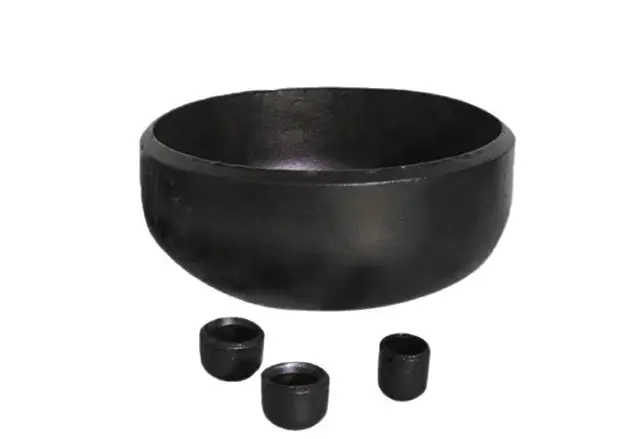
Understanding ASME B16.9 Pipe Caps: Specifications and Standards
The Role of Pipe Caps in Industrial Systems
Pipe caps are permanent devices that seal the ends of pipelines. They keep the system's integrity during operational phases and maintenance breaks. In places where chemicals are processed, these parts keep things clean and keep the pressure levels steady. They block off branch links and temporary line ends in oil and gas transmission networks while the building is done in stages. The ASME B16.9 standard sets the size and material requirements for these fittings so they can work perfectly with pipes that are made to the ASME B36.10M and B36.19M standards.
Key Dimensional and Material Specifications
The standard specifies exact outside diameter sizes, wall thickness ranges, and center-to-end measurements that make sure the parts fit correctly when they are installed in the field. Buttweld caps, unlike flanged closures, are fully welded into the pipe system, making them an integral part of it. Choosing the right material has a direct effect on how long something will work. For example, carbon steel grades like ASTM A234 WPB are cost-effective for moderate environments, while ASTM A403 WP304/316 stainless steel variants are better at resisting corrosion in acidic or marine settings. Alloy steels (ASTM A234 WP5/WP9) are used in high-temperature processes like making electricity and handling petrochemicals.
Pressure Rating Considerations
One thing that makes ASME B16.9 fittings stand out is that they can handle the same amount of pressure as straight pipes made of the same material grade and wall thickness. With this way of thinking about design, there is no need for separate pressure class names. Based on the formulas in ASME B31.3, the fitting's burst power is equal to the pipe's allowed pressure. This method makes designing systems easier while keeping safety margins high in a variety of operating conditions.
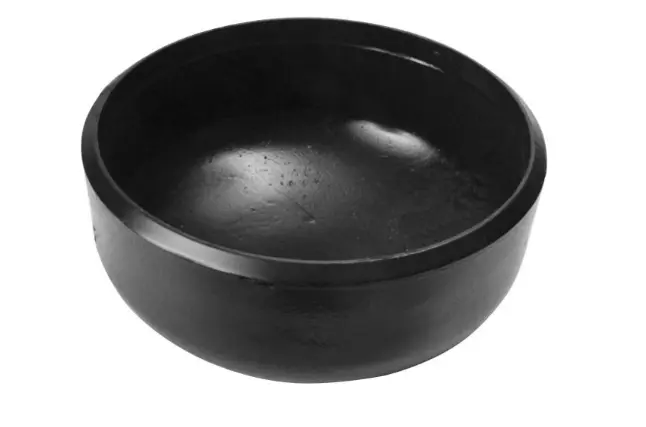
Detailed ASME B16.9 Pipe Cap Production Process
Raw Material Procurement and Verification
The first step in our manufacturing process is getting certified raw materials from mills that meet ASTM standards. Each heat of steel comes with a mill test certificate that lists its chemical makeup and mechanical properties. We check the amount of carbon (usually less than 0.30% to make the material weldable), manganese, and trace elements like phosphorus and sulphur that have an impact on how well the material works. This incoming inspection finds non-conforming materials before they get into production. This protects both the efficiency of production and the quality of the finished product.
Material traceability tools keep track of each batch as it moves through our plant, connecting finished pipe caps to the certificates that came from the mill. This paperwork is very important for customer checks and gives the paper record needed to follow the pressure vessel code.
Forming Techniques and Manufacturing Methods
From a raw steel plate or seamless pipe to a finished ASME B16.9 Pipe Cap, it goes through controlled shaping steps that are made to fit the size and properties of the material. Smaller diameter caps may begin as flat blanks that are deep drawn or stamped to give them their dome shape in progressive dies. Bigger caps usually start as sections of pipes, with one end being closed off one end at a time using hot or cold forming methods.
In hot forming, heat is used to slow down the process of work hardening, which allows the shape of the material to change more without breaking. This method works well for caps with thicker walls and alloys that aren't very flexible at room temperature. For sanitary uses, cold forming is better for stainless steel caps because it keeps the dimensions more accurate and gives the caps a better finish.
During the forming process, we keep an eye on the wall thickness distribution to make sure that no point is less than 87.5% of the nominal specification, which is the lowest level set by ASME B16.9. Material flow analysis and optimising the die design stop key stress concentration places from causing too much thinning.
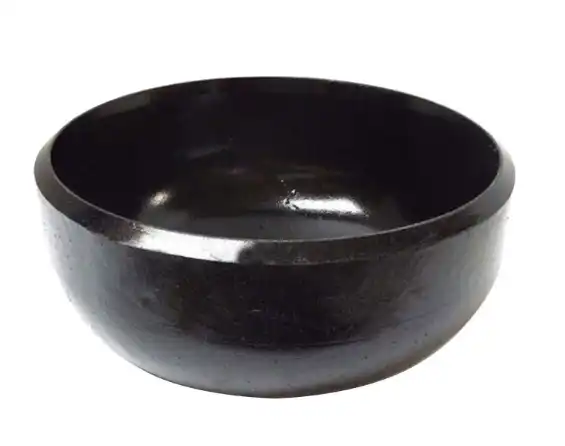
Heat Treatment and Stress Relief
Post-forming heat treatment is used for more than one thing when making pipe caps. Normalising evens out the grain structure after forming, which removes any residual stresses that could cause warping or failure before they're supposed to. Usually, carbon steel caps go through normalising cycles that heat the part above its highest transformation temperature and then cool it down with controlled air flow.
If cold working weakens the rust protection of stainless steel caps, they may need to be annealed in a solution. This process breaks up carbide precipitates and evens out the microstructure again. Keeping an eye on the temperature during these cycles is very important—changes of 50°F can have a big effect on the corrosion performance and mechanical properties.
Machining and Bevel Preparation
Precision cutting creates the bevelled end preparation that is needed for welding to work properly. Standard bevel angles of 37.5° ± 2.5° make it easier to fully penetrate when connecting caps to pipe systems. Machinists keep very close standards for the shape of the bevel, the size of the root face, and the size of the outside circle so that the parts always fit correctly, no matter who installs them.
CNC machining centres with measurement probes check the dimensions while the parts are being cut. This lowers the amount of waste and makes sure that all production batches are the same. Specifications for the surface finish of stop stress concentrators that could cause fatigue cracks to form during cyclic pressure loading.
Non-Destructive Testing and Final Inspection
Quality verification includes many checking steps that find problems on the surface and below the surface. Cracks, laminations, or surface irregularities that are easy to see can be found by looking at the item. Using calibrated gauges and coordinate measuring tools, dimension inspection makes sure that the product meets the requirements of the drawing.
Non-destructive testing methods get to the bottom of things. Ultrasonic testing can find internal cracks, changes in wall thickness, and laminations that can't be seen by looking at the surface. Magnetic particle inspection shows cracks that break through the surface of ferromagnetic materials. Liquid penetrant testing finds small flaws on the surface of stainless and alloy steel caps that are not magnetic.
Under realistic working conditions, pressure testing of the ASME B16.9 Pipe Cap proves that a structure is strong. In hydrostatic testing, 1.5 times the design pressure is used to show that the cap can handle service loads with enough room for error. These steps of verification provide written proof of compliance, which helps with regulatory submissions and quality assurance programs for customers.
Comparing ASME B16.9 Pipe Caps with Other Pipe Cap Types
Buttweld Caps Versus Threaded and Socket Weld Options
ASME B16.9 buttweld caps use circumferential welding to make stable, full-strength connections. ASME B16.11 threaded and socket-weld caps, on the other hand, are made for smaller bore uses. Buttweld configurations get rid of the stress concentration that comes with threaded connections. This means that they can handle high pressures and repeated loading. The continuous weld joint spreads stresses out evenly, which stops threaded links from having preferred failure paths when temperatures change.
It's faster to put socket weld caps on small-bore sensor lines, but they leave cracks that corrosive fluids can get stuck in. Buttweld caps have smooth inside shapes that make them easier to clean and lessen fouling in process industries. In pharmaceutical and food-grade settings, where cleanliness rules don't allow dead-leg geometries, this difference becomes very important.
Material Performance Trade-offs
The cost of carbon steel caps is lower, and they work well in moderately heated, non-corrosive environments. Because they are easy to weld and come in thick wall thicknesses, they are good for high-pressure uses. But the need for an external coating raises the cost of installation, and corrosion allowances reduce the thickness of the material over time.
Stainless steel alternatives don't need to be coated on the outside and can be used for decades without rusting in harsh chemical environments. When lifecycle costs, like upkeep and replacement cycles, are taken into account, the bigger original investment turns out to be a good deal. Alloy steel caps are in the middle of this range. They offer high-temperature strength without the high cost of rare metals like Inconel or Hastelloy.
Dimensional Standards and Global Compatibility
ASME B16.9 dimensions are the same as international pipeline standards, which makes it possible to source and exchange parts from around the world. Standardisation is different from private fitting systems, which force users to buy from only one source. The ability to source from multiple certified manufacturers without having to change the layout of pipes or the way they are installed is appreciated by procurement teams.
How to Choose the Right ASME B16.9 Pipe Cap for Your Application
Matching Pressure and Temperature Requirements
Application engineers have to make sure that the cap specs match the design codes and working parameters of the system. The ASME B31.3 process piping code figures out the minimum wall thickness by looking at the design pressure, temperature, and the material's allowable stress values. To keep the system's pressure values the same, caps must match or go beyond the pipe plan.
The temperature affects the choice of material by affecting its creep strength and thermal expansion compatibility. Above 800°F, carbon steel loses strength, so metal upgrades are needed. Cryogenic services below -20°F need materials that have been tested for impact to keep them from breaking easily.
Dimensional Compatibility and Fit-Up Precision
To choose the right cap, the outside diameter and wall thickness must be exactly the same as the pipes that connect to it. Mismatches make it hard to arrange things in the field, which costs a lot and causes delays in the schedule. As long as the caps are the same nominal pipe size and schedule as the pipes next to them, the internal bores will be flush, and the weld joint geometry will be correct.
Tolerance stack-up analysis stops interference fits or too many gaps that hurt the quality of the weld. Our processes for controlling dimensions keep tolerances tighter than required by standard specifications. This means that there are fewer fit-up problems in a wider range of installation situations.
Supply Chain Optimisation Strategies
Through production economies of scale, buying in bulk lowers the cost per unit. Strategically placing inventory at distribution centres cuts down on the time it takes to deliver parts for routine maintenance. Carrying costs are passed on to producers through vendor-managed inventory systems, which also make sure that materials are available for planned shutdowns.
Certification currency, production capacity, and quality system maturity of ASME B16.9 Pipe Cap should be given a lot of weight when judging a supplier. Manufacturers who have ISO 9001 certification and licenses to make special equipment show that they are dedicated to always improving and following the rules.
Partnering with Reliable ASME B16.9 Pipe Cap Suppliers
Certification and Quality System Verification
We are committed to meeting internationally recognised standards at Oudi, which is why we have an ISO 9001:2000 quality management system certification and a special equipment manufacturing licence from the People's Republic of China. Our quality system covers every step of the production process, from checking the raw materials to doing the final review and shipping. This makes sure that all of our goods are always compliant. Third-party audits confirm that our processes work, giving customers an unbiased look at our abilities.
Since starting to make things in 1998, we've built a reputation in 40 countries through strict quality control and technical know-how. Our 66,600-square-meter building has state-of-the-art forming machines, heat treatment furnaces, and inspection labs that can meet even the strictest customer requirements. This investment in infrastructure helps us keep up with our yearly production capacity of 16,000 tonnes, which keeps supplies coming in for big projects and ongoing repair programs.
Technical Capability and Custom Fabrication Services
Our engineering team works with customers to make solutions that are perfect for their specific needs. When standard catalogue sizes don't work, we make custom caps with different wall thicknesses, combinations of materials, or changes to the shape. This adaptability is helpful for retrofit projects where non-standard fitting sizes are needed because of the way the pipes are already set up.
Our in-house metallurgical experts help with choosing the right materials by suggesting the best grades for different harsh environments or temperature ranges. Because we keep in touch with speciality steel mills, we can get materials other than standard carbon steel. These include exotic alloys and materials with tight tolerances.
Building Long-Term Partnerships Through Reliability
We have exported to Europe, North and South America, Africa, Southeast Asia, and the Middle East. We have worked with a wide range of businesses, from those that make chemicals to those that build ships. This global reach shows that we can handle foreign quality standards, shipping logistics, and paperwork needs that make things harder for producers with less experience.
Support after the sale goes beyond just delivering the product. Help with technical issues during installation, proof for regulatory reports, and quick answers to questions from the field build the trust that turns business ties into strategic partnerships. Customers like suppliers who know how busy their businesses are and are quick to adapt to new needs.
Conclusion
The process of making ASME B16.9 Pipe Caps uses metallurgical science, precise manufacturing, and strict quality control to make parts that keep systems together in tough industrial settings. When procurement professionals understand this manufacturing process, they can judge the skills of suppliers, choose the right materials, and make sure they meet project requirements. Working with skilled makers is important for the success of projects and the dependability of operations as pipe systems get more complicated and working conditions get harsher.
FAQ
1. What materials are commonly used for ASME B16.9 pipe caps?
Carbon steel (ASTM A234 WPB) is the most common type used in normal uses because it is cheap and easy to find. Alloy steels (ASTM A234 WP5/WP9) can handle high temperatures in power plants, while stainless steel grades (ASTM A403 WP304/316) work well in places where corrosion is a problem.
2. What is the typical manufacturing lead time for custom pipe caps?
Standard catalogue items usually ship within a few days of being in stock. Custom specifications that need materials that aren't in stock or special testing usually take 4 to 6 weeks from the time the order is confirmed until it's delivered, depending on how complicated the inspection is and how much heat treatment is needed.
3. Can pipe caps be customised for special project requirements?
Manufacturers often make caps with wall thicknesses that aren't standard, special blade preparations, or certifications for materials that aren't commonly used. Giving detailed specs early on in the buying process lets engineers look them over and give you an accurate quote for your unique needs.
Connect With Oudi for Your ASME B16.9 Pipe Cap Needs
Oudi has been making butt-weld pipe caps for decades and has a lot of quality control systems in place to make sure they are reliable for your important piping projects. Our location in China's fitting manufacturing hub lets us save money without lowering quality standards. Our ISO 9001 certification and special equipment licenses also prove that we are technically capable. Our engineering team is ready to help you with your needs, whether you need normal carbon steel caps or custom options made from stainless alloy. Please email us at oudi-04@oudiguandao.com to talk about your needs with an experienced ASME B16.9 Pipe Cap maker who knows what is needed for industry uses around the world.
References
1. American Society of Mechanical Engineers. (2018). ASME B16.9: Factory-Made Wrought Buttwelding Fittings. New York: ASME Press.
2. American Society of Mechanical Engineers. (2020). ASME B31.3: Process Piping Code. New York: ASME Press.
3. ASTM International. (2019). ASTM A234: Standard Specification for Pipe Fittings of Wrought Carbon Steel and Alloy Steel for Moderate and High Temperature Service. West Conshohocken: ASTM International.
4. ASTM International. (2021). ASTM A403: Standard Specification for Wrought Austenitic Stainless Steel Piping Fittings. West Conshohocken: ASTM International.
5. Nayyar, M.L. (2017). Piping Handbook (8th ed.). New York: McGraw-Hill Education.
6. Smith, P.R. & Zappe, R.W. (2016). Valve Selection Handbook: Engineering Fundamentals for Selecting the Right Valve Design for Every Industrial Flow Application (6th ed.). Oxford: Gulf Professional Publishing.

Need help finding the right solution with our experts. Please contact us.

SINCE 1998 Your Reliable Pipeline Manufacturer



