What Standards Should Socket Weld Pipe Tee Meet?
Socket Weld Pipe Tees must meet standards that are known all over the world to make sure they are safe, reliable, and the right size for critical pipe applications. ASME B16.11 is the main standard that governs these fittings. It describes forged fittings for socket welding and threading. It's also important to have material specifications that meet ASTM standards (like ASTM A105 for carbon steel and ASTM A182 for stainless and alloy steels), MSS SP-83 for steel pipe unions, and ISO 9001 quality management certification. These standards make sure that Socket Weld Pipe Tees work well in harsh conditions in the oil, chemical, natural gas, and power production industries without leaking and up to the pressure they are rated for.
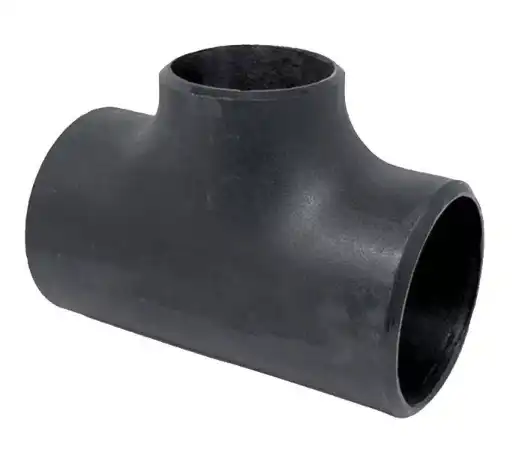
Understanding Socket Weld Pipe Tee Standards
Socket Weld Pipe Tees are a special kind of forged pipe joint that is used to connect branches in small-bore, high-pressure pipe systems. Socket weld tees have recessed openings where pipes can go right before welding, while butt weld fittings need to be carefully bevelled and lined up. This design gets rid of the need for complicated fit-up steps and makes strong parts, won't leak, and can handle harsh operating conditions.
When you look at the skeletal features of different connection methods, you can tell the difference between socket weld and others. Butt weld connections need very precise measurements, while threaded fittings use mechanical threads that can come loose when the system vibrates. Socket weld designs, on the other hand, are easy to install and very strong. Because of this, they are very useful in situations where system integrity can't be compromised. For example, offshore platforms, refinery sampling lines, and high-pressure steam systems all depend on these fittings to keep hermetic seals in place even when they are under constant stress.
Why ASME B16.11 Matters
The ASME B16.11 standard is the basis for socket weld fittings. It sets all the requirements for sizes, tolerances, ratings, and testing. This standard covers fittings for nominal pipe sizes from ½ inch to 4 inches, which is perfect for small-bore jobs where socket welding works really well. The standard lists important parameters like socket depth, bore diameter, wall thickness, and fillet weld geometry. Each measure is designed to improve the ease of production and the long-term performance of the part.
In addition to size requirements, ASME B16.11 also lists pressure-temperature ratings that are based on the type of material and the conditions of service. These numbers, which are given in classes like 3000, 6000, and 9000, show the highest pressure that can be used at different temperatures. By knowing these categories, engineers can choose fittings that fit the system design parameters without over-engineering, which has a direct effect on the cost of the project.
Material Standards That Define Quality
The chemical make-up, mechanical qualities, and performance of socket weld tees are all based on material requirements set by ASTM. Forgings made of carbon steel that can handle mild temperatures are covered by ASTM A105. Forgings made of stainless steel and alloy steel that can handle high temperatures or conditions that are corrosive are covered by ASTM A182. Each material standard lists requirements for heat treatment, grain structure, and impact toughness. These all have a direct effect on how well the fitting works when it's under stress.
During our 26-year history of making things, Oudi has always strictly followed these material standards. Before the forging process starts, our quality control process starts with positively identifying the raw materials to make sure their chemical makeup meets the requirements. Our ISO 9001:2000 certification and People's Republic of China special equipment manufacturing license make it possible for us to keep track of everything that goes into making our products. Every fitting we make is fully inspected and tested without damaging it. This makes sure that the material properties meet or go beyond ASTM standards for tensile strength, yield point, and elongation.
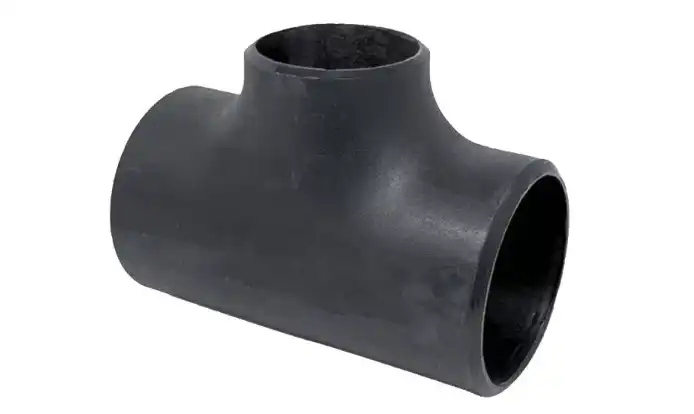
Dimensions and Design Criteria Socket Weld Pipe Tee Must Comply With
How well a Socket Weld Pipe Tee works over its lifetime depends on how well its dimensions are met. ASME B16.11 gives exact measurements for socket depth, which needs to be deep enough to allow for proper weld penetration while also keeping the pipe from bottoming out, which could cause stress concentrations or turbulence. The standard specifies socket hole sizes with very tight limits, usually within 0.01 inches, to make sure that pipes are inserted consistently and there aren't too many gaps that weaken the weld.
Socket Depth and Bore Specifications
Socket depth measurement is based on a certain rule: the pipe must go in deep enough to make a strong fillet weld, but there must still be a small gap at the bottom to allow for thermal expansion during operation and welding. ASME B16.11 requires a 1/16-inch gap between the pipe end and the socket bottom. Welding experts know this is important to keep cracks from forming due to restricted expansion. This gap also acts as a visual proof during assembly, letting inspectors make sure the pipe is in the right place before welding starts.
With some room for manufacturing errors and weld preparation, the socket bore diameter is directly related to the outside diameter of the pipe it accepts. A bore that is too small stops the pipe from going in at all, while a bore that is too big makes a gap that is too wide, which causes welding to fail or burn through. Our factory in Cangzhou keeps the bore diameter within 0.5% of the standard specs. This is possible with precise machining on advanced CNC equipment that we've been upgrading since we started doing business in 1998.
Pressure Class and Temperature Ratings
ASME pressure classes show how well a fitting can hold internal pressure at certain temperatures. As the temperature rises, the rating goes down because the material's strength goes down. Class 3000 fittings, which are often used in general process applications, can handle full pressure up to about 400°F for carbon steel materials. Higher classes, like 6000 and 9000, are used in places where pressures are higher than 5000 PSI, like in high-pressure injection systems and hydraulic control lines that are used offshore.
Temperature limits depend on the material used and how it is used. Fittings made of carbon steel work very well below 800°F, but their strength decreases a lot when they get hotter. Stainless steel types like 316 and alloy steels with chromium and molybdenum can withstand temperatures of up to 1500°F. This makes them necessary for high-temperature process lines and steam systems used in power plants. Our product line includes carbon steel, stainless steel, and alloy steel choices that are perfectly matched to these different temperature needs. This way, buying teams can easily find the right materials without sacrificing safety.
Material Selection for Corrosion Resistance
Corrosion resistance determines how long a fitting will last in chemically harsh environments like those found in oil refining, chemical processing, and offshore production. Carbon steel fittings work well with dry gas and non-corrosive hydrocarbon streams, but they break down quickly when they come into contact with acidic compounds, chlorides, or high-temperature oxidation. Stainless steel grades deal with these problems by having chromium in them, which forms protective oxide layers. For example, 316L grades are better at resisting pitting and crevice rust in places where salt is present.
Specialised alloy steels with nickel, molybdenum, and other alloying elements can be used in situations where rust is very bad. Duplex stainless steels have microstructures that are both austenitic and ferritic. They are stronger and less likely to rust than regular stainless steels. These materials are very important on offshore platforms because normal materials break down quickly in conditions like seawater, high pressure, and corrosive production fluids. Our technical team helps customers choose the right material for the job by using their many years of experience supplying fittings to tough jobs in 40 countries.
Key Quality and Testing Standards for Socket Weld Pipe Tees
Quality control for Socket Weld Pipe Tees includes more than just checking the sizes; it also includes testing the materials, making sure the welding process is correct, and following strict inspection rules. All of these steps work together to make sure that fittings meet performance requirements and regulatory compliance standards. This is very important in fields where failure can lead to everything from lost production to major safety incidents.
Welding Procedures and Qualification
Section IX of ASME rules specifies the specifications for welding procedures and the qualifications of welders. These rules make sure that the quality of the weld is the same, no matter who does the joining. This standard says that makers and contractors have to come up with thorough welding processes that include the base material requirements, the choice of filler metal, how to control the preheat and interpass temperatures, and the heat treatment needs after the welding. Each method is put through qualification tests that show it makes welds that meet minimum mechanical property requirements for toughness, ductility, and strength.
Because of the shape of the tip and the buildup of heat in the small joint area, socket weld joints are harder to weld than butt welds. To get a complete fusion between the pipe and fitting socket while avoiding too much penetration that could cause internal protrusions that block flow, the right technique needs controlled heat input. For socket weld joints, a welder's qualification usually includes looking at sample joints visually, testing them with X-rays, and testing them destructively to make sure their mechanical features meet code standards.
Non-Destructive Testing Methods
Non-destructive testing finds flaws in the way something was made and weld breaks without hurting the fittings. This allows for 100% inspection in situations where it's needed for critical service. The most basic level of inspection is visual examination, which finds flaws on the surface like cracks, holes, and incomplete fusion that can be seen with the naked eye. Even though this method can't find everything, it does a quick evaluation and finds obvious problems before more in-depth testing starts.
X-rays or gamma radiation are used in radiographic tests to make pictures that show internal flaws like fissures, slag inclusions, and lack of fusion. This method is very good at finding volumetric flaws, but it needs special tools, rules for radiation safety, and trained interpreters to check the quality of the film and figure out what the flaws mean. Ultrasonic testing is an option that uses high-frequency sound waves to find problems inside things. It gives data right away and doesn't pose any radiation risks. Through capillary action, liquid penetrant testing finds flaws that break the surface. This makes it perfect for finding small cracks in stainless steel and other non-magnetic materials where magnetic particle inspection can't be used.
Mechanical Property Testing
Testing the mechanical properties of parts makes sure they are strong, tough, and hard enough to work safely under normal circumstances. The ultimate tensile strength, yield strength, and elongation are all measured by pulling test pieces until they break. This makes sure that the material meets the minimum requirements set by ASTM. Charpy V-notch specimens broken at certain temperatures are used in impact testing to measure how tough a material is. This is especially important for low-temperature service, where the risk of brittle fracture rises.
Hardness testing is a quick and non-destructive way to make sure that the right heat treatment was done and to find problems with the material. Measurements of Rockwell or Brinell hardness are related to tensile strength and can show where bad heat treatment has happened. Our quality control lab is fully equipped to do mechanical tests, and they do regular verification tests on every output lot to make sure everything is the same. We are dedicated to testing the integrity of our products so that we can supply fittings for important uses in chemical processing, offshore oil production, and power generation, where the material properties must be known for sure.
Hydrostatic and Corrosion Testing
Fittings are put under pressures higher than their regular working levels during hydrostatic testing to make sure the structure is solid and find leaks before they are installed. According to ASME B16.11, test pressures are based on pressure class ratings. Fittings usually need to be able to withstand a test pressure that is 1.5 times the highest pressure that can be used at room temperature. This overload test confirms the quality of the manufacturing process and finds flaws that might not show up in normal use but could lead to failures during changes in temperature or pressure.
Corrosion testing checks how well a material can handle certain chemical environments that it will be exposed to in service. Salt spray testing is like being in a sea environment, and immersion testing in acidic or caustic solutions is like being in touch with process fluids. These fast tests help confirm material choices for corrosive service and predict how fast corrosion will happen over time. Customers are asking for more and more material certificates that can be linked to heat-specific corrosion testing for important uses. These certificates offer more assurance than normal mill test results.
Comparing Socket Weld Pipe Tee Standards with Other Pipe Tee Types
Knowing how the rules for Socket Weld Pipe Tee connections are different from those for other types of connections helps people who work in buying make smart choices that balance performance needs with project limitations. Each connection method has its own pros and cons that affect its suitability for different uses, pressure ranges, and installation conditions.
Socket Weld vs. Butt Weld Tees
Follow the rules in ASME B16.9 for butt weld tees. These rules are about worked fittings for butt welding, not the forged design that is common for socket weld fittings in ASME B16.11. The main difference is how the joints are made. Butt welds make full-penetration joints, which means that the walls of the pipe and fitting fuse together across their entire thickness. Socket welds, on the other hand, make fillet welds around the outside of the pipe. This difference has an effect on both the strength characteristics and the inspection requirements.
Because they use full-penetration welds, butt weld joints tend to be stronger and less likely to fatigue. This is why they are better for bigger diameter pipes and heavy cyclic work. But they need precise preparation of the pipe ends, such as beveling, alignment, and often backing rings or purge gas to keep the weld root from oxidising. When compared to socket welds, where pipe preparation only involves cutting to length and basic cleaning, these requirements make installation more difficult and cost more in labour.
Socket Weld vs. Threaded Connections
Threaded tees are also covered by ASME B16.11, but they link with mechanical threads instead of welded joints. Threaded fittings are useful because they can be put together in the field without hot work permits, welding tools, or experienced welders. This lowers the cost of installation and lets maintenance work be done in areas where welding would pose too many fire risks. Threaded connections, on the other hand, have big performance problems that limit what they can be used for.
Vibration loosening is a common issue with threaded joints, especially in systems that use rotating parts or thermal cycling, which causes movement between parts. Thread sealants and locking compounds only work temporarily and usually need to be tightened again and again to keep the leak-tight integrity. This problem isn't a problem with socket weld joints because they have permanent fusion bonding that won't come loose no matter how strong the vibrations are or how often they happen.
Because of stress accumulation at thread roots and thinner walls from thread machining, threaded fittings' pressure and temperature values are much lower than those for socket welds. Even though there are Class 2000 and 3000 threaded fittings, they are usually only used up to 1000 PSI to keep safety gaps high. In Class 6000 configurations, socket weld fittings can normally handle pressures higher than 5000 PSI. For more specialised uses, like hydraulic systems and high-pressure injection, Class 9000 ratings make the fittings even more capable.
Procurement Considerations: Ensuring Standard Compliance When Buying Socket Weld Pipe Tees
To get standard-compliant Socket Weld Pipe Tees, you need to check the supplier's skills, the product paperwork, and their quality control methods in a planned way. Due diligence is necessary to avoid non-conforming products that cause liability risks and project delays because international supply chains are complicated and technical standards are enforced differently in different areas.
Supplier Certification Verification
ISO 9001 approval shows that a seller has set up quality management systems that cover all stages of production, from planning and buying materials to making the products and checking them for quality at the end. For this certification, accredited registrars must do independent audits to make sure that written policies and methods for continuous improvement are being followed. ISO 9001 is more about management systems than product specifications, but it gives customers confidence that a manufacturer has consistent processes in place that can make products that meet standards.
ASME approval is a more specific qualification that means the maker is allowed to put ASME code stamps on pressure-retaining parts. To get this certification, you have to show that you have the technical skills, quality control methods, and inspection methods that meet the ASME Boiler and Pressure Vessel Code. Before getting ASME authorisation, manufacturers have to go through strict audits that look at things like material traceability, non-destructive testing methods, welder qualification, and how they keep records.
Our factory has both ISO 9001:2000 certification and special equipment production licensing from the Chinese government officials. This shows that we follow quality management standards that are known all over the world. These certifications show that we have improved our quality control methods over 26 years of working with customers in the Middle East, Africa, the Americas, Europe, and the Asia-Pacific region. As we all know, certifications don't guarantee quality on their own. They need to be backed up by a real dedication to technical excellence and customer satisfaction, which comes from handling every order as if our reputation relied on it, which it does.
Material Traceability and Documentation
Material test certificates are important records that show how the chemical make-up and mechanical qualities of each part are related to the specific heat of the steel it was made. EN 10204 3.1 certificates, which are given by the manufacturer, show the test results for samples that were taken during the production of steel and fittings. These certificates should have heat numbers, chemical analysis results, tension test data, impact test data, and hardness measures that show the material meets the requirements for certain ASTM grades.
Third-party inspection records give you more peace of mind because they include independent checks of the measurements, material qualities, and test results by qualified inspection agencies. Many customers ask for third-party inspection for large orders or important applications where getting non-conforming material would have serious consequences. This is usually worth the extra cost. Inspectors from companies like Bureau Veritas, TÜV, or SGS watch the production process, look over quality records, and test the products on their own to make sure they meet the requirements of the purchase order.
From receiving the raw materials to shipping the finished goods, we can track all of them because we have systems in place that connect each fitting's unique number to its history of production. This lets us quickly answer questions from customers about specific products and gives us the data we need to make material certificates that meet EN 10204 standards. Our annual production capacity of 16,000 tonnes is based on quality control standards that make sure every fitting meets the requirements, no matter how big the order is or how quickly it needs to be delivered.
Lead Time and Logistics Considerations
Setting realistic lead times strikes a balance between the need for fast delivery and the steps that need to be taken to make quality fittings. Forging processes include heating steel billets to a temperature that allows them to be shaped, pressing or hammering them into rough shapes, heat treating them to get the right mechanical properties, milling them to the right size, and inspecting them. These steps can't be sped up without lowering the quality. Standard products in common sizes usually ship within 4 to 6 weeks. However, products made to order or from rare materials may take 8 to 12 weeks, depending on the availability of the raw materials.
The minimum order amounts are based on the prices of setting up forging dies, heat treatment processes, and inspection methods. Large distributors may take orders for a single piece from stock, but manufacturers usually set MOQs that cover the costs of setting up the production line. Understanding these limitations helps procurement professionals place orders that balance the costs of keeping inventory with volume discounts and keep above-minimum quantity premium charges at a minimum.
Packaging standards keep parts safe while they're being shipped internationally and make it easier to handle and keep track of inventory. Corrosion doesn't happen on wooden cases or pallets with moisture barriers during sea freight, and labels with heat numbers, specifications, and piece counts make it possible to inspect shipments upon arrival without having to unpack the whole thing. After decades of exporting, we've gotten better at packaging because we know that fittings coming in perfect condition after travelling thousands of miles say just as much about our commitment to quality as the production processes that made them.
Conclusion
To make sure they work safely and reliably in important pipe applications, Socket Weld Pipe Tees must meet strict standards for their sizes, materials, pressure ratings, and testing. The ASME B16.11 standard sets the rules for measurements and ratings, and the ASTM material requirements spell out the chemical and mechanical qualities that materials need to work in different situations. Quality control measures like ISO 9001 approval, non-destructive testing, and checking of mechanical properties give customers faith that fittings will work as planned for the duration of their useful life. By learning about these standards and how they compare to other connection methods, procurement professionals can choose the best fittings for their needs while still following the rules. To make sure you don't get non-conforming goods that cause project risks and delays, you need to check the certifications of your suppliers, the ability to track materials, and their quality control methods.
FAQ
1. What size range do socket weld pipe tees cover?
The standard pipe size for Socket Weld Pipe Tees that follow ASME B16.11 rules is usually between ½ inch and 4 inches. This size limit shows the range of real-world situations where socket welding is better than butt welding. For smaller diameters, installation is easier because they don't need to be bevelled. For larger sizes, however, butt weld connections are usually used because they are stronger and better at handling the higher volumes they handle.
2. Can socket-weld tees be used in high-pressure applications?
Some materials and types of socket weld tees can withstand up to 9000 pounds of pressure, making them great for high-pressure use. In situations like overseas production systems and refining high-pressure process lines, Class 6000 fittings are often used with pressures higher than 5000 PSI. When properly made according to qualified welding procedures, the socket weld design makes strong fillet welds that can withstand high pressures. This means that these fittings are suitable for critical service where failure would have serious consequences.
3. How do I verify a supplier meets ASME B16.11 standards?
The first step in the verification process is to make sure that the supplier has all the necessary certifications, such as ISO 9001 quality management and any ASME authorisations that their products need. Ask for material test certificates that show the chemical makeup and mechanical traits meet ASTM standards. Also, ask for dimensional inspection records that show the materials meet ASME B16.11 tolerances. For high-value orders where extra security is worth the cost, third-party screening services can provide independent confirmation.
Choosing Oudi as Your Socket Weld Pipe Tee Supplier
If you choose the right manufacturer, you can be sure that the Socket Weld Pipe Tees you buy will meet standards and work reliably for their entire service life. Oudi has 26 years of experience making pipe parts out of carbon steel, stainless steel, and alloy steel that meet American, Japanese, German, and British standards. Our 66,600-square-meter factory is in Cangzhou's Mengcun fitting manufacturing zone. It has high-tech production tools and strict quality control systems that are approved by ISO 9001:2000 and Chinese rules for making special equipment. We have long-term relationships with more than 300 customers in 40 countries because we give them all the fittings they need, including bends, flanges, tees, reducers, and caps, all of which meet ASME B16.11, ASTM material specifications, and their own unique needs. If you need a Socket Weld Pipe Tee manufacturer that knows how important it is to get exactly what you asked for, on time, and at a fair price, email our team at oudi-04@oudiguandao.com to talk about your needs and experience the partnership approach that has made us a trusted supplier to industries around the world with high standards.
References
1. American Society of Mechanical Engineers. (2021). ASME B16.11: Forged Fittings, Socket-Welding and Threaded. New York: ASME Press.
2. ASTM International. (2020). ASTM A105/A105M: Standard Specification for Carbon Steel Forgings for Piping Applications. West Conshohocken: ASTM International.
3. ASTM International. (2019). ASTM A182/A182M: Standard Specification for Forged or Rolled Alloy and Stainless Steel Pipe Flanges, Forged Fittings, and Valves and Parts for High-Temperature Service. West Conshohocken: ASTM International.
4. Manufacturers Standardisation Society. (2018). MSS SP-83: Class 3000 Steel Pipe Unions, Socket-Welding and Threaded. Vienna: MSS.
5. American Society of Mechanical Engineers. (2019). ASME Section IX: Welding and Brazing Qualifications. New York: ASME Press.
6. International Organisation for Standardisation. (2015). ISO 9001:2015 Quality Management Systems—Requirements. Geneva: ISO.

Need help finding the right solution with our experts. Please contact us.

SINCE 1998 Your Reliable Pipeline Manufacturer



