ASME B16.9 Pipe Cap Suppliers: How Can You Ensure Quality?
Ensuring quality when sourcing ASME B16.9 Pipe Cap components starts with understanding what defines excellence in this specialized product category. An ASME B16.9 Pipe Cap must meet rigorous dimensional tolerances, material chemistry requirements, and pressure-bearing capabilities to reliably seal piping systems in demanding industrial environments. Quality assurance involves verifying supplier certifications, inspecting raw material traceability, and confirming that manufacturing processes include proper heat treatment and non-destructive testing protocols. By partnering with suppliers who demonstrate proven expertise in buttweld fitting production and maintain transparent quality documentation, procurement professionals can secure components that perform consistently across oil, chemical, natural gas, and water conservancy applications while minimizing project risks.
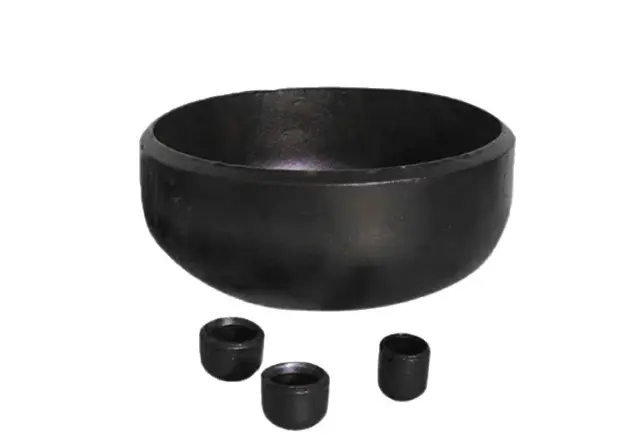
Understanding ASME B16.9 Pipe Caps and Their Quality Standards
When industrial plumbing systems need solid end closures, pipe caps are necessary to stop leaks, the entry of contaminants, and pressure loss. Even though these fittings look easy, they play a big role in keeping systems in chemical plants, pipelines, and power plants working properly.
What Defines an ASME B16.9 Pipe Cap
The ASME B16.9 standard sets the size and material requirements for wrought buttweld fittings that are made in a factory. This includes caps that can be used for temporary or permanent sealing. Butt-weld caps are different from threaded or socket-weld options because they are fully penetrated and welded into plumbing systems, making joints that are as strong as the pipe itself. The standard includes caps made of carbon steel, stainless steel, and alloy steel. They come in sizes from DN15 to DN1200 or even bigger, depending on the needs of the application.
Forging or forming are common ways to make things. These methods align the metal's grain structure, which makes it more resistant to fatigue than cast options. The worked production method makes sure that the wall thickness is evenly distributed and concentricity is maintained. This makes field alignment easier and cuts down on installation time. For carbon steel uses, material specifications often refer to ASTM A234 WPB. Chemistry controls keep the carbon content below 0.30% and Manganese, Phosphorus, and Sulfur levels in check to ensure good weldability without preheating problems.
Critical Dimensional and Material Standards
ASME B16.9 sets exact tolerances for cap geometry to make sure that caps from different manufacturers can be used together. The thickness of the walls must match the standards of the pipe plan, and out-of-roundness tolerances keep fit-up problems from happening during welding. As required by the standard, the bevel end must be prepared at 37.5° ± 2.5° so that the joint can penetrate properly and be strong.
The function and life are directly affected by the properties of the material. For WPB grades, the minimum tensile strength of carbon steel caps is around 60,000 psi, which is strong enough for mild temperature and pressure applications. Stainless steel types are better at resisting rust in places that use acids, chlorides, or fluids that are very pure. In power generation and petrochemical applications where high temperatures would cause carbon steel to creep deform, alloy steel can be used instead.
There are different pressure values for different types of materials and at different temperatures. While ASME B16.9 is mostly about sizes and not pressure levels, caps must match the pressure level of the pipe systems they link to, whether that's ANSI 150, 300, 600, or higher. Corrosion resistance varies a lot between types of materials. Protective coatings or linings can make things last longer in harsh environments where bare carbon steel would break down quickly.
How ASME B16.9 Caps Compare to Alternative Standards
There are important parallels and differences between ASME B16.9 and foreign standards like DIN, JIS, or BS. European pipe fitting sizes are governed by DIN 2605 and EN 10253, which sometimes have slightly different tolerance bands or bevel angle requirements. Japan's industrial needs are met by JIS B2313, which uses metric measurements that might not exactly match ANSI inch measurements. When projects call for more than one standard system or when getting parts made in other countries, it's important to understand these differences to avoid making mistakes that cost a lot of money.
Standardization built into ASME B16.9 makes sure that ASME B16.9 Pipe Caps from different makers can still be used interchangeably. This makes buying caps easier and reduces the complexity of keeping an inventory. This compatibility is very helpful for big projects that involve multiple providers or for quickly getting replacements from other suppliers in a situation without affecting the structure of the system.
Critical Quality Factors to Evaluate When Choosing ASME B16.9 Pipe Cap Suppliers
Comparing unit prices is only one part of choosing the right provider. The level of quality assurance, the number of certifications, and the manufacturing skills of the company determine how well the delivered parts will work for the whole time they are supposed to.
Certification and Compliance Verification
ISO 9001:2000 quality management system certification is the minimum standard for trustworthy suppliers. It shows that there are structured ways to control the quality of production from receiving the raw materials to the final inspection. Smart procurement professionals, on the other hand, look into special equipment manufacturing licenses that let them make pressure-bearing parts for dangerous service uses.
Third-party testing documentation lets you check the properties of the material and the accuracy of the measurements on your own. Mill test reports (MTRs) should be in line with EN 10204 Type 3.1 or 3.2 classifications. They should include real chemical analysis results, mechanical test data, and records of heat treatment. Positive Material Identification (PMI) with X-ray fluorescence technology makes sure that the chemistry of the material fits the grade that was ordered. This keeps dangerous material mix-ups from happening, which could cause the product to fail early.
Traceability of raw materials connects finished caps to the original approvals from the steel mill. This creates a chain of paperwork that meets the needs of quality audits and lets root cause analysis be done if problems happen in the field. Suppliers with strong traceability systems can quickly find batches that aren't working right and take steps to fix them, which keeps project delays to a minimum.
Manufacturing Quality Control Measures
Before a product leaves the factory, ASME B16.9 tables should be used to do a thorough check of the center-to-end dimensions, squareness, and wall thickness. Even small changes in these factors make field fit-up more difficult, which raises installation costs and could lower the quality of the weld if makers have to make up for parts that aren't within tolerance.
Non-destructive testing (NDT) finds problems below the surface that can't be seen with the naked eye. Ultrasonic testing (UT) checks to see if the wall thickness is uniform and finds any laminations or inclusions in the base material. Using magnetic particle inspection (MPI), you can see surface cracks that might get bigger when the load is changed over and over. Radiographic testing (RT) gives a full bulk examination for important uses, but it costs more and takes longer to check.
Verification by heat treatment shows that normalizing or stress-relieving cycles have properly fixed the microstructure that was lost during cold forming. When heat treatment isn't done right, it leaves behind residual stresses that can cause distortion during welding or speed up the start of cracks when the metal is put through service loads. Hardness testing, which usually only goes up to 197 HB for carbon steel grades, is a quick way to make sure that heat treatment has created the right conditions for the material.
Tensile strength, yield strength, and ductility all meet the minimum requirements set by the specification. These destructive tests destroy sample parts to make sure that production lots keep the same features. This gives people faith that pieces from the same batch that haven't been tested will work the same way.
Supplier Reputation and Experience Assessment
The supplier's past work on related projects can tell you a lot about how reliable they are in real life. Client reviews from oil and gas operators, EPC contractors, or chemical processors show how providers deal with difficult requirements, tight deadlines, or calls for expert help. Case studies that show large-scale projects were completed successfully show the ability to handle complicated logistics and keep quality consistent across large orders.
If you've exported to more than one international market, it means you know how to meet a variety of regulatory and documentation standards. Suppliers that work with customers in Europe, North America, and Asia have shown that they can meet the needs of a wide range of customers and have the systems in place to handle the complicated paperwork, shipping, and currency exchanges that come with doing business across borders.
Comparing ASME B16.9 Pipe Caps: How to Make Informed Procurement Decisions
Technical suitability, quality assurance, and cost optimization must all be balanced in order for procurement to work well within the constraints of project schedules and budgets.
Material Selection Considerations
To pick between types of carbon steel, stainless steel, and alloy steel, you need to look at the working conditions, such as pressure, temperature, and fluid properties. The best choice for water, steam, and hydrocarbon uses where corrosion rates are okay is carbon steel A234 WPB, which is strong and doesn't cost much for non-corrosive services at temperatures below 400°C.
In places where acids, chlorides, or high-purity fluids are present, where carbon steel would quickly wear down, stainless steel types like A403 WP304 or WP316 are worth the extra cost. Stainless alloys contain chromium, which creates a passive oxide layer that heals itself when scratched. This layer protects against corrosion over time, increasing service life and lowering maintenance costs despite a higher initial cost.
Alloy steel types with chromium, molybdenum, or vanadium stay strong at high temperatures, while carbon steel would soften because of creep. Power plants and petroleum plants that work above 450°C depend on these special materials to keep their structures strong over time while they are under constant heat stress.
Balancing Cost and Quality Expectations
Purchasing teams are always under pressure to find the cheapest parts, but sacrificing quality leads to system breakdowns, emergency fixes, and production delays that cost a lot more. A broken ASME B16.9 Pipe Cap in a crucial process line can stop work for hours, which costs a lot of money and far outweighs the small savings from choosing cheaper parts.
When judging providers, you need to look beyond their prices and figure out what quality systems, checking routines, and material controls make the price differences worth it. If a supplier's prices seem too low, they might be skipping important inspection steps, using low-quality materials, or not heat-treating their goods properly. These hidden flaws only become apparent after parts stop working, which can lead to liability issues and hurt the project's reputation.
Domestic versus International Sourcing Strategies
When companies decide what to buy, they are weighing domestic suppliers against foreign makers, especially those from well-known production hubs. Domestic suppliers may have easier communication, shorter lead times, and easier logistics, but their labor costs may be higher, which drives up the prices of parts.
International providers from places with developed pipe fitting industries bring decades of specialized manufacturing know-how, a lot of production capacity, and prices that are hard to beat. China has become a major center for production. Plants like Cangzhou Oudi serve more than 300 customers in over 40 countries and regions. These well-known exporters have built up complex quality control systems and a lot of experience meeting a wide range of international standards, such as ANSI, JIS, DIN, and BS requirements.
When judging international suppliers, you need to check how many certifications they have, how consistent their production capacity is, and how well they can keep quality high during large orders. Manufacturers that have been around for a while and can produce more than 16,000 tons per year have the size and infrastructure to handle big projects without affecting delivery times or quality.
Procurement Best Practices: Ensuring Smooth Transactions with ASME B16.9 Pipe Cap Suppliers
Choosing the right products is only part of successful procurement. You also need to handle your relationships with suppliers, coordinate your operations, and build long-term partnerships.
Supplier Credential Verification Methods
The first thing you should do when reviewing documentation is to look at any ISO 9001 certificates, special equipment manufacturing licenses, or industry-specific certifications that are important to your application field. Make sure that the certifications are still valid and cover the types of products you want to buy. Some makers only have certifications for certain product lines, so making sure of the scope keeps compliance gaps from being found after orders have been made.
Factory audits give you a first-hand look at how well production is going, how well quality control is being used, and how well operations are being run. By walking through manufacturing sites, you can see if sellers keep their work areas clean, their inspection tools in good shape, and their methods for separating materials correct. Seeing real production runs gives you information about the quality of the work and how well the process is controlled that written information alone can't give you.
When it's not possible to visit the factory directly, third-party inspection services can be used to get independent proof. Internationally recognized standards are used by groups like SGS, TÜV, and Bureau Veritas to do audits and witness tests. These groups give buyers who can't personally check a supplier's abilities objective assessments that lower procurement risk.
Negotiating Terms and Managing Logistics
Minimum order numbers (MOQs) are a way for buyers and sellers to agree on how much of an item to buy in order to keep inventory costs low. Knowing the MOQ requirements of suppliers early on in the planning process keeps you from finding out that the amounts you want to buy are less than what it costs to make them. Some manufacturers are flexible for long-term customers or when orders include more than one type of fitting, in order to make enough to make the business profitable.
When you buy things from around the world, you need to include lead times for manufacturing, quality checks, and international shipping transit in your delivery schedules. Most of the time, rush orders don't lead to good results because suppliers skip inspection steps or use different materials to meet unrealistic deadlines. Adding enough time to the plan to account for potential delays helps meet project deadlines.
The terms of payment show how trustworthy and friendly the buyers and sellers are with each other. For new relationships, suppliers usually need deposits or letters of credit to lower their risk. However, for long-term ties, suppliers may be able to offer better terms. Knowing how business is done and how much money is expected in a different culture makes talks easier, especially when working with sellers from other countries.
For foreign orders, customs and shipping operations need to be carefully coordinated to avoid delays that cost a lot of money. Making sure the paperwork is correct, knowing the rules and fees for importing goods, and hiring dependable freight forwarders who have experience with industrial parts can help keep shipments from getting stuck at ports during clearance problems.
After-Sales Support and Long-Term Partnerships
Warranty policies and how quickly technical support responds show which suppliers care about their customers' success and which ones only care about closing the deal. Making sure you know about warranty terms, return policies, and technical support options before placing an order sets clear expectations for when problems do happen.
Having long-term relationships with suppliers is helpful for more than just one transaction. Being a preferred customer with a well-known seller can often mean getting priority scheduling when capacity is limited, better pricing as order numbers rise, and faster response times when urgent needs arise. Suppliers who care about keeping relationships going are more likely to be able to meet specific needs or work on projects that don't fit their normal product lines.
Top ASME B16.9 Pipe Cap Manufacturers and Brands to Consider
To find reliable suppliers, you need to know how manufacturing works around the world and be able to spot manufacturers who have shown they can do a lot of different types of work.
Leading Global Manufacturers
In the industrial pipe fitting market, there are well-known companies from several countries, each with its own skills and areas of expertise. North American manufacturers usually put a lot of emphasis on making sure their products are precise and getting them to domestic markets quickly. They can do this with the help of large distribution networks and technical support in the region. European manufacturers are known for having high standards for quality and a lot of experience with metals, especially when it comes to making alloys that can withstand harsh conditions.
Manufacturing centers all over Asia have gotten very good at making fittings that meet ASME B16.9 standards at reasonable prices without lowering the quality standards. Cangzhou Oudi is a good example of this change because it has been serving the global industrial market since 1998 from sites that are ideally placed in China's hub for making pipe fittings. Advanced manufacturing equipment and skilled technical staff work together in the company's 66,600-square-meter production facility to make 16,000 tons of products every year. These products include bends, flanges, tees, reducers, and caps made of carbon steel, stainless steel, and alloy steel.
Oudi stands out in the global market because it checks the quality of its products at every stage of production. The company has both ISO 9001:2000 approval and special equipment-making licenses from Chinese regulators. This shows that it follows both foreign quality standards and Chinese safety rules. With this two-level approval process, the company can be sure that its products meet the different rules in Europe, North and South America, Africa, Southeast Asia, and the Middle East, where it sells its goods.
Oudi's quality control philosophy focuses on preventing problems instead of finding them. They do this by inspecting all incoming materials carefully, keeping an eye on the work that's being done, and checking the finished product before it is shipped. Comprehensive testing methods, such as dimensional verification, mechanical testing, and non-destructive examination, can be done with advanced detection tools. Full inspection methods and nondestructive flaw detection are used by the company on all production lots. This gives sophisticated buyers the clear paperwork they need for important uses in the oil, chemical, natural gas, and power generation industries.
The company can handle its own import and export, which makes international business easier by cutting out the middlemen who can get in the way of communication and cause delivery times to slip. When buyers work directly with factories, they can talk to engineering staff about their technical needs, change specifications to fit specific uses, and get quick help throughout the whole procurement process. With this direct relationship model, Oudi has built long-lasting relationships with more than 300 customers around the world. Many of these customers come back for more projects because they were happy with the quality of the products and the reliability of the service.
Factory-Direct Sourcing Advantages
Getting rid of middlemen in the distribution chain through direct relationships with manufacturers has many benefits besides lowering costs. When you buy from a factory directly, you can get technical help to answer questions about specifications or to make products fit your specific needs. The engineering staff at factories know what they can and can't do with production, so they can give useful advice on acceptable tolerances, material substitutions, or design changes that distributors can't.
When you work directly with manufacturers, you have a lot more customization options. With OEM possibilities, buyers can ask for different sizes, different materials, or special testing needs that are specific to their project. Distributors usually only have standard stock items, which makes it harder for users who need non-standard combinations.
Direct contact with the factory improves insight into production schedules, letting buyers keep an eye on order progress and change delivery dates as project needs change. This makes things clearer, which lowers uncertainty and makes it easier to coordinate with installation plans. This keeps expensive delays from happening because of problems with getting parts.
Evaluating Supplier Reputation
Trade sites and publications in the same industry can tell you a lot about how well a seller is doing and how they stand in the market. Technical journals often write about top manufacturers and highlight new ways of managing quality or using production technology. There are chances to meet representatives from suppliers, look at samples of products, and judge the professionalism of an organization by looking at how well their booth is set up and how good their technical literature is at trade shows.
Online directories, such as Alibaba, Made-in-China, and those that are specific to an industry, collect information about suppliers, customer reviews, and proof of certification. Even though online reviews can be biased, patterns in a lot of different feedback sources show what a supplier does well and doesn't so well when it comes to product quality, delivery reliability, and how they handle disputes.
Professional networks in your field let you get suggestions from other professionals based on their own direct experience. Colleagues who have successfully sourced similar parts can give honest opinions about the supplier's skills and their partnership experiences that aren't shown in marketing materials. These unofficial recommendations are often a good way to find trusted sellers who stay out of the spotlight but always provide great value.
Conclusion
To find good ASME B16.9 ASME B16.9 Pipe Caps, you need to do a thorough evaluation that goes beyond just price. This evaluation should include supplier certifications, manufacturing capabilities, quality control rigor, and relationship management approaches. Understanding the technical requirements set out in ASME B16.9, such as tolerances for size and shape, material standards, and pressure values, is important for making smart choices about what to buy. Checking a supplier's qualifications by looking at ISO badges, special equipment licenses, and proof of third-party testing lowers risk and makes sure regulations are followed. Procurement pros can get the most for their money without sacrificing system integrity by balancing material selection, cost concerns, and buying strategies. Best practices for checking suppliers, managing shipping, and building partnerships create long-lasting supply chains that help oil, chemical, natural gas, and industrial infrastructure projects run smoothly for a long time.
FAQ
1. What documentation should I request when sourcing ASME B16.9 pipe caps?
Ask for mill test reports that meet the requirements of EN 10204 Type 3.1 or 3.2. These reports should include chemical research results, mechanical test data, and records of the heat treatment process. Get ISO 9001 certification, licenses to make certain types of equipment, and paperwork that shows how finished products can be tracked back to the original steel mill certifications. Third-party inspection reports from well-known groups are an independent way to make sure that important applications are following the rules.
2. How do I verify that pipe caps meet ASME B16.9 dimensional requirements?
Checking center-to-end measures, wall thickness, out-of-roundness, and bevel angle against ASME B16.9 tolerance charts is part of dimensional verification. Suppliers with a good reputation use calibrated measuring tools to do a full inspection of all dimensions and provide detailed inspection reports that show compliance. For high-value orders, you might want to ask for the right to be a witness during inspection or hire third-party testers to check important measurements before they are shipped.
3. What are the typical lead times for ASME B16.9 pipe cap orders?
There are different lead times for different types of materials, sizes, quantities, and suppliers. Standard carbon steel caps in common sizes may ship in two to four weeks. Special metal grades or caps with large widths may take six to eight weeks or longer. 2 to 6 weeks are added for international shipping, depending on where it's going and how it's being sent. By adding enough time to the plan, you can avoid sacrificing quality during rushed production.
Partner with Oudi for Reliable ASME B16.9 Pipe Cap Supply
Since 1998, Oudi has been known as a reliable supplier of ASME B16.9 Pipe Caps to demanding businesses around the world. They have done this by always focusing on quality and customer happiness. Our wide range of products includes caps made from carbon steel, stainless steel, and alloy steel that meet ASME B16.9 standards. These caps are backed by ISO 9001:2000 certification and strict inspection protocols that make sure the dimensions are correct and the material is solid. With the ability to produce 16,000 tons per year and direct sales experience in more than 40 countries, we can provide the dependability and speed that large-scale manufacturing projects need. Get in touch with our team at oudi-04@oudiguandao.com to talk about your specific needs and find out how our technical know-how and quality assurance systems can help your next project with reasonably priced parts that meet certification standards.
References
1. American Society of Mechanical Engineers. (2018). ASME B16.9: Factory-Made Wrought Butt-Welding Fittings. New York: ASME Press.
2. ASTM International. (2021). ASTM A234/A234M: Standard Specification for Piping Fittings of Wrought Carbon Steel and Alloy Steel for Moderate and High Temperature Service. West Conshohocken: ASTM International.
3. Becht, C. (2017). Process Piping: The Complete Guide to ASME B31.3. New York: ASME Press.
4. Parisher, R. A., & Rhea, R. A. (2019). Pipe Drafting and Design (4th ed.). Houston: Gulf Professional Publishing.
5. Singh, A. (2020). Piping Materials Guide. Houston: Gulf Publishing Company.
6. Zahner, L. (2021). Architectural Metals: A Guide to Selection, Specification, and Performance. Hoboken: John Wiley & Sons.

Need help finding the right solution with our experts. Please contact us.

SINCE 1998 Your Reliable Pipeline Manufacturer



