Best Corrosion-resistant carbon steel elbow Factory for OEM Orders
It is very important to choose the right corrosion-resistant carbon steel elbow for your industrial pipe system when it is exposed to tough chemical conditions, high temperatures, or fluids that eat away at metal. Over the past twenty years, Oudi Pipe Manufacture has been making elbows that not only meet specifications but also go above and beyond in the toughest situations. Our plant uses advanced hot forming methods and strict quality controls to make pipe parts that will protect your infrastructure investment. If you're looking for parts for offshore oil platforms, chemical processing plants, or power plants, knowing what makes great elbow manufacturing different from average options can help your business avoid costly failures and unplanned downtime.
Types and Specifications of Corrosion-Resistant Carbon Steel Elbows
Industrial applications require precise dimensional standards and material specifications. Our manufacturing capabilities span the complete spectrum of internationally recognized standards, including ANSI, ASME, DIN, JIS, and BS specifications.
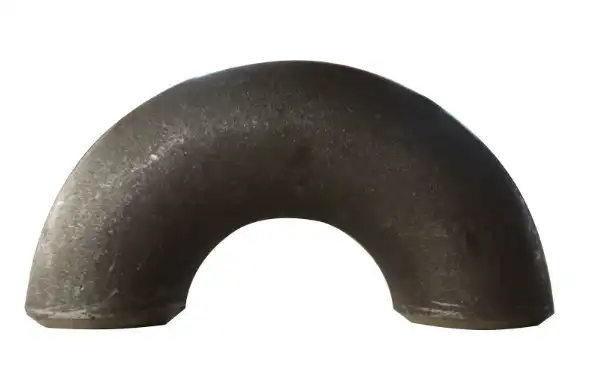
Angle and Radius Configurations
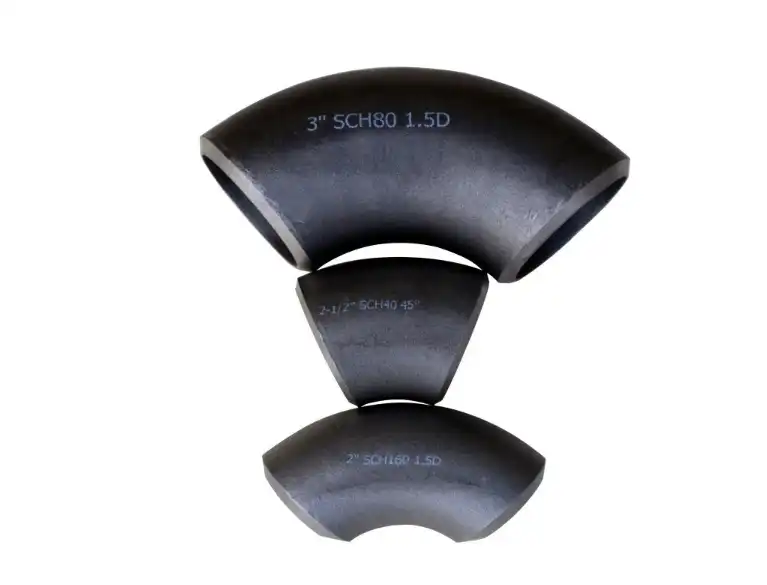
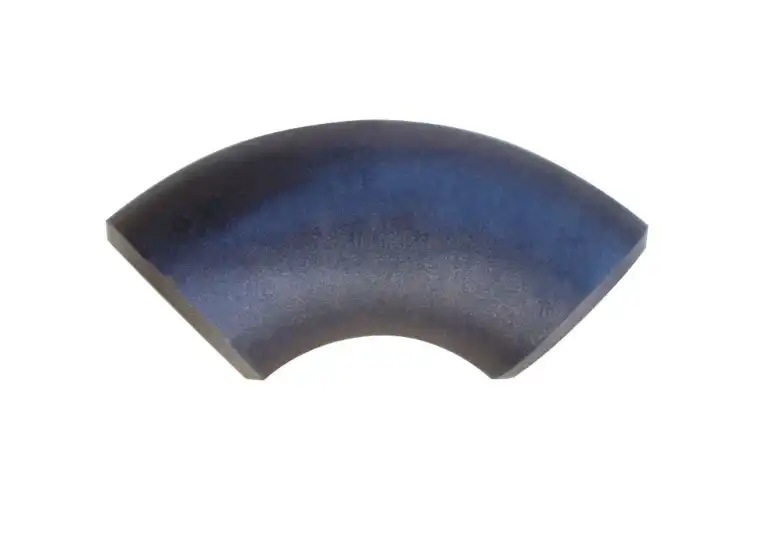
The 45-degree short radius elbow is used in places where installation space is limited and moderate changes in direction are enough. These small fittings work great in boiler systems and shipbuilding where complicated routing calls for adaptable solutions. When choosing materials for 45-degree shapes, ASTM A105 carbon steel is often the best choice because it is very resistant to rust, wear, and mechanical stress.
The most common design we get for oil and gas pipeline lines is the 90-degree long radius elbow. When compared to short radius designs, long radius designs—where the centerline radius is 1.5 times the standard pipe diameter—have less flow turbulence and less pressure drop. This shape is very important in chemical processing plants where fluid dynamics have a direct effect on how well the machines work and how long they last.
In places with limited space, like marine engine rooms and small processing modules, Corrosion-resistant carbon steel elbow short radius 90-degree elbows work well. The smaller sweep radius, which is the same as the nominal pipe diameter, lets the pipe go around obstacles, but it has to deal with a little more pressure loss and turbulence.
Pressure Ratings and Material Grades
Our production capacity covers pressure classes from 150 LB to 2500 LB, and we have special tools for ultra-high-pressure tasks that can hit 3000 LB grades. With steady performance in temperatures ranging from -20°F to 650°F, ASTM A105 carbon steel is the base for most standard uses.
Choosing the right material grade has a big effect on how well it resists corrosion. ASTM A234 WPB grade fittings have a slightly higher carbon content, which makes them easier to weld while still being resistant to rust. They are good for natural gas distribution systems and water conservation projects. For use in places where sour gas or hydrogen sulphide is present, special alloy additions are needed to stop sulphide stress cracking.
In power plants and steam systems, temperature tolerance is very important. Our high-temperature versions use heat treatment methods that keep grain boundaries stable, which stops creep deformation at high temperatures that last for a long time. Surface processes that form inactive oxide layers are helpful for chemical processing applications that use acidic or alkaline materials because they greatly increase the time between refills.
Before choosing materials, we ask sourcing teams to give us specific information about the working conditions, such as the types of fluids that will be used, the temperature ranges, the changes in pressure, and the outside temperature and humidity. With this knowledge, our tech team can come up with the best specs that meet both efficiency needs and price concerns.
Comparing Corrosion-Resistant Carbon Steel Elbows With Other Materials
The choice of material has a big impact on both the original investment and the costs over the product's life. When procurement professionals understand performance trade-offs, they can make decisions that are in line with project needs and budget limits.
Carbon steel with protective coatings is very cost-effective for uses where middling resistance to rust is enough. Galvanised carbon steel elbows usually cost 30 to 40 percent less than stainless steel joints of the same type, but they still protect well in freshwater systems, natural gas pipes and controlled industrial settings. In many temperature ranges, it has higher mechanical strength than stainless steel. This lets wall parts be smaller, which lowers the cost of materials and the weight of installation.
Instead of other metals, stainless steel is better at resisting rust in harsh settings like seawater systems, drug processing, and food-grade uses. The chromium makes passive layers that heal themselves and stop pitting and crevice corrosion. But it costs 200–300% more to buy than treated carbon steel, and it doesn't offer many benefits in situations where the environment isn't too bad.
Alloy steel elbows are in the middle. They have chromium, molybdenum, or nickel added to them to make certain properties better. These special materials are used in niche situations where standard carbon steel doesn't work well or where full stainless steel specifications are too expensive. Examples include high-temperature steam systems and sour gas service.
PVC and plastic alternatives get rid of all concerns about metal corrosion, but they lose some mechanical strength and temperature capability. The highest temperature that it can work at is rarely higher than 140°F, which limits its uses to low-pressure water distribution and drainage systems. Brass fittings work well for domestic water systems, but they don't have the pressure rates and thickness choices that are needed for industrial uses.
Ductile iron is very good at keeping buried water mains and wastewater systems from rusting. The graphite polygonal structure is more resistant to pressure than carbon steel and cheaper than stainless steel choices. Due to its limited temperature range and difficult weldability, ductile iron is mostly used for public structures rather than industrial processing facilities.
When our technical team chooses a material, they look at six main things: the fluid chemistry, the operating temperature range, the pressure needs, the ambient environment, how easy it is to do maintenance, and the total cost of ownership. This thorough evaluation makes sure that the chosen material performs at its best for the projected service life, without costing too much at the start.
How to Choose the Best Corrosion-Resistant Carbon Steel Elbow Factory for OEM Orders
Selecting a manufacturing partner extends beyond comparing price quotations. Reliable OEM relationships depend on production capacity, quality assurance systems, technical capabilities, and supply chain stability that protects your project timelines.
Production Capacity and Technical Infrastructure
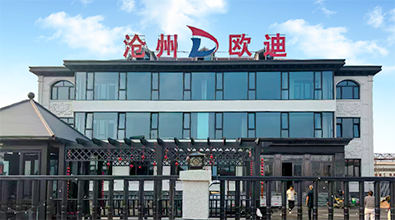
Our 66,600-square-meter factory at Oudi makes 16,000 tonnes of Corrosion-resistant carbon steel elbows and other carbon steel, stainless steel, and alloy steel pipe fittings every year. With this large output capacity, we can handle both big building projects and ongoing supply deals without having to rush deliveries. Because we are in Mengcun Hui Autonomous County, which is known as China's pipe fitting manufacturing hub, we have quick access to the specialised sources of raw materials and technical experts that are based in this industrial area.
Precision and consistency in quality are determined by how well and how often advanced production equipment is used. During the heating and shaping process, our hot forming equipment keeps temperature tolerances within ±10°F. This is important for getting a uniform grain structure and accurate measurements. When hydraulic pushing equipment is used, it applies controlled force that forms elbows without causing stress peaks or changes in wall thickness.
At every stage of production, quality tracking equipment checks that the standards are being met. Before processing starts, spectral analysers make sure that the material's makeup fits the requirements. Ultrasonic testing equipment finds internal breaks that can't be seen from the outside. Hydrostatic test stations put finished elbows under pressures that are higher than their stated maximums. This makes sure that the structure is solid before they are shipped.
Certification Compliance and Quality Management
ISO 9001:2000 certification establishes our quality management framework, documenting procedures from raw material receipt through final product shipment. This systematic approach ensures consistency regardless of order volume or customization complexity. The People's Republic of China Special Equipment Manufacturing License authorizes our production of pressure vessels and pipeline components for hazardous service applications.
Material traceability protocols track each production batch through our facility. Heat numbers from steel mills connect directly to finished elbow serial markings, enabling complete verification of material origins and properties. This documentation proves essential during project commissioning when third-party inspectors validate compliance with engineering specifications and international standards.
Nondestructive testing procedures extend beyond minimum standard requirements. While many factories conduct spot-checking on sample percentages, we maintain full inspection protocols across production runs. Radiographic examination detects internal weld defects. Magnetic particle inspection reveals surface cracks invisible to visual examination. Penetrant testing confirms surface integrity on non-magnetic materials.
Customization Flexibility and Engineering Support
OEM projects frequently require dimensional modifications or specialized material grades outside standard catalog offerings. Our engineering team collaborates directly with your design professionals to develop custom solutions matching unique application requirements. CAD capabilities enable rapid prototyping and dimensional verification before production tooling investment.
Minimum order quantities balance customization feasibility against economic production runs. Standard specification elbows accommodate orders as small as 50 pieces, while custom tooling requirements typically establish minimums around 500 pieces depending on complexity. Lead times for standard products average 3-4 weeks from order confirmation, extending to 6-8 weeks for custom engineered solutions requiring specialized dies or heat treatment protocols.
Global Logistics and Supply Chain Reliability
Our proximity to Tianjin Port—just 120 kilometers from our facility—streamlines international shipping logistics. Container consolidation services optimize freight costs for smaller orders while dedicated shipping arrangements serve large-scale projects requiring expedited delivery. Export documentation expertise navigates customs requirements across our 40+ country distribution network, minimizing border delays that jeopardize construction schedules.
Factory-direct pricing eliminates distributor markups that inflate procurement costs. Purchasing directly from manufacturing sources typically reduces component costs 15-25% compared to multi-tier distribution channels. These savings compound significantly across large projects involving thousands of fittings, freeing budget for other critical infrastructure investments.
Customer feedback and reference projects provide objective performance validation. We've served over 300 customers globally, with long-term relationships in Europe, North and South America, Africa, Southeast Asia, and the Middle East. Project references spanning petroleum facilities in Iran, shipbuilding operations in Singapore, and chemical plants throughout Greece demonstrate proven performance across diverse applications and operating environments.
Maintenance and Longevity of Corrosion-Resistant Carbon Steel Elbows
Proper installation practices and preventive maintenance protocols dramatically extend service life even in aggressive operating environments. Understanding degradation mechanisms helps maintenance teams detect problems before catastrophic failures occur.
Installation Best Practices
Proper alignment during installation of Corrosion-resistant carbon steel elbows prevents stress concentrations that accelerate corrosion initiation. Misaligned elbows experience uneven load distribution, creating tension zones where protective coatings crack and expose underlying steel. Support spacing should follow ASME B31.3 guidelines, preventing excessive span deflection that imposes bending moments on elbow connections.
Welding procedures require careful heat input control to avoid damaging factory-applied coatings adjacent to weld zones. Preheat temperatures should match material specifications, while interpass temperature limits prevent grain growth that reduces corrosion resistance. Post-weld heat treatment restores material properties in the heat-affected zone, particularly critical for thick-wall high-pressure applications.
Inspection and Preventive Maintenance
Visual inspection schedules should align with operating severity. Benign service environments like dry natural gas systems may require only annual examinations, while corrosive chemical processing warrants quarterly assessments. Inspectors should document coating condition, looking for disbondment, cracking, or wear-through exposing bare metal.
Ultrasonic thickness measurements track wall loss rates from internal corrosion or erosion. Establishing baseline measurements during commissioning enables trending analysis that predicts remaining service life. Measurement locations should focus on flow direction changes where turbulence concentrates erosive forces and areas where condensation or stratification creates locally corrosive conditions.
Cathodic protection systems enhance longevity in buried or submerged applications. Sacrificial anodes or impressed current systems maintain a protective electrical potential that prevents electrochemical corrosion. Annual potential surveys verify system effectiveness, with adjustments maintaining optimal protection levels throughout the pipeline network.
Service Life Extension Strategies
Environmental controls reduce corrosion rates significantly. Dehumidification systems in storage or intermittent service applications prevent moisture condensation that initiates corrosion. Chemical inhibitor injection neutralizes corrosive species in process fluids, slowing attack rates on internal surfaces. Insulation systems protect external surfaces from atmospheric moisture and temperature cycling.
Coating rehabilitation extends service life economically compared to component replacement. Surface preparation removes degraded coatings and corrosion products before recoating with fusion-bonded epoxy or other protective systems. This refurbishment typically costs 20-30% of new elbow replacement while restoring decades of additional service capability.
Detecting degradation early enables proactive replacement before failures cause production disruptions or safety incidents. Warning signs include coating deterioration exposing bare metal, visible rust staining indicating active corrosion, or dimensional changes suggesting wall thinning. Leak detection during hydrostatic testing or operating pressure fluctuations may indicate through-wall penetration requiring immediate component replacement.
Our OEM support extends beyond initial product delivery. Technical consultation services help customers optimize maintenance strategies for their specific operating conditions. We maintain extensive spare parts inventory enabling rapid replacement component shipment that minimizes downtime during unplanned failures. This ongoing partnership approach ensures your piping systems deliver reliable performance throughout their design life.
Conclusion
Selecting the best corrosion-resistant carbon steel elbow factory for OEM orders requires evaluating manufacturing capabilities, quality certifications, customization flexibility, and long-term partnership reliability. At Oudi Pipe Manufacture, our 25-year track record demonstrates consistent delivery of precision-engineered elbows meeting stringent international standards across petroleum, chemical, natural gas, and water conservancy industries. Our ISO 9001-certified quality management system, advanced production equipment, and comprehensive testing protocols ensure every elbow leaving our facility performs reliably in demanding applications. With 16,000-ton annual capacity, factory-direct pricing, and global logistics expertise serving customers across 40+ countries, we provide the production scale and technical support your OEM projects deserve.
FAQ
Can you customize corrosion-resistant carbon steel elbows for specific OEM project requirements?
Absolutely. Our engineering team collaborates directly with your design professionals to develop custom dimensional specifications, material grades, and protective coating systems matching unique application requirements. CAD capabilities enable rapid prototyping and dimensional verification before production begins. Minimum order quantities for custom specifications typically start around 500 pieces depending on tooling complexity, with lead times averaging 6-8 weeks from design approval to shipment.
What are typical lead times for bulk orders of corrosion-resistant carbon steel elbows?
Standard specification elbows matching ANSI, ASME, DIN, or JIS dimensions typically ship within 3-4 weeks from order confirmation. Large volume orders exceeding 50 tons may extend to 5-6 weeks to ensure complete production runs maintain consistent quality. Custom engineered solutions requiring specialized tooling or unique heat treatment protocols generally require 6-8 weeks. Rush order accommodations are available for emergency projects, with expedited production potentially reducing timelines 30-40% depending on current production schedules.
How do costs compare between corrosion-resistant carbon steel and stainless steel elbows?
Corrosion-resistant carbon steel elbows with galvanized or epoxy protective coatings typically cost 30-40% less than equivalent stainless steel fittings. Total lifecycle costs favor carbon steel even more substantially in moderate corrosion environments where protective coatings provide adequate durability. Stainless steel advantages justify premium pricing primarily in highly aggressive chemical environments, food-grade applications, or installations where maintenance accessibility severely limits coating rehabilitation options. Our technical team provides detailed cost-benefit analysis comparing material alternatives for your specific operating conditions.
Partner with Oudi for Superior Corrosion-Resistant Carbon Steel Elbow Solutions
Oudi Pipe Manufacture invites procurement managers and engineering teams to experience the quality difference that comes from partnering with a dedicated corrosion-resistant carbon steel elbow manufacturer. Our factory-direct pricing eliminates unnecessary markups while our ISO 9001-certified quality systems ensure every elbow meets exacting specifications. Whether your project demands standard ASME configurations or custom-engineered solutions, our 16,000-ton annual production capacity and advanced hot forming technology deliver reliable components on schedule. Contact our technical team at oudi-04@oudiguandao.com today for personalized quotations, engineering consultations, or to arrange factory visits where you'll witness our commitment to manufacturing excellence firsthand. Let us demonstrate why over 300 customers across 40 countries trust Oudi as their preferred corrosion-resistant carbon steel elbow supplier for critical infrastructure projects.
References
1. American Society of Mechanical Engineers. (2020). ASME B16.9: Factory-Made Wrought Buttwelding Fittings. New York: ASME Press.
2. Davis, J.R. (2006). Corrosion of Carbon Steel Piping Systems: Mechanisms, Prevention, and Protective Coatings. Materials Park, OH: ASM International.
3. Mohitpour, M., Golshan, H., & Murray, A. (2007). Pipeline Design and Construction: A Practical Approach (3rd ed.). New York: American Society of Civil Engineers.
4. Revie, R.W., & Uhlig, H.H. (2008). Corrosion and Corrosion Control: An Introduction to Corrosion Science and Engineering (4th ed.). Hoboken, NJ: John Wiley & Sons.
5. Specification for Carbon Steel Pipe Fittings. (2018). ASTM A234/A234M-18: Standard Specification for Piping Fittings of Wrought Carbon Steel and Alloy Steel for Moderate and High Temperature Service. West Conshohocken, PA: ASTM International.
6. Wen, K., & Zhou, Y. (2015). "Hot Forming Process Optimization for Carbon Steel Elbows: Microstructure and Corrosion Resistance." Journal of Materials Processing Technology, 223, 145-156.

Need help finding the right solution with our experts. Please contact us.
SINCE 1998 Your Reliable Pipeline Manufacturer