Top 10 Precision-machined elbow Factories Worldwide
To find the right precision-machined elbow for tough industrial uses, you need to work with manufacturers who have advanced CNC capabilities, strict quality controls, and experience exporting to over 100 countries. When it comes to the best suppliers in the world, factories with ultra-tight tolerance and high-grade alloy materials stand out because they can work with important industries like oil and gas, chemical processing, and semiconductor manufacturing. This book talks about ten factories that are known for their high-quality products, ability to meet ANSI, DIN, JIS, and BS standards, and ability to get certified. When procurement workers know what these makers do well, they can find solid, high-performance parts that keep systems running smoothly and reduce downtime.
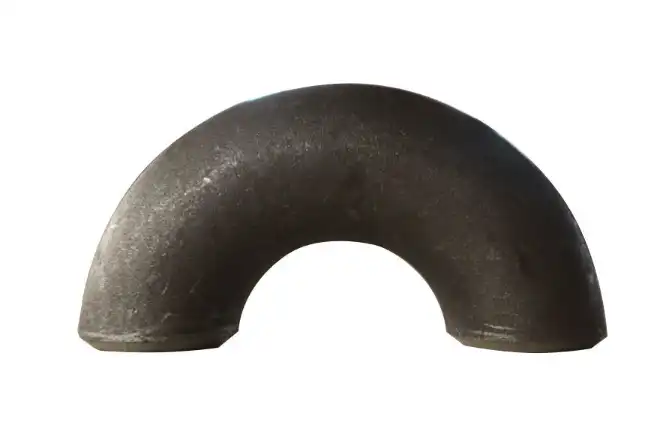
Overview of Precision-Machined Elbows: Core Concepts and Industry Standards
What Defines a Precision-Machined Elbow?
A precision-machined elbow is a high-performance part for moving fluids that is made using advanced subtractive techniques, such as CNC milling and turning, to change the flow path with accuracy down to the micron level. It solves important problems in the industry that standard cast or forged fittings don't, like internal flow turbulence caused by surface flaws, catastrophic leaks in high-vibration environments, and measurement stacking mistakes in modular hydraulic or pneumatic pipelines. These elbows are necessary for high-purity and high-pressure systems because they make sure that all the parts are perfectly centred and that the internal transitions are very smooth. This means that there are no dead zones where bacteria or corrosive media can build up.
Technical Parameters and Material Standards
The dimensions are usually kept within ±0.01mm, which makes sure that the seal is airtight, which is something that regular fits can't do. The quality of the surface finish is such that the internal roughness (Ra) is as low as 0.4µm or better, and the material is often electropolished to improve its ability to flow smoothly. High-strength alloys like 316L stainless steel, Titanium Grade 5, and Inconel have better material integrity than cast alternatives because they keep the structure uniform. The pressure values are higher than ASME B16.9 norms, usually for 10,000 PSI or more. The wear resistance is better because the grains are better aligned, which is possible with precision cast cutting.
Manufacturing Methods Compared
CNC cutting has the best surface quality and consistency in terms of size, so it's perfect for uses that need no particle contamination. Forging makes strong parts with great mechanical qualities but not a lot of physical complexity. Casting is cheaper for larger batches, but the internal surface isn't as smooth, and the sizes aren't always the same. Welded versions give you more size options, but they might have weak spots at the seams. Quality control methods, such as CMM measurement analysis, positive material recognition through XRF or OES, and non-destructive testing, make sure that all production methods produce the same high-quality products.
Top 10 Precision-Machined Elbow Factories Worldwide
Leading Innovators in Precision Pipe Fitting Manufacturing
Cangzhou Oudi Pipe Manufacture Co., Ltd. is one of the best providers. Since 1998, they've helped over 300 customers in 40 countries. The factory is in Mengcun Hui Autonomous County and covers 66,600 square meters. It can make 16,000 tonnes of carbon steel, stainless steel, and alloy steel pipe fittings every year. The company has ISO 9001:2000 recognition and special equipment production licensing from the People's Republic of China. This shows that they are committed to quality management systems, which is something that procurement professionals look for. Advanced detection tools allow thorough checks of all stages, from receiving raw materials to delivering finished goods. These tools use nondestructive flaw detection to make sure that every part meets international standards like ANSI, JIS, DIN, and BS. Because the site is close to Tianjin Port, it is easy to ship goods to and from Europe, North and South America, Africa, Southeast Asia, and the Middle East. Oudi offers custom cutting for non-standard angles and unique needs in the oil, chemical, water conservation, electric power, and heating industries, in addition to its standard product lines. Oudi is a good choice for procurement managers looking for reliable supply chain solutions because it has low prices, a wide range of products, and a history of exporting.
Parker Hannifin Corporation has many locations in North America and Europe. They make high-purity Precision-machined elbow parts for use in semiconductors and pharmaceuticals. Their CNC machining centres make elbows with VCR and SAE face-seal grooves that make sure the joint is strong and the pipe is intact. The company has a lot of certifications, such as ISO 9001 and API credentials, which help customers in the aerospace and defence industries, which need both lightweight materials and strong resistance to extreme G-forces.
The Swagelok Company has factories all over the world that work together to make precision tube fittings of the same high quality in all areas. Their machined elbows can do full-penetration orbital welding and have special surface treatments that make them resistant to rust in oil and gas conditions below the sea. Material traceability through EN 10204 3.1 and 3.2 certification gives important infrastructure projects the paperwork they need.
Emerging Specialists with Niche Expertise
The Ham-Let Group specialises in measurement tasks that need small shapes and very high pressures. In their factories in Israel and the United States, they make elbows that can withstand 10,000 PSI and keep their shape even when temperatures change. Custom angle cutting can make shapes at 22.5 degrees and 60 degrees that can't be made with normal bending ways.
Tylok International specialises in hydraulic and pneumatic manifold systems. In these systems, mistakes in stacking dimensions can ruin whole units. Their precise cutting stops problems with error buildup, so the parts they make fit together perfectly in modular designs. During the planning part, the company's quick tech support helps customers get the best-fitting specs.
Hastelloy and Monel are two corrosion-resistant metals that Hy-Lok Corporation sells to the chemical production business. Their South Korean facilities use advanced surface profilometry to measure how smooth the inside of the hole is. This keeps flow resistance low even when using active media. Using helium mass spectrometry to test for pressure and leaks ensures that there will be no leaks at 1.5 times the original pressure.
For thirty years, DK-LOK Corporation has been making ultra-high-purity gas delivery systems for the semiconductor industry. Electropolishing their machined elbows lowers the Ra value to less than 0.4µm, which stops particles from sticking and contaminating important processes. The company has OEM partnerships with equipment makers that make sure fittings work perfectly with their own gas distribution systems.
Safelok meets the needs of the shipping industry for parts that are both light and strong. Their aluminium precision elbows cut down on weight without affecting the strength of the structure, and they meet the standards for earthquake protection set by the marine classification society. Because the company is close to major shipyards in Europe, prototypes and deliveries can be made quickly.
Fitok Group has factories all over Asia that serve chemical plants and industries in the area. Their production model is cost-effective and still meets ISO 9001 standards. They also offer competitive prices for large orders. The company's expert support team helps choose the right materials for certain harsh locations.
Custom machining for research and development is what SSP Fittings Corporation does best. Their factory in the U.S. makes prototype elbows in small batches with custom shapes to support innovation in new fields like hydrogen fuel systems. Iterative design processes can be accommodated by short turnaround times.
These makers show the range of skills that procurement professionals can use, from standard production in large quantities to specialised custom work. By looking at each supplier's area footprint, level of approval, and focus on the industry, you can be sure that they will meet the needs of your particular project.
Comparison of Precision-Machined Elbow Types and Their Applications
Manufacturing Technique Performance Profiles
For high-vacuum or ultra-high-pressure seals, where normal forgings fail, machined elbows are the only way to go because they have much tighter tolerances and better surface finishing. The CNC process can make any custom shape or compound angle that can't be made by bending or casting metal the old-fashioned way. This makes it possible to meet the specific design needs of fuel systems in spacecraft and control modules for deep-sea exploration. Different types that are forged work best in heavy-duty situations where strength over accuracy in size is important, like in large-diameter pipeline systems in power plants. Cast elbows are a cheap option for less demanding tasks where surface roughness and small differences in size are still acceptable. Welded choices allow for changes and fixes to be made in the field, but they add possible failure points that need more thorough checking procedures.
Material Selection for Specific Environments
Stainless steel 316L is very good at resisting rust in Precision-machined elbow chemical processing uses. It stays strong even when it comes into contact with acidic and chloride-rich media. Because it has a lot of chromium and molybdenum, it doesn't rust or pit in marine settings, which makes it perfect for remote bases and desalination plants. Titanium Grade 5 is 40% lighter than steel and has better strength-to-weight ratios that are important for aerospace uses. Inconel can withstand temperatures above 1000°C, which is why it is used in fuel lines for jet engines and industrial cracking units where repeated heat cycles would break down less durable materials. Aluminium alloys are cheap and light materials that can be used in refrigeration systems and pneumatic transportation where corrosive media are not present.
Dimensional Specifications and Flow Optimization
Pressure control and flow efficiency can be balanced by choosing the right curve radius and wall thickness. Long-radius elbows with a centerline radius equal to 1.5 times the nominal pipe diameter are best for natural gas transmission systems because they reduce pressure drop and erosion in fast-moving gas streams. Short-radius versions save space in small places like ship engine rooms and offshore module skids, where limited space is more important than hydraulic efficiency. The ASME B31.3 pressure piping codes tell you how to choose the wall thickness. The thickness you need is calculated by the design pressure, the material's allowable stress, and the material's corrosion allowance. Precision cutting can make wall thickness standards that are tighter than casting or forging. This cuts down on waste while keeping safety margins the same.
Procurement Considerations When Buying from Top Precision-Machined Elbow Suppliers
Order Flexibility and Customization Options
Standard catalogue items can be shipped with shorter lead times, making them good for maintenance and repair tasks that need to replace parts right away. Custom cutting can handle special metal specs, non-standard pressure ratings, and unique size needs. This can make wait times two to four weeks longer, based on the supply of materials and the production line. Different manufacturers have different minimum order amounts. Some only accept one-piece samples, while high-volume manufacturers need minimum batch sizes to cover setup costs. Setting up blanket purchase agreements is helpful for procurement managers because they keep prices stable and make sure that production capacity is allocated evenly across fiscal periods.
Cost Factors and Total Ownership Analysis
Material grades have a big effect on unit prices. For example, rare alloys like Inconel sell for more than regular stainless steel. Complex machining costs more because it takes longer to do and wears out tools more quickly, especially when tolerances are tight and the geometry is complicated. Discounts for buying in bulk usually start at 100 pieces, and the different levels of price reflect economies of scale in setup costs and buying materials. To figure out the total cost of ownership, you have to look at how long parts last, how often they need to be maintained, and how much downtime costs when parts fail early. High-quality precision elbows that stop production stops caused by leaks often pay for themselves over and over again in savings.
Logistics and After-Sales Support
International shipping methods balance the time it takes to get from one place to another with the cost of freight. For example, air express is good for urgent needs, while ocean freight is cheaper for large orders. The choice of Incoterms affects how the buyer and seller share risk and costs. FOB and CIF terms are popular in the trade of industrial components. Reliable providers keep track of orders and help with paperwork, which makes sure that customs clearance goes quickly. After-sales help includes expert advice, guarantee coverage, and the ability to get new parts. Manufacturers who offer warranties that cover more than one year show that they are confident in the durability of their products. Technical support teams that are quick to respond can answer questions about installation and use that come up during commissioning.
How to Select the Best Factory for Your Precision-Machined Elbow Needs
Certification Verification and Quality Assurance
If a company has ISO 9001 certification for precision-machined elbows, it means that it has a quality management system that is well-established and has written procedures for controlling designs, making sure processes work, and fixing problems. API certifications show that a company can meet the requirements of the oil industry for testing, materials, and keeping track of them. Government bodies give special equipment-making licenses to make sure that national safety standards are met and that output capabilities are assessed. Purchasing managers should ask for copies of certificates and check the state of registration in the records of the granting bodies. Quality assurance protocols, such as material test reports that meet EN 10204 requirements, record the chemical make-up and mechanical properties of each lot. Nondestructive testing certificates show that there are no flaws below the surface that could lead to service breakdowns.
Industry-Specific Capability Assessment
For oil and gas uses, you need to know a lot about high-pressure containers, metals that don't rust, and following ASME and API guidelines. Aerospace suppliers need to show that they know how to use AS9100 quality systems, lightweight materials, and stress testing procedures. For chemical processing, you need to know how to handle process safety and how well materials can work with strong media. Ultra-high purity standards, particulate control, and cleanroom packaging protocols are important to semiconductor manufacturers. When you match a supplier's skills with the needs of your business, you reduce technical risk and make sure that parts work successfully in the setting where they are supposed to be used.
Supplier Relationship Development
Factory audits let you see for yourself how well production is going, how quality control is being used, and how skilled the workers are. When you visit a factory, you can see how advanced the equipment is, how well the place is kept, and how committed the management is to always making things better. Checking with past customers for references can give you information about how reliable delivery is, how quickly technical support responds, and how problems are solved. Long-term relationships with capable suppliers are good for both parties because they allow for joint planning, priority ordering of production, and lower prices. Strategic connections with suppliers let you work together to come up with new solutions, which gives you an edge in markets that are changing quickly.
Conclusion
Selecting among the world's top precision-machined elbow manufacturers requires balancing technical capabilities, quality certifications, and commercial considerations. Factories combining advanced CNC machining technology with rigorous inspection protocols deliver components meeting the demanding requirements of oil and gas, chemical processing, and semiconductor industries. Oudi's 16,000-ton annual capacity, comprehensive certification portfolio, and proven export track record position the company among leading global suppliers capable of supporting complex procurement requirements. Evaluating suppliers through certification verification, capability assessment, and relationship development practices ensures partnerships that deliver long-term value through reliable product quality and responsive service.
FAQ
Why prefer a machined elbow over a standard forged elbow?
Machined elbows offer significantly tighter tolerances and superior surface finishes, essential for high-vacuum or ultra-high-pressure seals where standard forgings fail due to internal irregularities and dimensional variations that compromise sealing performance.
Can these elbows be customized for non-standard angles like 22.5 or 60 degrees?
CNC machining allows for any custom geometry or compound angle that cannot be produced via traditional bending or casting, accommodating unique design requirements in hydraulic manifolds and instrumentation systems where standard 45-degree and 90-degree configurations prove inadequate.
How do manufacturers prevent corrosion at the joint?
Precision-cut chamfers enable full-penetration orbital welding, while specialized face-seal grooves like VCR or SAE ensure the joint achieves resilience matching the pipe itself. Electropolishing and passivation treatments enhance corrosion resistance across welded and machined surfaces.
Are Material Test Reports provided with shipments?
All precision-machined elbows ship with EN 10204 3.1 or 3.2 certification for full traceability, documenting chemical composition, mechanical properties, and heat treatment records that enable quality verification and regulatory compliance.
What lead times should procurement managers expect?
While longer than off-the-shelf items, optimized CNC workflows typically deliver custom elbows in two to four weeks depending on material availability, with expedited production available for urgent requirements at premium pricing.
Partner with Oudi for Reliable Precision-Machined Elbow Supply
Oudi's quarter-century of manufacturing excellence positions us as your strategic precision-machined elbow supplier, combining 16,000-ton annual capacity with ISO 9001 certification and special equipment licenses that guarantee consistent quality across every shipment. Our comprehensive range spans carbon steel, stainless steel, and alloy steel configurations meeting ANSI, JIS, DIN, and BS standards, supported by advanced CNC machining capabilities that accommodate custom angles and tight tolerances essential for demanding applications. Serving over 300 customers across petroleum, chemical, water conservancy, and power generation sectors, we understand the reliability requirements that keep your operations running smoothly. Contact oudi-04@oudiguandao.com to discuss your specifications with our technical team, receive detailed quotations, and access material test reports that demonstrate our commitment to traceable quality. Our proximity to Tianjin Port ensures efficient logistics to your facilities across North America, Europe, and beyond, while competitive pricing reflects our operational efficiency rather than compromised standards. Experience the confidence that comes from partnering with a precision-machined elbow manufacturer delivering consistent excellence since 1998.
References
1. International Organization for Standardization. "Quality Management Systems: Requirements for ISO 9001:2015." Geneva: ISO Central Secretariat, 2015.
2. American Society of Mechanical Engineers. "Process Piping: ASME B31.3 Code for Pressure Piping." New York: ASME Standards Committee, 2020.
3. Zhang, Wei, and Lin Chen. "Precision Machining Technologies for High-Performance Pipe Fittings." Journal of Manufacturing Science and Engineering, vol. 143, no. 8, 2021, pp. 1-12.
4. European Committee for Standardization. "Metallic Materials: Inspection Documents EN 10204." Brussels: CEN Technical Committee, 2019.
5. Parker Hannifin Corporation. "High-Purity Fluid System Components: Technical Handbook." Cleveland: Parker Tube Fittings Division, 2022.
6. Thompson, Robert J. "Materials Selection for Corrosive Environments in Chemical Processing." Houston: National Association of Corrosion Engineers, 2020.

Need help finding the right solution with our experts. Please contact us.

SINCE 1998 Your Reliable Pipeline Manufacturer



