Best High-Temperature Carbon Steel Elbow for Process Piping
When industrial piping systems operate under extreme thermal conditions, selecting the right components becomes a matter of operational safety and long-term cost efficiency. A High-temperature carbon steel elbow serves as the backbone of directional flow control in demanding environments, from refinery steam lines to chemical processing units. These engineered fittings combine exceptional heat tolerance with structural integrity, making them indispensable for industries where system failure isn't an option. Understanding what distinguishes a superior carbon steel elbow—from material composition to manufacturing precision—enables procurement teams to source fittings that deliver decades of reliable service while maintaining compliance with international standards like ASME B16.9 and ASTM A234.
Introduction
When used in high-temperature processes, process piping needs parts that work consistently even when they are exposed to heat, changes in pressure, and corrosive substances. High-temperature carbon steel elbows provide a workable compromise between mechanical strength and cost. Industries like petrochemical processing, power generation, and boiler making depend on these fittings to keep the flow of fluids intact at high temperatures that would damage other materials.
This guide answers the most common questions that purchasing managers, project engineers, and EPC contractors have when they need to choose piping parts that meet strict quality standards without going over budget. We look at the technical specs that determine performance in hot settings, contrast the different ways of making things that affect how long they last, and describe buying strategies that make sure the supply chain is reliable. This resource gives you useful information on how to find High-temperature carbon steel elbows that meet both technical and business needs, whether you're in charge of expanding a refinery in Texas or building a ship that needs certified pressure vessel parts.
Understanding High-Temperature Carbon Steel Elbows
Material Composition and Temperature Ratings
High-temperature carbon steel elbows are made from materials that are designed to not break down when heated. The most common grade, ASTM A234 WPB, can withstand constant working temperatures of up to 800°F (427°C), and in some cases, short-term excursions can hit 1000°F (538°C). The carbon content is usually between 0.25% and 0.30%, which gives the metal enough strength while still letting it be welded. Manganese and silicon are trace elements that improve the structure of grains. This makes the material less brittle during thermal cycling, which is very important for applications that start up and shut down often.
Manufacturing Methods: Hot Forming Versus Cold Bending
When Oudi makes High-temperature carbon steel elbows, we mostly use hot forming methods that give them better mechanical properties. Before hydraulic rams shape pipe sections around precise mandrels, they are heated to 1750°F–2000°F as part of hot pushing. This makes seamless bends with walls that are all the same thickness. This method gets rid of areas of high internal stress that can cause cracks to form when the temperature rises. For bigger diameters, hot induction bending is an option. It heats up small areas slowly while automatically shaping the curve. Both methods make fittings that work better in high-temperature conditions than cold-bent ones because they keep the same grain structure throughout the bend radius.
Standard Configurations and Pressure Classes
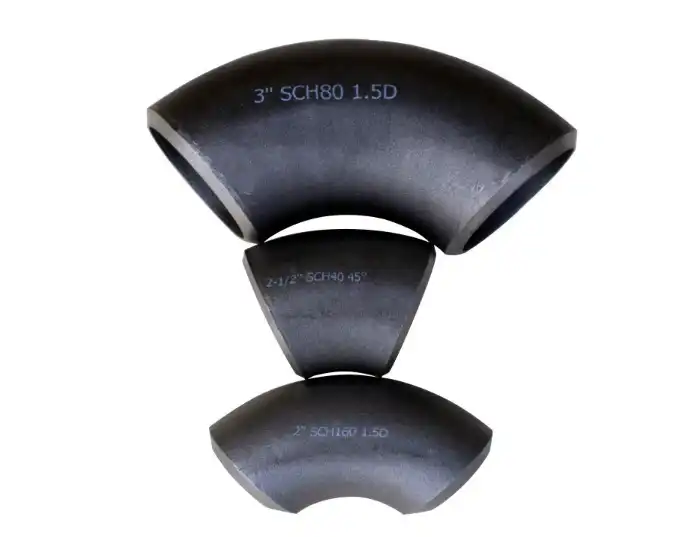
For process piping, High-temperature carbon steel elbows usually meet standards for sizes that cover different types of angles and radii. The most common fitting is the 90-degree long-radius elbow, which has a centerline radius that is 1.5 times the nominal pipe diameter. This is because it has good flow characteristics and stress distribution. A 45-degree short-radius elbow can be used to connect pieces of tools that are closer together. Pressure ratings range from 150# to 2500# classes, which means that they can withstand working pressures of 285 psi to 6,170 psi at room temperature. According to published derating curves in ASME B31.3, these pressure limits go down as working temperatures rise. This means that component ratings need to be carefully matched to real service conditions.
Benefits and Performance of High-Temperature Carbon Steel Elbows
Thermal Stability and Mechanical Resilience
High-temperature carbon steel elbows are very resistant to creep deformation, which is the slow stretching that happens when materials are under constant stress at high temperatures. Stainless steel options are better at resisting corrosion, but High-temperature carbon steel elbows stay the same size better in steam service and hydrocarbon handling where temperatures change from 400°F to 850°F. The material's thermal expansion coefficient (6.5 × 10⁻⁶ per °F) stays the same across its entire working range. This makes it easier to figure out the expansion loop and support spacing.
As part of Oudi's production process, we use normalized heat treatment to smooth out the grain structure. This makes the material stronger against impact, even after being exposed to heat for a long time. This is especially important in systems that have water hammer or valves that close quickly, because pressure spikes could otherwise cause cracks to spread from tiny flaws in the material. When our hot-pushing process is used to make seamless High-temperature carbon steel elbows, the longitudinal weld seam that is present in fabricated alternatives is removed. This means that there is no possible failure path under cyclic loading.
Cost Efficiency Across Project Lifecycles
Buying decisions involve more than just the initial purchase price. They also include things like installation labor, maintenance intervals, and how often to replace something. Most of the time, High-temperature carbon steel elbows are 40–60% less expensive than stainless steel fittings of the same type. This difference becomes more noticeable for diameters of 8 inches and up. The material is easy to find and has well-established supply lines that cut down on lead times. This helps projects stay on schedule and avoid delays that add to extra costs.
The cost of maintenance is also better for High-temperature carbon steel elbows in situations where the fluid chemistry inside doesn't pose a big risk of rusting. If you choose the right High-temperature carbon steel elbow system for steam service, it will usually last 25 to 30 years before any of the parts need to be replaced. This is about the same amount of time as stainless steel but costs a lot less. When good drains and external protection keep moisture out, the expected service life goes up even more. This is especially true in oil and gas processing settings, where hydrocarbons naturally stop corrosion.
How to Choose the Right High-Temperature Carbon Steel Elbow for Your Process Piping
Evaluating Operating Conditions and Material Compatibility
To choose the right High-temperature carbon steel elbow specifications, you must first carefully look at the fluid properties and temperature profiles. For steam systems that work above 750°F, High-temperature carbon steel elbows can still be used as long as the pressure stays within the stated allowed stress values that take into account the effects of high temperatures. For chemical processing, it's important to check the pH levels and contaminant levels. High-temperature carbon steel elbows work well in hydrocarbon service and neutral pH water solutions, but they break down quickly in acidic environments below pH 4 or in water systems with a lot of oxygen.
Certification Requirements and Quality Verification
More and more, industrial projects need to be able to track materials and get third-party approval to meet insurance standards and government rules. When asking for High-temperature carbon steel elbows, the procurement documents should list Oudi's ISO 9001:2015 quality management certification and People's Republic of China Special Equipment Manufacturing License. These certifications show that the process is controlled in a planned way, from receiving the raw materials to checking the final dimensions.
Each shipment should come with a material test report (MTR) that lists the chemical composition using optical emission spectrometry, the mechanical properties using tensile and hardness testing, and the conformance of the dimensions to ASME B16.9 tolerances. For pressure tank uses that follow ASME Section VIII, ask for High-temperature carbon steel elbows that have the manufacturer's National Board stamp and the U-number that goes with it. This paperwork is necessary for jurisdictional checks and makes it easier to register tools with the right people in the area.
Seamless Versus Welded: Performance Trade-offs
The choice between seamless and butt-welded High-temperature carbon steel elbows depends on the pressure class, the width that is available, and how easy it is to check. When hot-pushing is used to make seamless High-temperature carbon steel elbows, the material properties are the same all the way through the fitting. This means that there are no worries about the weld's integrity in high-stakes situations. Their continuous structure evenly distributes stress during pressure surges and temperature changes, which lowers the chance of failure in important applications such as high-pressure steam headers or hydrocracker transfer lines.
Butt-welded High-temperature carbon steel elbows, which are made by putting formed pieces together with arc welding, are cheaper for bigger sizes where seamless production would not be possible. Modern welding methods that use controlled heat input and heat treatment after the weld make joints that are close to the strength of the base metal. Radiographic or ultrasonic tests are used to look for flaws below the surface of these fittings. Acceptance criteria set out in ASME B31.3 make sure that the structure is sound. Both configurations are available from Oudi, so project teams can choose the best one based on their service needs and budget.
Installation and Maintenance Best Practices for High-Temperature Carbon Steel Elbows
Pre-Installation Verification and Handling Protocols
The right way to put fittings starts before they even leave the building. Check each High-temperature carbon steel elbow for damage from shipping, making sure that the protective coating is still in place and that the dimensional marks match the requirements of the buy order. Using ultrasonic gages to check that the wall thickness matches the standard schedules at several points; differences greater than ±12.5% mean that the product was manufactured incorrectly and needs to be replaced. Check the end bevels to make sure they are at the right angle (usually 37.5°) and land width. Deviations make it harder to get full-penetration welds.
How you store things has a big effect on how well they fit. Instead of concrete floors, High-temperature carbon steel elbows should rest on wooden dunnage. This keeps moisture from building up, which starts surface corrosion. When it will be months or even years between when the materials are delivered and when they are installed, use temporary coating or vapor-phase corrosion inhibitor wrapping. Extreme temperatures in outdoor storage yards can cause changes in dimensions. To keep thermal stress from building up, let parts settle at room temperature for 24 hours before welding.
Welding Procedures and Thermal Management
High-temperature carbon steel elbows must be joined to nearby pipes using skilled welding techniques that regulate heat input and cooling rates. The amount of preheating needed depends on the thickness and carbon equivalent of the material. Sections with walls thicker than 1 inch usually need to be heated to 200°F to 300°F to make them less likely to crack from hydrogen. Keep this temperature steady while welding and for at least an hour afterward. To make sure you're following the rules, use temperature-indicating crayons.
When the nominal thickness of pressure piping goes over the limits listed in ASME B31.3 Table 331.1.1, post-weld heat treatment (PWHT) is required. This controlled heating to 1100°F–1200°F, followed by slow cooling, gets rid of any remaining stresses that could cause stress corrosion cracking or warping while the system is in use. Because of thermal expansion, supports need to be spaced out correctly and allow for movement. For example, if you rigidly anchor High-temperature carbon steel elbows without allowing for changes in size, the stress will build up at the welds.
Inspection Scheduling and Predictive Maintenance
By setting regular inspection times, you can avoid unexpected failures that cause production to stop. During yearly turnarounds, a visual inspection should record external corrosion, coating degradation, and the state of the supports. Ultrasonic thickness readings taken at set places keep track of how much metal is being lost, which lets you guess how long the service will last. Pay extra attention to the areas right below High-temperature carbon steel elbows because flow turbulence speeds up erosion and corrosion in two-phase or high-velocity services.
Advanced diagnostic methods, such as phased-array ultrasonic testing and radiography, can find cracks below the surface that can't be seen from the outside. Plan these checks based on the expected fatigue life or when operating conditions change. For example, higher temperature, pressure, or cycle frequency can all speed up the buildup of damage. By comparing trending thickness data to baseline measures, we can see that the degradation is happening faster than expected. This means that we need to look into what's causing it and maybe do some mechanical analysis.
Procurement Guide: Buying High-Temperature Carbon Steel Elbows Online and Bulk Orders
Supplier Qualification and Manufacturing Capability Assessment
Building relationships with certified manufacturers guarantees consistent product quality and a steady supply of High-temperature carbon steel elbows. When evaluating possible providers, use more than just price to make your decision. Indicators of manufacturing capacity include annual production tons (Oudi's 16,000-ton capacity meets the needs of big projects), the ability to test products in-house, and well-documented quality control systems. Ask for facility audit records or approvals from reputable third parties, such as Lloyd's Register or TÜV Rheinland, that show the facility meets ISO 9001 and any relevant pressure equipment guidelines.
As part of a technical capability assessment, the available production methods should be looked at. These include hot pressing, induction bending, and fabrication welding. Suppliers can then suggest the best ways to make things for specific uses because of their versatility. Among Oudi's high-tech inspection tools are spectroscopic analyzers for checking the quality of materials, coordinate measuring machines for checking the sizes of things, and ultrasonic flaw detectors for checking for internal discontinuities. This infrastructure helps with the strict quality control that is needed for parts that will be used in hydrotreaters at refineries, offshore platforms, and utility boilers, all of which have bad outcomes if they fail.
Pricing Dynamics and Order Optimization
The price of a High-temperature carbon steel elbow depends on how much the raw materials cost, how hard it is to make, and how many items are ordered. Material surcharges that are tied to steel plate values change every three months. For budget security, fixed-price contracts that cover more than one supply phase are helpful. When you place an order for more than 20 tons, economies of scale really start to show. You can cut unit costs by 15 to 25 percent by combining needs from different project phases or coordinating purchases with sister facilities.
Expected lead times depend on how complicated the specifications are and how busy the supplier is. Standard-size High-temperature carbon steel elbows in popular grades (ASTM A234 WPB, 90-degree long radius, sizes 2 inches to 24 inches) usually ship 4 to 6 weeks after the order is confirmed. Timelines may be pushed back to 10–12 weeks for custom configurations that need extra heat treatment, non-destructive testing, or certifications for exotic materials. Oudi keeps a smart inventory of things that are often asked for. This lets them deliver quickly for urgent project needs while keeping prices low by making production more efficient.
International Procurement Considerations
When getting High-temperature carbon steel elbows from around the world, you need to be careful about transportation planning and following the rules. Export packaging standards must protect fittings during ocean freight. Corrosion can't happen in humid climates because of wooden crates with desiccant packets and vapor barrier wrapping. Commercial bills with the correct HS code (usually 7307.93 for butt-welding fittings), material test results translated into English, and certificates of origin are some of the documents that are needed. These are needed when trade deals offer tariff advantages.
Oudi's established exports to more than 40 countries make doing business across borders easier. Our transportation relationships help containers be used more efficiently, which lowers freight costs by making load planning easier. Serving clients in Europe, North and South America, Africa, Southeast Asia, and the Middle East gives you knowledge of the unique needs of each place, such as CE marking for EU pressure equipment directive compliance, NORSOK material specifications for Norwegian offshore projects, or API monogram programs for North American refining applications.
Conclusion
High-temperature carbon steel elbows for process piping systems must strike a balance between technical performance standards and economic realities. If these parts are made to recognized international standards and are properly specified, they will work reliably in harsh thermal environments. The choice framework includes choosing the right material grade for the job, weighing the pros and cons of different manufacturing methods like seamless vs. welded construction, and making sure the provider has good quality management systems and the ability to produce the goods. The success of an installation depends on following skilled welding methods and routine maintenance plans that check the state of the system throughout its service life. Procurement teams make sure the supply chain is reliable by working with well-known companies that have all the necessary certifications and a history of exporting. This also helps the project's economics by lowering the initial capital costs and overall operating costs over its lifetime.
FAQ
1. What temperature range can carbon steel elbows withstand in continuous service?
According to ASME B31.3 guidelines, ASTM A234 WPB High-temperature carbon steel elbows keep their structural integrity at constant working temperatures up to 800°F (427°C). As the temperature rises, the allowed stress values decrease gradually. During upset conditions, short-term temperature changes up to 1000°F are okay. However, long-term exposure above the design temperature speeds up creep deformation and oxidation. Chrome-moly alloy steel is a strong steel that can be used in places where the temperature regularly goes above 850°F.
2. How do seamless and welded carbon steel elbows differ in high-temperature applications?
When hot-pushing processes are used to make seamless High-temperature carbon steel elbows, the material properties are all the same and there are no weld seams. This means that there are no possible failure points in systems that are subject to temperature or pressure changes. Welded High-temperature carbon steel elbows have heat-affected areas next to the lengthwise lines where changes in the microstructure may make the fittings less tough. When made to ASME standards, both types work well enough, but seamless construction gives you more reliability in important services like high-pressure steam or petroleum handling, where failure would have very bad results.
3. Are carbon steel elbows suitable for corrosive high-temperature environments?
High-temperature carbon steel elbows work well in hydrocarbon service at high temperatures and in steam systems with controlled chemistry (pH 7–9, low dissolved oxygen). When the pH is below 4, the material corrodes quickly. It also corrodes quickly in places with a lot of chlorine or hydrogen sulfide (above 50 ppm). When working with corrosive materials at high temperatures, stainless steel or alloys that don't rust are usually needed. The right choice of material depends on a full analysis of the fluids and calculations of the corrosion rate that are specific to the operating conditions.
Partner with Oudi for Your High-Temperature Carbon Steel Elbow Requirements
Oudi has been making things for more than 25 years and can help you with your process pipe projects by using cutting-edge production technology and strict quality control. Our factory is ISO 9001:2015 certified and makes 16,000 tons of pipe fittings every year out of High-temperature carbon steel elbow, stainless steel, alloy steel, and steel that meets ASME, DIN, JIS, and BS standards. We make High-temperature carbon steel elbows for the oil, chemical, power generation, and construction industries in more than 40 countries, so we know what your specifications need in terms of performance and compliance. Our technical team helps you choose the right materials, make sure the dimensions are right, and get the right certification paperwork so that your buying process goes more smoothly. You can email us at oudi-04@oudiguandao.com to talk about your project needs and get detailed quotes from a reliable High-temperature carbon steel elbow source that will deliver quality parts on time.
References
1. American Society of Mechanical Engineers. (2022). ASME B16.9: Factory-Made Wrought Buttwelding Fittings. New York: ASME Press.
2. ASTM International. (2021). ASTM A234/A234M: Standard Specification for Pipe Fittings of Wrought Carbon Steel and Alloy Steel for Moderate and High Temperature Service. West Conshohocken: ASTM International.
3. Escoe, A. Keith. (2019). Piping and Pipeline Assessment Guide: Inspection, Analysis, Repair, and Life Extension. Oxford: Butterworth-Heinemann.
4. Mohitpour, M., Golshan, H., & Murray, A. (2020). Pipeline Design and Construction: A Practical Approach (4th ed.). Reston: American Society of Civil Engineers.
5. Singh, Rajinder. (2018). Applied Welding Engineering: Processes, Codes, and Standards (3rd ed.). Cambridge: Woodhead Publishing.
6. Spiekhout, J., & van der Velde, J. (2021). High-Temperature Materials for Power Engineering: Performance and Degradation Mechanisms. London: Springer Nature.

Need help finding the right solution with our experts. Please contact us.

SINCE 1998 Your Reliable Pipeline Manufacturer



