Best High-Temperature Carbon Steel Elbow for Steam and Oil Lines
When your steam or oil pipeline system absolutely must be reliable under tremendous heat and pressure, the appropriate elbow fitting is not a little detail -- it's the difference between safe, continuous operation and expensive system failure. High-temperature carbon steel elbow is the backbone of directional flow control in the most demanding industrial environment. This article describes what you need to know to make a confident and well-informed buying decision, from material choice to supplier assessment...
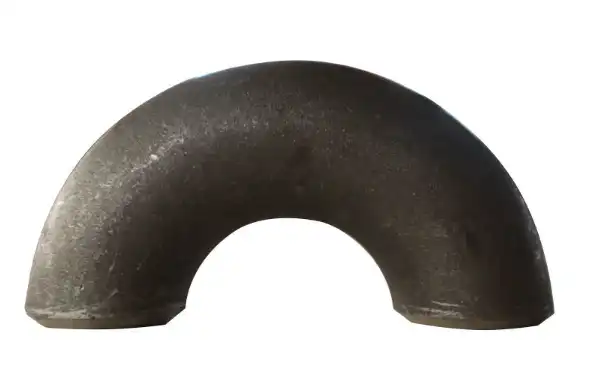
Understanding High-Temperature Carbon Steel Elbows
High-temperature carbon steel elbows are pipe fittings that change the direction of flow of some fluid or gas – usually at 45°, 90°, or 180° angles – in a pressurized pipeline system that operates at extreme temperatures. These components are regularly subjected to temperature cycling, mechanical load, and corrosive media in steam lines, oil refineries, and chemical processing facilities. Without a correctly rated elbow, the structural integrity of the whole pipeline is compromised.”Before you buy, check out these key specifications:
- Dimensional standards: ASME B16.9 (butt-weld fittings), ASME B16.11 (socket-weld and threaded), and equivalent DIN/JIS/BS standards
- Pressure ratings: Ranging from Class 150 to Class 2500, depending on application
- Temperature range: Carbon steel elbows — particularly ASTM A234 WPB/WPC grades — are rated for service from -29°C to 425°C (approximately -20°F to 800°F)
- Material grades: A234 WPB is the most widely used; A234 WP5, WP9, and WP11 alloy grades extend performance into higher thermal ranges
The way it is made also affects performance. Seamless elbows are created without weld seams by hot forming methods and provide better structural homogeneity. Published metallurgical data show that seamless construction reduces possible areas of seam failure, a factor of special importance in high-pressure steam operation.
Advantages and Applications of Carbon Steel Elbows in High-Temperature Environments
Steam and oil lines are often fitted with carbon steel elbows because they provide a performance-to-cost ratio that is difficult to beat by any other material. High-temperature carbon steel elbow is particularly suitable for applications requiring reliable performance under elevated temperatures. Carbon steel is stronger at moderate temperatures than stainless steel, and it is far less expensive in material cost; thus, it is the option for large-scale industrial projects where financial discipline and mechanical integrity must co-exist. The basic performance benefits that make carbon steel elbows the first option throughout heavy industries are:
- Thermal resilience: Carbon steel maintains structural integrity across a wide thermal range, handling the repeated expansion and contraction cycles common in steam systems without premature fatigue.
- Pressure tolerance: High-grade carbon steel elbows withstand operating pressures far exceeding those typical in oil transmission and gas processing lines.
- Cost-effectiveness at scale: For EPC contractors and industrial distributors managing large procurement volumes, carbon steel delivers certified performance without inflating project budgets.
- Broad industrial applicability: These elbows serve reliably in petroleum refining, natural gas processing, power generation boilers, chemical plants, and water conservancy infrastructure.
These advantages translate directly into reduced maintenance intervals and longer service lifecycles, which procurement managers at refineries and power stations consistently cite as primary purchasing drivers.
How to Choose the Best High-Temperature Carbon Steel Elbow for Your Project
Choosing between material grades and manufacturing methods is where procurement decisions carry the most weight. The table below provides a structured comparison to support your evaluation:
| Criteria | Carbon Steel (A234 WPB) | Alloy Steel (A234 WP11) | Stainless Steel (A403 WP316) |
|---|---|---|---|
| Max Service Temp | 425°C (800°F) | 593°C (1100°F) | 816°C (1500°F) |
| Corrosion Resistance | Moderate | Moderate-High | Excellent |
| Tensile Strength | High | Very High | High |
| Cost | Low | Medium | High |
| Best Application | Steam, oil lines | High-alloy service | Aggressive chemical media |
The A234 WPB Carbon Steel Elbows handle most of the operating situations at the most economical pricing point for the majority of steam and oil line applications. The correct technical choice when service temperatures are over 425°C and/or sulfur-bearing media is to upgrade to WP11 or WP9 alloy steel grades.
Geometry of the elbow counts as well as material quality. Long-radius (LR) elbows (centerline radius 1.5 times the nominal pipe diameter) decrease pressure drop and turbulence, directly reducing energy consumption and limiting erosion at the bend. Short-radius (SR) elbows are used in confined spatial arrangements where some loss in flow efficiency may be tolerated.
B2B buyers in regulated sectors won’t accept anything less than certification compliance. Make sure your supplier is certified to the ISO 9001 quality management system and has special equipment manufacturing permits, if necessary, in accordance with ASME, API, or similar national regulations.
Procuring High-Temperature Carbon Steel Elbows: Market Insights and Supplier Selection
The global pipe fittings market is crowded, but not all manufacturers can deliver consistent quality in large volumes of orders. If you are looking for a manufacturer of High-temperature carbon steel elbows, the most important things that set them apart in the eyes of industrial buyers are certification authenticity, production capacity, and documented export experience. Cangzhou Oudi Pipe Manufacture Co., Ltd., founded in 1998 and located in Mengcun, known as the so-called “fitting hub” in China, has made a name for itself based on just these criteria.
Oudi manufactures carbon steel, stainless steel, and alloy steel pipe fittings according to American (ANSI), Japanese (JIS), German (DIN), and British (BS) standards, with a capacity of 16,000 metric tons per year and a factory covering 66,600 square meters. The company is ISO 9001:2000 certified and licensed to manufacture special equipment in the People’s Republic of China. These credentials are independently verifiable and are required by procurement teams in Europe and North America.
Oudi has a quality control protocol covering incoming raw materials, the production process stages, and the final inspection of finished products, including nondestructive testing (NDT) and full inspection systems. This is not a documentation exercise – this is a process architecture that has been designed to support more than 300 customers in more than 40 countries, including major markets in the United States, Europe, Southeast Asia, the Middle East, and South America. Oudi supports OEM customization in dimensions, materials, and standards for bulk procurement, allowing EPC contractors and industrial distributors to consolidate their supply chain under a single certified source.
Maintenance, Installation Tips, and Common Challenges
Even the most precisely defined elbow will not perform if installed carelessly. A good fit-up before butt-welding is essential; any misalignment creates stress concentrations that accelerate fatigue cracking under thermal cycling. When welding carbon steel, especially in wall thicknesses > 19mm, the preheat requirements of ASME B31.3 or B31.1 must be followed. Ongoing maintenance should include periodic visual examinations at bend extrados locations, where erosion and wall thinning are particularly visible in high-velocity service.
Ultrasonic thickness monitoring at these sites every 12–24 months gives early warning of material deterioration before a failure event occurs. Where corrosive condensate is present in steam pipes, interior coating or cathodic protection may improve service periods greatly. Common concerns in the field include galvanic corrosion at dissimilar metal junctions and deformation under unforeseen pressure spikes.
Addressing issues proactively via correct material selection, expansion loop design, and frequent inspection schedules reduces downtime to a minimum.
Conclusion
Selecting the proper elbow for steam and oil service is a technical and financial choice with long-term ramifications. High-temperature carbon steel elbow products, correctly specified, verified, and acquired from a manufacturer with proven quality credentials, offer the performance and durability that essential pipelines expect. Oudi's 26-year track record, worldwide export reach, and stringent quality control procedures make it a supplier deserving serious consideration for your next procurement cycle.
FAQ
What is the maximum service temperature for a standard carbon steel elbow?
ASTM A234 WPB carbon steel elbows are rated for continuous service up to approximately 425°C (800°F). For applications exceeding this threshold, alloy steel grades such as WP11 or WP9 are the appropriate upgrade path.
How do carbon steel elbows perform in corrosive steam environments compared to stainless steel?
Carbon steel performs reliably in clean steam service but is more susceptible to oxidation and pitting in environments with aggressive condensate or chemical contamination. Stainless steel offers superior corrosion resistance in those specific conditions, though at a higher material cost.
Can carbon steel elbows be custom-manufactured to non-standard dimensions?
Yes. Manufacturers like Oudi provide OEM fabrication services for non-standard sizes, wall thicknesses, and end configurations. Providing detailed technical drawings and material specifications enables accurate quotation and production.
What certifications should I verify when sourcing carbon steel elbows?
Prioritize ISO 9001 quality management certification, relevant special equipment manufacturing licenses, and compliance with ASME, ASTM, API, or equivalent international standards applicable to your industry and jurisdiction.
Get Certified High-Temperature Carbon Steel Elbows from Oudi — Request a Quote Today
Oudi has delivered high-performance pipe fittings to over 300 industrial clients across 40+ countries since 1998. As a trusted high-temperature carbon steel elbow supplier with ISO 9001 certification, 16,000-ton annual capacity, and full OEM capability, we are positioned to support your procurement needs at any scale. Contact our technical team at oudi-04@oudiguandao.com for specifications, competitive pricing, and fast lead-time confirmation.
References
1. ASME B16.9 — Factory-Made Wrought Buttwelding Fittings, American Society of Mechanical Engineers, 2018.
2. ASTM A234/A234M — Standard Specification for Piping Fittings of Wrought Carbon Steel and Alloy Steel for Moderate and High Temperature Service, ASTM International, 2022.
3. ASME B31.3 — Process Piping Code, American Society of Mechanical Engineers, 2022.
4. Piping Handbook, Nayyar, M. L., McGraw-Hill, 7th Edition, 2000.
5. API 570 — Piping Inspection Code: In-service Inspection, Rating, Repair, and Alteration of Piping Systems, American Petroleum Institute, 2016.
6. Industrial Piping and Equipment Estimating Manual, Galeno, F. R., Gulf Professional Publishing, 2002.

Need help finding the right solution with our experts. Please contact us.

SINCE 1998 Your Reliable Pipeline Manufacturer



