BW Carbon Steel Cap vs Threaded Cap: Which Is Best?
When selecting end-of-line closures for industrial piping systems, the choice between BW carbon steel caps and threaded caps directly impacts system reliability and operational safety. BW carbon steel caps generally prove superior for high-pressure, high-temperature applications due to their permanent welded joints and robust construction, while threaded caps offer practical advantages in lower-pressure environments where installation flexibility matters most. The optimal choice depends on your specific application parameters, including operating pressure, temperature range, and maintenance accessibility requirements.
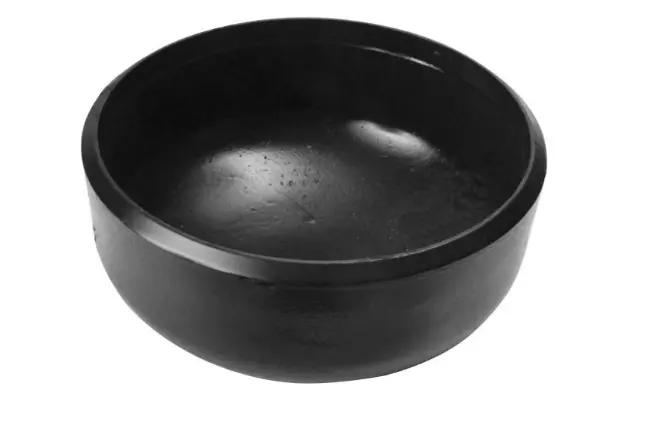
Performance Comparison: BW Carbon Steel Cap vs Threaded Cap
Pressure and Temperature Capabilities
When the system needs to work at more than 2,500 psi, BW Carbon Steel Caps are the most common choice. The welded joint gets rid of the areas of high mechanical stress that come with threaded connections. This lets these caps handle pressures of up to 10,000 psi in Schedule XXS setups. Depending on the material grade, temperature resistance goes from -50°F for cold use to 800°F for high temperatures. The continuous weld bead makes a uniform pressure boundary that doesn't loosen when the temperature changes. Threaded caps can only be used in systems that don't go above 2,000 psi, and the highest temperature they can handle is about 450°F for carbon steel versions. Pressure values are based on thread engagement depth and material yield strength. Caps with bigger diameters can't handle as much pressure because the thread roots are under more stress. When the temperature changes, thermal expansion can weaken the thread seal, which might mean that it needs to be retightened on a regular basis to keep it working properly.
Installation Requirements and Maintenance Access
To install BW Carbon Steel Caps, you need qualified welders, the right way to prepare the joint, and the right way to inspect the work after the weld. Because the fixed link has to be cut in order to be removed, these caps are not good for places where they need to be accessed often. Welding time depends on the size of the pipe and the thickness of the wall. For example, tacking, root passes, and fill passes for 4″ Schedule 40 caps take about 30 minutes. There are big benefits to installing threaded caps when welding isn't possible or when there isn't enough space for hot work. Standard pipe wrenches make it easy for maintenance staff to remove and reinstall threaded caps in minutes. This makes it easier to inspect and change the system. This ability to be removed comes with the cost of possible leak paths at thread interfaces, which means that important service applications need to be closely watched.
Corrosion Resistance and Longevity
The lack of cracks in properly welded BW Carbon Steel Cap joints reduces the number of places where corrosion can start, especially in environments that are acidic or contain chloride. In high-speed flow systems, flush weld patterns keep fluid from pooling and lower the risk of erosion and rust. Our heat treatment methods get rid of sensitization zones that could speed up intergranular corrosion. This means that properly designed systems can last longer than 20 years. Corrosive materials can build up in the cracks between the male and female thread surfaces of threaded connections. Over time, thread lubricants and sealants may break down, creating new ways for leaks to happen. When different metals touch in threaded joints, galvanic corrosion can happen. This means that you need to be careful when choosing materials or using isolation techniques. Threaded caps are usually inspected every two to three years, while welded seals are usually inspected every five to seven years.
Selecting the Best Cap for Your Application: Decision Criteria
Analyzing Operating Conditions
The main selection factors are the system pressure and temperature patterns. When working at temperatures above 400°F or pressures above 1,800 psi, BW Carbon Steel Caps are usually needed to make sure there are enough safety margins. It doesn't matter what kind of fluid it is—welded seals work well with corrosive chemicals, erosive slurries, or high-purity processes because they are uniform. We suggest doing a full risk review that looks at what could go wrong and how it might affect other systems. For important systems, the BW Carbon Steel Cap specification should be used no matter the pressure class. Maintenance frequency expectations also play a role in the choice. Systems that need major overhauls every 10 years or more, like permanent BW Carbon Steel Caps, get rid of the inspection issues that come with mechanical connections. On the other hand, threaded caps are more flexible, which is good for pilot plants, temporary installations, or processes that need to be rearranged every season, even though they pose a slightly higher risk of leaks.
Compliance with International Standards
For example, ASME B31.3 for process piping, ASME B31.1 for power piping, or API 570 for in-service testing must be used in the procurement requirements. BW Carbon Steel Caps made to ASTM A234 standards make sure that the material can be tracked back to the mill, where test reports show the chemical make-up and mechanical properties. Our Special Equipment Manufacturing License and ISO 9001:2015 approval show that we follow quality control standards that are accepted around the world. Different parts of the world have different thread standards. For example, projects in North America usually need NPT threads, while projects in Europe need BSP threading. Checking for thread compatibility keeps field changes from being too expensive. Material certifications should include 3.1 certificates according to EN 10204 for projects in Europe or material test results that meet the standards of ASTM A370 for projects in the United States.
Cost-Effectiveness Analysis
At first glance, threaded caps are 15–25% cheaper than comparable BW Carbon Steel Caps in sizes smaller than 4 inches. This benefit is lost because of the higher cost of installation—skilled labor for welded caps costs $75–125/hour, while mechanical installation costs $45–65/hour. However, because welded joints are permanent, there are no ongoing maintenance costs. A lifecycle cost analysis over 15 years usually shows that BW Carbon Steel Caps are the most cost-effective choice for permanent installations. Threaded options are only cost-effective when ease of installation is more important than durability. Our annual production capacity of 16,000 tons at Oudi lets us offer competitive prices through economies of scale. For projects that need 100 or more units, we offer volume discounts. Standard BW Carbon Steel Caps have lead times of 4 to 6 weeks for stock sizes and 8 to 10 weeks for special sizes, which include getting the materials and making sure they are of good quality. We keep a lot of popular sizes in stock (2″ to 12″ in Schedule 40 and Schedule 80) so that we can meet your needs for fast delivery.
Advantages and Limitations of BW Carbon Steel Caps and Threaded Caps
BW Carbon Steel Cap Strengths
The permanent welded joint gives the structure unmatched strength; it doesn't loosen even when there is vibration, thermal shock, or pressure surges. Because it will last longer, it will need fewer inspections and less long-term upkeep. Oudi's BW Carbon Steel Caps go through strict quality control measures that go beyond what is required by ASTM. These include checking the dimensions, doing chemical analyzes, and testing the mechanical properties. Our manufacturing process ensures that the wall thickness changes are uniform and within a 12.5% tolerance. This means that the pressure ratings are the same from one production batch to the next. Welded seals are necessary for services that handle poisonous, flammable, or highly pure materials because they get rid of the possible leak paths that come with mechanical connections. The flush internal shape keeps particles from building up and reduces pressure drop in clean settings. Our seamless manufacturing choice makes things even more reliable by getting rid of longitudinal weld gaps that could be used to start corrosion. The primary limitation involves installation inflexibility—welded caps need hot work permits, skilled welders, and, in some cases, heat treatment after the join. To make changes to a system, parts have to be taken out and cut, which creates more waste and costs more to do again. Because of these problems, BW Carbon Steel Caps are not good for temporary pipes or uses that need to be accessed often.
Threaded Cap Practical Benefits
The best thing about screw caps is how easy they are to install. Maintenance crews can quickly make changes to the system because these closures can be put in place with simple hand tools, and no special training or hot work permits are needed. Because it is removable, it can be inspected inside on a regular basis, cleaned, and parts can be replaced without damaging the device. Threaded caps work great in low-pressure utility systems, instrumentation connections, and temporary test setups where you don't want something to last. Using different types of materials can help you save money. For example, you could use carbon steel for normal use, stainless steel for moderate rust protection, or alloy steel for high temperatures. Standardized thread dimensions make it possible for parts from different manufacturers to be used together, which makes managing spare parts easier.
How to Choose the Right Cap for Your Project: A Rational Choice Approach
Defining System Specifications
First, write down the design pressure, design temperature, and fluid properties like pH, chloride content, and concentration of suspended solids. Check the appropriate piping codes to find out the minimum wall thickness and material grade standards. According to OSHA 29 CFR 1910.119, systems that contain dangerous fluids should always use welded closures, no matter what the operating pressure is, to reduce the number of possible leak sources. Look at the limitations of the installation environment, such as the ease of accessing workspaces, the availability of hot work permits, and the skill levels of the workers. Even though they don't work as well, projects in remote areas with limited welding equipment may choose threaded ends. On the other hand, refineries and chemical plants that already have established welding procedures can benefit from standardizing BW Carbon Steel Caps because it makes inventory less complicated.
Assessing Available Product Options
Oudi makes BW Carbon Steel Caps with three different types of forming: seamless for high-pressure service that needs to be done correctly, ERW for normal uses, and manufactured for needs with a large diameter. Our product range goes from 1/2″ to 48″ in diameter and from Schedule 5S to XXS in thickness. It can handle design pressures of 150 psi to 10,000 psi. ASTM A234 WPB is a material grade for general use, ASTM A420 WPL6 is for use in cold environments (up to -50°F), and ASTM A234 WP11/WP22 alloy grades are for use at high temperatures (up to 1,100°F).We keep full records of mill test reports that include chemical composition analysis, tensile testing results, impact testing data, and certificates that verify the dimensions. As required by ASME B16.9, each production lot is marked for tracking. This allows for proof in the field during installation. Our expert team helps you choose the right materials based on the conditions of your service, making sure that you get the best performance and follow all the rules.
Partnering with Reliable Suppliers
The choice of supplier has a direct effect on the success of the project through consistent quality, reliable delivery, and access to technical support. Check the manufacturer's credentials, such as ISO 9001 quality management systems and any special equipment licensing that is needed for pressure-retaining parts. Ask for proof that the inspection tools can do what you want them to do. Reliable providers will keep coordinate measuring machines, spectroscopy testers, and non-destructive testing facilities in good shape. Since 1998, Oudi has served more than 300 customers in more than 40 countries. We have built delivery networks in North America, Europe, and the Middle East. Our factory in Cangzhou is spread out over 66,600 square meters and has CNC forming presses, automated welding stations, and inspection labs with climate control. We offer technical support in English, CAD drawings for checking the integration, and material certifications that meet international standards. Lead times stay the same at 4 to 6 weeks for standard configurations, but urgent projects can get them faster.
Conclusion
The choice between BW Carbon Steel Caps and threaded caps depends on the needs of the application, not on which is better in general. BW Carbon Steel Caps work better than any other caps in vital service, high-pressure, and high-temperature situations where permanent, leak-free closures are worth the extra cost of fitting. Threaded caps are useful in lower-pressure systems where installation freedom and easy entry for servicing are more important than the performance limits of mechanical connections. When making purchases, people should think about working conditions, code compliance, and lifecycle costs first. They should also work with certified makers who can consistently deliver high-quality goods on time. If you choose the right cap and do a thorough analysis of the specifications and check with the supplier, the system will stay intact for decades.
FAQ
Can BW carbon steel caps handle high-temperature steam applications?
BW Carbon Steel Caps made from ASTM A234 WPB material can safely work with systems that use full steam up to 750°F and up to 2,500 psi of pressure. The soldered joint design stays strong even when heated and cooled many times, while threaded connections tend to come loose. For uses above 800°F, alloy steel grades like ASTM A234 WP11 or WP22 are needed. We offer these grades with approved material test reports that show their high-temperature mechanical features. When you heat treat the area properly after welding, you get rid of any leftover stresses that might cause stress-corrosion cracks in steam service.
What welding standards ensure safe BW cap installation?
ASME Section IX sets the rules for how to qualify welders and how to weld pressure pipe systems. Installers need to make sure that the ends of the pipes are beveled at 37.5°, that the root openings stay at 1/16″, and that root passes are done using either GTAW or SMAW processes with E7018 electrodes for carbon steel. As per ASME B31.3, the post-weld inspection includes both a visual check and X-ray testing for services that go over 600 psi design pressure. The recommended welding procedures in our technical documentation are in line with the requirements of the AWS D1.1 structural welding code.
How does corrosion resistance compare between BW and threaded caps?
Because flush weld shapes don't leave cracks where corrosive media can gather, BW Carbon Steel Caps are better at resisting rust. In chloride environments, threaded connections speed up localized corrosion by creating oxygen concentration cells between the thread roots and crests. Our BW Carbon Steel Caps go through a solution annealing heat treatment that gets rid of the sensitization zones. This makes the intergranular corrosion resistance higher than what is required by ASTM A262 Practice E for stainless grades.
Partner with Oudi for Premium BW Carbon Steel Cap Solutions
Since 1998, Oudi has been making precision-engineered pipe fittings and sending ASME B16.9-compliant BW Carbon Steel Caps to industries around the world that need them. Our ISO 9001:2015-certified factory follows strict quality standards from checking the raw materials to doing the final inspection. This makes sure that every cap exactly meets your needs. We have a wide range of sizes in stock, from 1/2″ to 48″ in schedules 10S to XXS. The materials we stock include standard carbon steel, low-temperature service steel, and alloy steel. As a well-known company that makes BW Carbon Steel Caps for more than 300 customers in over 40 countries, we know how important it is to deliver on time and with the right information. Our engineering team helps with choosing materials, giving advice on specifications, and making things to fit the needs of each individual job. Our competitive prices represent our ability to produce 16,000 tons of goods every year, and our strong supply chain guarantees lead times of 4 to 6 weeks for normal configurations. To talk about your pipe cap needs, email our expert sales team at oudi-04@oudiguandao.com. We'll give you detailed quotes that include mill test reports, dimensional drawings, and delivery schedules that are made to fit the time frame of your project. Oudi is a trusted BW Carbon Steel Cap supplier in North America, Europe, and other places. Come experience the quality and service that have made them so popular.
References
1. American Society of Mechanical Engineers. (2020). ASME B16.9: Factory-Made Wrought Butt-Welding Fittings. New York: ASME Press.
2. ASTM International. (2021). ASTM A234/A234M: Standard Specification for Piping Fittings of Wrought Carbon Steel and Alloy Steel for Moderate and High Temperature Service. West Conshohocken: ASTM International.
3. American Petroleum Institute. (2016). API 570: Piping Inspection Code: In-service Inspection, Rating, Repair, and Alteration of Piping Systems. Washington: API Publishing Services.
4. Kannappan, S. (2018). Introduction to Pipe Stress Analysis. Hoboken: John Wiley & Sons.
5. Mohitpour, M., Golshan, H., & Murray, A. (2007). Pipeline Design & Construction: A Practical Approach (3rd ed.). New York: American Society of Mechanical Engineers.
6. Nayyar, M. L. (2019). Piping Handbook (8th ed.). New York: McGraw-Hill Education.

Need help finding the right solution with our experts. Please contact us.

SINCE 1998 Your Reliable Pipeline Manufacturer



