Corrosion-resistant carbon steel elbow Buying Guide for Engineers
When specifying piping components for demanding industrial environments, engineers face a critical decision: selecting fittings that balance performance, longevity, and budget. Corrosion-resistant carbon steel elbows represent a practical solution for systems exposed to moisture, chemicals, and temperature fluctuations. These specialized fittings combine the mechanical strength of carbon steel with enhanced surface treatments or alloying elements that slow oxidation and chemical degradation. Understanding how these elbows achieve corrosion resistance—through protective coatings, specific heat treatments, or deliberate material composition—helps procurement teams make informed choices that prevent premature failure and reduce total cost of ownership across oil, chemical, natural gas, and water conservancy projects.
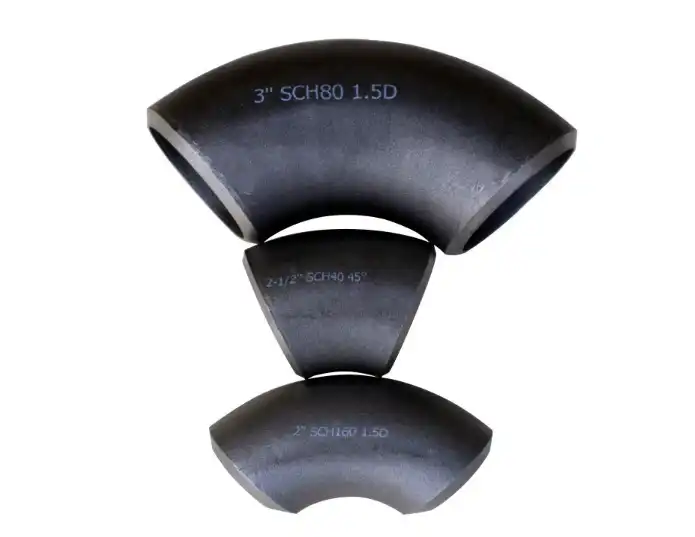
Benefits and Performance: Why Choose Corrosion-Resistant Carbon Steel Elbows
Durability in Harsh Industrial Environments
Industrial pipe systems have to work in harsh places like chemical plants, refineries, and offshore platforms. Some of these are salt solutions, acidic condensates, high humidity, and changes in temperature. When put under this much stress, raw carbon steel breaks down in just a few months. This can lead to leaks, unplanned shutdowns, and safety risks. Things last a lot longer when they are treated, so they do not rust. Natural gas gathering systems along the coast have joints that don't get treated and only last 3 to 5 years. A protected elbow can last 15 to 20 years. The costs of the project go down because things last longer and don't need to be replaced, fixed, or stopped for maintenance as often.
Cost-Effectiveness Compared to Alternatives
If you want elbows that don't rust, you'll have to pay two to four times as much for stainless steel ones. When it comes to big pipes or networks that go across a lot of land, this price difference is very important. Stainless steel parts are strong at high temperatures, but they might be too pricey when the main worry is corrosion instead of temperature. When the temperature and pressure are low, plastic elbows work well, but they aren't strong enough for high-pressure steam, hydrocarbons, or gritty slurries. Corrosion-resistant carbon steel elbows are a good compromise because they provide enough protection for water treatment plants, district heating systems, and chemical processes that are not very corrosive.
Application-Specific Performance
There are traits that are more important than others in different fields. Hydrocarbons, hydrogen sulfide, and carbon dioxide are all things that elbows work with all the time. Often, they have to do this while under a lot of pressure. Coatings that keep hydrocarbons and bad gases out are important. Things need to be able to deal with acids, bases, and solvents in order to be used in chemical processing. Process fluids can't damage the inside of elbows that are sealed with epoxy. If you want to save water for things like watering and garbage transport, you can use fusion-bonded epoxy linings or cement mortar that stop tuberculation and keep flow rates steady. For shipbuilding, you need finishes that are made for marine use and can handle being in saltwater and bilge conditions for a long time. It is important for engineers to know these little things so they can pick parts that are perfect for the job.
Comparing Corrosion-Resistant Carbon Steel Elbows with Alternative Solutions
Carbon Steel vs. Stainless Steel
The chromium in stainless steel forms an oxide layer that is not active and repairs itself when it gets scratched. This layer naturally keeps rust away, without any coats. So, stainless elbows are great for places where contamination isn't a problem, like places that work with food, drugs, or very acidic substances. But stainless steel costs more to buy and put together, which can be hard on budgets, especially for big building jobs. Corrosion-resistant carbon steel elbows can stop corrosion well for less money with the right coatings or cathodic protection, especially in situations where maintenance is only required occasionally. Lifecycle cost analysis often picks carbon steel over stainless steel when the environment isn't too toxic, and the extra cost of stainless steel can't be justified by small performance gains.
Galvanized and Alloy Steel Options
It is easy for air and water to rust carbon steel elbows that have been hot-dip galvanized and covered with zinc. They are often found in fire alarm systems and HVAC pipes that are outside. The service life is longer because zinc rusts before the base steel. Galvanization can fail, though, in places that are very acidic or basic, where zinc dissolves quickly. Indelibles made of metal steel can handle strong chemicals and high temperatures better than those made of plain carbon steel. They work well in units that crack petrochemicals and make electricity at high temperatures. Custom coatings on standard carbon steel are often enough to keep it from rusting when it is not in high temperatures or chemicals. Compare this to the more expensive metal types and save money.
Total Cost of Ownership Considerations
When getting something, you should think about how much it will cost to fix, replace, and have it down for a while. It will cost money to fix a cheap elbow that breaks too soon, which will stop work, and it could also be dangerous. Specifying too many materials, on the other hand, wastes money and doesn't help. To figure out how long something should last, engineers should look at how quickly it rusts, how often it needs to be serviced, and how much it will cost to shut down and replace the part. There is a 30% price increase for a Corrosion-resistant carbon steel elbow, but it lasts twice as long. In the long run, this saves time and money.
How to Choose the Best Corrosion-Resistant Carbon Steel Elbow for Your Needs
Assessing Environmental and Operational Parameters
To begin, describe the environment in terms of the fluid's make-up, pH, temperature range, pressure, and speed of flow. The amounts of acidic substances like chlorides, sulfides, and organic acids should be found. Find out if the elbow could rust if it gets dirty, if it gets wet in the air, or if it gets chemically splashed. Thermal cycling and mechanical pressures from growth or shaking are things to look into. Thermal cycling can damage surfaces that are too thin. With this test, you can pick the coating, the grade of the material, and any extra safety measures like vapor-phase inhibitors or cathodic protection.
Material Grade and Standard Compliance
Making a list of the materials that meet the mechanical and chemical needs is helpful. To be used in moderate temperatures, ASTM A234 Grade WPB (wrought carbon steel) is the standard. Versions with higher grades can handle higher pressures or temperatures. Making sure the pipes meet the standards set by ASME B31.3, B31.1, or B31.4 for pipeline transport or B31.8 for gas distribution is important. For the welding process and the flange joints, make sure that the size standards are the same. Request mill test records (MTRs) that display the chemical makeup, tensile strength, and impact toughness. Customers trust manufacturers even more when they have ISO 9001 certification and special equipment manufacturing licenses. This makes it easier to keep track of quality.
Evaluating Suppliers: Certifications and Reputation
You can trust a supplier if they have the technical know-how, strong quality systems, and a track record of exporting. See if the company has ISO 9001:2000 certification. This shows that they follow quality management standards that are known all over the world. In many places, you need a special permit to make tools. This shows that safety rules are being followed. Modern production tools, such as CNC bending machines, heat treatment ovens, and automatic coating lines, make sure that everything is done correctly and consistently. Non-destructive testing methods, such as ultrasonic, radiographic, and magnetic particle inspection, are used to check for integrity. Suppliers with more than 300 customers in 40 countries send goods to Europe, North and South America, Africa, Southeast Asia, and the Middle East. They know how to handle logistics and have worked with people in a wide range of industries. Customers who leave reviews and come back to a business show that they can be trusted and that they make customers happy.
Customization and Bulk Order Strategies
Some jobs or system setups are so unique that you may need custom sizes, styles, or faster delivery. Deal with sellers who can do these things. Large sales can be taken care of by companies that can make 16,000 tons of goods every year. This helps keep project plans on track. Customization options, such as different lining materials on the inside, non-standard angles, or built-in reducers, make the system easier to install and work better. When shopping for a lot of things, use economies of scale to get lower prices per unit while keeping quality high.
Procurement and After-Sales: Buying and Maintaining Corrosion-Resistant Carbon Steel Elbows
Sourcing from Certified Distributors
Find manufacturers or wholesalers that have clear ways of checking quality and getting certified. Get copies of the ISO 9001 certificates and licenses that allow them to make certain kinds of tools. In case ASTM, ASME, ANSI, DIN, or BS norms are important to your project, make sure the items you want to buy meet them. It is possible for buyers to find qualified sellers on the Internet and in trade magazines. However, buyers should first do their homework by calling references, asking for samples, and reading inspection reports. Talking clearly about things like prices, shipping times, and specs helps people trust each other and keeps things from getting confusing.
Negotiating Bulk Orders and Delivery Schedules
It is easier to buy things when there is clear information about when they need to be delivered, how many, and what the specifications are. Give detailed drawings and lists of what you need to avoid making mistakes. Talk about how you plan to ship and package the items. Things don't get broken in shipping if they are properly packed and labeled. To protect both parties, you can set payment terms that balance risk and cash flow. This can be done with letters of credit, delayed payments, or trust services. Make sure that the dates of delivery match up with the important steps in the building process and that there is extra time for inspections and delays that weren't planned for. Suppliers who have sent things all over the world know how to handle foreign shipping, customs paperwork, and government rules. It's now easier to do business across countries.
Maintenance Best Practices for Extended Lifespan
Regular maintenance is good for all elbows, not just those that don't rust. Regularly look at the covering to see if it is damaged, getting darker, or has surface pits. Ultrasonic thickness gauges can be used to find places where walls are getting thinner. Things should be cleaned on the outside to get rid of dirt and other things that speed up rusting. If there is damage, put on protective coatings again, making sure to clean and prepare the area according to the manufacturer's directions. Cathodic protection should be used when it's needed, especially for pipes that are buried or submerged. Record when things are inspected, maintained, and replaced so you can see how things are doing and plan what to do next. These habits make things safer, make them last longer, and give you the best return on your purchase.
Conclusion
You have to look at technical performance, cost, and service life to figure out which Corrosion-resistant carbon steel elbow is the best. Engineers know how rust works, set the right standards, and work with accepted sources to make sure that pipe systems are reliable and cost-effective. These fittings are worth the money because they last a long time. Supporting oil and gas pipelines, chemical plants, or local water networks is one way they can be used. Projects are set up for long-term success with less downtime and running risks if the site's state, the quality of the materials, and the provider's reputation are carefully checked. All the rules must still be followed.
FAQ
1. What is the typical service life of corrosion-resistant carbon steel elbows?
How long the coating lasts, how bad the corrosion is, and how well it is kept up all play a role. It should last between 15 and 25 years if it has the right layers of protection and lives in a temperature that is a little toxic. Aggressive conditions, such as bad gas or acidic fluids, can shorten life to 8 to 12 years. Things last longer when they are checked and recoated on a regular basis.
2. Are these elbows suitable for highly acidic environments?
With the right coatings, like epoxy or PTFE, Corrosion-resistant carbon steel elbows that don't rust can handle slightly acidic conditions, which are usually between pH 4 and 6. A lot of the time, places with a pH level below 3 or a lot of acids need stainless steel or special metals. Look at the rust rate information and talk to the covering makers to find out which fluids will work with their goods.
3. What certifications verify product quality?
Quality management certifications like ISO 9001, ASTM material compliance (A234, A105), ASME B16.9 dimensional compliance, and licenses to make special equipment should all be looked for. As for mill test results, non-destructive test proof, and third-party inspection certificates, you should ask for them. Because safety and rules say so, these papers show that the materials are complete, that the measurements are correct, and that they can be tracked.
Partner with Oudi for Reliable Corrosion-Resistant Carbon Steel Elbows
One reliable Corrosion-resistant carbon steel elbow supplier can be found in Oudi. This is for engineers and people who work in procurement. Since 1998, Oudi has been making good pipe parts in Cangzhou, China. Over 300 people in 40 countries, such as the US, Europe, and the Middle East, buy from them. Our ISO 9001:2000 certification, ability to produce 16,000 tons per year, and license to make special equipment ensure that quality is always upheld and orders are delivered on time. We have many items that are up to ANSI, JIS, DIN, and BS norms. There are 45-degree and 90-degree elbows, long and short radius shapes, and options for seamless and welded construction. You can email our team at oudi-04@oudiguandao.com to talk about your project, get detailed specs, or get good deals on bulk orders.
References
1. American Society of Mechanical Engineers. ASME B16.9: Factory-Made Wrought Butt-Welding Fittings. New York: ASME Press, 2018.
2. ASTM International. ASTM A234/A234M-19: Standard Specification for Piping Fittings of Wrought Carbon Steel and Alloy Steel for Moderate and High Temperature Service. West Conshohocken: ASTM International, 2019.
3. Fontana, Mars G., and Norbert D. Greene. Corrosion Engineering. 3rd ed. New York: McGraw-Hill Education, 1986.
4. Mohitpour, Moness, Howard Golshan, and Alan Murray. Pipeline Design and Construction: A Practical Approach. 3rd ed. New York: ASME Press, 2007.
5. Revie, R. Winston, and Herbert H. Uhlig. Corrosion and Corrosion Control: An Introduction to Corrosion Science and Engineering. 4th ed. Hoboken: Wiley-Interscience, 2008.
6. Schweitzer, Philip A. Fundamentals of Corrosion: Mechanisms, Causes, and Preventative Methods. Boca Raton: CRC Press, 2010.

Need help finding the right solution with our experts. Please contact us.

SINCE 1998 Your Reliable Pipeline Manufacturer



