Can a CS Concentric Reducer Improve Piping System Efficiency?
Absolutely. A CS Concentric Reducer significantly improves piping system efficiency by creating smooth diameter transitions that minimize turbulence, reduce pressure drops, and maintain balanced flow dynamics throughout vertical piping configurations. The symmetrical, cone-shaped design aligns inlet and outlet centerlines perfectly, enabling fluids to transition seamlessly from larger to smaller pipe diameters without creating disruptive eddy currents or energy losses. This precision engineering translates directly into measurable operational benefits—lower pumping costs, reduced vibration stress on pipe supports, and extended equipment longevity. When manufactured to exacting standards like ASME B16.9 and paired with appropriate material specifications, carbon steel concentric reducers deliver reliable performance across demanding industrial applications, from high-pressure steam systems to chemical processing lines where flow consistency directly impacts product quality and safety margins.
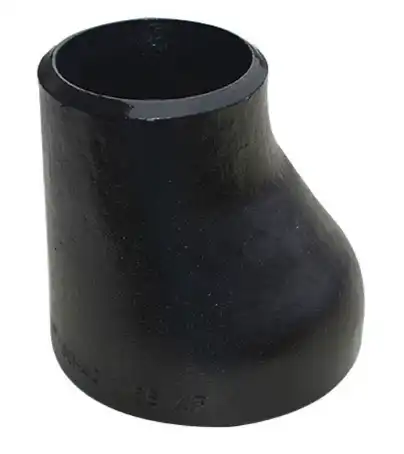
How CS Concentric Reducers Can Optimize Piping System Performance
Turbulence, pressure drops, and flow flaws make industrial pipe systems work less efficiently all the time. When properly chosen and installed, CS Concentric Reducers directly deal with these issues, leading to real operational improvements that have an effect on the bottom line.
Minimizing Turbulence and Pressure Loss
Any pipe system that has turbulent flow wastes energy. Because CS Concentric Reducers lower the diameter of a fluid slowly and smoothly, the particles in the fluid move in controlled streamlines instead of chaotic eddies. This preservation of laminar flow is very important in chemical processing, where the consistency of reactions depends on being able to predict residence times and mixing patterns. Studies in fluid dynamics show that properly designed reducer shifts can cut pressure drop by 15–20% compared to sudden changes in diameter. This directly lowers the amount of pumping energy needed over the system's lifetime.
Real-World Efficiency Gains Across Industries
CS Concentric Reducers are very important for keeping high-pressure steam distribution systems in power plants from eroding or corroding. When steam with a pressure of more than 250 bar moves through a change in diameter, any unevenness in the fitting creates high-speed impact zones that quickly wear down the pipe walls. Because these fittings are centered, this energy is spread out evenly. This makes the equipment last longer while keeping its heat efficiency. Similar benefits are reported by chemical processing plants that use vertical reactor feed lines. The concentric design stops the settling of suspended solids that would otherwise build up in the offset pockets made by eccentric fittings. This keeps production consistent and cuts down on unplanned maintenance shutdowns.
Quantifying Return on Investment
Quality CS Concentric Reducers make things more efficient in a number of different ways. Less vibration means that support structures don't break as often and pipe hangers don't need to be adjusted as often. Lower pressure drops mean that pumps don't have to be as big or that current equipment can handle more work. Maintenance teams working on water conservation projects have seen a 30–40% drop in fitting-related failures when they switch from non-standard transitions to properly specified CS Concentric Reducers that meet ASME standards. Over years of use, these practical savings add up, making the initial investment in approved fittings a clear economic win.
Comparing CS Concentric Reducers with Other Reducer Types
To choose the right type of reducer, you need to know the unique speed characteristics and use cases where each design works best. Choosing between CS Concentric Reducers and eccentric configurations or between carbon steel and stainless steel materials has a direct effect on how reliable and cost-effective the system is.
Concentric Versus Eccentric Reducer Applications
The main difference between eccentric and CS Concentric Reducers is how their centerlines are positioned. CS Concentric Reducers share a center axis, which makes a cone form that is symmetrical and perfect for vertical pipes where gravity automatically gets rid of air pockets. Eccentric reducers are designed to work with horizontal pump suction lines because they move the centerlines out of the way and keep either the top or bottom edge flat. When you use a CS Concentric Reducer for horizontal suction, it traps air at the apex, which can damage the pump and cause it to cavitate. On the other hand, eccentric reducers in vertical runs create uneven flow patterns that put different amounts of stress on pipe supports. Knowing this difference keeps you from making expensive specification mistakes that hurt the integrity of the system.
Material Considerations: Carbon Steel Versus Stainless Steel
CS Concentric Reducers have great mechanical qualities and are very cheap. This is why they are the first choice for oil, gas, and water systems that need non-corrosive parts. When paired with the right coatings or cathodic protection, the A234 WPB grade can handle temperatures from -29°C to 400°C and resist corrosion well. Stainless steel types like A403 WP304 or WP316 are needed in places that are corrosive, like chemical processes with acidic media, marine uses at sea, or food-grade installations that need to be clean. The cost of stainless steel is usually 200–300% higher than that of carbon steel. The choice comes down to the original investment and the need for rust protection over time.
Connection Methods and Technical Compatibility
Buttweld connections are the most common way for CS Concentric Reducers to be used in industry because they are strong and can handle pressure. Butt-weld fittings match the strength of the parent pipe when they are done right, while threaded joints can only work with smaller sizes and lower pressures. As required by ASME B16.25, the standard 37.5° ±2.5° bevel angle with a 1/16" root face ensures consistent weld penetration across manufacturers. For wall thicknesses greater than 22mm, compound bevels are needed to facilitate complete fusion. This standardization lets procurement teams source fittings from multiple certified suppliers while maintaining interchangeability—an important factor to consider for large-scale projects that need thousands of fittings. At Oudi, our 16,000-ton annual production capacity supports both standard catalog items and custom specifications, with welding bevels made to meet the exact needs of each project.
Installation, Maintenance, and Longevity of CS Concentric Reducers
The working life of CS Concentric Reducers depends a lot on how they are installed and how often they are serviced. Even high-quality fittings break early if installation shortcuts damage the weld or if maintenance teams don't notice early signs of wear.
Installation Procedures for Optimal Performance
Fit-up preparation is the first step to a successful buttweld installation. The CS Concentric Reducer's beveled ends must line up with the pipe's bevels so that there are no gaps bigger than 1/16", and the centerline alignment should keep the concentricity within a certain range. Welders should follow qualified welding procedure specifications that match the base material and wall thickness. This usually means making more than one pass and controlling the temperature between passes. To keep carbon steel A234 WPB reducers from hydrogen cracking, they may need to be heated up to 150–200°C before use in cold environments or with thick-walled pipes. In many pressure vessel codes, post-weld heat treatment is required. This gets rid of any leftover loads that could cause fatigue cracks when the vessel is loaded and unloaded over and over again.
Maintenance Best Practices and Inspection Routines
When you do regular inspections, you should focus on the places that are most likely to break down. Visual checks on the outside find places where the coating is breaking down or where rust is starting, while ultrasonic thickness readings track interior erosion in high-speed service. Pay extra attention to the areas where the heat from the welding changes the material's properties and could cause weak spots. When using steam, workers should keep an eye out for erosion-corrosion patterns that show turbulent flow, which is usually a sign of problems further up the line rather than problems with the CS Concentric Reducer itself. Critical plumbing in chemical processing plants is usually inspected every six months, but more often when the service conditions are toxic.
Extending Service Life Through Protective Measures
It is still the main problem with carbon steel that it can rust in wet or chemically harsh conditions. When chosen correctly for the working conditions, protective coatings like simple paint systems or specialized fusion-bonded epoxy can make things last a lot longer. Rubber or PTFE linings on the inside can work well in some chemical situations, but they do reduce the effective diameter, which needs to be taken into account when hydraulic calculations are made. Cathodic protection systems work well with buried or submerged pipes that have CS Concentric Reducers inside them. They stop electrochemical corrosion and work with coating systems. Because of these safety measures and the fact that the base material is strong, these fittings can last for decades and be used in a wide range of industry settings.
Procurement Considerations for CS Concentric Reducers
When buying pipe fittings strategically, you have to weigh the needs of the project right now against the stability of the supply chain in the long run. Choosing the right supplier and being clear about the specifications during the buying phase can make the difference between a successful installation of CS Concentric Reducers and one that runs into costly delays.
Selecting Certified Suppliers and Manufacturers
Quality certifications are the basis for judging a supplier. ISO 9001 recognition shows that a company is dedicated to consistent quality management, and special equipment manufacturing licenses make sure that pressure-retaining parts meet all legal requirements. Since our company was founded in 1998, Oudi has had ISO 9001:2000 recognition. This is backed up by our extensive in-house testing capabilities, which means we don't need third-party approval for regular quality checks. Our location in Mengcun Hui Autonomous County, which is known as the "fitting capital" of China, gives us access to skilled workers and supply chains that have been improved over many years. Buyers should make sure that producers keep records of where the materials came from and how they were made, with mill test reports that can be linked to specific heat numbers for each CS Concentric Reducer that is shipped.
Bulk Ordering Strategies and Customization Options
Using consolidated buying methods is very helpful for big tasks. Ordering full fitting packages from a single company that makes a wide range of products simplifies transportation, cuts down on administrative costs, and can often lead to better pricing when you buy in bulk. Oudi sells all kinds of fittings made of carbon steel, stainless steel, and alloy steel. These include bends, flanges, tees, caps, and CS Concentric Reducers in all the standard sizes and schedules. Because of this, tech teams only have to deal with one source instead of having to coordinate with several suppliers whose lead times and quality standards are different.
Logistics, Lead Times, and After-Sales Support
Production plans, shipping methods, and customs clearance processes must all be carefully coordinated in order for global supply chains to work. We are only 120 kilometers from Tianjin Port, which makes it easy to load containers quickly and get competitive ocean freight rates for shipments of CS Concentric Reducers to North America, Europe, and other important markets. Standard catalog items usually have lead times of 20 to 30 days from when the order is confirmed to when the goods leave the port. Custom specifications, on the other hand, can take up to 50 days, depending on how complicated they are and how busy the production line is. Support after the sale is what sets good sellers apart from real partners. Technical advice during installation, help with paperwork to make sure pressure vessel codes are followed, and quick attention to any quality issues all build the trust that is needed for long-term relationships.
Conclusion
In many important industry settings, CS Concentric Reducers are more than just simple transition fittings. They are engineered parts that have a direct effect on system efficiency, running costs, and equipment life. The balanced design keeps the flow steady in vertical pipes, the standard production process makes sure that the sizes are always the same, and the carbon steel material is the best mix of strength and cost-effectiveness. By buying from certified companies like Oudi and installing and maintaining things the right way, you can get the most out of these natural benefits while keeping lifecycle costs as low as possible. When building new facilities or improving old ones in the oil and gas, chemical processing, power generation, or water systems, the choices you make about specs for parts that seem simple can have a big impact on how well they work. There is strong evidence that buying high-quality fittings that are made to international standards pays off in the form of lower energy costs, fewer maintenance tasks, and a longer system's useful life.
FAQ
What determines whether I should specify a concentric or eccentric reducer?
Pipe orientation drives this choice. CS Concentric Reducers work best for vertical runs because their symmetrical design keeps the flow balanced and doesn't cause any problems with structural loading. Eccentric reducers are only used in horizontal pump suction lines because their flat-top design stops air pockets from forming, which can damage the pump through cavitation. If you use these parts incorrectly, they won't work right. For example, a concentric in horizontal suction traps air, and an eccentric in vertical causes uneven support loads.
How does pressure rating work for butt-welded concentric reducers?
Buttweld fittings get their pressure rating from matching the parent pipe's schedule and material grade, while flanged fittings have clear pressure class ratings (150#, 300#, etc.). A Schedule 40 CS Concentric Reducer can handle the same amount of pressure inside as a Schedule 40 seamless pipe made of the same material. This method gives designers more freedom, but engineers have to make sure that the wall thickness is right for the conditions of use.
Can carbon steel concentric reducers handle high-temperature steam service?
When properly designed and installed, A234 WPB CS Concentric Reducers can still be used in steam work up to about 400°C. For supercritical power plants to work above this level, they need alloy steel types like A234 WP11 or WP22 that stay strong at high temperatures. When high-pressure steam is used, the concentric geometry is very important because uneven flow would speed up erosion and corrosion and drastically shorten the service life.
Partner with Oudi for Your Carbon Steel Concentric Reducer Supply Needs
When your project needs dependable CS Concentric Reducer suppliers with a global reach and a history of making products, Oudi has what industrial customers need: quality, capacity, and service. Our ISO 9001:2000-certified factory in China's fitting manufacturing hub makes 16,000 tons of pipe fittings every year out of carbon steel, stainless steel, alloy steel, and steel that meet ANSI, JIS, DIN, and BS standards. Full-dimensional inspection and nondestructive examination are supported by a wide range of in-house testing tools, which make sure that every package meets the requirements set by the specifications. The Oudi advantage goes beyond being able to make things. During the whole procurement process, our technical team helps you choose materials, review specifications, and figure out how to use them. Because we are close to Tianjin Port, we can offer competitive logistics to North America, Europe, Africa, Southeast Asia, and the Middle East. Since 1998, we've served over 300 customers in over 40 countries in these markets. Our production capacity is flexible enough to handle both catalog orders and custom specifications, whether you're an EPC contractor in charge of big building projects, an industrial end-user planning maintenance shutdowns, or a distributor building inventory for customers in your area. Contact our team at oudi-04@oudiguandao.com to talk about your unique CS Concentric Reducer requirements. We will give you thorough technical specifications, material certifications, prices that are based on the amount you need, and delivery times that work with your project plan. We have decades of experience helping industrial customers improve the efficiency and dependability of their piping systems.
References
1. American Society of Mechanical Engineers. (2018). ASME B16.9: Factory-Made Wrought Butt-Welding Fittings. New York: ASME Press.
2. Nayyar, M. L. (2019). Piping Handbook (8th ed.). New York: McGraw-Hill Education.
3. Chuse, R., & Eber, S. M. (2017). Pressure Vessels: The ASME Code Simplified (9th ed.). New York: McGraw-Hill Education.
4. Mohitpour, M., Golshan, H., & Murray, A. (2007). Pipeline Design & Construction: A Practical Approach (3rd ed.). New York: ASME Press.
5. Singh, R. K., & Solanki, V. S. (2020). Material Selection and Performance Analysis of Pipe Fittings in High-Pressure Applications. Journal of Pressure Vessel Technology, 142(4), 041503.
6. International Organization for Standardization. (2015). ISO 9001:2015 Quality Management Systems—Requirements. Geneva: ISO Publications.

Need help finding the right solution with our experts. Please contact us.

SINCE 1998 Your Reliable Pipeline Manufacturer



