How Does Concentric Reducer Carbon Steel Improve Flow?
Concentric Reducer Carbon Steel improves flow by maintaining a symmetrical transition between pipe diameters, reducing turbulence and pressure loss within the system. Its cone-shaped design aligns both pipe ends along a common centerline, allowing fluids to accelerate or decelerate smoothly in vertical applications. This geometry prevents flow separation and minimizes the coefficient of friction, crucial for maintaining hydraulic stability in high-pressure environments. The robust mechanical properties of carbon steel—combined with precise manufacturing tolerances under ASTM A234 WPB standards—ensure that these fittings withstand operational stresses while preserving flow continuity, making them indispensable in oil, chemical, and natural gas industries.
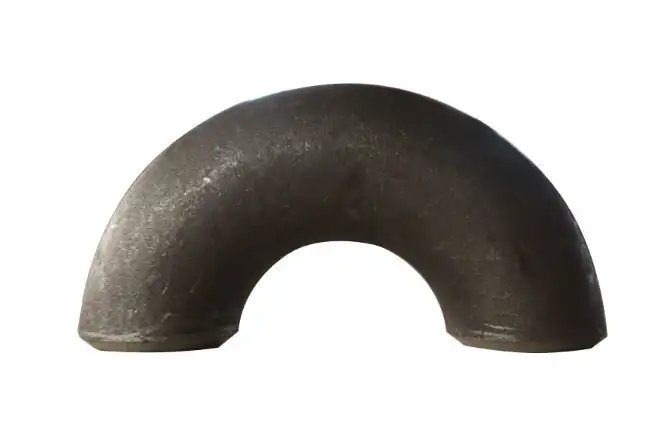
How Concentric Reducer Carbon Steel Optimizes Flow Performance
The shape of Concentric Reducer Carbon Steels has a direct effect on how well hydraulics work. This is a relationship that has been measured using computational fluid dynamics and proven in many industrial settings.
Minimizing Turbulence and Pressure Loss
When fluid flows through a sudden change in diameter, the boundary layers separate. This makes eddies that lose energy as heat and noise. This problem can be fixed by a properly designed Concentric Reducer Carbon Steel, which has slow taper angles (usually between 15° and 30°) that keep the flow connected to the wall. When compared to sudden contractions, this controlled transition lowers the loss coefficient (K-factor) by up to 60%. This means that systems that run all the time use less energy. In vertical pump discharge lines, concentric reducers control the speed rise as fluid enters a smaller pipe. Changing from 8-inch to 4-inch pipes quadruples the speed of the flow because speed rises proportionally to the square of the width ratio. If you don't have a smooth reducer, this speeding up causes shock loads and vibrations that damage pipe supports and stress weld joints. Because a concentric fitting has a symmetrical flow path, these forces are spread out evenly, which keeps the system stable.
Material Strength Supporting Hydraulic Demands
Tensile strength of carbon steel, which can be anywhere from 60,000 to 85,000 psi based on grade, is what makes it strong enough for high-pressure work. The substance doesn't change shape when there are surge conditions, which are short-lived pressure spikes that happen when a valve opens or a pump starts up. This toughness is especially useful in natural gas transmission systems, where sudden changes in flow can cause water hammer effects that are 300% higher than standard working pressures. Even though carbon steel doesn't fight corrosion as well as stainless steel, it's good enough for many uses as long as it's kept safe. In slightly corrosive places, epoxy coats, hot-dip galvanizing, or cathodic protection systems can make things last longer. We've sold carbon steel reducers to water conservation projects all over Southeast Asia. The protective coatings on these reducers allowed them to last 20 years in brackish water systems, which shows how important it is to choose the right material and treat the surface properly.
Concentric vs. Eccentric: Choosing the Right Profile
Whether to use a concentric or an eccentric reducer depends on the direction of the flow and the needs of the system. Concentric fittings work best in vertical runs because centerline alignment makes supporting the structure easier and takes away any worries about air getting trapped or material building up. Because the pressure is the same all around the circumference, there are no bending moments that would require stronger pipe hangers.On the other hand, eccentric reducers with the flat side facing upward are needed for horizontal pump flow lines. This keeps air pockets from forming that can damage the impeller and cause cavitation. In this case, using the wrong concentric reducer creates a vapor trap at the crown, which causes the pump to fail. This is an expensive lesson that many industries have learned the hard way. Knowing these application-specific needs is what separates good engineering from mistakes that cost a lot of money.
Real-World Performance Validation
A Louisiana petrochemical plant saw a 12% drop in pumping energy after changing incorrect reducers with concentric fittings that met the right specifications in their vertical crude transfer system. The better flow profile got rid of recirculation zones that were using extra power. This shows that optimizing parts can lead to system-wide efficiency gains. In the same way, a power plant's boiler feedwater system had constant shaking problems that were linked to rough flow through homemade reduction sections. Adding ASME B16.9 Concentric Reducer Carbon Steel to the pump got rid of the shaking and increased the seal's life from 8 months to 36 months. These examples show how choosing engineered parts over field-fabricated ones can give you a real return on your investment.
Manufacturing and Quality Control in Carbon Steel Concentric Reducers
The way these Concentric Reducer Carbon Steels are made has a big impact on how well they work and how reliable they are.
Seamless vs. Welded Construction
When hot-pressed or rotary-swaged, seamless reducers are made that are stronger and smoother than other types. Because there are no horizontal welds, there are no weak spots where corrosion or cracks could start. This makes seamless the best choice for uses that use sour gas or have a lot of cycles. The fitting's continuous grain structure makes it better able to handle outside loads evenly. This is especially important for sites that are out at sea and are affected by wave-induced shaking. For larger diameters (usually over 24 inches), where seamless manufacturing is too expensive, welded reducers are a cheaper alternative. These are made by rolling and welding plate segments together. Modern submerged arc welding methods make joints that are very close to the mechanical properties of base metal, especially when heat treatment is done after the welding process. Weld inspection protocols that are very strict are the key. Radiographic testing, ultrasonic examination, and magnetic particle inspection all make sure that the weld is solid before the fitting is put into service. We keep both seamless mandrel presses for sizes up to 16 inches and automated welding stations for bigger diameters at our plant in Cangzhou. Because we can do two things, we can suggest the best way to make something based on what the application needs, instead of how much can be made. This gives us the freedom to meet the needs of our clients in the oil, chemical, and water conservation sectors.
Quality Assurance Protocols That Deliver Reliability
Dimensional accuracy has a direct effect on how easy it is to install and how well it works in the long term. Critical dimensions like end diameters, concentricity, and face-to-face length are checked by our three-coordinate measuring machines against ASME B16.9 tolerances, which are measured in thousandths of an inch. If the reducer doesn't meet these standards, it could leak, get out of alignment while being welded, or make stress risers that cause cracks to spread during cyclic loading. Using optical emission spectrometry to check the material makes sure that the grade-specified amount of carbon, manganese, and minor elements is present. This step stops mistakes in material replacement that could put steel that doesn't meet specifications in important roles. This risk is higher when getting steel from sources that haven't been checked out. Our material test reports, which can be linked to heat numbers, give you the proof you need for project quality files and legal compliance. The last level of proof is non-destructive testing. Ultrasonic thickness gaging finds internal laminations or holes, and liquid penetrant screening finds cracks on the surface that can't be seen with the human eye. Every one of our 16,000-ton-a-year production lines uses these quality gates to make sure that every reducer meets the performance standards that engineers built into their systems.
Protective Treatments Extending Service Life
The condition of the surface has a big effect on how well it resists corrosion and how it flows. Mill scale, an iron oxide layer that forms during hot forming, makes the surface rough, which raises the friction coefficient and gives corrosion places to start. This scale can be removed by shot blasting or freezing, leaving a clean surface ready for protective coats. When electrostatically applied and cured at 200°C, epoxy powder coatings act as a barrier to protect areas where chemicals are processed. These polymers don't react with acids, alkalis, or solvents that would quickly damage bare carbon steel. This means that maintenance can be put off for decades instead of years. Immersing fittings in molten zinc during hot-dip galvanizing provides sacrificial protection that is perfect for outdoor setups that are exposed to weather and industrial environments. What kind of surface treatment you choose should depend on the harmful substances and temperature levels that will be used. Our expert team regularly gives customers advice on which coating to choose by looking at case studies from over 40 countries and a wide range of industrial settings, such as the wet conditions in Southeast Asian petrochemical plants and the acidic soils in Middle Eastern pipeline corridors.
Selecting the Right Concentric Reducer Carbon Steel for Your Application
The right choice of Concentric Reducer Carbon Steel components strikes a balance between technical needs and realistic purchasing issues. This is a decision-making process that works best when it is analyzed in a planned way.
Material Grade Matching to Service Conditions
The workhorse grade for moderate temperature and pressure service is ASTM A234 WPB. It can handle most hydrocarbon, water, and steam applications within its rated envelope. But some situations need different types, like WP11 (chromium-molybdenum metal) for temperatures above 400°C or WP91 (9Cr-1Mo-V) for advanced ultra-supercritical power plant use. Hydrogen sulfide-containing sour service environments need strict hardness limits to stop sulfide stress cracking. Compliance with NACE MR0175/ISO 15156 requires a maximum hardness of 22 HRC and limits some alloying elements. These requirements must be confirmed through material test reports and hardness surveys. Standard WPB fittings should not be used in sour gas wells because they could fail catastrophically. This risk can be eliminated by choosing the right grade. Knowing the temperature, pressure, corrosivity, and erosivity of the stream helps choose the right material. For slu rry services, grades that don't wear down easily are needed, and for cryogenic services, materials that have been tested for their impact toughness at low temperatures are needed. When these things are thought about during the design phase, they keep things from breaking down in the field and putting people in danger.
Certification and Compliance Verification
Product dependability is often based on the quality of the documentation. Full material test reports (MTRs) include information on the chemical make-up, mechanical properties, heat treatment settings, and test results. This information lets engineers make sure the material is right for the job. In addition to the manufacturer's own certification, certificates from approved testing laboratories with the ASME or ISO mark provide third-party confirmation. National regulatory bodies give special equipment manufacturers licenses that show they follow pressure vessel codes and safety rules. In China, the TS certificate allows the production of pressure-bearing parts, but companies must keep up-to-date qualified welding procedures, certified welders, and inspection tools that are in good working order. When you combine this regulatory oversight with ISO 9001 quality management systems, you get multiple layers of protection for end users. When you're reviewing providers, don't just take their word for it; ask to see proof of these certifications. Traceability systems, audit reports, and inspection records show if quality promises are kept in real life. Our paperwork package includes heat-specific MTRs, dimensional inspection records, and NDT certifications—everything needed to hand over the project and get it approved by the government.
Sizing Precision Preventing Performance Issues
If you don't choose the right size reducer, you could have problems ranging from a small loss of efficiency to complete failure. The reduction plan (wall thickness) needs to be able to handle both the upstream and downstream pressures, taking into account the pressure drops that happen during the change. If the wall width is too small, it could break, and if it's too big, it will cost more and add more weight, which is especially important on ocean platforms where every kilogram affects the design of the structure. Flow behavior is affected by the reduction ratio, which is the difference in diameter between the large and small ends. Gradual transitions reduce turbulence, but reducers that are too long take up valuable space in pipe racks that are already full. Standardized lengths in ASME B16.9 keep these rival factors in check, giving businesses reliable geometries that have been tested and proven to work. During design, you should pay attention to how the bevel is prepared. Standard bevels of 37.5° work for most welding tasks and pipe diameters below 22mm. For thicker walls, compound bevels may be needed to make sure that the weld goes all the way through, stopping any incomplete fusion defects that cause cracks to spread. By working out these details with your welding provider during the planning phase, you can avoid making changes in the field that hurt quality and cause delays.
Supplier Credibility Assessment
The connection with the seller goes beyond the initial buy and includes technical help, on-time delivery, and service after the sale. Manufacturers that have been in business for decades show that they are stable and committed to their markets, unlike trading companies that pop up and disappear when problems arise. When planning big projects or keeping inventory for ongoing operations, production capacity is important. With various production lines and an annual capacity of 16,000 tons, we can handle large orders without affecting shipping times for current customers. This scale also makes prices competitive by making it easier to get materials and improve production. Logistics costs and lead times are affected by how close a location is to major shipping routes. Our site is 120 kilometers from Tianjin Port and has direct highway access. It serves global markets well and keeps freight rates low. When combined with experienced export documentation teams, this logistical advantage speeds up customs clearance and lowers the landed cost to your facility. These benefits add up when you buy in bulk.
Purchasing and Logistics: Streamlining Procurement of Concentric Reducer Carbon Steel
Controlling costs while also ensuring quality and on-time delivery is important for effective Concentric Reducer Carbon Steel procurement, which requires smart relationships with suppliers.
Navigating B2B Sourcing Channels
Direct relationships with manufacturers are better than networks of distributors because you don't have to pay markups to middlemen, you can get technical help, and you can make changes to fit non-standard requirements. By working directly with production facilities, you can check the quality systems, inspect the manufacturing processes, and set up chains of accountability. This level of openness is not possible with middlemen. Online business-to-business (B2B) sites have made foreign sourcing more accessible by letting buyers compare prices, certifications, and product details from different sellers. But these marketplaces are very different in how strict they are about verifying vendors. Put platforms that need certification uploads, factory audits, and ongoing dispute resolution mechanisms at the top of the list. These safety measures lower the chance of buying from sellers you don't know. Even when you're using an online site, direct interaction is still useful. Claims made in product listings are backed up by video tours of factories, testing of samples, and checks of references. Serving more than 300 customers in 40 countries shows how committed we are to being open and honest. We welcome facility inspections and are happy to give you client references from Europe, the Americas, Africa, and Asia.
Economic Advantages of Bulk and Custom Orders
Buying in bulk lets you take advantage of economies of scale in getting materials, setting up production, and moving goods around. When you buy by the container load, the cost per unit is 15–25% less than when you buy in small lots. These savings add up over the course of large projects or yearly supply agreements. We help our clients find the best order quantities by balancing the costs of keeping inventory with price cuts per unit. Custom specs, such as non-standard diameters, wall thicknesses, or different materials, meet particular application needs that stock items can't meet. Customization may add two to three weeks to the lead time, but the efficiency benefits usually make it worth it. A reducer that is perfectly matched to your system gets rid of field changes and possible weak spots, which lowers lifetime costs even though it costs more at first.
Understanding Pricing Variables and Lead Times
The price of a reducer is affected by more than just the cost of the raw materials. The way something is made—seamless vs. welded—affects the price. For sizes where both options are available, seamless construction costs 20–30% more. Depending on the type of coating and how thick it is, surface treatments can add 5 to 15%. These variables make it possible to change the specs to fit a tight budget when the performance needs allow it. Lead times depend on the size of the order, how customized it is, and how deep the production queue is. Stock items in common sizes usually ship within 3–5 days. Custom orders, on the other hand, take 3–4 weeks from the time the order is confirmed until they are sent out by the factory. Depending on the destination and the type of freight (ocean vs. air), international shipping can take an extra two to six weeks. When you plan your purchases around the key paths of a project, you can avoid expensive processing fees and schedule changes. Because we are close to Tianjin Port, we can combine containers and ship them once a week to major ports around the world. This framework for logistics, along with experienced freight forwarders who handle paperwork, customs bonds, and delivery coordination, makes international buying easier for all clients, even those who have never imported before.
After-Sales Support Ensuring Long-Term Success
Full support includes more than just delivering the goods; it also includes startup help, troubleshooting, and guarantee coverage. During building, technical questions like the right way to weld, check the dimensions, or fix a finish come up. These problems are quickly fixed by responsive engineering support, which avoids costly mistakes or extra work in the field. Warranty terms show that the company that made the product is confident in its quality. Our normal guarantee covers flaws in the materials and the way they were made for 18 months after shipment or 12 months after installation, whichever comes first. This coverage, backed by our 25-year history of business, gives you options in the unlikely event that we fail too soon. Traceability and documented quality systems make it easy to quickly look into and fix problems when they happen. When you work with suppliers who care about your success as much as you do, you'll have ties that go beyond individual deals. Engaged suppliers become extensions of your team when you need urgent replacement items, technical advice on new applications, or planning for production capacity for projects that will last for years. We make this happen by communicating clearly and committing to client goals.
Conclusion
Concentric Reducer Carbon Steels are precision-engineered solutions to the basic problem of changing the diameter of pipes. Their cone-shaped shape, consistent sizes, and strong material properties work together to reduce turbulent flow, lower pressure losses, and keep the structure's integrity in tough industrial settings. Knowing the technical details, like the difference between seamless and bonded construction, choosing the right material grade, and making sure the right size is used for the job, helps procurement workers choose parts that work best right away and last a long time. The decision-making process includes more than just technical details. It also includes checking the credibility of the supplier, making sure the certification is correct, and coordinating logistics. If a part fails in your industry, it can lead to safety issues and production delays. To protect your investment and keep your business running, choose makers with a history of quality systems and global service capabilities.
FAQ
When Should I Use a Concentric Reducer Instead of an Eccentric Reducer?
Concentric Reducer Carbon Steels work best with vertical pipe setups because they make it easier to support the structure and make sure that the flow is spread out evenly. The shape keeps the pipe hangers from bending and stops the buildup of air pockets or sediment that can happen in horizontal orientations. On the other hand, eccentric reducers are used in horizontal pump pressure lines (flat side up to avoid cavitation) and gravity drain systems (flat bottom up for easy liquid removal). When concentric reducers are used incorrectly in horizontal pump suctions, they create vapor traps at the fitting crown. This damages the impeller and causes the pump to fail early. Knowing these differences between applications helps keep expensive business problems from happening.
Does Carbon Steel Require Special Heat Treatment After Forming?
ASTM A234 requires heat treatment after shaping to recover qualities that were changed during shaping. Reducers that were made at high temperatures or by working them cold must go through either a normalizing heat treatment (heating above 900°C and then cooling in air) or a stress-relief heat treatment (minimum 595°C hold) to smooth out the grain structure and make them more flexible again. This method gets rid of any remaining stresses that might cause distortion during welding or service, which is especially important for parts with thicker walls. Check that the material test results list the temperature, hold time, and cooling rate that were used for the heat treatment. This will show that the reducer meets more than just the dimensional requirements of the standard.
What Documentation Should I Request When Purchasing?
Full material test reports (MTRs) include information about the chemical makeup, tensile strength, impact resistance, and heat treatment records that can be linked to specific heat numbers. Dimensional inspection reports make sure that critical dimensions like end diameters, concentricity tolerance, and face-to-face length are in line with ASME B16.9. Ultrasonic, radiographic, or magnetic particle certificates, depending on the application, confirm that the inside is sound. Systematic quality management is shown by ISO 9001 certificates and licensing to make certain kinds of tools. This set of documents helps with project quality files, governmental submissions, and being able to find problems in the future if they happen.
Partner with a Trusted Concentric Reducer Carbon Steel Manufacturer
Industrial pipe fitting buying is hard to understand, so you need a provider with technical know-how, the ability to make things, and a strong commitment to quality. Oudi has been making fittings out of carbon steel, stainless steel, and alloys that meet ANSI, JIS, DIN, and BS standards since 1998. They are used by the oil, chemical, natural gas, and water conservation industries around the world. Our quality system is ISO 9001-certified, and we have special equipment manufacturing licenses. This means that before being sent to your facility, every Concentric Reducer Carbon Steel goes through a thorough inspection, which includes checking the raw materials and finding flaws using ultrasonic technology. We serve customers quickly and easily from Europe, the Americas, Africa, Southeast Asia, and the Middle East. We are in Cangzhou's specialized fitting manufacturing zone, which has direct access to Tianjin Port. For the best component selection, our engineering team offers technical advice, whether you need standard sizes for immediate delivery or custom specifications for a specific application. Get in touch with us to talk about your project needs and find out why over 300 customers in 40 countries trust Oudi to provide them with important pipe parts. You can email our team at oudi-04@oudiguandao.com to get quotes, technical details, or to set up a building audit. The performance and dependability of your system depend on the quality of its parts.
References
1. American Society of Mechanical Engineers. (2018). ASME B16.9: Factory-Made Wrought Buttwelding Fittings. New York: ASME Press.
2. ASTM International. (2020). ASTM A234/A234M: Standard Specification for Piping Fittings of Wrought Carbon Steel and Alloy Steel for Moderate and High Temperature Service. West Conshohocken: ASTM International.
3. Nayyar, M. L. (2019). Piping Handbook (8th ed.). New York: McGraw-Hill Education.
4. Singh, R. K., & Sharma, A. (2017). Flow Characteristics Through Pipe Reducers: A Computational Fluid Dynamics Analysis. Journal of Pressure Vessel Technology, 139(4), 041301.
5. Mohitpour, M., Golshan, H., & Murray, A. (2007). Pipeline Design & Construction: A Practical Approach (3rd ed.). New York: American Society of Mechanical Engineers.
6. National Association of Corrosion Engineers. (2015). NACE MR0175/ISO 15156: Petroleum and Natural Gas Industries—Materials for Use in H2S-Containing Environments in Oil and Gas Production. Houston: NACE International.

Need help finding the right solution with our experts. Please contact us.

SINCE 1998 Your Reliable Pipeline Manufacturer



