Can a Custom carbon steel elbow Reduce Piping Installation Costs?
Yes, a bespoke Custom carbon steel elbow may really cut pipe installation costs, and the benefits are more quantifiable than many purchasing teams believe. Sizing and fabricating elbows to your specific pipe dimensions, bend angle, and pressure requirements reduces field rework, waste materials, and labor hours. We have delivered bespoke carbon steel elbows to customers in the oil, chemical, and gas sectors in over 40 countries at Oudi. One of the main reasons why engineers select custom fittings over off-the-shelf fittings is to save costs.
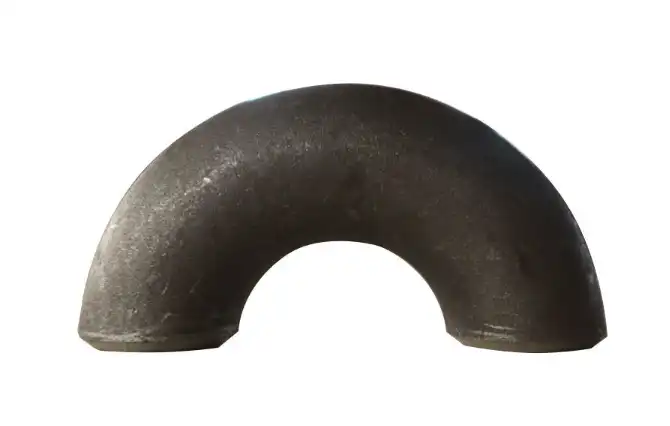
Understanding Custom Carbon Steel Elbows and Their Role in Piping Systems
What Defines a Custom Carbon Steel Elbow?
A custom carbon steel elbow is a pipe fitting fabricated to precise dimensions, angles, wall thicknesses, or material grades not covered by regular catalog products. These are not generic parts from the warehouse shelf. They are made to fit the precise pipe arrangement of a project, whether that involves a non-standard bend radius, a particular wall schedule, or an angle other than the conventional 45° or 90°.
Manufacturing Methods and Material Grades
Carbon steel elbows are made via hot pressing, hot forging, or cold shaping. Seamless elbows are used in oil refining and gas transmission lines. Seamless elbows are better in pressure resistance. Welded elbows are economical for low-pressure systems. Typical material grades include ASTM A234 WPB for general-purpose applications and A420 WPL6 for low-temperature use. Oudi manufactures seamless and straight-seam elbows according to American (ANSI), Japanese (JIS), German (DIN), and British (BS) specifications.
Standards Compliance and Certification
In heavy industry, international standards are not a luxury. They are a basic need. Custom elbows should adhere to ASME B16.9 for butt weld fittings or ASME B16.11 for socket weld and threaded types. Oudi has won the ISO 9001:2000 quality management system certification and Special Equipment Manufacturing License issued by the People's Republic of China, and has set up a complete inspection system from raw material input to completed product export.
How Custom Carbon Steel Elbows Can Lower Installation Costs
Fewer On-Site Modifications Mean Less Labor
When a pipe elbow arrives pre-fabricated to the correct bend radius and end-to-end dimensions, installation crews don't need to cut, grind, or adjust fittings in the field. According to industry data, field modifications on piping components can account for 15–25% of total installation labor costs on industrial projects. Eliminating that rework step alone reduces job site hours significantly.
Reduced Material Waste and Better Budget Control
Standard custom carbon steel elbows often require additional reducers or transition fittings to bridge dimensional gaps. A custom-dimensioned elbow eliminates these bridge components entirely. Here are the main cost-saving areas where precise fabrication makes a difference:
- Fewer supplementary fittings: Accurate sizing means you don't purchase additional reducers or adapters to compensate for dimensional mismatches.
- Lower scrap rates: Custom fabrication targets exact wall thickness and bend geometry, reducing off-cuts and rejected material.
- Simplified welding: Matched pipe ends reduce weld preparation time and the risk of joint defects that require costly repairs.
These efficiencies compound across large projects — especially in refinery, chemical plant, or water conservancy construction where hundreds of elbows may be required.
Long-Term Savings Through Durability
Forged and seamless carbon steel elbows offer longer service life under cyclic pressure and temperature changes. Fewer replacements over a system's lifespan translate directly into lower maintenance budgets. A correctly specified elbow — right material grade, right wall thickness — performs reliably for decades in demanding environments like natural gas pipelines or boiler systems.
Comparison of Custom Carbon Steel Elbows With Other Elbow Types
Carbon Steel vs. Stainless Steel Elbows
Stainless steel elbows are better suited for corrosion resistance in severe chemical conditions, but are much more expensive, generally 3 to 5 times more than carbon steel. Carbon steel elbows provide similar performance at a fraction of the cost in oil and gas systems when internal corrosion is controlled by flow chemistry or coatings.
Forged vs. Welded Elbows
Forged elbows provide greater grain structure integrity under stress and higher pressure ratings. They are highly suited for high-pressure steam lines and important oil transfer systems. Welded elbows are cheaper in unit cost and are suitable for water and chemical lines of lower pressure. Choosing the appropriate type for the application avoids over-engineering and minimizes procurement expense.
Custom vs. Standard Elbows: When Each Makes Sense
Standard elbows perform effectively with typical pipe schedules and simple system architectures. Custom carbon steel elbows are the option when pipe diameters are not in the standard catalogs, when bend radii are specified by engineering drawings, or when a project needs non-standard angles. Minimum quantities and lead times vary. Stock goods are quicker to ship, while bespoke orders from an experienced manufacturer like Oudi usually take 15 to 30 days depending on complexity and volume.
Procurement Considerations for Custom Carbon Steel Elbows
Choosing a Qualified Manufacturer
The first checkpoint is certification. Any supplier for carbon steel pipe fittings should hold ISO 9001 certification and, for pressure-bearing components, a valid special equipment manufacturing license. Beyond documentation, look for manufacturers with a proven export track record. Oudi has served over 300 customers across more than 40 countries since 1998, supplying clients in oil, chemical, construction, shipbuilding, and electric power industries.
Pricing, MOQ, and Lead Time Planning
Custom fabrication carries a different pricing structure than standard stock. Request itemized quotes that break down material, processing, and inspection costs. Minimum order quantities (MOQ) vary by size and grade — clarify these before committing to a project timeline. For international procurement, factor in shipping lead time and port handling. Oudi's annual production capacity of 16,000 tons supports consistent order fulfillment even for large-volume projects.
Submitting Accurate Specifications
Nothing delays a custom order more than incomplete drawings. Before approaching a supplier, prepare the following:
- Pipe size (NPS or DN) and schedule
- Material grade and applicable standard (ASTM, ANSI, DIN, JIS)
- Bend angle and radius (short radius or long radius)
- End finish type (butt weld, socket weld, threaded)
- Pressure class and operating temperature range
Providing complete specifications upfront reduces back-and-forth communication and accelerates production scheduling.
Installation Best Practices and Technical Guidelines
Handling and Pre-Installation Checks
Carbon steel elbows should be kept above bare ground and protected from moisture until installation. Check the part marking against your specification sheet — NPS size, schedule, material grade, and heat number. Confirm the bend radius is per the system design prior to any fit-up.
Welding Procedures and Safety Compliance
Butt-weld elbows must be connected by certified welding processes in accordance with ASME Section IX or appropriate project code. Check for damage on bevel ends before fit-up. Maintain the root spacing and alignment to avoid stress concentrations at the weld junction. Depending on the grade of material and wall thickness, post-weld heat treatment (PWHT) may be necessary.
Avoiding Common Installation Errors
Premature elbow failure is often caused by mechanical stress from forced alignment. If a fitting does not fit naturally into the pipe next to it, do not force the junction, but review the isometric design. Corrosion protection coatings, as specified in the project specification, should be applied to the outside surface of buried or insulated systems to prevent environmental damage.
Conclusion
Properly selected bespoke custom carbon steel elbows save installation costs by reducing field labor, removing unneeded fittings, and providing durability that reduces long-term maintenance expense. The savings are genuine and substantial, especially for major industrial projects where pipe is a considerable portion of the entire construction cost. The difference between an inexpensive purchasing decision and a costly one is the choice of an experienced manufacturer with verified quality controls and a comprehensive product range. With 25+ years of manufacturing expertise, worldwide certification, and a global customer base, Oudi delivers it to every order we complete.
FAQ
1. How long does it take to receive a custom carbon steel elbow order?
Lead time depends on order volume, material grade, and fabrication complexity. For standard custom sizes, expect 15 to 30 business days from drawing confirmation. Larger orders or special alloy grades may require additional time. Oudi recommends sharing your project schedule early so production can be planned accordingly.
2. Should I choose a forged or welded elbow for my application?
Forged elbows are better suited for high-pressure, high-temperature systems such as steam lines or oil transmission pipelines. Welded elbows are appropriate for medium- and low-pressure water treatment and chemical processing lines. Forged options carry a higher unit cost but provide greater structural integrity under cyclic load.
3. Are custom carbon steel elbows suitable for high-pressure service?
Yes. Seamless carbon steel elbows in grades such as ASTM A234 WPB or A420 WPL6 are rated for high-pressure service when manufactured to ASME B16.9 standards. Wall thickness and pressure class should be specified based on your system's design pressure and temperature. Oudi's quality inspection process includes non-destructive testing to verify each fitting meets the stated pressure rating before shipment.
Get Your Custom Carbon Steel Elbow Quote From Oudi Today
Oudi has manufactured carbon steel pipe fittings since 1998, with a 16,000-ton annual production capacity, ISO 9001 certification, and export experience across 40+ countries. Whether you need a custom carbon steel elbow supplier for an oil refinery, a chemical plant, or a water conservancy project, our team is ready to review your specifications and provide competitive bulk pricing. Contact us at oudi-04@oudiguandao.com to request a quote today.
References
1. ASME B16.9 — Factory-Made Wrought Buttwelding Fittings, American Society of Mechanical Engineers, 2018.
2. ASTM A234/A234M — Standard Specification for Piping Fittings of Wrought Carbon Steel and Alloy Steel for Moderate and High Temperature Service, ASTM International, 2022.
3. Nayyar, M.L. — Piping Handbook, 7th Edition, McGraw-Hill, 2000.
4. Pipe Fabrication Institute Standard ES-7: Minimum Length and Spacing for Welded Nozzles, Pipe Fabrication Institute, 2020.
5. ASME B31.3 — Process Piping Code, American Society of Mechanical Engineers, 2022.
6. Frankel, M. — Facility Piping Systems Handbook, 3rd Edition, McGraw-Hill, 2010.

Need help finding the right solution with our experts. Please contact us.

SINCE 1998 Your Reliable Pipeline Manufacturer



