Why Buy BW Carbon Steel Caps from a Qualified Supplier?
One of the easiest choices a procurement manager can make is to buy a BW Carbon Steel Cap from a verified, certified provider. These butt-weld pipe end caps are not cosmetic components; they terminate live pipes under real pressure and genuine operational conditions. One bad cap may cause a leak, a stoppage, or worse. Oudi has been manufacturing pipe fittings since 1998. We’ve supplied over 300 clients in more than 40 countries. We know what good sourcing looks like in practice.
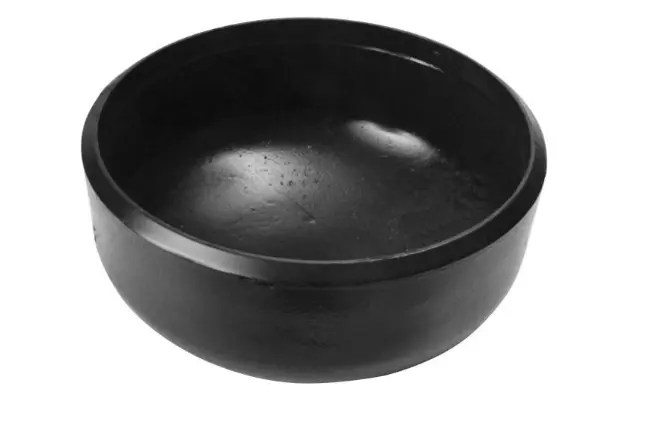
Understanding BW Carbon Steel Caps and Their Specifications
What a Butt-Weld Cap Actually Does
A butt-weld cap is a device to shut the open end of a pipe by welding directly onto the pipe to create a permanent, pressure-tight seal. It shares the same functional region with threaded plugs and blind flanges, but the welded union offers better sealing integrity, which makes it the preferred option for high-pressure and high-temperature systems in oil, gas, and chemical processing.
Key Material Grades
ASTM A234 WPB is the most specified grade for carbon steel butt-weld caps. This grade includes both seamless and welded fittings for service at moderate and elevated temperatures. ASTM A420 WPL6 is the standard for low-temperature conditions. ASTM A234 WP11 and WP22 are chromium-molybdenum grades used when a chromium-molybdenum concentration is desired for better heat resistance.
Governing Dimensional Standards
No option for dimensional conformity. ASME B16.9 covers factory-made wrought butt-welding fittings. ASME B16.9 also covers wall thickness and outer diameter tolerances and end preparation. Sizes from DN 15 (½ inch) up to DN 1200 (48 inches). Wall thickness schedules from SCH 10 to XXS. Every fitting leaving our factory at Oudi is inspected to these criteria by our in-house quality team.
Comparing BW Carbon Steel Caps with Alternative Pipe End Caps
Butt-Weld vs. Threaded Caps
Threaded caps screw onto the male ends of threaded pipe. They're good for low-pressure, non-critical utility lines. BW caps, conversely, create a metallurgical link or a fusion with the pipe wall. This bond can tolerate much greater pressure ratings and offers a far more reliable seal in process pipework where leaking is not acceptable.
Carbon Steel vs. Stainless Steel Caps
Stainless steel caps provide superior corrosion resistance and are the appropriate choice for harsh chemical media or hygienic applications. Carbon steel caps are more cost-effective per unit, simpler to weld in the field, and proven in most oil, gas, water, and general-purpose applications. In almost every instance when buying in volume, carbon steel provides the optimal combination of mechanical performance and cost.
Carbon Steel vs. Alloy Steel Caps
Alloy BW Carbon Steel Caps like WP9 or WP91 grades are used for high-temperature service over 400 °C, such as boiler headers and power plant steam lines. When the working temperatures are in the range of typical process temperatures, and the application does not justify the alloy premium, carbon steel grades are the practical default.
Benefits of Purchasing BW Carbon Steel Caps from Qualified Suppliers
It’s not only about papers when working with a recognized manufacturer. The tangible operational gains are genuine and quantifiable. Core advantages that procurement teams always appreciate:
- Quality management certification: Oudi has been certified with the ISO 9001:2000 quality system and has obtained the Special Equipment Manufacturing License of the People's Republic of China. Each manufacturing batch is 100% inspected from the raw material input to completed product shipment, including non-destructive fault identification.
- Traceability and documentation: Qualified suppliers provide mill test results, material certifications, and inspection records to fulfill your project compliance needs under ANSI, DIN, JIS, and BS standards.
- Production scale and delivery dependability: Oudi’s yearly production capacity is 16,000 tons and a production base of 66,600 square meters. Oudi’s throughput is stable to ensure the delivery time of bulk orders without surprises.
- Product range depth: Oudi makes carbon, stainless, and alloy steel elbows, tees, reducers, flanges, and bends, as well as BW carbon steel caps. That means you can combine various fitting types with a single validated supplier.
These criteria significantly minimize procurement risk and the entire cost of project execution, especially on large EPC contracts where material certification failures may have severe schedule consequences.
Guidance on Installation and Application Best Practices
Welding Preparation
Before welding a carbon steel cap, verify that the pipe end and cap bevel match in wall thickness and material grade. Mismatched schedules create stress concentrations at the weld root. Clean the mating surfaces of mill scale, moisture, and contaminants before fit-up. Preheat requirements for ASTM A234 WPB follow ASME B31.3 guidelines and depend on wall thickness.
Application Environments
BW carbon steel caps are standard in oil and gas gathering lines, petrochemical plant piping, water conservancy systems, boiler feed water circuits, and power generation infrastructure. They handle pressures up to Class 2500 ratings when correctly specified and installed. Oudi's caps have been exported to active projects in Southeast Asia, the Middle East, Europe, and the Americas.
Inspection After Installation
After welding, inspect the completed joint with visual examination as the minimum baseline. For critical service, radiographic or ultrasonic testing per applicable code is the standard practice. Ensuring weld integrity at the cap joint protects the entire pipeline from localized failure points.
Making an Informed Procurement Decision for BW Carbon Steel Caps
Certifications to Verify First
Before you issue a purchase order, ask any potential BW carbon steel cap supplier for their ISO 9001 certificate, special equipment manufacturing license, and current third-party inspection reports. These papers demonstrate the real quality management infrastructure underlying the product and not simply a price quotation.
Evaluating Price vs. Quality
The cheapest unit price for a pipe cap is not the cheapest overall cost if the product fails inspection or has to be replaced mid-project. Qualified manufacturers price to true material compliance and inspection overhead. Oudi competes on fair, transparent pricing based on verified production capability—not by skimping on material certification.
OEM and Custom Specification Capability
For certain projects, you may need non-standard dimensions, unique heat treatment, or custom surface coatings. A competent BW carbon steel cap supplier with its own technical personnel may meet these standards without having to route orders via middlemen. Oudi’s technical staff provides unique requirements in American, Japanese, German, and British standards.
Conclusion
The correct provider for a BW carbon steel cap is not only the cheapest. It’s verifiable certificates, material traceability, manufacturing capacity, and the expertise to meet the needs of your project. Since 1998, Oudi has delivered pipe fittings to clients from the oil, gas, chemical, power, and water sectors in over 40 countries. The ISO 9001 accreditation, special equipment license, and 16,000 tons yearly production provide a dependable basis for procurement teams to place standard and project-specific orders.
FAQ
1. What standard governs the dimensions of a BW carbon steel cap?
ASME B16.9 is the primary dimensional standard for factory-made butt-welding fittings, including carbon steel caps. It sets tolerances for outside diameter, wall thickness, and end preparation. Material requirements fall under ASTM A234.
2. Are carbon steel caps suitable for corrosive service?
Carbon steel performs well in oil, gas, and water service. For strongly acidic or chloride-bearing media, stainless or alloy steel grades are the better material selection. Always match cap material to the pipe specification and the process fluid.
3. What is a typical lead time for a bulk order?
Lead times vary by order volume and specification complexity. Standard ASME B16.9 carbon steel caps in common sizes are generally available within normal production cycles. Contact Oudi directly with your quantity and specification for a confirmed delivery schedule.
4. Can Oudi supply documentation for project compliance?
Yes. Oudi provides mill test reports, ISO certificates, and inspection documentation aligned with ANSI, DIN, JIS, and BS project requirements.
5. What sizes does Oudi manufacture?
Oudi produces BW caps from DN 15 (½ inch) to DN 1200 (48 inches) across multiple wall thickness schedules, in carbon, stainless, and alloy steel.
Get a Quote from Oudi — Certified BW Carbon Steel Cap Supplier
Oudi has supplied customers across four continents with certified pipe fittings since 1998. As a trusted BW Carbon Steel Cap manufacturer, we offer documented quality management, full ASME B16.9 compliance, and the production scale to meet your timeline. Send your specification and quantity to oudi-04@oudiguandao.com, and our team will respond with a detailed quotation. Whether you need a standard bulk order or a custom material grade, we are ready to support your procurement needs directly.
References
1. ASME International. ASME B16.9: Factory-Made Wrought Buttwelding Fittings. 2018.
2. ASTM International. ASTM A234/A234M: Standard Specification for Piping Fittings of Wrought Carbon Steel and Alloy Steel for Moderate and High Temperature Service. 2022.
3. ASTM International. ASTM A420/A420M: Standard Specification for Piping Fittings of Wrought Carbon Steel and Alloy Steel for Low-Temperature Service. 2022.
4. American Society of Mechanical Engineers. ASME B31.3: Process Piping Code. 2022.
5. Nayyar, M. L. Piping Handbook. McGraw-Hill. 2000.
6. Frankel, M. Facility Piping Systems Handbook. McGraw-Hill. 2010.

Need help finding the right solution with our experts. Please contact us.

SINCE 1998 Your Reliable Pipeline Manufacturer



