Which Lap Joint Flange CS Certifications Matter Most?
If you're looking for a carbon steel lap joint flange for oil, gas, or chemical service, certificates are not just optional paperwork; they are the basis of every safe and compliant installation. The appropriate Lap Joint Flange CS certifications ensure that the backing flange fulfills dimensional tolerances, pressure ratings, and material traceability criteria per international standards. Procurement teams without Verified Credentials risk expensive failures, project delays, and regulatory fines. When engineers and buyers know what the most valuable credentials are, they can make quicker, more confident sourcing choices.
Understanding Lap Joint Flange CS Certifications: What They Are and Why They Matter
What Is a Carbon Steel Lap Joint Flange?
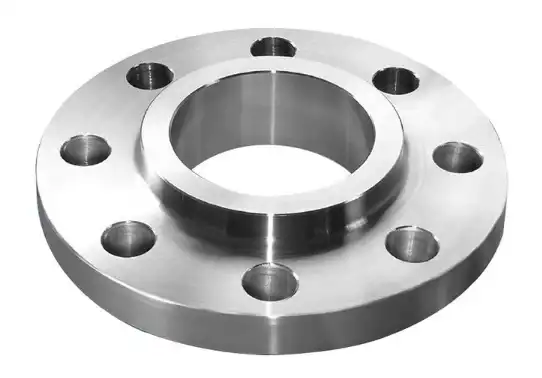
Lap joint flanges are made in two pieces. One is a loose backing flange that fits over the pipe without interference. The other is a stub end that is butt-welded to the pipe. The backing flange spins independently, enabling the pipe to remain stationary while the bolt holes are aligned. This design addresses challenging fit-up difficulties in confined pipe racks and greatly decreases installation time. The most popular material option is the ASTM A105 carbon steel grade because it has a good yield strength at an affordable price.
Why Certifications Are Central to Procurement
Certifications are a written assurance that a factory follows prescribed procedures – from input of raw material to examination of the completed product. Uncertified flanges are a liability at every step for EPC contractors and heavy industrial purchasers. Consider, for instance, a forged ASTM A105 backing flange made to ISO 9001 standards, complete with traceable documentation to safeguard projects during third-party audits and insurance assessments.
The Main Certification Categories Buyers Should Know
The four most significant certification families for carbon steel lap joint flanges are the ISO (quality systems), ASME (dimensional and pressure requirements), API (oil and gas service), and EN/CE (European market access). With these, Mill Test Reports (MTRs) provide the true chemical composition and mechanical characteristics for each heat of steel, giving material traceability from the mill to the project site.
Key Certifications and Their Specific Implications for Lap Joint Flange CS
ISO 9001: The Quality Management Baseline
ISO 9001:2015 certification guarantees that a manufacturer has a written and verified quality management system in place. This implies that for the manufacturing of carbon steel lap joint flanges, there is a repeatable and tested method for raw material inspection, dimensional checks throughout the process, and final product testing. Oudi has been ISO 9001 certified from day one, and the company’s entire inspection system covers every step from receipt of raw materials to distribution of finished items.
ASME B16.5 and B16.47: Dimensional and Pressure Standards
ASME B16.5 covers Lap Joint Flange CS joint flanges from 1/2" through 24" in pressure classifications 150# to 2500#. ASME B16.47 covers 26″ - 60″. These standards define bore radius parameters, face dimensions, and bolt circle geometry — all of which are important to the interchangeability of mating stub ends. Flanges fabricated outside of the ASME tolerances may produce assembly gaps that can leak under pressure or fatigue under cyclic loads.
API and EN Standards: Sector-Specific Requirements
API 6A and API 605 are specialized to oil and gas wellhead and process pipework, with pressure-temperature values not often found in the ASME tables. For European projects, EN 1092-1 and CE marking according to the Pressure Equipment Directive (PED 2014/68/EU) is compulsory. Buyers supplying refineries in Greece, processing factories in Germany, or offshore platforms in the North Sea must check EN compliance before ordering.
Mill Test Reports: The Non-Negotiable Document
An MTR (material test certificate or heat certificate) lists the carbon, manganese, sulfur, phosphorus, and tensile information for each heat of steel. MTR for ASTM A105 carbon steel should demonstrate yield strength ≥250 MPa and tensile strength ≥485 MPa. No valid MTR means you cannot trace back the flange to its original material source. That is a disqualifying problem on any audited project.
Comparing Lap Joint Flange CS Certifications with Other Flange Materials
Carbon Steel vs. Stainless Steel Certification Requirements
Carbon steel lap joint flanges manufactured to ASTM A105 require MTRs confirming carbon content limits and impact test results where specified. Stainless steel flanges — typically ASTM A182 F304 or F316 — require additional certification of austenitic grain structure and corrosion resistance test data. The certification burden is higher for stainless grades, which is one reason the two-component lap joint design is so cost-effective: buyers can use an ASTM A105 backing flange with a stainless or alloy stub end, reducing material costs by 40–60% while maintaining full traceability for each component independently.
Lap Joint vs. Weld Neck and Slip-On Certification Differences
Weld neck flanges carry full pipeline pressure ratings and require radiographic weld inspection records. Slip-on flanges require fillet weld documentation. Lap joint flanges, because the backing flange carries bolt load rather than weld stress, have their own specific dimensional standard for the bore radius that clears the stub end weld fillet. Each flange type operates under the same ASME pressure class system, but the inspection records and dimensional checkpoints differ — buyers must confirm the correct standard applies to their selected type.
Selecting the Right Certified Backing Flange for Your Environment
Here are the core selection criteria for certified Lap Joint Flange CS joint flanges across common service environments:
- Corrosive chemical service: Pair an ASTM A105 certified backing flange with a Hastelloy C276 or SS316 stub end. Confirm separate MTRs for both components and verify ISO 9001 manufacturing controls apply to the full assembly.
- High-pressure oil and gas: Require ASME B16.5 Class 600# or higher dimensional certification and API compliance where applicable. Confirm hydrostatic test records are included in the documentation package.
- Water conservancy and power generation: Standard ASME B16.5 Class 150# or 300# certification is generally sufficient, supported by ISO 9001 manufacturing records and full MTR traceability.
These criteria apply across the pressure classes and materials that Oudi regularly supplies from its 66,600-square-meter manufacturing facility in Cangzhou, China.
Practical Steps to Verify Lap Joint Flange CS Certifications When Procuring
Build a Certification Checklist Before Contacting Suppliers
Define the papers your project needs before you ask for a price. A typical checklist for procuring carbon steel lap joint flange shall include: ISO 9001 certification (valid, not expired); ASME B16.5 or B16.47 dimensional compliance statement; MTR for each heat of ASTM A105 material; API compliance documentation, if applicable; and CE/PED declaration for European projects
How to Authenticate Certification Documents
Expired ISO certifications are often a problem in the spot market. Always check the certificate number with the issuing agency directly. Oudi has been awarded the People’s Republic of China Special Equipment Manufacturing License and ISO 9001:2000 quality management system certification, which are verifiable credentials of the company’s capability to make pressure-bearing components.
Questions to Ask Your Supplier During Evaluation
When evaluating a lap joint flange supplier, ask these targeted questions to assess their documentation depth and production capability:
- Can you provide a full MTR for the specific heat of ASTM A105 used in my order?
- What is your nondestructive testing procedure for finished flanges?
- How do you handle certification for mixed-material assemblies (e.g., CS backing flange with alloy stub end)?
- What is your current lead time for certified Class 300# lap joint flanges in 2" through 12"?
Getting clear, documented answers to these questions tells you whether the supplier's quality system matches their claims.
Conclusion
Certifications for Lap Joint Flange CS Joint Flanges are used to establish whether a component may be legally and safely placed into operation in oil refineries, chemical plants, power stations, and water infrastructure. ISO 9001 certifies the quality controls in production. Dimensional and pressure compliance is confirmed in ASME B16.5 and B16.47. API standards meet oil and gas service requirements. A project audit can’t be done without MTRs that give material traceability. Having a supplier with verified credentials and tight inspection records from raw material to completed items is not a precaution; it is basic engineering practice for anybody responsible for long-term system integrity.
FAQ
1. What certifications are mandatory for high-pressure carbon steel lap joint flanges?
For pressure classes above 600#, ASME B16.5 dimensional compliance is required alongside a valid ASTM A105 Mill Test Report. API 6A may apply for wellhead service. ISO 9001 certification from the manufacturer provides the quality management assurance that supports all other documents.
2. How do I verify that an ISO 9001 or ASME certificate is genuine?
Request the certificate number and issuing body name. Contact the certification body directly to confirm validity and expiration date. For ASME compliance, the manufacturer should provide a dimensional inspection report, not just a general statement.
3. Does certification affect delivery lead time or pricing?
Fully certified stock typically ships faster because it has already passed inspection. Custom certified orders may require longer lead times due to heat-specific MTR generation and dimensional inspection. Pricing is generally higher than uncertified spot material, but the risk reduction and audit compliance justify the difference for any industrial project.
4. Can I use an uncertified backing flange with a certified stub end?
No. Both components require traceable certification in any audited project. The backing flange carries the bolt load, and without documented dimensional and material compliance, the full assembly cannot be accepted under ASME or EN pressure system regulations.
Request Certified Lap Joint Flange CS from Oudi — Your Trusted Manufacturer Since 1998
Oudi has supplied certified Lap Joint Flange CS products to over 300 customers across 40 countries. With 16,000 tons of annual production capacity, ISO 9001 certification, and a Special Equipment Manufacturing License, we back every order with full documentation. Contact our team for specifications, MTRs, and competitive quotes. Reach us at oudi-04@oudiguandao.com to explore our full range from a verified Lap Joint Flange CS manufacturer.
References
1. ASME. ASME B16.5: Pipe Flanges and Flanged Fittings. American Society of Mechanical Engineers, 2017.
2. ASME. ASME B16.47: Large Diameter Steel Flanges. American Society of Mechanical Engineers, 2020.
3. American Petroleum Institute. API 6A: Specification for Wellhead and Christmas Tree Equipment. API Publishing Services, 2018.
4. International Organization for Standardization. ISO 9001:2015 Quality Management Systems — Requirements. ISO, 2015.
5. European Parliament. Pressure Equipment Directive 2014/68/EU. Official Journal of the European Union, 2014.
6. ASTM International. ASTM A105/A105M: Standard Specification for Carbon Steel Forgings for Piping Applications. ASTM International, 2021.

Need help finding the right solution with our experts. Please contact us.

SINCE 1998 Your Reliable Pipeline Manufacturer



