Top 10 High-Temperature Carbon Steel Elbow Uses in Process Piping
High-temperature carbon steel elbows are one of the most used fittings in contemporary process piping. Whether you're routing steam lines in a power plant or controlling aggressive fluid flow in a petrochemical refinery, these fittings direct flow at certain angles, 90°, 45°, or 180°, without sacrificing structural integrity under continuous heat stress. Grades like ASTM A234 WPB and ASTM A420 are meant for temperatures above 400°C. They are a vital procurement option for oil, gas, chemical, water conservancy, and power-generating industries because of their mechanical strength, weldability, and cost-effectiveness.
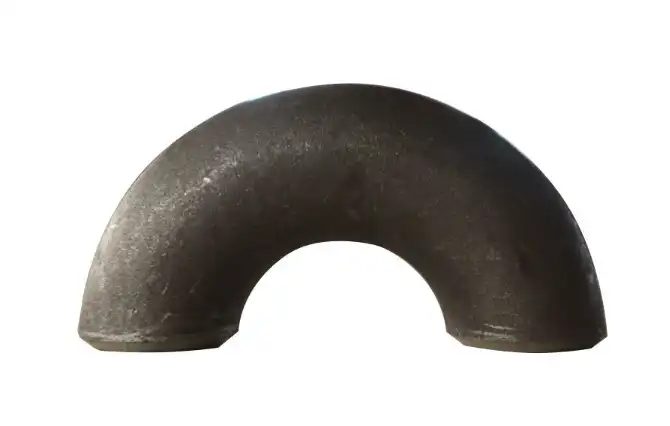
What Makes a High-Temperature Carbon Steel Elbow Different?
Not all heat the same way in elbows. Carbon steel pipe elbows for high-temperature service are manufactured with regulated carbon content and appropriate alloying elements such as manganese and silicon. These are used to maintain the yield strength during thermal cycling. Carbon steel grades are a cost-effective alternative to their stainless steel counterparts for use in applications lacking oxidizing environments. The uniform grain structure, obtained by hot-pushing or hot-bending procedures and subsequent heat treatment, lowers the likelihood of stress cracking and premature fatigue.
Manufacturing standards such as ASME B16.9, ASTM A234, and ISO 15590 include dimensional tolerances and mechanical testing processes. These certificates are not just paper. They are what determine whether an elbow will withstand a pressure surge at 350°C or fail at the weld zone. Butt-welded seamless elbows, in particular, do not have weld seams, which may be sources of failure during fast heat fluctuation.
Top 10 Uses of High-Temperature Carbon Steel Elbows in Process Piping
These fittings appear in more places than most procurement teams realize. Here's where they deliver real operational value:
Crude Oil Refinery Pipelines
Refineries operate continuous high-temperature loops where crude and intermediate products travel at elevated pressures. Carbon steel elbows rated for these conditions handle thermal expansion without compromising flow integrity or triggering shutdowns.
Steam Distribution in Power Generation
Steam lines in coal, gas, and nuclear power plants experience cyclical pressure swings. ASTM A234 WPB elbows absorb thermal movement effectively, reducing stress concentration at pipe junctions and extending maintenance intervals.
Natural Gas Processing Facilities
Downstream gas processing demands fittings that withstand both temperature variance and potential H₂S exposure. Properly heat-treated High-temperature carbon steel elbows with NACE-compliant material certifications serve these environments reliably.
Chemical Plant Process Lines
Many chemical reactions generate heat byproducts that must be managed through insulated process lines. Carbon steel elbows routed through reactors and heat exchangers maintain flow direction without degrading under sustained chemical exposure—provided appropriate coatings are applied.
Boiler Feed and Steam Return Systems
Boiler systems in industrial facilities depend on compact piping layouts. Short-radius and long-radius carbon steel elbows redirect feed water and condensate return lines efficiently, contributing to overall system thermal efficiency.
Water Conservancy Infrastructure
Large-scale irrigation and hydraulic infrastructure projects use carbon steel elbows to navigate terrain changes and infrastructure constraints. Their pressure tolerance and ease of field welding make them a practical choice for civil construction pipelines.
Shipbuilding Engine Room Piping
Engine rooms demand compact, pressure-rated piping for cooling, fuel, and exhaust systems. Carbon steel elbows conforming to classification society standards—such as DNV or Lloyd's Register—are regularly specified in marine engineering.
HVAC and Industrial Heating Systems
High-capacity commercial HVAC systems and district heating loops operate at elevated water temperatures. Carbon steel elbows provide durable directional changes in these closed-loop systems without the premium cost of stainless alternatives.
Mining Slurry and Thermal Process Lines
Mining operations route abrasive slurries and thermally elevated fluids through process circuits. Heavy-wall carbon steel elbows with erosion-resistant coatings handle abrasion and thermal load simultaneously.
Waste Treatment and Incinerator Off-Gas Piping
High-temperature off-gas from waste incinerators passes through carbon steel piping designed to tolerate both heat and particulate matter. Properly specified elbows maintain directional integrity in these demanding exhaust circuits.
These ten applications collectively reflect why High-temperature carbon steel elbows remain the dominant fitting choice across heavy industrial sectors globally.
Why Choose Carbon Steel Elbows Over Alternatives?
Procurement professionals frequently weigh carbon steel against stainless steel, alloy steel, and ductile iron. The decision comes down to application-specific demands—and often, carbon steel wins on multiple fronts.
| Criteria | Carbon Steel | Stainless Steel | Alloy Steel | Ductile Iron |
|---|---|---|---|---|
| Temperature Range | Up to 425°C | Up to 870°C | Up to 650°C | Up to 350°C |
| Corrosion Resistance | Moderate | High | High | Low–Moderate |
| Tensile Strength | High | Moderate–High | Very High | Moderate |
| Cost per Unit | Low | High | Very High | Low–Moderate |
| Weldability | Excellent | Good | Moderate | Difficult |
| Best Application | General process piping | Aggressive media | High-alloy service | Low-pressure water |
Carbon steel elbows deliver the best value in non-corrosive, high-temperature, and high-pressure environments where budget and supply reliability matter. For EPC contractors managing large-volume orders, the cost differential between carbon steel and stainless steel can represent significant project savings without performance compromise.
How to Procure Reliable High-Temperature Carbon Steel Elbows
What Certifications Should You Verify?
Check that your supplier is ISO 9001 quality management certified and has the Special Equipment Manufacturing License as required by Chinese national criteria before making a large purchase. These credentials guarantee not just manufacturing operations but also traceability from raw material input to completed product inspection. At Oudi, every batch is completely inspected, and flaws are detected non-destructively before shipping. This is a practice entrenched in our quality system, accredited to ISO 9001:2000 since 1998.
Why Oudi Is a Trusted High-Temperature Carbon Steel Elbow Manufacturer
Cangzhou Oudi Pipe Manufacture Co., Ltd. has been manufacturing certified carbon steel, stainless steel, and alloy steel pipe fittings for 25 years. Our plant in Cangzhou — the pipe fitting manufacturing capital of China — has an area of 66,600 square meters and a yearly capacity of 16,000 tons. We manufacture elbows according to American (ANSI/ASME), Japanese (JIS), German (DIN), and British (BS) standards and serve more than 300 customers in over 40 countries, such as the United States, Europe, Southeast Asia, the Middle East, and South America.
We have excellent manufacturing equipment for the hot-pushing, hot-bending, and forging operations. All elbows leaving our plant are subject to dimensional tolerances checked using our in-house hydrostatic, tensile, and ultrasonic inspection equipment. Clients of Oudi in the oil, chemical, natural gas, and power generation industries depend not only on the quality of their product but also on the reliability of their supply chain, particularly when project schedules are set.
Maintenance and Performance Tips for Process Piping Elbows
Thermal cycling causes elbows to expand and contract repeatedly. Teams that inspect weld zones and outer radius surfaces on a scheduled basis catch wall thinning or pitting before it becomes a leakage event. Apply epoxy or zinc-rich coatings on exposed carbon steel surfaces to slow oxidation in humid environments.
Key maintenance practices include:
- Conduct ultrasonic thickness measurements at the elbow's extrados annually in high-velocity systems.
- Monitor downstream pressure differential—a rising drop can signal internal erosion at the elbow bend.
- Ensure supports account for thermal expansion rather than restraining it rigidly, which concentrates stress at the fitting.
These measures extend service life significantly and reduce unplanned downtime.
Conclusion
Workhorses of industrial process pipes are the High-temperature carbon steel elbows. Their mechanical properties, weldability, and economy of use make them the practical choice for extreme temperature duty from power stations and refineries to boiler rooms and chemical industries. There are three activities that will preserve your investment over the long term: selecting the proper grade, validating supplier credentials, and adhering to periodic inspection procedures. With over 25 years of manufacturing expertise, ISO-certified quality control, and an annual capacity of 16,000 tons, Oudi is your trusted partner for your worldwide sourcing requirements.
FAQ
1. What temperature range do carbon steel elbows handle?
Standard carbon steel elbows conforming to ASTM A234 WPB are rated for service up to approximately 425°C (800°F). For higher thermal demands, alloy steel grades such as WP11 or WP22 extend this range to 650°C and above.
2. How do I confirm a supplier's quality compliance?
Request the supplier's ISO 9001 certificate, Special Equipment Manufacturing License, and material test reports (MTRs) for each heat lot. Reputable manufacturers like Oudi provide full traceability documentation as standard practice.
3. Are seamless or welded elbows better for high-temperature service?
Seamless elbows are preferred for high-pressure, high-temperature lines because they eliminate weld seams that can initiate fatigue cracks under thermal cycling. Welded elbows remain acceptable for lower-pressure applications when proper NDT inspection is performed.
4. What standards apply to carbon steel pipe elbows?
ASME B16.9 governs factory-made wrought butt-welding fittings. ASTM A234 specifies material requirements. ISO 15590 addresses induction bends for pipeline applications. Always verify that your supplier's products reference the applicable standard revision.
Partner with Oudi — Your Certified High-Temperature Carbon Steel Elbow Supplier
Oudi has supplied certified pipe fittings to 300+ clients in 40+ countries since 1998. Our full product range—carbon steel, stainless steel, and alloy High-temperature carbon steel elbows in ANSI, DIN, JIS, and BS standards—ships from a 66,600 m² facility with rigorous QC at every production stage. Send your specifications to oudi-04@oudiguandao.com and receive a competitive quote within 24 hours.
References
1. ASME B16.9 — Factory-Made Wrought Buttwelding Fittings, American Society of Mechanical Engineers, 2018.
2. ASTM A234 — Standard Specification for Piping Fittings of Wrought Carbon Steel and Alloy Steel for Moderate and High Temperature Service, ASTM International, 2022.
3. Piping Handbook, Mohinder L. Nayyar, McGraw-Hill, 7th Edition, 2000.
4. Process Piping: The Complete Guide to ASME B31.3, Charles Becht IV, ASME Press, 2009.
5. ISO 9001:2015 — Quality Management Systems — Requirements, International Organization for Standardization, 2015.
6. Industrial Piping and Fluid Mechanics, Frank Clifford, Elsevier Engineering Journal, 2017.

Need help finding the right solution with our experts. Please contact us.

SINCE 1998 Your Reliable Pipeline Manufacturer



