Can a Precision-machined elbow Reduce Costs and Installation Time?
A precision-machined elbow, manufactured through CNC subtractive processes to tolerances as tight as ±0.01mm, consistently eliminates the dimensional stacking errors and surface irregularities that drive up labor hours on-site. When pipe runs require exact angular transitions in high-pressure oil, chemical, or gas systems, these components arrive ready to fit — no grinding, no shimming, no costly rework cycles. At Oudi, we have supplied high-accuracy pipe fittings to industrial clients across more than 40 countries since 1998, and the pattern is clear: dimensional accuracy at the component level translates directly into faster assemblies and lower lifetime costs.
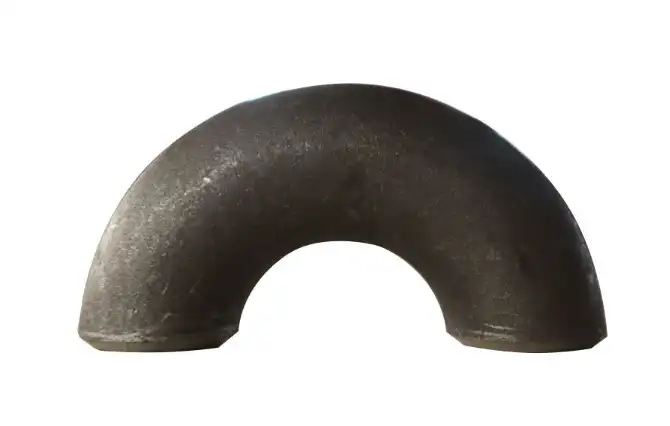
What Exactly Is a Precision-Machined Elbow — and Why Does It Outperform Standard Options?
Most procurement engineers encounter two common elbow categories on the market: cast fittings and forged fittings. Both serve general piping needs adequately. The challenge surfaces when system pressures exceed 5,000 PSI, when fluid purity requirements prohibit internal surface roughness, or when modular manifold assemblies demand repeatable geometry across hundreds of units.
The Manufacturing Difference That Changes Everything
A precision-machined elbow starts from solid billet material — typically 316L stainless steel, alloy steel, or titanium — and undergoes CNC milling and turning to achieve the final geometry. This subtractive process preserves homogeneous grain structure, eliminates casting porosity, and produces internal bore roughness (Ra) as low as 0.4μm. By contrast, cast elbows routinely carry internal surface irregularities that generate flow turbulence, accelerate erosion, and create accumulation zones for corrosive media or biological matter in process lines.
Key Physical Properties That Matter in High-Demand Systems
The specifications below reflect what distinguishes a machined elbow from a conventional forged alternative:
| Parameter | Precision-Machined Elbow | Standard Forged Elbow |
|---|---|---|
| Dimensional Tolerance | ±0.01mm | ±0.5–1.0mm |
| Internal Surface Finish (Ra) | 0.4μm or better | 3.2–6.3μm typical |
| Pressure Rating | Up to 10,000 PSI and above | Typically per ASME B16.9 |
| Material Traceability | EN 10204 3.1/3.2 MTR | Standard mill cert |
| Custom Angle Capability | Any angle (CNC programmable) | Limited to 45°/90° |
| Fatigue Resistance | Superior (billet grain orientation) | Moderate |
This table captures a genuine decision-making gap for procurement managers sourcing components for hydraulic manifolds, subsea control systems, or high-purity chemical lines. The tolerance differential alone explains why precision-machined elbows reduce installation time — parts that fit without adjustment accelerate every downstream task.
How Do Precision-Machined Elbows Actually Reduce Costs and Installation Time?
The commercial case is straightforward once you trace where project costs actually accumulate. In EPC (Engineering, Procurement, and Construction) pipeline projects, rework accounts for a substantial share of total installation labor. A 2019 study published in the Journal of Construction Engineering and Management identified dimensional non-conformance in pipe fittings as a leading contributor to on-site rework events in industrial plant construction.
Fewer On-Site Adjustments Mean Lower Labor Costs
When a precision-machined elbow arrives with verified angular geometry and surface-finished mating faces, installation crews eliminate the alignment adjustment loops that burn hours on large-diameter pipe assemblies. In modular hydraulic systems, where dozens of elbows route fluid through tight spatial envelopes, each unit of dimensional deviation compounds. Tight tolerances break this compounding effect. Procurement teams sourcing for oil refinery upgrades or LNG processing modules frequently report assembly time reductions of 15–30% after transitioning to precision-machined components.
Reduced Maintenance Intervals Protect Long-Term Capital
Smooth internal bores reduce localized erosion at flow transition points. Precision-cut face-seal grooves — such as VCR or SAE formats — produce joint integrity equivalent to the pipe wall itself, eliminating the micro-leak pathways that develop over thermal cycling in standard compression fittings. Fewer unplanned maintenance shutdowns protect operational uptime, which in refinery and chemical plant environments carries direct revenue impact measured in tens of thousands of dollars per hour.
How Do You Select the Right Precision-Machined Elbow for Your Application?
Material selection, surface specification, and supplier qualification are the three variables that determine whether a machined elbow delivers its promised performance or becomes an expensive problem.
Material Selection: Why It Directly Impacts System Longevity
316L stainless steel Precision-machined elbows deliver excellent corrosion resistance in saline and acidic process environments and remain the default choice for chemical and offshore applications. Alloy steel grades provide enhanced tensile strength for high-pressure gas transmission lines. Titanium Grade 5 serves aerospace and deep-sea applications where the strength-to-weight ratio is non-negotiable. Selecting the wrong grade — even with correct geometry — accelerates galvanic corrosion at joints and reduces rated service life. Always verify alloy chemistry against a Material Test Report (MTR) conforming to EN 10204 3.1 or 3.2 before acceptance.
Quality Control: The Inspection Protocols That Protect Your Investment
Reliable machined elbow suppliers apply a multi-stage inspection sequence before dispatch. At Oudi, our quality management system — certified to ISO 9001 and operating under the People's Republic of China Special Equipment Manufacturing License — enforces the following inspection chain:
- CMM Dimensional Analysis maps full 3D coordinates to verify angular precision and wall thickness uniformity against drawing tolerances.
- Positive Material Identification (PMI) using XRF or OES confirms that alloy chemistry matches the MTR on every batch.
- NDT Testing through Dye Penetrant Inspection (DPI) or Ultrasonic Testing (UT) detects subsurface micro-fissures invisible to visual inspection.
- Pressure and Leak Testing via hydrostatic or helium mass spectrometry verifies zero leakage at 1.5× design pressure.
- Surface Profilometry quantitatively measures internal bore smoothness to prevent flow resistance in high-purity or high-velocity systems.
These protocols exist because quality gaps at the component level become structural liabilities at the system level. Procurement managers sourcing for oil, gas, or chemical installations should request documented evidence of each stage before placing a volume order.
Real-World Applications: Where These Components Prove Their Value
Precision-machined elbows appear in three high-stakes operating environments where standard fittings consistently underperform:Semiconductor and high-purity chemical lines demand zero particulate contamination. Ultra-high-purity (UHP) gas delivery systems require internal wall finishes that prevent particle shedding — a standard cast elbow cannot meet this threshold.Subsea oil and gas control modules operate under dual-pressure stress: external hydrostatic pressure at depth combined with internal fluid pressure. Components in these assemblies carry design service lives of 25 years; dimensional integrity and corrosion resistance are non-negotiable from day one.Industrial hydraulic manifolds in power generation and heavy construction equipment route high-pressure fluid through compact assemblies. CNC-machined elbows in non-standard angles — 22.5°, 60°, or compound geometries — allow designers to optimize manifold layouts that forged alternatives simply cannot replicate.Across all three environments, the ROI argument for machined elbows rests on reduced rework, extended service intervals, and system uptime protection — not just unit price comparison.
Conclusion
Precision-machined elbows deliver genuine, quantifiable value in high-pressure, high-purity, and high-stakes piping systems. Their dimensional accuracy shortens installation time, their material integrity extends service life, and their inspection traceability reduces procurement risk. For procurement managers in oil, chemical, natural gas, and water conservancy industries, the decision to specify precision-machined components is a cost-control strategy, not a premium expenditure. Oudi has supported clients across more than 40 countries with certified, high-accuracy pipe fittings since 1998 — and our 16,000-ton annual production capacity ensures consistent supply for both project-scale and ongoing procurement needs.
FAQ
Why choose a machined elbow over a standard forged elbow?
Machined elbows hold tolerances to ±0.01mm and achieve internal surface finishes down to Ra 0.4μm, making them essential where standard forgings cannot guarantee hermetic sealing or repeatable assembly geometry.
Can these elbows be produced in non-standard angles?
CNC machining allows any custom angle — 22.5°, 60°, compound geometries — that traditional bending or casting methods cannot reliably reproduce.
How is corrosion prevented at the joint?
Precision-cut chamfers support full-penetration orbital welding, while face-seal groove formats such as VCR or SAE provide joint resilience equivalent to the parent pipe.
Are Material Test Reports provided?
Every precision-machined elbow ships with EN 10204 3.1 or 3.2 certification, guaranteeing full alloy traceability from billet to finished component.
What is the typical lead time for custom orders?
Optimized CNC workflows deliver custom machined elbows within 2–4 weeks, depending on material availability and order complexity.
Partner with Oudi for Your Precision-Machined Elbow Supply
Oudi has manufactured certified carbon steel, stainless steel, and alloy steel pipe fittings since 1998, holding ISO 9001 certification and a Special Equipment Manufacturing License. Our precision-machined elbow supplier capabilities cover ANSI, DIN, JIS, and BS standards with a 16,000-ton annual output. Contact our technical team today for specifications, bulk pricing, or a custom quote: oudi-04@oudiguandao.com
References
1. Journal of Construction Engineering and Management — ASCE, 2019
2. ASME B16.9: Factory-Made Wrought Buttwelding Fittings — American Society of Mechanical Engineers, 2018
3. Machinery's Handbook — Industrial Press, 31st Edition, 2020
4. Corrosion Engineering, Science and Technology — Taylor & Francis, 2021
5. International Journal of Pressure Vessels and Piping — Elsevier, 2020
6. EN 10204: Metallic Products — Types of Inspection Documents — European Committee for Standardization, 2004

Need help finding the right solution with our experts. Please contact us.

SINCE 1998 Your Reliable Pipeline Manufacturer



