Cost-Effective Carbon Steel Elbow Uses and Benefits
For consistent directional adjustments in your pipe system without breaking the bank, a Cost-effective carbon steel elbow does just that. Carbon steel elbows change the direction of gas or fluid flow at predetermined angles, such as 90°, 45°, or 180°. They are basic building blocks of oil refineries, chemical plants, power stations, and water treatment facilities. They are popular specifications for procurement engineers worldwide responsible for large-scale industrial infrastructure because of the mechanical strength, pressure tolerance, and affordable prices they provide.
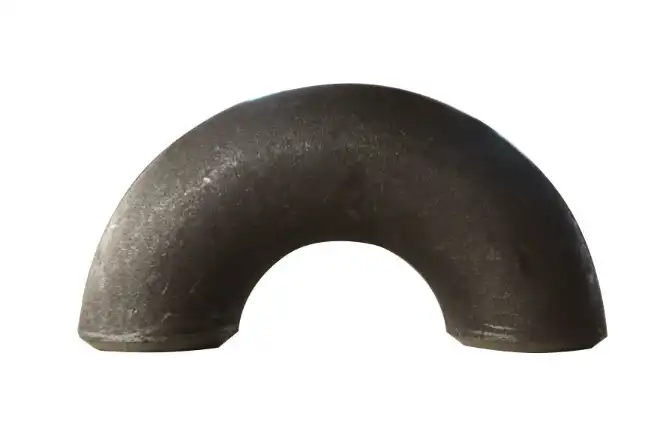
What Exactly Are Carbon Steel Elbow Fittings?
Carbon steel Elbows are pipe fittings used to change flow direction in a pipeline system. They are produced by hot-pushing or hot-heating bending procedures and are available in butt-welding and socket-welding types, and may be seamless or welded according to the application needs.
How Do Standards Govern Their Specifications?
Dimensions, wall thickness, pressure ratings, and material composition are defined by governing standards such as ASTM A234, ASME B16.9, ANSI, DIN, JIS, and BS. These standards guarantee dimensional interchangeability of global pipe topologies. The grades vary from low carbon grades (e.g. ASTM A234 WPB) to higher carbon alloy grades, each calibrated to a specified temperature range and mechanical load profile. All Oudi’s carbon steel elbows are created according to these worldwide standards, with ISO 9001:2000 certification and China’s Special Equipment Manufacturing License.
What Are Short Radius vs. Long Radius Elbows?
Short radius (SR) elbows are bent with a bend radius equal to the pipe diameter and are suited for space-restricted locations in oil refining or water treatment facilities. Long radius (LR) elbows (bend radius 1.5 times the pipe diameter) decrease turbulence and pressure drop — best when flow efficiency is a requirement. Both variations are available in 90° and 45° versions. Reducing elbows are offered when pipe diameters must alter at the point of turning.
What Makes Carbon Steel Elbows Worth Choosing?
Heavy industrial procurement choices are usually a trade-off between upfront material cost, service life, and frequency of maintenance. Carbon steel elbows address this issue rather well, making a Cost-effective carbon steel elbow a practical option for many industrial applications. These are the key benefits procurement experts often mention when choosing carbon steel pipe fittings:
- Cost Advantage Over Alternatives: Carbon steel elbows are much less costly than stainless steel or alloy steel equivalents, often 40-60% cheaper depending on grade and size, without affecting mechanical dependability in typical industrial settings.
- Pressure & temperature resistance: Carbon steel can function dependably across a wide range of temperatures and resist high-pressure systems that are common in natural gas transmission and boiler applications. For example, ASTM A234 WPB elbows are certified for duty up to 800°F (427°C).
- Wide coating compatibility: Carbon steel elbows used in combination with epoxy coatings, hot-dip galvanizing, or anti-corrosion paint systems will provide sufficient service life in moderately corrosive situations.
- Weldability and fabrication flexibility: Carbon steel’s metallurgical qualities enable easy butt-welding to be incorporated into existing pipe systems, which reduces installation labor costs onsite.
Taken together, these features make carbon steel elbows a practical and field-proven choice for industrial applications where lifespan value is as important as unit cost.
Where Are Carbon Steel Elbows Used in Industry?
Most purchasers don’t first grasp how much more extensive the applications are. Oudi’s carbon steel pipe fittings cater to customers from oil, chemical, natural gas, water conservancy, construction, shipbuilding, electric power, and boiler manufacturing industries – a profile that speaks to the true adaptability of the material.
Oil & Gas and Chemical Processing
Petroleum refineries and chemical pipelines use 90° short radius elbows for directional changes in tight equipment layouts, and long radius elbows to preserve flow continuity in high-velocity transmission lines. Seamless elbows are the default in these applications, since the lack of a longitudinal weld removes a possible failure plane under cyclic pressure stress.
Power Generation and Water Treatment
Carbon steel elbows are used in power plant steam lines and condensate return systems because of their high temperature performance. Water treatment facilities employ 45° and 90° elbows to provide directed routing in large-footprint treatment train layouts. A Cost-effective carbon steel elbow can provide a practical balance between performance and procurement costs. The seamless vs. welded differential matters operationally: seamless elbows have greater pressure ratings and are suitable for important service lines, whereas straight-seam welded elbows provide cost savings for lower-pressure utility plumbing.
How Should You Compare Carbon Steel Against Other Elbow Materials?
Material selection is not a “one size fits all” proposition; The important choice factors are shown in the table below:
| Criteria | Carbon Steel | Stainless Steel | Alloy Steel |
|---|---|---|---|
| Unit Cost | Low | High | Medium–High |
| Corrosion Resistance | Moderate (coating needed) | Excellent | Good |
| High-Temp Performance | Good (up to ~427°C) | Very Good | Excellent |
| Weldability | Excellent | Good | Moderate |
| Best Application | General industrial, oil & gas | Food, pharma, marine | High-temp, high-pressure |
For most procurement situations in heavy industry not involving strong chemical corrosion, carbon steel is best placed. In situations where complete immunity to corrosion is required—marine pipelines, pharmaceutical processing---stainless steel earns its price. Alloy steel is used for the high temperature or high-stress niche circumstances of refinery furnace lines and pressure vessel connections. Oudi produces all three kinds of material enabling procurement teams to unify supplier connections under one quality standard.
How Do You Procure Reliable Carbon Steel Elbows at Scale?
Sourcing strategy has a big impact on overall landed cost. Effective procurement is guided by the following considerations:
- Confirm certificates before engaging. ISO 9001 certification and Special Equipment Industrial plumbing components entering regulated industries are non-negotiable for Manufacturing Licenses. Oudi has both, with thorough inspection processes from receipt of raw materials to release of final items.
- Compare your volume to manufacturing capacity: Oudi produces 16,000 tons per year, ensuring the consistency of supply chains for big EPC projects and recurring distributor purchases.
- Evaluate range of product diversity: Procurement is made easier with a network of suppliers supplying carbon steel, stainless steel and alloy steel fittings – flanges, tees, reducers, caps and elbows – with delivery timing coordinated.
- Ask for NDT documentation: Oudi utilizes state-of-the-art NDT inspection tools and equipment in all production lines for fault discovery tracing throughout the process, for every batch sent to clients in more than 40 countries.
The best lead time and per unit cost will be realized by negotiating bulk orders and early involvement of the supplier’s technical team, especially with non-standard sizes or bespoke wall thickness.
Conclusion
Carbon steel elbows continue to be one of the most practical pipe fitting specifications on the market for industrial buying teams. Their mechanical capabilities against pressure, temperature and flow direction requirements, along with a Cost-effective carbon steel elbow profile that stainless and alloy alternatives cannot match in normal conditions, make them the primary focus of most project pipe material lists. A qualified carbon steel elbow manufacturer will have proper certification, good production capacity, and a proven record of exportation worldwide so that there is no uncertainty in sourcing. Oudi, founded in 1998, with over 300 clients in 40 countries, is the exact supplier profile.
FAQ
How do I select the right carbon steel elbow grade for my project?
Grade selection depends on operating temperature, pressure class, and fluid medium. ASTM A234 WPB covers most general-purpose oil, gas, and water applications up to 427°C. For lower-temperature or structural applications, A234 WPC or A420 grades apply. Always cross-reference with ASME B16.9 dimensional standards and confirm the wall schedule matches your pipe specification.
What drives price differences between carbon steel elbows?
Three factors dominate: raw material grade and mill certification level, production method (seamless commands a premium over welded), and order volume. Supplier location, inspection requirements, and surface treatment specifications also influence final pricing. Sourcing directly from a manufacturer with in-house NDT and quality certification — rather than through multiple intermediaries — typically yields the most competitive unit cost.
Are carbon steel elbows suitable for high-temperature steam lines?
Yes. ASTM A234 WPB carbon steel elbows are an industry-standard specification for steam and condensate piping in power generation. For service conditions exceeding 427°C, alloy steel grades such as ASTM A234 WP11 or WP22 are the appropriate upgrade path.
Source Oudi's Certified Carbon Steel Elbows — Request Your Quote Today
Oudi has manufactured export-grade pipe fittings since 1998, supplying over 300 clients across 40 countries with Cost-effective carbon steel elbow, stainless steel, and alloy steel elbows built to ANSI, DIN, JIS, and BS standards. As a verified cost-effective carbon steel elbow supplier with 16,000-ton annual capacity and ISO 9001 certification, we deliver consistent quality with competitive pricing on every order size. Contact our technical team directly at oudi-04@oudiguandao.com to request specifications, custom sizing options, or a bulk procurement quote.
References
1. ASME International. ASME B16.9: Factory-Made Wrought Buttwelding Fittings. 2018.
2. ASTM International. ASTM A234/A234M: Standard Specification for Piping Fittings of Wrought Carbon Steel and Alloy Steel for Moderate and High Temperature Service. 2022.
3. American Petroleum Institute. API 570: Piping Inspection Code — In-service Inspection, Rating, Repair, and Alteration of Piping Systems. 2016.
4. Nayyar, M. L. Piping Handbook, 7th Edition. McGraw-Hill. 2000.
5. International Organization for Standardization. ISO 9001:2015 — Quality Management Systems: Requirements. 2015.
6. Kannappan, S. Introduction to Pipe Stress Analysis. Wiley-Interscience. 1986.

Need help finding the right solution with our experts. Please contact us.

SINCE 1998 Your Reliable Pipeline Manufacturer



