Can Concentric Reducer Carbon Steel Reduce Piping Installation Costs?
A Concentric Reducer Carbon Steel fitting may really cut the overall cost of your plumbing installation. These fittings join pipes of various sizes along a common centerline, reducing turbulence and the amount of corrective welding needed during installation, and simplifying support structures. They are made to ASTM A234 WPB specifications and measured to ASME B16.9 so they will reliably fit into normal plumbing configurations. Choosing the proper carbon steel pipe reducer straight away in oil, gas, chemical, and water conservancy projects can save you costly rework and keep your project on time.
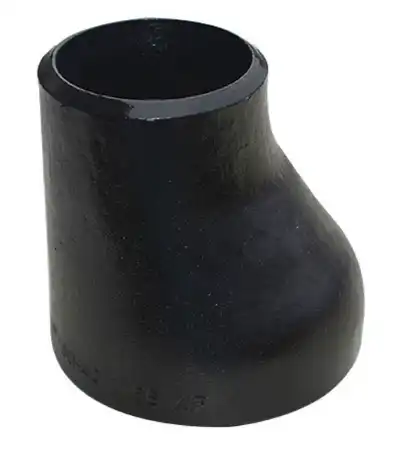
Understanding Carbon Steel Concentric Reducers
Before evaluating cost impact, it helps to understand what these fittings actually are and how they work inside a pipeline system.
What Is a Concentric Reducer?
Concentric Reducer: A concentric reducer is a cone-shaped pipe fitting that unites two pipes of various diameters but keeps the two ends on the same central axis. This symmetrical shape enables fluid to go from a bigger bore to a smaller bore, or from a smaller bore to a larger bore, without sharp changes in direction. This leads to a more stable flow channel with less friction loss.
Key Specifications to Know
Carbon steel concentric reducers are usually made in ASTM A234 WPB or WPC material grade. Face-to-face length is ASME B16.9. Size is based on the bigger pipe OD. Normally, the wall thickness is the same as the bigger connecting pipe schedule. Standard bevel angles of 37.5° ± 2.5° are applicable for wall thicknesses less than 22mm. Because of these standard specifications, the site is interchangeable with fittings from complying suppliers.
Seamless vs. Welded Variants
Seamless reducers are manufactured from a single billet to provide improved pressure integrity for high-stress applications such as natural gas transmission lines. Welded reducers are economical for medium-pressure systems and are extensively utilized in construction, shipbuilding, and water conservation projects. Which one you choose depends on your pressure rating needs and budget.
How Carbon Steel Concentric Reducers Can Lower Installation Costs
The cost savings from using properly specified Concentric Reducer Carbon Steel come from multiple directions — not just the purchase price.
Simplified On-Site Alignment
Because both pipe ends share a common centerline, concentric reducers eliminate the need for complex offset calculations during installation. This directly shortens field labor hours, particularly in vertical piping runs where alignment precision is non-negotiable. Fewer adjustment welds mean less filler material used and less qualified welder time billed to the project.
Lower Long-Term Maintenance Expenses
Carbon steel has a tensile strength typically ranging from 415 to 485 MPa (ASTM A234 WPB), giving it the durability to handle cyclic pressure and thermal changes in petroleum and chemical service. Fewer failures mean fewer emergency shutdowns. Over a 10–15 year service life, maintenance savings on a mid-sized industrial plant can offset the initial fitting cost many times over.
Bulk Procurement and Supply Chain Efficiency
Standard ASME B16.9 dimensions allow procurement teams to consolidate orders across multiple project phases. When a supplier maintains 16,000 tons of annual production capacity — as Oudi does — delivery schedules become predictable, reducing project delays tied to material shortages. Bulk order discounts further compress the per-unit cost, which matters significantly on EPC contracts where fitting quantities run into the thousands.
These three cost factors combine to make carbon steel concentric reducers one of the more economical choices available to procurement managers in heavy industry.
Comparing Carbon Steel Concentric Reducers with Alternative Materials and Designs
Not every project calls for carbon steel, and not every transition point calls for a concentric reducer. Here is a direct comparison to guide your selection.
Carbon Steel vs. Stainless Steel and Alloy Steel
Carbon steel pipe reducers cost significantly less than stainless steel equivalents — often 40–60% less per unit depending on market conditions. Stainless steel is justified in corrosive media service, such as certain chemical processing streams, but for standard oil, gas, and water applications, carbon steel delivers adequate corrosion resistance when properly coated or buried in appropriate soil conditions. Alloy steel grades like ASTM A234 WP9 or WP11 are reserved for high-temperature service above 400°C, where carbon steel loses mechanical strength.
Concentric vs. Eccentric Reducers
The choice between concentric and eccentric types is a technical decision, not just an economic one. Concentric reducers are the correct choice for vertical piping and pump discharge lines. On horizontal pump suction lines, eccentric reducers (installed top-flat) prevent air pocket formation that causes cavitation damage to impellers. Using the wrong type creates a maintenance problem that erases any initial cost savings. Understanding this distinction is something experienced suppliers like Oudi can help you verify during the specification stage.
PVC and Non-Metallic Options
PVC reducers work for low-pressure, ambient-temperature water service. They are not rated for hydrocarbon service, high temperatures, or significant mechanical stress. For industrial applications in oil, chemical, or power generation environments, Concentric Reducer Carbon Steel remains the appropriate standard.
Best Practices for Selecting and Procuring Carbon Steel Concentric Reducers
Getting the specification right before ordering prevents costly returns and on-site substitutions.
Confirm Dimensional and Pressure Compliance
Always make sure the reducer is compatible with your pipe schedule, OD, and pressure class. The ASME B16.9 standard includes diameters from ½ inch to 48 inches. Make that your application requires butt-weld ends and that the bevel preparation is consistent with your welding technique standard (WPS). Mismatched bevel angles enhance field rework time.
Evaluate Supplier Certifications
Procurement teams buying for regulated sectors – oil refining, power generation, natural gas – must check that their supplier has an ISO 9001 quality management certification and, for the Chinese market, the People’s Republic of China Special Equipment Manufacturing License. Since 1998, Oudi has both and performs a complete inspection routine from the intake of raw materials to the discharge of final items, including nondestructive testing.
Leverage Bulk Order Strategies
For major projects, you may want to negotiate bulk price tiers with a manufacturer who keeps constant stock of American (ANSI), Japanese (JIS), German (DIN), and British (BS) standards so you limit the number of vendors you maintain. Oudi’s product line includes flanges, bends, tees, caps, and reducers in carbon steel, stainless steel, and alloy steel, all under one roof. It improves logistics and quality control.
Applied consistently, these approaches immediately result in quicker procurement processes and fewer on-site material difficulties.
The Manufacturing Process and Its Role in Cost Efficiency
Raw Material Sourcing and Quality Control
Oudi supplies carbon steel billets and plates with certified chemical composition. Materials coming in are analyzed spectrally and mechanically tested before they proceed into manufacturing. This front-end quality gate prevents poor base metal from entering fabrication, which is the most frequent root cause of field weld failures.
Seamless and Welded Fabrication Methods
They are hot-formed by forcing heated billets over a mandrel, then sized to ASME B16.9 specifications. Welded reducers should be made from plate with longitudinal seams ground flat and examined by radiographic or ultrasonic means. Both approaches, with the right equipment, generate fittings that fit properly and function dependably throughout the life of the design.
Final Inspection and Certification
Fittings completed at Oudi were checked for dimensions, hydrostatic testing where appropriate, and surface inspection before packing. With each shipment, we provide material test reports (MTRs) that procurement managers may use to support regulatory filings and maintain project quality records.
Conclusion
When designed properly and purchased from a vendor with proven quality standards, Concentric Reducer Carbon Steel provides a practical way to cut pipe installation expenses. They decrease on-site labor, simplify alignment on vertical runs, and work dependably throughout oil, gas, chemical, and water conservancy applications. The key is matching the exact material grade, pressure rating, and fitting type to your real system needs — and dealing with a supplier that can back up each and every shipment with adequate documentation. With a strong manufacturing capacity, a record of certification and extensive expertise in exporting worldwide, Oudi is a reliable resource for procurement teams working to tight project timeframes.
FAQ
1. What pressure rating applies to a standard carbon steel concentric reducer?
ASTM A234 WPB carbon steel reducers are rated to match the connecting pipe's pressure class under ASME B16.9. For typical Schedule 40 or Schedule 80 pipe, working pressures can range from approximately 740 psi to over 2,000 psi depending on pipe size and temperature. Always confirm the specific rating against your system's design pressure and temperature.
2. Can carbon steel reducers handle high-temperature service?
Standard ASTM A234 WPB is suitable for service up to approximately 425°C (800°F). Above that range, alloy grades such as WP11 or WP22 are recommended. For most oil, gas, and chemical plant applications, WPB handles the thermal conditions without issue.
3. When should I choose an eccentric reducer instead?
Use an eccentric reducer on horizontal pump suction lines to keep the top of the pipe flat, preventing air accumulation and cavitation. Use a concentric reducer on vertical runs and pump discharge lines where centered flow is the priority.
4. How do I verify a supplier's certifications?
Request copies of the ISO 9001 certificate, special equipment manufacturing license, and material test reports for the specific batch. Reputable manufacturers provide these documents without hesitation.
5. Does wall thickness vary across the reducer body?
Generally, wall thickness is uniform and matches the larger pipe schedule. In high-pressure applications, a tapered bore at the smaller end may be machined to match the downstream pipe wall — this is noted as "bored to match" on drawings.
Get Your Concentric Reducer Carbon Steel Quote from Oudi Today
Oudi has manufactured and exported pipe fittings since 1998, serving over 300 customers across 40 countries. Our Concentric Reducer Carbon Steel products meet ANSI, JIS, DIN, and BS standards, backed by ISO 9001 certification and a 16,000-ton annual output. Whether you need a single specification or a full project bill of materials, contact us directly at oudi-04@oudiguandao.com to request pricing or technical support from our team.
References
1. ASME B16.9 — Factory-Made Wrought Buttwelding Fittings, American Society of Mechanical Engineers, 2018.
2. ASTM A234/A234M — Standard Specification for Piping Fittings of Wrought Carbon Steel and Alloy Steel for Moderate and High Temperature Service, ASTM International, 2022.
3. Nayyar, M. L. — Piping Handbook, McGraw-Hill, 7th Edition, 2000.
4. Mohinder L. Nayyar — Piping Databook, McGraw-Hill, 2002.
5. Smith, P. & Zappe, R. W. — Valve Selection Handbook, Elsevier/Gulf Professional Publishing, 5th Edition, 2004.
6. ISO 9001:2015 — Quality Management Systems: Requirements, International Organization for Standardization, 2015.

Need help finding the right solution with our experts. Please contact us.

SINCE 1998 Your Reliable Pipeline Manufacturer



