What Is a Chemical Industry Carbon Steel Elbow?
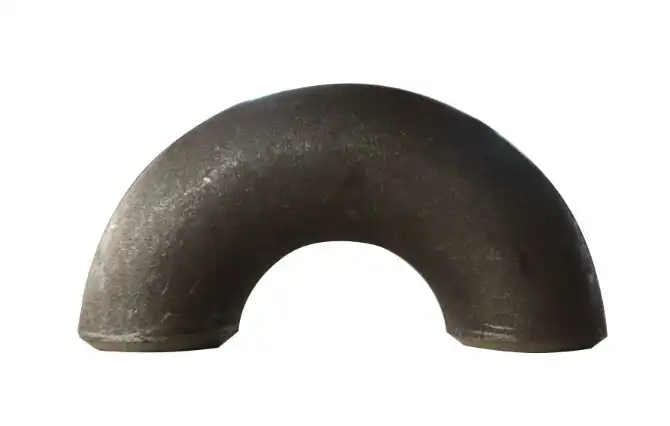
Chemical Industry Carbon Steel Elbow Pipe Fitting is used to change the flow direction of fluid in industrial piping systems, often at 45°, 90°, or 180°. These fittings, made from carbon steel grades like ASTM A234 WPB, are suitable for high-pressure and high-temperature media such as corrosive chemicals, gases, and slurries. They are conventional equipment in chemical processing plants, refineries, and petrochemical plants where directional changes in pipework are common and where material durability has a direct bearing on operational safety and system life.
Understanding Chemical Industry Carbon Steel Elbows
What They Do in a Piping System
Inside a chemical plant, plumbing seldom goes in a straight line. Process engineers create sophisticated routing pathways that link reactors, tanks, pumps, and heat exchangers. Carbon steel elbows enable piping to shift direction without affecting the continuity of flow. The 90° elbow produces a severe bend, the 45° elbow makes a less abrupt change in direction, and the 180° return elbow reverses the flow direction altogether, each fulfilling a distinct layout purpose.
Material Properties That Matter
Carbon steel has tensile strength of 415-585 MPa (according to ASTM A234) and is thus suitable for high-pressure chemical duty. Very weldable. When welded by qualified welders, the seams are sturdy and leak-free. Carbon steel is not inherently corrosion resistant; however, protective coatings and proper grade selection may compensate for most chemical conditions at a fraction of the cost of exotic alloys.
Governing Standards and Specifications
“Qualified fittings are specified using standard specifications by procurement teams in the chemical sector. The most common standards are ASME B16.9 for butt-weld fittings, ASTM A234 for material grades, and API 5L for pipeline-grade steel. Besides, projects in Europe and Asia-Pacific areas are under DIN, JIS, and BS standards. Compliance with these standards assures the dimensional correctness, pressure rating, and interchangeability in various stages of the project.
Types and Manufacturing of Carbon Steel Elbows for Chemical Plants
Seamless vs. Welded Designs
The seamless elbows are manufactured from a single piece of steel without a weld seam to guarantee a consistent wall thickness and improved pressure integrity. They are recommended in services requiring harsh chemicals or high cycle fatigue. Elbows may also be welded. Formed elbows are made by bending and welding pieces of plate or pipe together, and they are less expensive to produce for bigger diameters when the cost of seamless becomes prohibitive. Both kinds are frequently employed in chemical processing applications depending on pressure class and service circumstances.
Long Radius vs. Short Radius Elbows
LR elbows are long-radius chemical industry carbon steel elbows with a bend radius of 1.5 times the normal pipe diameter. This design lowers turbulence and pressure loss and is the usual option for most chemical plant pipework. The short radius (SR) elbow, with a bend radius equal to the pipe diameter, may fit into narrower spaces—useful in small skid-mounted equipment or regions with spatial limits. The chosen kind of radius will directly affect the pump size, energy consumption, and pipe stress estimates.
Manufacturing Processes and Quality Protocols
The major manufacturing techniques of carbon steel elbows are hot pressing, hot shaping, and forging. In hot pushing, a pipe blank is pushed over a mandrel via a heating ring, resulting in a uniform wall thickness around the bend. Forging is for high-pressure fittings where you want a better grain structure. Once formed, fittings are inspected dimensionally, hydrostatically tested, and nondestructively examined (NDE), such as by ultrasonic or magnetic particle testing. The quality management system of well-known manufacturers has ISO 9001 certification, and they have specific equipment manufacturing permits, which confirm the validity of their production controls.
Performance Factors and Comparison in Chemical Applications
Corrosion Resistance and Temperature Tolerance
Typical carbon steel alloys are good for dry service up to around 425 °C (800 °F). In chemical situations with moisture, acids, or chlorides present, exterior coatings such as epoxy, hot-dip galvanizing, or FBE (fusion-bonded epoxy) may greatly increase service life. For light acid use, carbon steel with a proper coating is frequently less costly in its service life than uncoated stainless steel. However, engineering teams should analyze grade selection carefully before selecting carbon steel fittings for heavily oxidizing or halogenated streams.
Carbon Steel vs. Stainless Steel: A Practical Comparison
Both materials are used for chemical pipes, although they have quite different cost profiles. Carbon steel elbows are typically 40-60% less expensive than comparable stainless steel fittings. Carbon steel provides good corrosion protection and economical performance in systems that carry hydrocarbons, natural gas, steam, or neutral water. If the process medium includes chlorides over threshold quantities or if product purity criteria prevent carbon contamination, stainless steel is required. The choice of material should be based on a mix of corrosion data, operating temperature, and total installed cost, and not on material preference by the procurement engineers.
Popular Grades and Protective Coatings
For chemical use, grades of carbon steel elbows are usually ASTM A234 WPB (general purpose), ASTM A420 WPL6 (low-temperature service to -46°C), and ASTM A860 WPHY grades for high-yield applications. Coating choices include simple priming solutions for interior installations to multi-layer FBE coatings for buried or subsea service. These coatings provide quantifiable protection at relatively little cost and enable engineers to specify carbon steel in a wider variety of chemical conditions than its unprotected performance would imply.
Procurement Considerations for Carbon Steel Elbows in Chemical Industry
Supplier Qualification Criteria
When buying Chemical industry carbon steel elbows for chemical plants, purchasers should check three items before ordering: whether the vendor is ISO 9001 certified, whether they have a special equipment manufacturing license authorization (a requirement in China, but known internationally), and their experience supplying similar projects in the chemical industry. As standard paperwork with each shipment should include material test reports (MTRs), third-party inspection certifications, and conformity to ASME or ASTM standards.
Lead Times and Pricing Factors
Catalog standard sizes in grades such as ASTM A234 WPB normally arrive from stock in two to four weeks. Special diameters, non-standard angles, or big diameter fittings beyond DN600 usually need 4 to 8 weeks' manufacturing wait time. The price is determined by the cost of raw materials (in relation to the indices of the steel market), the amount of the order, and surface treatment requirements. Buying in bulk from known suppliers, with yearly production capabilities of 16,000 tons or more, tends to have more predictable prices than buying on the spot market.
Logistics, Delivery, and After-Sales Support
Suppliers are a reliable source for shipment monitoring, pre-shipment inspection options, and well-documented shipments for import customs clearance. After-sales assistance is important in chemical industry procurement because field modifications, replacement schedules, and warranty claims need a direct connection with the manufacturer. A practical benefit for EPC contractors is that a supplier with a track record of exporting to 40+ countries knows the paperwork and logistical needs of multiple regulatory environments, which are critical in multi-region procurement.
Why Choose Oudi's Carbon Steel Elbows for Your Chemical Processing Needs?
Since 1998, Cangzhou Oudi Pipe Manufacture Co., Ltd. has been producing pipe fittings made of carbon steel, stainless steel, and alloy steel for customers in the oil, chemical, natural gas, and water conservancy industries. From its 66,600-square-meter manufacturing plant in Cangzhou, China, Oudi produces 16,000 tons a year and has a full line of fittings – elbows, flanges, tees, reducers, caps and bends – to American, Japanese, German and British standards.
These are the key qualities that make Oudi unique in the chemical sector supply chain:
- ISO 9001 and Special Equipment Manufacturing License: All products have comprehensive quality documents from raw material inspection to finished goods confirmation, including non-destructive fault detection on suitable products.
- Extensive Standard Coverage: Oudi provides fittings to ANSI, ASME, DIN, JIS, and BS standards that enable cross-border project procurement for EPC contractors and global distributors.
- Established Worldwide Presence: Oudi has serviced 300+ clients in 40+ countries and regions, including significant markets in Europe, North and South America, Southeast Asia, and the Middle East.
- Consistent Quality Control: Strict full-inspection procedures at every level of manufacturing, including final testing, decrease the chance of inferior fittings making their way to a chemical plant installation.
These advantages immediately translate into less procurement risk for chemical plant operators and project engineers who require fittings that will work the first time they go into operation.
Conclusion
Chemical plant pipe design is based on Chemical industry carbon steel elbows. Their ability to effectively redirect flow, endure mechanical stress, and interface neatly with welded pipe systems make them the preferred option for a number of industrial applications. Choosing the proper type, grade, and coating for your particular chemical service, and using a provider that can demonstrate compliance with ASME, ASTM, and ISO standards, will determine the safety and operational cost of your pipe system. Oudi, with 26 years of production expertise and a worldwide export record, is a reliable supplier for any specification of carbon steel elbows for the chemical industry.
FAQ
1. What temperature and pressure ratings apply to standard carbon steel elbows?
ASTM A234 WPB elbows are rated for service from -29°C to 425°C (-20°F to 800°F). Pressure ratings depend on wall thickness schedule and pipe diameter, as defined in ASME B16.9. For Class 3000 socket weld fittings, ratings can exceed 3,000 psi at ambient temperature. Always confirm pressure-temperature tables with your fitting supplier before specifying for high-pressure chemical service.
2. When should I choose seamless over welded elbows?
Seamless elbows are recommended for high-pressure applications, cyclic service, and chemical streams where weld seam integrity could be a liability. Welded elbows are acceptable for lower-pressure, larger-diameter applications where cost control matters. Most chemical plant piping specifications above Class 600 default to seamless construction.
3. Can Oudi supply custom-dimension elbows for non-standard configurations?
Yes. Oudi produces fittings across a broad specification range, including non-standard angles, large diameters, and special material grades. Custom orders are available with documented MTRs, dimensional inspection reports, and third-party certification if required. Contact oudi-04@oudiguandao.com with your project specifications for a technical and commercial response.
4. What documentation comes with each shipment?
Standard documentation includes material test reports, dimensional inspection certificates, hydrostatic test records, and packing lists. Third-party inspection certificates from SGS, BV, or TÜV are available upon request for major projects.
Request a Quote for Chemical Industry Carbon Steel Elbows from Oudi
Oudi has been manufacturing certified pipe fittings since 1998, with 16,000 tons of annual output and active supply to chemical projects across more than 40 countries. Whether you need standard Chemical industry carbon steel elbows or custom fittings to DIN or JIS specifications, our team can respond with technical documentation and competitive pricing. Reach our export team directly at oudi-04@oudiguandao.com and get a response within one business day.
References
1. ASME. ASME B16.9: Factory-Made Wrought Buttwelding Fittings. American Society of Mechanical Engineers, 2018.
2. ASTM International. ASTM A234/A234M: Standard Specification for Piping Fittings of Wrought Carbon Steel and Alloy Steel for Moderate and High Temperature Service. ASTM International, 2022.
3. API. API 5L: Specification for Line Pipe. American Petroleum Institute, 2018.
4. Nayyar, Mohinder L. Piping Handbook, 7th ed. McGraw-Hill, 2000.
5. Smith, Peter, and R.W. Zappe. Valve Selection Handbook, 5th ed. Elsevier, 2004.
6. Becht, Charles. Process Piping: The Complete Guide to ASME B31.3, 4th ed. ASME Press, 2014.

Need help finding the right solution with our experts. Please contact us.

SINCE 1998 Your Reliable Pipeline Manufacturer



