Certified Socket Weld Pipe Tee Factory for OEM Production
Your industrial project needs to find a certified Socket Weld Pipe Tee manufacturer with both technical know-how and reliable OEM capabilities. Socket Weld Pipe Tees are the most important part of branching connections in high-pressure pipe networks. This is especially true in places like power plants, oil refineries, and chemical plants where system integrity is very important. At Oudi, we've spent more than 20 years improving our production process so that we can make pipe fittings that meet strict international standards and give customers the customisation options they need for today's complicated industrial uses. Our ISO 9001-certified factory makes 16,000 tonnes of steel every year for over 300 customers in over 40 countries, providing solutions made of carbon steel, stainless steel, and alloy steel that are designed to work in harsh conditions.
Understanding Socket Weld Pipe Tees: Types, Dimensions, and Standards
When Socket Weld Pipe Tees came out as an easy-to-use option to threaded connections, they changed the way small-bore pipe systems were built. These parts have recessed sockets at their openings where pipes can go in and be fillet-welded. This makes joints that can handle high pressure and temperature changes without the problems that come with mechanical threading.
Structural Design and Functional Purpose
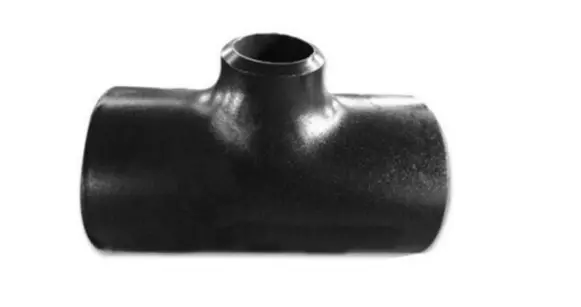
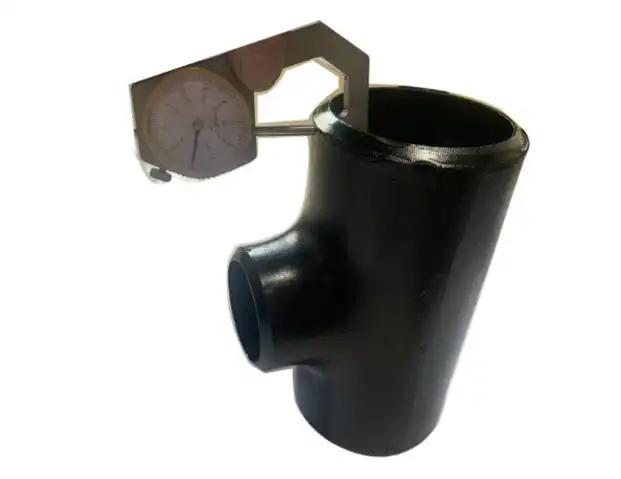
The Socket Weld Pipe Tee makes a branch connection at a 90-degree angle from the main pipeline. This lets fluids be sent to different places or collected at different angles. The hole depth is usually 3/16 inch deeper than the point where the pipe goes in. This creates the important space that keeps the pipe from breaking when it expands due to heat. This seemingly small detail stops stress buildup that could weaken joint integrity in systems that go back and forth between room temperature and temperatures above 500°C.
At Oudi, our production lines make both equal tees, which have three holes with the same width, and reducing tees, which have one smaller branch outlet. When connecting smaller monitoring lines or sampling systems to main process pipes, the reducing design is very helpful. Each fitting is checked for size against ASME B16.11 standards to make sure that the socket bore diameters and depths exactly match the pipe schedules that were given.
Material Selection and Performance Characteristics
How well Socket Weld Pipe Tees work under operating stress is directly related to the materials they are made of. Carbon steel types that use ASTM A105 forgings are most common in situations where cost is important, and corrosion is not a problem. These fittings can handle pressures up to Class 6000 and come in sizes from ½ inch to 4 inches. This means they can be used for both steam distribution networks and hydrocarbon transport lines.
Chemical injection skids and marine platform systems are places where corrosion is common. 304L and 316L types of stainless steel are available to handle these harsh conditions. The chromium-nickel mix stops pitting and crevice rust, which would quickly break down carbon steel options. Positive Material Identification testing makes sure that Oudi's raw materials can be tracked by making sure that their chemical make-up matches Material Test Certificates according to EN 10204 3.1 standards before they are used for machining.
Alloy steel parts with chromium-molybdenum elements are used in high-temperature situations where regular steel would bend due to creep. These materials are required by power plants for steam trap systems and instrument root valves that work continuously above 450°C. Because the grain structure is better, it stays stable in size and can hold pressure even after decades of heat cycles.
Dimensional Standards Governing Socket Weld Tees
ASME B16.11 sets the dimensions that make sure forged fittings can be used anywhere in the world. Socket depth specifications keep welds from not engaging properly and stop too much insertion, which could block flow paths. Different pressure levels can be met by wall thicknesses ranging from Schedule 40 to Schedule XXH. Heavier schedules offer better burst resistance in critical service applications.
The diameter of the socket bore stays a little bigger than the outer diameter of the pipe, usually by 0.005 to 0.015 inches. This clearance window lets the pipe go in smoothly while making sure there is enough material left over for a good fillet weld to form. These tolerances are kept the same across all production runs by Oudi's CNC machining centres. This gets rid of the fit-up problems that lower-quality manufacturers have.
Comparing Socket Weld Pipe Tees With Other Pipe Tee Types for Informed Decision-Making
When making decisions about what to buy, it helps to know how different joining methods compare to Socket Weld Pipe Tee setups. The pros and cons of each approach are different and depend on the specifics of the project.
Socket Weld Versus Butt Weld Tees
To butt weld tees, the pipe ends must be bevelled, and the welding must go all the way through the wall thickness. This makes the strongest joint possible, which can handle any pressure or temperature that the base pipe can handle. However, the complexity of the preparation and welding means that certified welders are needed, and radiographic tests are used to keep a close eye on the quality.
Because they don't need to be bevelled and only need to be welded to external fillet beads, Socket Weld Pipe Tees make installation easier in the field. The socket automatically controls the gap and aligns the parts, so even welders with less experience can get good results. Because they are easier to install, Socket Weld Pipe Tees are perfect for small-bore pipes less than 2 inches in diameter, since butt welding costs too much for the size of the line. Ultrasonic testing is done on Oudi's Socket Weld Pipe Tees to find any problems with the forging inside. This makes sure that the strength of the base material makes up for the fact that the weld doesn't go as deep as in butt weld joints.
Socket Weld Versus Threaded Connections
Threaded tees can be installed most quickly through mechanical assembly, which doesn't need any hot work. This benefit is useful in places where there is a risk of explosion or when maintenance work takes longer than planned because of welding permits. Because of the threaded engagement, there are possible leak paths and stress risers that keep the pressure ratings to Class 2000 or lower.
Socket Weld Pipe Tee joints get rid of the spiral leak path that comes with threads and make them more resistant to vibration. When the link is welded, it stays strong in places where there is moving equipment, where threaded fittings would slowly come free. When chemical processing plants replace old threaded systems with Socket Weld Pipe Tee replacements, they say that fugitive emission events happen 85% less often during normal operations.
Socket Weld Versus Slip-On and Flanged Options
Slip-on flanges and flanged tees make connections that can be taken off and put back on easily, making maintenance and regular inspections easier. The bolted assembly lets you take it apart without cutting any pipes, but it also introduces failure modes for the gaskets and needs regular maintenance on the bolt torque. When compared to Socket Weld Pipe Tee joints, the flanged method also adds a lot of weight and space requirements.
Socket Weld Pipe Tees make permanent joints that don't add much weight and take up little space. The welded design eliminates concerns about gasket degradation in high-temperature service, where elastomeric materials break down quickly. Because Oudi makes both Socket Weld Pipe Tees and flanged fittings, engineers can choose the best way to connect their pipes without having to stick to a single solution.
How to Choose a Certified Socket Weld Pipe Tee Factory for OEM Production
To find the best production partner, you need to look at more than just price. You need to look at the partner's skills and dependability in a number of different areas for Socket Weld Pipe Tee manufacturing. The factory's list of certifications, production infrastructure, and support systems all show if they can consistently produce quality throughout the lifespan of your project.
Essential Certifications and Quality Management Systems
Getting ISO 9001 certification shows that a company has put in place written quality management processes that cover all stages of production. With this methodical approach, measurements are always the same, and materials can be tracked, so grades or specifications don't get mixed up. Oudi's quality system goes through yearly surveillance checks, which is how we've kept our certification since the first time we registered.
In addition to basic quality control, the People's Republic of China special equipment manufacturing licence makes sure that our factory meets strict safety and technical standards for making parts for pressure vessels and pipes. As part of this government oversight, production equipment, testing facilities, and technical documentation systems are checked on a regular basis. More and more, American procurement teams see these certifications as the same level of assurance as domestic regulatory frameworks.
ASME compliance goes one step further than certification by requiring validation of the design and controls for the manufacturing process that are specific to pressure piping applications. Our production methods are in line with ASME B16.11 standards, which means that the minimums for socket depths, fillet radii, and material properties are met. Third-party inspection agencies can check for compliance at any stage of production. This gives major EPC contractors the transparency they need.
Manufacturing Capabilities and Capacity Considerations
When working on big projects, the production capacity has a direct effect on how reliable deliveries are. Our yearly output of 16,000 tonnes gives us enough space to handle large orders without affecting shipping times for current customers. The plan of the building separates the processing of carbon steel, stainless steel, and alloy steel so that they don't get contaminated with each other, which could lead to corrosion problems in service before they should.
Forging machines with high-tech features, like 5,000-ton hydraulic presses, make the thick grain structures that allow Socket Weld Pipe Tees to hold pressure. The forging process gets rid of flaws like porosity and segregation that happen with cast alternatives. This makes the mechanical properties more predictable. The heat treatment furnaces at Oudi offer controlled normalising and tempering cycles that make materials tougher while still meeting the required hardness levels.
When standard catalogue sizes don't fit the needs of the project, customisation becomes very important. Our engineering team looks at what the customer wants and then comes up with custom socket depths, reinforcement configurations, or material grades that work with the specific conditions of the job. This OEM feature keeps system design from being harmed by the limits of off-the-shelf components.
Supply Chain Reliability and Technical Support Infrastructure
There is a difference between manufacturers who see quality as a production checkpoint and those who see it as a whole customer experience. Oudi keeps strategic inventories of raw materials that protect against problems in the supply chain. This way, your project schedule won't be held up by delays further up the chain. Our logistics team works with goods forwarders who know how to handle pipe fittings and make sure that damage during transport is kept to a minimum by using the right packaging and loading techniques for containers.
Having access to technical support during construction helps solve problems that come up with installations and applications. Throughout the lifecycle of your project, our engineers help with dimensional verification, suggesting the best way to weld, and making sure that the materials are compatible. We offer this consultation after the original sale because we know that good performance in the field is what builds the long-term relationships we value.
Manufacturers' confidence in the quality of their products can be seen in the warranty terms they offer after the sale. We guarantee the quality of the materials and work that went into making our Socket Weld Pipe Tees, and we'll fix any problems that come up during installation or hydrostatic testing. This promise lowers the risk of buying from us and shows that we are responsible for the goods that bear the Oudi name.
Installation and Maintenance Best Practices for Socket Weld Pipe Tees
If you don't use the right installation methods, Socket Weld Pipe Tee joints might not work as well as they should, or they might leak over time and need expensive repairs. Because these parts look pretty simple, they can give you false trust that hides important installation details.
Preparation and Fit-Up Procedures
The first step in surface preparation is to clean the inside and outside of the socket and pipe of any mill scale, rust, and organic contaminants. Wire brushing and liquid cleaning make sure that there are no materials in the weld zone that could cause porosity or slag spots. Many installation problems can be traced back to not cleaning properly, which allows contaminants to get in the way of the weld fusion.
Pay close attention to the gap size between the pipe end and the socket shoulder when figuring out the pipe insertion depth. ASME B31.3 requires a 1/16-inch expansion gap that keeps the pipe end from touching the socket bottom during the heat expansion phase of welding. When installers push pipes all the way into sockets, the pipe end "hard spots" the fillet weld. This creates stress risers that cause cracks to spread during pressure cycling.
Welding Technique and Quality Verification
Fillet weld profiles need to have the right throat sizes without too much reinforcement, which can mess up the flow. The weld bead should smoothly go from the fitting to the pipe surfaces, making a profile that is slightly convex or concave instead of the "lump" that happens when there is too much filler metal. Oversized welds don't make the joint stronger; instead, they make it more likely to rust by blocking out places where moisture can collect.
It's especially important for Socket Weld Pipe Tee joints that the welder is qualified because you can't see the critical root fusion zone. In order to meet many standards, qualification samples must be tested by cutting welded assemblies into sections to check the internal fusion and penetration characteristics. This validation gives people confidence that production welds are of the same quality, even though they are only looked at from the outside.
Ongoing Maintenance and Inspection Protocols
Visual checks done on a regular basis can find early signs of joint wear and tear before they become catastrophic. Patterns of discolouration around Socket Weld Pipe Tee joints could mean that there is internal leaking through tiny cracks that will eventually lead to through-wall flaws. Surface rust that is mostly found at the tips of welds means that the metal wasn't fused properly, leaving cracks where corrosion could start.
Monitoring ultrasonic thickness keeps track of wall loss during corrosive service, which lets replacement happen before safety margins are lost. The socket shape makes measuring thickness more difficult than with straight pipe sections. Technicians need to be skilled at figuring out what readings mean when they come close to geometric breaks. Setting baseline measurements during commissioning gives inspectors a way to find walls that are getting significantly thinner in the future.
Advantages of Procuring Certified Socket Weld Pipe Tees from a Trusted Factory
Strategic buying choices have effects on the economics and dependability of a project that go far beyond comparing prices for your Socket Weld Pipe Tee procurement. Working with well-known companies like Oudi can help lower the total cost of ownership through a number of value streams.
Performance Advantages in Demanding Applications
When pressure values are checked, you can be sure that the valves will keep system pressures within the right safety margins for the whole time they're working. Our Socket Weld Pipe Tees are tested hydrostatically at 1.5 times their rated working pressure to make sure they are strong and free of any flaws that could make them less effective at containment. This validation stops failures in the field that could put people near dangerous process fluids or cause environmental releases.
Superior material quality means longer service life in places where it is corrosive or hot. We keep an eye on the chemical makeup so that the microstructures stay the same and don't rust or break down when exposed to hydrogen. Chemical processing customers who work in harsh conditions say that Socket Weld Pipe Tees last longer than 20 years if they are installed and specified correctly, so they don't have to be replaced as often as cheaper materials do.
Economic Benefits of OEM Partnerships
Customisation features let fittings be optimised for specific uses instead of systems being over-engineered to work with the limitations of standard parts. A reducing tee that is custom-made for your branch size gets rid of the need for extra reducer fittings and the welds that go with them. This lowers the cost of installation and gets rid of possible leak points. The engineers at Oudi work together to improve designs so that your piping system needs fewer pieces and less work to install them.
As long as a maker has enough production ability to offer volume discounts without affecting shipping times, bulk buying is possible. Our annual capacity of 16,000 tonnes meets the needs of large projects while also keeping stock for smaller, ongoing maintenance needs. This scalability gives project managers the stability and speed they need, no matter how big the order is.
Conclusion
When looking for a certified Socket Weld Pipe Tee manufacturer, you need to think about their technical skills, quality control systems, and how reliable their partnerships are. Because the fitting's main job is to make pressure-containing branch connections, it needs to be made with the kind of material integrity, accuracy in measurements, and uniformity in production that can only be found from well-known manufacturers. Oudi has been dedicated to producing high-quality pipe fittings for 25 years. Our wide range of certifications and track record of on-time deliveries around the world make us a valuable partner for engineers and procurement professionals who refuse to skimp on quality or dependability in their industrial piping systems.
FAQ
1. What certifications should I verify when selecting a socket weld tee manufacturer?
When choosing a Socket Weld Pipe Tee manufacturer, reputable companies with a good reputation keep their ISO 9001 quality management certification, which shows that they have systematic controls over their production. ASME compliance means that the size and material requirements for pressure piping applications have been met. Regulatory authorities issue special equipment manufacturing licenses that add to the proof of technical skill and safety compliance. Material Test Certificates according to EN 10204 3.1 make sure that the chemical make-up and mechanical qualities of each output lot can be tracked.
2. Can socket-weld tees be customised for unique project specifications?
OEM customisation for the Socket Weld Pipe Tee is easy to get from well-known companies that can do engineering analysis and make custom production tools. To deal with specific operating conditions, socket depths can be changed, non-standard materials can be used, or branch configurations can be made stronger. For customisation to work, your engineering team and the manufacturer's technical staff need to work together to make sure the design is possible and the cost of production is acceptable before agreeing to the custom specs.
3. How do socket weld installation procedures differ from butt weld fittings?
Socket Weld Pipe Tee joints need to be cleaned on both the inside and outside of the socket to get rid of contaminants that make it harder for the weld to fuse. When the pipe is inserted correctly, it keeps the growth gap that was stated and doesn't make hard contact with the socket bottom. For welding, external fillet beads are used instead of full-penetration groove welds, which means that a different set of skills is needed, and candidates must pass different tests. Socket joints are easier to fit up than butt weld connections because they don't need precise gap and alignment control.
Partner with Oudi for Your Socket Weld Pipe Tee Requirements
Piping systems that work well start with parts like the Socket Weld Pipe Tee that are made to strict standards and come with quick expert help. Oudi offers Socket Weld Pipe Tees that work reliably in your most important applications by combining decades of production experience with full quality control and global logistics capabilities. Our special equipment manufacturing licence and ISO 9001-certified production processes give your projects the peace of mind they need, and our engineering team is ready to help with unique requests and technical problems. We provide the quality, stability, and support that keep your project on schedule and protect the integrity of your operations. Get in touch with our team at oudi-04@oudiguandao.com to talk about your needs with skilled Socket Weld Pipe Tee suppliers who know what's at stake in your situation.
References
1. American Society of Mechanical Engineers. (2020). ASME B16.11: Forged Fittings, Socket-Welding and Threaded. New York: ASME Press.
2. American Society of Mechanical Engineers. (2018). ASME B31.3: Process Piping - Design, Materials, Fabrication, Erection, Examination, and Testing of Piping Systems. New York: ASME Press.
3. Kumar, S., & Patel, R. (2019). Material Selection and Performance Analysis of High-Pressure Piping Components in Petrochemical Applications. Journal of Pressure Vessel Technology, 141(4), 041401.
4. European Committee for Standardisation. (2019). EN 10204: Metallic Products - Types of Inspection Documents. Brussels: CEN Publications.
5. Mohitpour, M., Golshan, H., & Murray, A. (2020). Pipeline Design and Construction: A Practical Approach (4th ed.). New York: American Society of Civil Engineers Press.
6. Nayyar, M. L. (2019). Piping Handbook (8th ed.). New York: McGraw-Hill Education.

Need help finding the right solution with our experts. Please contact us.
SINCE 1998 Your Reliable Pipeline Manufacturer