How Does Custom Carbon Steel Elbow Improve Pipeline Reliability?
Custom carbon steel elbows make pipelines much more reliable by offering parts that are exactly designed to meet practical needs, including pressure ratings, dimensional requirements, and environmental conditions, in a way that standard components can't. Unlike off-the-shelf options, these custom pipe elbows are made using strict methods that are in line with ASTM, ASME, and ISO standards. This makes sure that the joints are leak-proof and that system failures are kept to a minimum. When oil, chemical, or natural gas pipelines are exposed to high-pressure fluids, corrosive media, or extreme temperatures, Custom carbon steel elbows provide the precise measurements and material integrity needed to keep the flow going and avoid costly downtime.
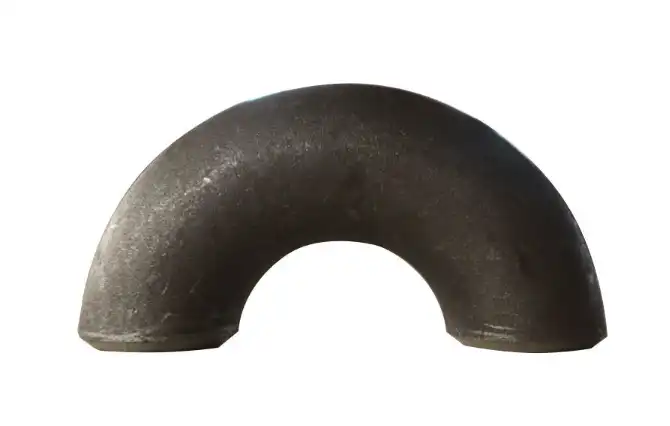
Understanding Custom Carbon Steel Elbows and Their Role in Pipelines
What Defines a Custom Carbon Steel Elbow
A Custom carbon steel elbow is a pipe fitting that is made to fit the specific needs of a project rather than standard industry sizes. These parts change the flow of fluids or gases at exact angles, usually 45 degrees or 90 degrees. They can also handle wall thicknesses, diameters, and pressure ratings that standard fittings can't. There are different ways to make things, such as hot pushing, hot bending, seamless forming, and bonded building. Each has its own mechanical qualities that are best for different types of stress.
Manufacturing Standards Governing Reliability
Quality carbon steel elbows meet standards that are known all over the world, like ANSI B16.9, JIS, DIN, and BS. These rules explain what materials are made of, how they should be tested, how much pressure they can hold, and how to measure them. We have ISO 9001:2000 certification and a special equipment manufacturing license from the People's Republic of China at our Cangzhou facility. This means that before being shipped, every elbow goes through a full inspection and nondestructive flaw detection. This methodical approach has a direct effect on the long-term integrity of the pipeline by getting rid of manufacturing flaws that could put system safety at risk.
Material Selection and Mechanical Properties
Different types of carbon steel have different amounts of carbon, alloying elements, and heat treatment, which changes how strong, flexible, and resistant to rust they are. For general uses, ASTM A234 WPB is a common grade. For hostile conditions, higher-alloy versions are available. The choice of material must strike a balance between how much it costs and how well it works. For example, carbon steel has better tensile strength and pressure resistance than stainless steel, but it costs less. This makes it the best choice for oil pipelines, gas transmission systems, and water conservation projects where cost-effectiveness and durability are important.
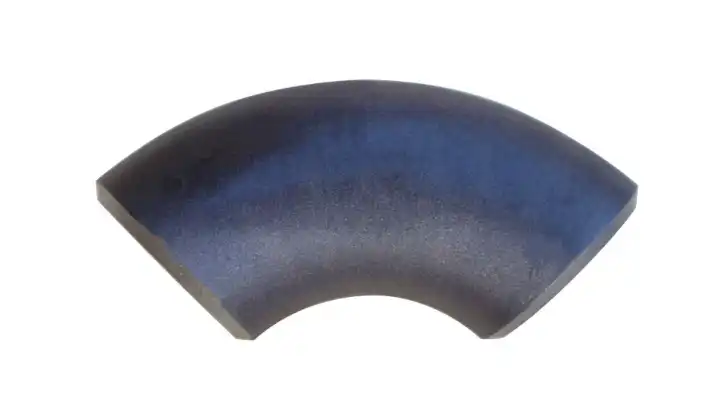
Key Factors in Improving Pipeline Reliability with Custom Elbows
Dimensional Accuracy Reduces Stress Concentration
When standard elbows are installed, they often cause small misalignments, which create stress points where cracks start to form over time. These risks are taken away by custom fabrication, which uses precise dimensional control to match the shape of an existing pipeline. Tolerances are kept within millimetres by our advanced production tools. This makes sure that the changes are smooth and that mechanical stress is spread evenly across the elbow radius. In high-pressure oil and gas applications, where even small flaws can speed up fatigue failures, this level of accuracy is very important.
Enhanced Pressure Ratings for Demanding Applications
The safety margins on off-the-shelf parts aren't enough for specialised settings because they are made for normal use. Custom carbon steel elbows can be made with thicker walls and certain grades of steel to handle sudden changes in pressure, thermal expansion, and repeated loading. Fittings that can withstand higher temperatures and corrosive fluids are needed in a chemical plant. Our annual production capacity of 16,000 tonnes lets us make these specialised parts without affecting delivery times or quality standards.
Corrosion Resistance Through Tailored Treatments
How long a pipeline lasts depends a lot on how well it resists rust from the inside and outside. Standard elbows don't have treatments like galvanising, epoxy coatings, or special linings that make them better for certain uses. Custom elbows do. Coatings on the inside of water treatment plants keep scale from building up and chemicals from breaking down, while installations near the coast need protection from saltwater on the outside. These targeted interventions greatly increase the service life, lowering the number of maintenance visits and unplanned shutdowns that cause problems and raise the cost of ownership over time.
Leak-Proof Connections Through Quality Assurance
To get good seals, butt welding, socket welding, and threaded connections all need certain sizes and finishes on the outside. Our quality control system, which was set up according to ISO 9001 standards, uses full inspection protocols to check everything from the raw materials to the finished product. Each joint is put under pressure and inspected visually to make sure the weld is strong and the surface is smooth, as required by the specifications. More than 300 customers in 40 countries trust this strict approach, including picky buyers in Europe, North America, and the Middle East.
Comparing Custom Carbon Steel Elbows with Other Solutions
Custom Versus Standard: When Specification Matters
Standard elbows work well for most building jobs, but Custom carbon steel elbows don't work well when projects need specific bend radii, angles, or sizes that aren't standard. If you are making a ship and space is limited, you might need elbows with smaller radius turns than what is available in catalogues. Custom fabrication can meet these needs without requiring design changes that lower the safety or efficiency of the system. It may seem like the initial costs are higher, but the total cost of ownership is lower when adapters, reducers, and workaround solutions are not needed.
Seamless Versus Welded: Performance Trade-Offs
Seamless elbows are made from solid pipe blanks that don't have continuous welds. They are stronger when subjected to changes in temperature and mechanical stress. Because of this, they work great in high-temperature boilers and natural gas pipelines where the pressure changes. When flat plates are bent into tube-like shapes, you get welded elbows. These are cheaper for applications with larger diameters and lower pressure. Because our factory makes both seamless and straight-seam versions, procurement teams can choose the best option based on operational needs rather than inventory levels.
Carbon Steel Versus Stainless Steel: Material Economics
Stainless steel elbows work great in places that are very corrosive, like food processing or pharmaceutical manufacturing, where the risk of contamination is greater than the cost. In industries like oil and gas, chemical processing, and power generation, where corrosion happens slowly and can be controlled with coatings and cathodic protection, carbon steel is still the most cost-effective choice. Our wide range of products, which includes carbon steel, stainless steel, and alloy steel, lets engineers match the exact properties of materials to the situations they will be used in without spending too much on corrosion protection that isn't needed.
Procurement Considerations for Custom Carbon Steel Elbows
Supplier Certification and Quality Verification
If you choose a manufacturer with quality management systems that have been checked, you can avoid getting low-quality materials and bad work. Our ISO 9001 certification and licenses to make special equipment show that we follow international quality standards. These are backed up by internal testing tools that meet the discovery needs of global markets. When procurement workers look at suppliers, they should ask to see proof of certification, if possible, visit the production facilities, and read third-party audit reports to make sure that promises of strict quality control are true.
Lead Times and Production Capacity Alignment
When you order custom items, the production cycle is naturally longer than when you buy stock items. Our annual capacity of 16,000 tonnes gives us enough throughput to balance the freedom to customise with reasonable delivery times. It's easier for production plans to work with project timelines when there is clear communication during the quotation stage. This includes laying out quantities, delivery dates, and technical needs. EPC contractors who are in charge of multi-phase construction projects benefit when suppliers can make staged deliveries that fit the order of installations without having to pay for storage space or make the site crowded.
International Shipping and Bulk Order Logistics
If you want to send Custom carbon steel elbow pipe fittings to North America, Europe, or Southeast Asia, you need to package them so they don't get damaged during ocean freight, make sure you have the right paperwork for customs clearance, and work with freight forwarders to make sure everything goes smoothly. We have experience exporting to Iran, Singapore, Greece, and many other countries, so we know what the local rules are for things like certifications, tracking materials, and inspection paperwork. Custom packaging options, such as wooden crates, palletisation, and protective coatings, are used for bulk orders to make sure that products arrive in a condition that can be installed, no matter how long they were shipped or how they were handled.
After-Sales Support and Technical Assistance
Quick technical support answers questions about installation, deals with unplanned problems in the field, and gives the paperwork needed to follow the rules. Before orders are finalised, our sales team helps with choosing materials, making sure they meet pressure ratings, and answering questions about suitability. Post-delivery support includes documentation packages with test reports on the materials, records of dimensional inspections, and compliance certificates that engineering teams and regulatory bodies in charge of pipeline building projects need.
Case Studies: Real-World Success of Custom Carbon Steel Elbows in Pipeline Projects
Resolving High-Pressure Oil Pipeline Integrity Issues
A project in North America to send oil had repeated failures at pipeline direction changes, where standard elbows couldn't handle sudden increases in pressure during pumping operations. We made elbows with thicker walls and higher-grade carbon steel that meet ASTM A234 WP11 standards for service at high temperatures after looking at operating data. The customised fits got rid of failures, cut down on maintenance shutdowns by 60%, and pushed inspection rounds from once a year to three times a year. This shows how customised solutions can solve problems that standard components can't.
Mitigating Corrosion in Coastal Chemical Processing
A chemical plant near the coast of the Mediterranean had to deal with faster corrosion on the outside of pipes that were exposed to salty air. Standard carbon steel elbows had to be replaced every three years, which slowed down work and made maintenance costs go up. We coated custom elbows with epoxy that was specially made for marine environments. This made them last longer—over ten years. Material choice—optimising carbon content for coating adhesion—along with proper surface preparation before coating application, provided corrosion resistance that met the plant's operational timeline without having to switch the whole system to stainless steel, which would have been expensive.
Optimising Space Constraints in Shipbuilding Applications
A port that was building LNG ships needed pipe elbows with non-standard bend radii so that they could fit in engine rooms that were not very big. Standard elbows with a long radius took up too much space, and elbows with a short radius caused too many pressure drops that hurt the system's performance. Both problems were solved by custom elbows with intermediate radii, which kept the hydraulic efficiency while also fitting the space requirements. Working together with the shipyard's designers on this project shows how customisation can make a project successful when catalogue solutions force unacceptable trade-offs between performance and installation ease.
Conclusion
By precisely matching component specifications to operational demands that standard fittings cannot meet, Custom carbon steel elbows provide quantifiable improvements in pipeline reliability. By making measurements more accurate, customising pressure ratings, and treating corrosion in ways that are specific to each application, these specialised fittings lower the number of failures, increase the time between maintenance, and lower the total cost of ownership for infrastructure projects in the oil, chemical, natural gas, and water industries. Procurement teams can be sure they get parts that meet international standards and work with project schedules and budgets if they choose manufacturers whose quality systems have been checked, whose production capacity is enough, and whose export experience has been shown.
FAQ
1. What advantages do custom carbon steel elbows offer over standard fittings?
Custom carbon steel elbows have what benefits over regular fittings? Custom fabrication makes exact size matches to existing pipe systems, which gets rid of the misalignment stress that leads to early failures. Because the walls of these elbows are thicker, they can handle higher pressure rates. They can also be coated in special ways for corrosive environments that regular goods can't handle. Being able to specify angles, radii, and material grades ensures the best performance in tough situations where catalogue parts could pose safety risks or slow down operations.
2. How long does manufacturing and delivery typically take?
Production times depend on how complicated the order is and how many of them there are. It usually takes four to six weeks from the time an order is confirmed until it is shipped for simple custom specifications like non-standard diameters and standard angles. Eight weeks may be needed for complicated projects with complex shapes, special materials, or a lot of testing. Depending on the location and the goods method, international shipping can take an extra one to three weeks. Getting in touch with suppliers early on in the planning stages of a project helps deal with lead times without delaying the start of construction.
3. Which industry standards ensure quality and compliance?
Some important standards are ASME B16.9 for limits and sizes, ASTM A234 for material details, and ISO 9001 for quality control methods. For use in the oil industry, API standards apply, while DIN and JIS standards are used in European and Asian markets. Manufacturers should give compliance certificates, material test results, and measurement check records that show they follow the rules. For important applications, third-party inspection services like SGS or Bureau Veritas can add more proof.
Partner with Oudi for Reliable Custom Carbon Steel Elbow Solutions
If you need reliable Custom carbon steel elbow solutions, work with Oudi. Our Cangzhou factory has been making precision pipe fittings for over 300 customers in the oil, chemical, natural gas, and water conservation industries around the world since 1998. Custom carbon steel elbows engineered to your exact specifications are delivered by our ISO 9001-certified quality system, special equipment manufacturing licenses, and 16,000-ton annual capacity. These elbows have dimensions, pressure ratings, and material grades that standard suppliers cannot match. Whether you need coated fittings for corrosive chemical service or smooth elbows for high-pressure gas gearbox, our expert team works with your engineers to make sure that performance and dependability are at their best. Email our Custom carbon steel elbow supplier team at oudi-04@oudiguandao.com for detailed quotes, technical advice, and delivery times that work with your project's schedule.
References
1. Smith, J. R., & Thompson, M. L. (2021). Advanced Materials in Pipeline Engineering: Carbon Steel Applications and Performance Analysis. Industrial Press.
2. Chen, W., & Rodriguez, A. (2020). "Comparative Study of Seamless and Welded Pipe Fittings in High-Pressure Systems." Journal of Pressure Vessel Technology, 142(3), 031402.
3. American Society of Mechanical Engineers. (2019). ASME B16.9: Factory-Made Wrought Buttwelding Fittings. ASME Standards.
4. Kumar, P., & Hassan, F. (2022). "Corrosion Resistance Enhancement in Carbon Steel Pipe Systems Through Surface Treatment." Corrosion Science Journal, 198, 110145.
5. International Organisation for Standardisation. (2020). ISO 9001:2015 Quality Management Systems—Requirements. ISO Publications.
6. Wilson, D. E. (2021). Pipeline Integrity Management: Best Practices for Oil and Gas Infrastructure. Gulf Professional Publishing.

Need help finding the right solution with our experts. Please contact us.

SINCE 1998 Your Reliable Pipeline Manufacturer



