Chemical Industry Carbon Steel Elbow: A Complete Buying Guide
If you’re in procurement or plant engineering, you know the incorrect pipe fitting choice may shut down an entire manufacturing line. The chemical industry carbon steel elbow is one of the most often ordered fittings in process piping systems; however, many customers still struggle with quality assessment, material grade, and supplier dependability. This book explains all you need to know – about material attributes, comparisons between types, how to install them, and how to choose a supplier – so that you can make confident, cost-effective purchase choices.
Understanding Carbon Steel Elbows in the Chemical Industry
What Is a Carbon Steel Elbow?
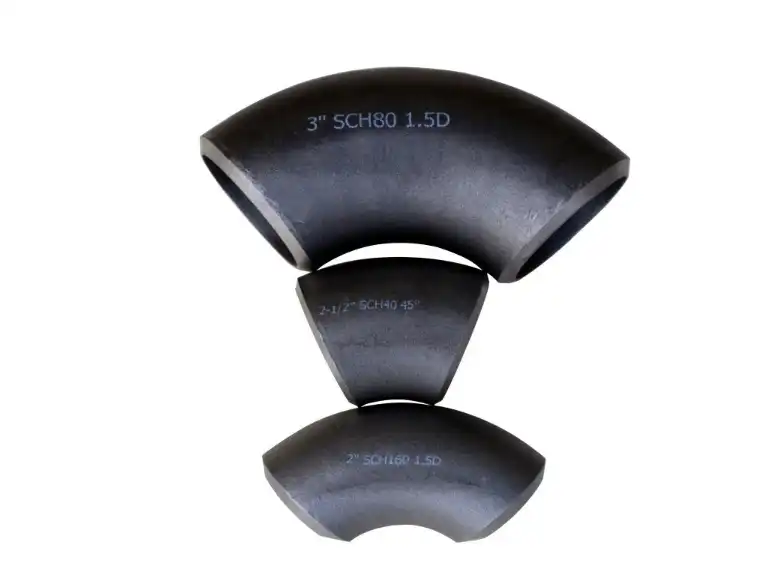
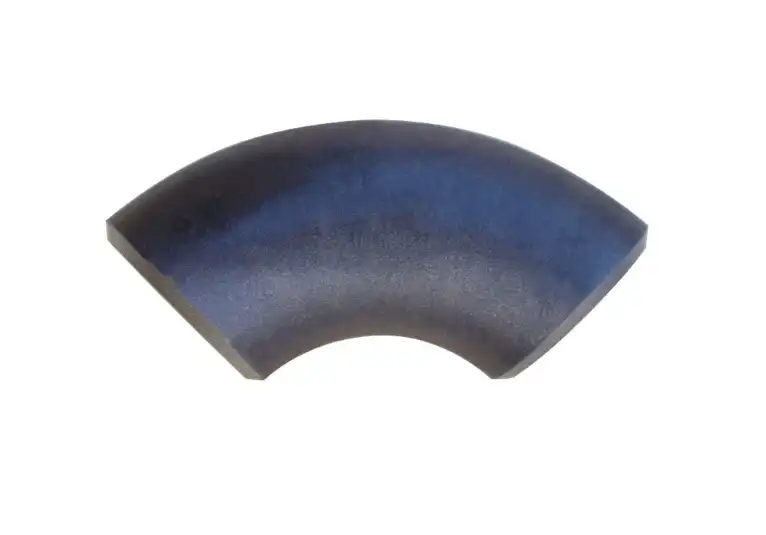
A carbon steel elbow is a pipe fitting that is used to change the direction of fluid or gas movement in a pipe system. The most frequent angles of bend are 90°, 45°, and 180°. These fittings are used in chemical plants every day for hostile media, high temperatures, and changing pressures. It is their capacity to maintain directed flow without degrading pressure integrity that makes them so vital in process pipe configurations.
Common Types Used in Chemical Plants
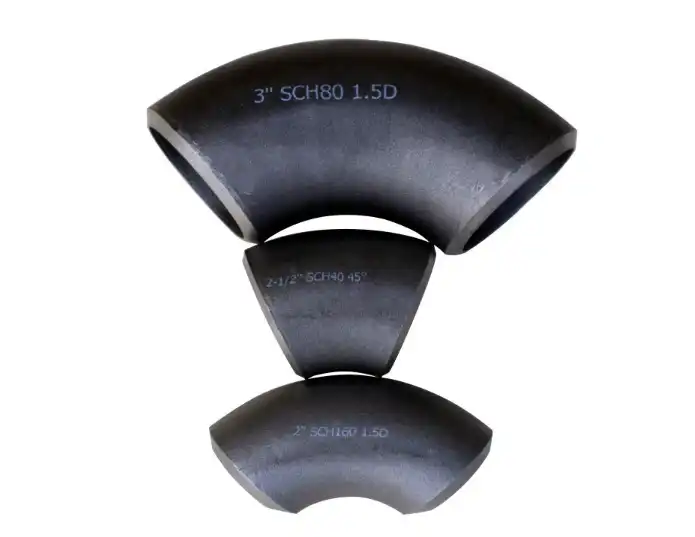
In chemical plant applications, three kinds are common. Butt-weld elbows are welded together and are ideal for high-pressure service. Socket-weld elbows are suitable for lower-diameter lines. Utility lines of lower pressure have threaded elbows. Short radius (SR) elbows, where the radius of the bend is the same as the pipe diameter, are in these categories and are perfect for confined places such as oil refineries and water treatment facilities. Long-radius (LR) elbows (1.5 times pipe diameter) minimize flow resistance and are recommended for high-velocity chemical streams.
Key Mechanical and Chemical Properties
The yield strength of ASTM A234 WPB and ASME B16.9 carbon steel pipe elbows is no less than 240 MPa, and the tensile strength is 415-585 MPa. These requirements provide structural dependability in thermally cycled high-pressure environments. While carbon steel is not as resistant to corrosion as stainless steel alternatives in severely acidic conditions, service life in most chemical processing applications may be significantly extended by correct coating and material grade selection.
Comparing Carbon Steel Elbows with Other Materials for Chemical Applications
Carbon Steel vs. Stainless Steel
Chemical industry carbon steel elbows cost 30-50% less than equivalent stainless steel fittings. They are the material of choice if the budget is low and the corrosivity of the medium is moderate. Stainless steel is the preferred material for extremely corrosive acid conditions but adds substantial capital expense. Carbon steel continues to be the practical, cost-effective choice for pipelines delivering hydrocarbons, gas, or treated water, without sacrificing structural performance.
Seamless vs. Welded Carbon Steel Elbows
Seamless Elbows are produced from solid billets, with no weld seam. They have homogeneous wall thickness and higher strength under strain. Welded elbows are cost-effective for bigger diameters and low-pressure applications. Seamless is the safest option for chemical service lines when pressure spikes exist. Oudi makes seamless and straight-seam industrial elbows by employing hot-pushing and hot-heating bending technologies to fulfill the complete spectrum of chemical plant needs.
How to Evaluate Suppliers
In the chemical sector, the first step in screening suppliers of carbon steel elbows is to verify the certifications. ISO 9001 quality management system certification and special equipment manufacturing licenses: Oudi is certified to ISO 9001:2000 and holds a People's Republic of China Special Equipment Manufacturing License. We have a full inspection system from raw material input to final product shipment. These certifications are not just formalities; they are a clear reflection of process discipline and product traceability.
Key Benefits of Using Carbon Steel Elbows in Chemical Plants
Carbon steel elbows provide various operational benefits, which are best suited to plant engineers and procurement teams. These are the basic advantages that account for their broad use in chemical processing systems:
- Cost efficiency at scale: Carbon steel is a raw material that is accessible internationally, making the unit cost reasonable. Oudi has a yearly capacity of 16,000 tons, so purchasers can lock in bulk purchases at steady prices and with no delays in supply.
- Wide specification coverage – From 1/2” to 72” diameter, and in ANSI, DIN, JIS, and BS standards, carbon steel elbows may be accurately matched to current pipeline requirements without the delays of bespoke manufacturing.
- Durability in demanding service: Carbon steel elbows, with the right surface treatment, may be used for operating temperatures from -29°C to 425°C (ASTM A234 WPB) and are suited for most chemical plant heating, cooling, and transfer lines.
- Standards compliance and traceability: Products certified to ASME B16.9 and ASTM A234 are supplied with comprehensive material test reports (MTRs) to satisfy regulatory audits and quality documentation needs.
These combined benefits minimize total cost of ownership and make procurement procedures simple and verifiable. This consistency of performance across requirements and certifications is a massive simplification for EPC contractors and industrial distributors operating multi-country projects
How to Choose the Right Carbon Steel Elbow for Your Chemical Industry Needs
Match Material Grade to Service Conditions
ASTM A234 WPB covers most general chemical service applications. For low-temperature services, A420 WPL6 is the appropriate grade. If your pipeline handles hydrogen sulfide (H₂S) environments, ensure the chemical industry carbon steel elbow meets NACE MR0175 requirements. Always cross-reference the process fluid, operating temperature, and pressure class before finalizing material specification.
Select the Right Bend Radius and Dimensions
Long-radius elbows (1.5D) minimize pressure drop and suit high-flow chemical transfer lines. Short-radius elbows (1D) work in space-constrained installations such as skid-mounted equipment. Confirm nominal pipe size (NPS), schedule (wall thickness), and end connection type — butt-weld, socket-weld, or threaded — align with your existing piping system before placing any order.
Evaluate Supplier Reliability and Lead Times
A qualified carbon steel elbow supplier should offer documented quality control, clear lead times, and responsive technical support. Oudi has served over 300 customers across more than 40 countries, with exports to Europe, North and South America, Africa, Southeast Asia, and the Middle East. This track record reflects both production consistency and the ability to handle diverse project specifications across global markets.
Installation and Maintenance Guide for Carbon Steel Elbows in Chemical Plants
Best Practices for Installation
Before installation, check the pressure-temperature rating of the elbow to ensure it meets the service line. Clean pipe ends completely and check weld bevels for flaws. Use competent welders and comply with ASME B31.3 process piping code for butt-weld elbows. Misalignment during fit-up is one of the most prevalent causes of weld stress concentration, so make sure you take the time to properly align your components before welding.
Routine Inspection and Corrosion Monitoring
Chemical service: Ultrasonic thickness measurements should be taken at elbow intrados locations every 12–24 months. Flow turbulence increases wall thinning at bend sections. Where external corrosion potential exists, use corrosion-resistant coatings or cathodic protection. Keep records of each inspection cycle and use them to see deterioration patterns and replace before problems occur.
Troubleshooting Common Issues
At the early stages, difficulties are indicated by surface pitting, small amounts of seepage at the weld joints, or anomalous pressure drops due to partial blockage. Where wall thickness readings are below minimum allowed values of ASME B31.3, schedule rapid replacement. Deformation or cracking seen at the weld heat-affected zone typically means faulty installation or thermal fatigue, both requiring an engineering assessment before returning the line to service.
Conclusion
The selection of the proper chemical industry carbon steel elbow for chemical plant use is a choice impacting both safety and long-term operational cost. Material grade, kind of bend, dimensional standard, and supplier certificates all play a part. When correctly designed and obtained from a licensed manufacturer, carbon steel elbows remain the practical, proven option for most chemical industry pipeline applications. Check supplier credentials, validate material test results, and compare specs against your real service circumstances. The effort you take will be repaid with a pipeline system that will provide you with reliable performance for years to come.
FAQ
1. What standards apply to carbon steel elbows used in chemical plants?
The primary standards are ASTM A234 for material specification and ASME B16.9 for factory-made butt-welding fittings. Process piping design follows ASME B31.3. Suppliers should provide material test reports (MTRs) confirming compliance. Oudi products meet ANSI, DIN, JIS, and BS standards, covering most global project requirements.
2. How does temperature affect carbon steel elbow performance?
ASTM A234 WPB carbon steel elbows are rated for service between -29°C and 425°C. Above this range, creep and oxidation reduce structural integrity. For higher temperature services, alloy steel grades such as A234 WP11 or WP22 are more appropriate choices.
3. Can carbon steel elbows handle corrosive chemical media?
Carbon steel performs well with hydrocarbons, natural gas, steam, and treated water. For strongly acidic or chloride-rich media, additional protective lining or a material upgrade to stainless or alloy steel may be required. Always confirm chemical compatibility during the specification stage.
4. What is the difference between short-radius and long-radius elbows?
Short-radius (SR) elbows have a centerline radius equal to the nominal pipe diameter, useful in confined spaces. Long-radius (LR) elbows have a centerline radius 1.5 times the pipe diameter, reducing flow resistance and pressure drop — the standard choice for most chemical process lines.
Request a Quote from Oudi — Certified Carbon Steel Elbow Supplier
Oudi has manufactured pipe fittings since 1998, and our carbon steel elbow products meet ISO 9001, ANSI, DIN, JIS, and BS standards with full material traceability. Whether you need a single specification or a large bulk order for a chemical plant project, our team is ready to provide competitive pricing and reliable delivery. Contact us today at oudi-04@oudiguandao.com to request a quote for your chemical industry carbon steel elbow requirements.
References
1. ASME B16.9 — Factory-Made Wrought Buttwelding Fittings, American Society of Mechanical Engineers, 2018.
2. ASTM A234/A234M — Standard Specification for Piping Fittings of Wrought Carbon Steel and Alloy Steel for Moderate and High Temperature Service, ASTM International, 2022.
3. ASME B31.3 — Process Piping, American Society of Mechanical Engineers, 2022.
4. Nayyar, M. L. — Piping Handbook, McGraw-Hill, 2000.
5. Smith, P. R. & Van Laan, T. J. — Piping and Pipe Support Systems: Design and Engineering, McGraw-Hill, 1987.
6. Chemical Engineering Progress — "Material Selection for Corrosive Process Environments," AIChE, 2019.

Need help finding the right solution with our experts. Please contact us.
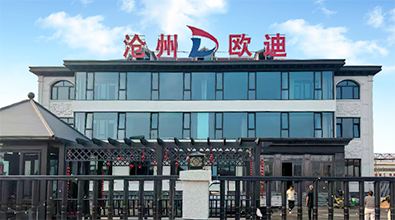
SINCE 1998 Your Reliable Pipeline Manufacturer