Concentric Reducer Carbon Steel Factory with Custom Sizes
When searching for a Concentric Reducer Carbon Steel factory that delivers precision-engineered custom sizes, reliability and technical expertise are non-negotiable. At Oudi, we specialize in manufacturing high-quality carbon steel concentric reducers that meet rigorous international standards, including ANSI, JIS, DIN, and BS. Since 1998, our facility in Cangzhou has produced over 16,000 tons annually of pipe fittings tailored to the exact specifications of oil, chemical, natural gas, and water conservancy industries worldwide. Our ISO 9001-certified production line ensures every concentric reducer—whether seamless or welded—provides the structural integrity and flow optimization your pipeline systems demand.
Understanding Carbon Steel Concentric Reducers
What Defines a Carbon Steel Concentric Reducer?
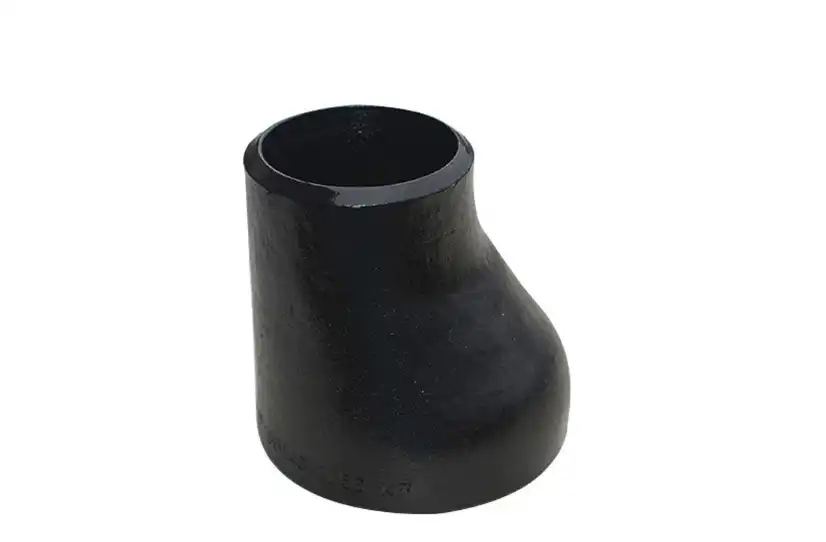
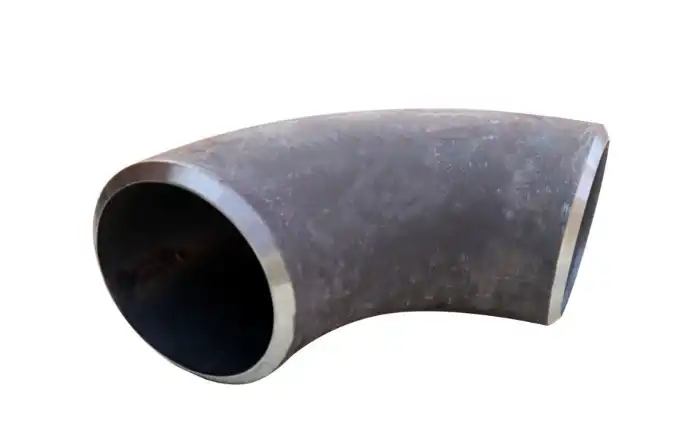
A carbon steel concentric reducer is a butt-weld pipe fitting that joins two pipes with different diameters so that they share a centerline. Manufactured primarily to ASTM A234 WPB/WPC standards, this cone-shaped component features symmetrical diameter reduction around the entire circumference. The centerline alignment distinguishes it from eccentric reducers and makes it particularly effective in vertical piping applications where balanced fluid dynamics matter most.
The main goal of engineering is to solve two very important problems. As the gradual taper lowers turbulence and friction coefficients during flow transitions, hydraulic instability is kept to a minimum. The smooth internal shape keeps the pipe's integrity, unlike sudden changes in width that speed up erosion. When the centerlines meet, there is no more angular stress on the support structures, which makes structural alignment easier. This is especially helpful in high-pressure steam lines or vertical pump discharge designs.
At Oudi, we make these reducers from high-quality carbon steel grades that are strong but also easy to weld. In our production, we use both precision welding and seamless forming methods, based on the size and pressure needs. Each method undergoes mandatory heat treatment—normalizing or stress-relief at temperatures above 595°C—to restore microstructure consistency and ductility after forming operations.
Seamless vs. Welded Manufacturing Techniques
Manufacturing technique directly impacts performance qualities. Seamless concentric reducers are hot-formed from solid pipe stock, eliminating weld seams that could become potential failure points under cyclic pressure. This method works well for high-pressure situations where the wall's structure can't be harmed. Our seamless production keeps the grain structure uniform throughout the fitting, which makes it more resistant to fatigue in harsh service conditions.
When changing diameters, welded reducers are cheaper than other types. We use controlled welding parameters and heat treatment after the welding process to make the mechanical properties of the parts match those of seamless equivalents. The longitudinal seam gets 100% radiographic screening per ASME B31.3 standards. Ultrasonic testing is used to make sure that the wall thickness is the same across the whole profile. This makes sure that the schedule rating stays the same from the big end to the little end.
Quality rules govern every step of the production process. ISO 9001:2000 certification and our Special Equipment Manufacturing License from the People's Republic of China confirm our quality control systems. From raw material chemical composition verification through dimensional inspection and non-destructive testing, we maintain full traceability. We use high-tech detection tools that check for hardness, tensile strength, and impact toughness to make sure that the materials meet the needs of your project.
Essential Dimensions and Specifications for Custom Sizes
Standard and Customizable Size Parameters
The success of placement and long-term performance depend on how accurate the measurements are. Standard Concentric Reducer Carbon Steel sizing follows ASME B16.9 specifications, where face-to-face length correlates directly to the larger pipe's outside diameter. The bigger end of the reducer fits the upstream line's nominal pipe size, and the smaller end connects to the line's downstream smaller diameter. The wall thickness stays the same all the way through and matches the pipe schedule of the bigger link.
It's necessary to use custom sizes when standard sizes can't meet specific flow needs or space limitations. We often make reducers with non-standard combinations of diameters, longer face-to-face lengths for smooth transitions, and different schedules on each end. One common way to customise something is to match different pressure ratings, like a Schedule 40 large end changing to a Schedule 80 small end so that it can work with equipment further downstream that needs higher working pressures.
Pay close attention to the thickness specs. Most of the time, a constant wall thickness is fine, but high-velocity services may need "bored to match" designs, in which the inside diameter narrows to match the thinner wall of the pipe downstream. This stops sudden speed changes that cause erosion. Based on your flow rates and fluid properties, our engineering team figures out the best taper angles. This makes sure that the velocity curves are smooth and that head loss is kept to a minimum.
End beveling is done according to standard guidelines to make field welding easier. For walls less than 22 mm thick, we make a typical 37.5° ±2.5° bevel. Compound bevels are used on thicker walls to allow deep penetration welds that match the strength of the parent pipe. The land face width and root gap measurements are correct for the welding process, so your crew can get consistent weld quality without doing any extra work.
Concentric vs. Eccentric Reducers: Functional Differences
Knowing when to use concentric or eccentric reducers can help you avoid expensive operational problems. Concentric reducers maintain centerline alignment, making them ideal for vertical pipe runs where gravity assists drainage and air pockets cannot accumulate. The equal reduction helps pipe clamps handle stress evenly and keeps installations looking good when they are out in the open.
Eccentric reducers offset the centerlines, creating a flat side either top or bottom. This setup fixes some problems with straight pipes. When put on pump suction lines flat-side up, the eccentric design stops air pockets from forming, which would otherwise cause cavitation and damage to the impeller. Flat-side-down installations make it easier for process lines that need to be cleaned often or put away for the winter to drain completely.
The structural effects are very different. Concentric designs make support engineering easier because the centerlines of the pipes stay parallel, which lets standard hangers be placed. Because the axis has moved to an eccentric placement, it needs offset supports or hangers that can be adjusted. Vibration characteristics are also different. For example, eccentric reducers in horizontal runs can cause asymmetric vibration modes if they are not properly supported, while concentric reducers in vertical lines have lower amplitude oscillations because their masses are spread out evenly.
Benefits and Performance Insights of Carbon Steel Concentric Reducers
Durability and Operational Resilience
Carbon steel has been shown to work well in harsh industrial settings. The material's natural toughness withstands mechanical shock, thermal cycling, and pressure changes common in oil refining, chemical processing, and power generation facilities. The ASTM A234 WPB grade has a tensile strength of more than 60,000 psi and great flexibility, which means the reducer can handle system shocks without breaking.
The environment and safety measures affect how resistant something is to corrosion. In dry gas service or non-corrosive fluid applications, carbon steel provides decades of reliable service. For mildly corrosive environments, protective coatings or cathodic protection systems extend operational life cost-effectively compared to exotic alloy alternatives. During production, we can apply epoxy coatings, galvanisation, or other surface treatments that will work with your plan to stop corrosion.
The ability to handle temperature and pressure shows operational resilience. ASME B16.9 Concentric Reducer Carbon Steel reducers accommodate service temperatures from -29°C to 427°C without derating. Pressure ratings correlate to pipe schedule and temperature—a Schedule 40 reducer maintains 1500 psi working pressure at ambient temperature, decreasing proportionally as temperature rises per ASME B31.3 allowable stress tables. Our expert team offers pressure-temperature ratings matched to your unique working envelope.
Real-World Performance Applications
The value proposition is shown through real-world applications. A major petrochemical complex in Texas recently replaced aging reducer fittings in their crude distillation unit with our ASTM A234 WPB concentric reducers. Temperatures can reach 370°C, and pressures can reach 300 psi in the vertical tower pipes. After 18 months of nonstop use, ultrasonic thickness monitoring showed less than 0.5 mm wall loss. This proved that the choice of material and heat treatment protocols kept the corrosion resistance even in the harsh hydrocarbon environment.
Power generation facilities rely on concentric reducers for boiler feedwater systems where vertical piping predominates. Our custom-sized reducers are used by a 600MW coal-fired plant in the Midwest to change from 12-inch Schedule 80 economiser ports to 8-inch distribution headers. The symmetrical design keeps flow stability at velocities topping 15 feet per second, avoiding the erosion-corrosion that plagued their previous eccentric installations. Inspections done once a year always show uniform wear patterns, which support the choice of a concentric configuration.
Water conservation projects are hard because they have to deal with both high pressure and flows that are full of silt. Our concentric reducers were chosen for use in a recent irrigation project for vertical drop structures where canals go from one elevation zone to another. The gradual taper design smoothly releases kinetic energy, which lowers the risk of cavitation damage compared to abrupt changes. After the installation, flow modelling showed that the head loss was within 5% of what was predicted theoretically. This shows how precise our quality control systems are in manufacturing.
How to Choose the Right Carbon Steel Concentric Reducer Factory and Supplier
Manufacturing Capabilities and Quality Assurance
When choosing a manufacturing partner, you need to look at both their technical support and their quality processes. At Oudi, our 66,600 square meter facility holds dedicated production lines for hot forming, cold forming, and welding processes. Advanced CNC machinery makes sure that all production batches are the same size, which is very important when projects need many reducers with the same specs. Our annual capacity of 16,000 tonnes makes the supply chain reliable, so there are no more delivery delays that throw off construction schedules.
Quality assurance infrastructure tells the difference between dependable providers and less-than-stellar businesses. We maintain an on-site metallurgical laboratory equipped for chemical composition analysis, mechanical property testing, and microstructure examination. Each batch of products is tested and recorded, with approved mill test records that can be linked to raw material heat numbers. Radiographic examination, ultrasonic thickness verification, magnetic particle inspection, and liquid penetrant testing are all examples of non-destructive testing that can be done by trained technicians following ASNT Level II guidelines.
Certification compliance proves that a company is good at making things. Our ISO 9001:2000 certification shows that we have a system for managing quality that includes design control, process validation, and constant improvement. The Special Equipment Manufacturing License that Chinese regulators gave out proves that the rules for pressure vessels and piping components were followed. These qualifications give you the proof you need to meet the requirements of project quality plans and regulatory reports in foreign markets.
Material Selection and Cost-Efficiency Considerations
When it comes to industrial piping, carbon steel is still the most cost-effective option. It can save you 60–70% compared to stainless steel equivalents while still meeting performance standards. The selection matrix weighs the qualities of the material against the conditions of service. Carbon steel works well in mildly or not at all corrosive environments where protective coatings or controlled atmospheres keep oxidation from happening. It can handle temperatures up to 427°C, which is high enough for most process industry uses.
When corrosion protection is more important than cost, stainless steel options are needed. Grade 304 stainless steel is very resistant to rust and stays strong at temperatures as low as -196°C. Molybdenum is added to Grade 316 to make it resistant to chloride in coastal or chemical processing areas. Because we make our Concentric Reducer Carbon Steels to the same size standards, they can be used directly when the project calls for better materials.
When you need high-temperature or high-strength performance, alloy steel fills the gap. Chrome-moly grades like ASTM A234 WP11 and WP22 can be used at temperatures up to 593°C and still keep their creep resistance in petrochemical and power generation applications. When we make alloy steel, it has to go through a required post-weld heat treatment and impact testing at design minimum temperatures. This makes sure that the material is tough enough to handle work in cold climates or cryogenic environments.
Evaluating Supplier Reputation and Lead Time Management
A brand's image shows how happy customers have been with different projects. Since 1998, Oudi has worked with more than 300 customers in more than 40 countries, building relationships with them through consistent quality and quick service. We have exported to markets in Europe, North and South America, Africa, Southeast Asia, and the Middle East, all of which have different rules and standards. This variety of locations shows that we can meet the needs of foreign standards and documentation.
Being clear about prices builds trust during the buying process. We give detailed quotes that break down the costs of materials, the steps needed to make the product, the testing that needs to be done, and the packaging requirements. Larger orders get cheaper when you buy in bulk, and special sizes cost more because of the cost of tools and setup. We keep our prices fixed by hedging our raw materials. This protects your budget from cost increases in the middle of a project, which can throw off your financial plans.
Lead time management tells the difference between responsive suppliers and those who treat customers like order numbers. We keep a strategic stockpile of popular specifications, so standard size reducers ship within 15 to 20 days of receiving an order confirmation. Custom sizes take 25 to 35 days, depending on how complicated they are and how many tests need to be done. We keep everyone informed about the production process by sending weekly updates with photos of the work that is still being done. When there is enough time to make changes to the production schedule, expedited production can meet the needs of an urgent project.
Procurement Guide: Purchasing Carbon Steel Concentric Reducers with Confidence
Ordering Protocols and Minimum Requirements
Complete sharing of specifications is the first step to effective buying. Purchase orders should list pipe sizes with normal diameters, wall thicknesses with plan numbers, and references to relevant standards like ASME B16.9. ASTM standards must be used for material grade requirements, usually A234 WPB for carbon steel. Any other requirements, such as impact tests or hardness limits for sour service environments, must also be included, as per NACE MR0175.
There is a balance between manufacturing efficiency and customer flexibility in minimum order quantities. For standard-size reducers, you need to order at least 10 pieces to cover the cost of setup. Custom setups usually need at least 25 pieces because they need special tools. We can often, however, handle smaller amounts when customers combine multiple specifications into a single buy order. This way, we can use production synergies across the larger volume.
Every shipment comes with technical paperwork. Our standard package comes with certified mill test reports that show the chemical make-up and mechanical properties, dimensional inspection reports that show the product meets the requirements of the drawing, and non-destructive testing certificates that show the integrity of the weld. Traceability includes heat numbers for raw materials, records of production batches, and stamps from the final inspection, meeting the strictest quality assurance standards.
International Logistics and After-Sales Support
To work, global supply chains need people who are good at both manufacturing and logistics. We are only 120 kilometres from Tianjin Port, which makes loading export containers faster and cheaper than moving goods within China. We take care of all the shipping paperwork, like commercial invoices, packing lists, certificates of origin, and any special customs forms that the countries where the goods are going need. Ocean freight consolidation services combine smaller orders into more cost-effective container loads, which lowers the cost of shipping each unit.
During foreign shipping, packaging keeps the structure of the product safe. Reducers come with separate plastic caps on both ends to keep them from getting dirty. They are then wrapped in waterproof plastic film and put in plywood cases or steel boxes, based on their size and number. The design of the packaging can withstand the mechanical stresses of shipping containers, moving them with cranes, and storing them in a warehouse. Clear markings on the outside show what's inside, how big it is, and how much it weighs in total, which makes customs processing and managing materials on the job site easier.
Warranty coverage shows that the company is confident in its products. We promise our goods against flaws in the materials and the work for 18 months from the date they were shipped or 12 months from the date they were installed, whichever comes first. Claims need pictures and information about how the machine is working so that our tech team can figure out what went wrong. When warranty claims are true, replacement goods are sent out quickly, so your operations are affected by downtime as little as possible.
Technical support after the sale goes beyond the warranty period. Our engineering team helps with questions about installation, suggestions for welding procedures, and fixing problems with how things work. We keep dimensional drawings and material certifications in permanent archives so that customers can order replacement parts years after the original purchase. This long-term relationship method takes into account the fact that factories run for decades, so they need a supplier who will stick with them after the original transaction.
Verifying Supplier Credibility
Doing your research ahead of time protects you from low-quality suppliers that lower the quality of your project. Certification verification should make sure that the company is registered for ISO 9001 through a recognised body and that the scope statements include manufacturing pipe fittings. Issuing authority records can be used to check the truth of licenses like our Special Equipment Manufacturing License, which goes beyond simple claims.
Online presence research shows how professional a provider is and where they stand in the market. Check out our website's in-depth content, technical resources, and project case studies that show how well we know how to use them. Third-party platforms, such as industry directories and business-to-business (B2B) marketplaces, collect customer reviews that give honest feedback about the quality of the product, how well it was delivered, and how quickly the company responded to customer requests. Positive feedback that stays the same across multiple platforms shows that operations are reliable.
Checking references with past buyers gives you first-hand information. Get the contact information of recent buyers in your field or area, and then talk to them directly about their experience. Specific questions about the accuracy of measurements, the completeness of documentation, and the effectiveness of problem resolution show operational realities that go beyond what is written in marketing materials. Suppliers who are sure of their work are happy to give references because they know that happy customers are the most reliable recommendation.
Conclusion
When looking for the right Concentric Reducer Carbon Steel factory, you need to think about more than just price. You also need to look at the factory's production skills, quality systems, and commitment to partnerships. Since 1998, we've worked with a wide range of industries around the world, becoming experts at making pipe fittings that are precisely sized and meet all safety requirements. Our ISO-certified factory uses cutting-edge production tools and strict testing methods to make products that improve pipeline performance in tough situations. When your project needs precisely made reducers that have been shown to work, work with a maker that is dedicated to quality and quick service throughout the lifecycle of the product.
FAQ
1. When Should Concentric Reducers Be Used Instead of Eccentric Designs?
For vertical pipe systems, specifying Concentric Reducer Carbon Steels makes support structures easier and stops uneven stress distribution. Centerline orientation is also important. Because they are symmetrical, they keep the fluid dynamics balanced. This makes them perfect for vertical pump discharge lines, tower pipes, and vertical drop structures. When horizontal pump suction lines have concentric reducers, air pockets can build up at the apex and damage the pump through cavitation. In horizontal applications, this problem can't happen with eccentric reducers that are orientated flat-side-up.
2. What Heat Treatment Requirements Apply to Carbon Steel Reducers?
ASTM A234 says that reducers that were made at high temperatures or cold-formed beyond certain limits must go through a stress-relieving or normalising heat treatment. The process starts with heating the metal to at least 595°C and then slowly cooling it down. This restores its flexibility and relieves any stress left over from the making process. We keep track of the heat treatment process with furnace charts that show time-temperature curves. This makes it possible to track the food and meet code compliance checks. The right heat treatment stops cracks from starting too soon in service and makes sure that the mechanical features meet the basic requirements.
3. Can Carbon Steel Reducers Function in Sour Service Environments?
Standard ASTM A234 WPB fittings could crack under sulphide stress in hydrogen sulphide settings if they are not approved according to NACE MR0175/ISO 15156 rules. For sour service approval, the hardest material that can be used is 22 HRC, and extra impact tests may need to be done at the design minimum temperature. We offer NACE-compliant reducers that come with material certifications and hardness surveys that prove they meet the needs of sour service metallurgy. This lets them work safely in oil and gas applications that contain H2S.
Partner with Oudi for Premium Concentric Reducer Carbon Steel Supplier Solutions
When buying, professionals need a reliable concentric reducer carbon steel supplier that knows how important time is and what quality standards you have. Oudi is the company to go to. Our 26-year history combines technical know-how with quick customer service to make sure your custom-sized reducers arrive on time and with all the paperwork they need. We have ISO 9001 approval, a Special Equipment Manufacturing License, and a wide range of testing tools that can meet the strictest project requirements. From the first question you ask until the product is delivered, our engineering team works with you and gives you technical advice on choosing the right material, making sure the dimensions are right, and making suggestions based on your specific needs. Get in touch with us right away at oudi-04@oudiguandao.com to talk about your needs, whether they are standard specifications or complicated custom designs. Find out why top EPC contractors, distributors, and end users choose Oudi for their most important piping parts by experiencing the dependability that has earned trust from customers in more than 40 countries.
References
1. American Society of Mechanical Engineers (2020). "ASME B16.9: Factory-Made Wrought Buttwelding Fittings." ASME International Standards.
2. ASTM International (2021). "ASTM A234/A234M: Standard Specification for Piping Fittings of Wrought Carbon Steel and Alloy Steel for Moderate and High Temperature Service." ASTM Volume 01.01.
3. Nayyar, M.L. (2019). "Piping Handbook, Eighth Edition." McGraw-Hill Professional Publishing, Chapter 6: Pipe Fittings and Connections.
4. Perry, R.H. and Green, D.W. (2018). "Perry's Chemical Engineers' Handbook, Ninth Edition." McGraw-Hill Education, Section 10: Transport and Storage of Fluids.
5. Singh, R. (2017). "Pipeline Integrity Handbook: Risk Management and Evaluation." Gulf Professional Publishing, Chapter 8: Material Selection for Pipeline Systems.
6. Mohitpour, M., Golshan, H., and Murray, A. (2007). "Pipeline Design and Construction: A Practical Approach, Third Edition." ASME Press, Chapter 4: Pipeline Materials and Specifications.

Need help finding the right solution with our experts. Please contact us.
SINCE 1998 Your Reliable Pipeline Manufacturer