Cost-effective carbon steel elbow Price and Procurement Guide
Cost-effective carbon steel elbows provide a good blend of quality and affordability for industrial projects that require dependable piping solutions without breaking budgets for procurement managers. These components are the backbone of piping systems used in petroleum, chemical processing, natural gas distribution, and water conservancy projects. Engineering teams can optimize project budgets while still meeting safety and performance standards that meet ASTM, ASME, and DIN specifications by knowing how to source these fittings strategically—considering material grades, manufacturing methods, supplier credentials, and total cost of ownership.
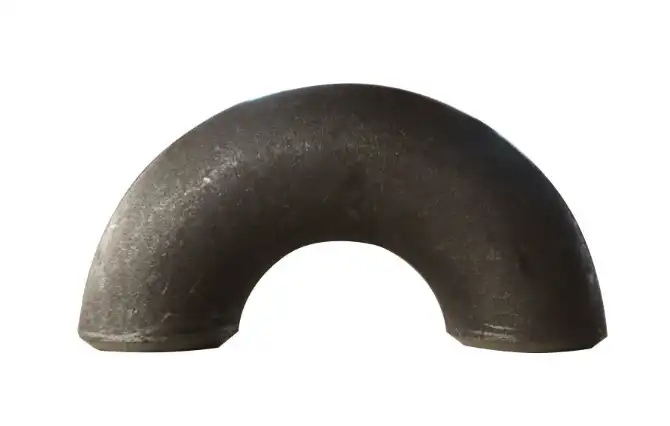
Understanding Carbon Steel Elbows: Types, Standards, and Benefits
Carbon steel elbows are used in a piping system to change the direction of fluid flow while providing the strength to withstand severe circumstances. These fittings are mostly constructed of iron and carbon. The carbon content is usually between 0.2% and 2.1%, which is sufficient to provide them with the strength necessary for high-pressure applications.
Manufacturing Methods and Their Impact on Performance
Hot forming technologies dominate carbon steel elbow manufacture, with two main techniques that set the industry norms. Hot pushing is a process of heating pipe sections and mechanically molding them into elbow shapes; hot bending is the application of controlled heat and pressure to produce directional shifts. All the methods influence the microstructure and mechanical qualities of the final product.
Oudi’s manufacturing plant uses modern hot forming technology for the production of elbows with both processes, which leads to an ideal grain structure and pressure resistance. The choice of process will be a function of the size parameters, wall thickness requirements, and the planned service conditions.
Seamless Versus Welded Construction
Seamless elbows are made from solid pipe stock, without longitudinal welds, providing better strength and reliability for high-pressure applications. These fittings are subjected to hot push techniques that ensure the continuity of the material during change of direction. Butt, socket, or threaded welding is used to weld two pieces of pipe together. Welded elbows, however, are made by welding two pieces of pipe together. They offer cheap alternatives for medium-pressure applications.
We have a yearly capacity of 16,000 tons for seamless and welded configurations on our production lines. The ability to adapt production processes allows us to align the right building techniques with unique project demands, weighing performance considerations against financial limitations.
Connection Types and Industry Standards
The three major types of available connections are: Butt welding elbows, where the pipe is joined together by fusion welding; socket welding elbows, where the elbow is inserted into the pipe end before welding; and threaded elbows, where the connection is mechanical, not using heat. Depending on its pressure rating, temperature range, and ease of maintenance, each type is suited to different installation situations.
Dimensions and material qualities are governed by industry standards. ASTM A234 addresses carbon steel fittings for service at moderate and elevated temperatures, and ASME B16.9 provides the dimensions for wrought factory-made fittings. European specs are under DIN and BS standards. This means international interoperability. All of our products meet the main international standards and are supported by ISO 9001:2000 and special equipment manufacture licenses issued by the regulatory authorities.
Radius Classifications and Application Suitability
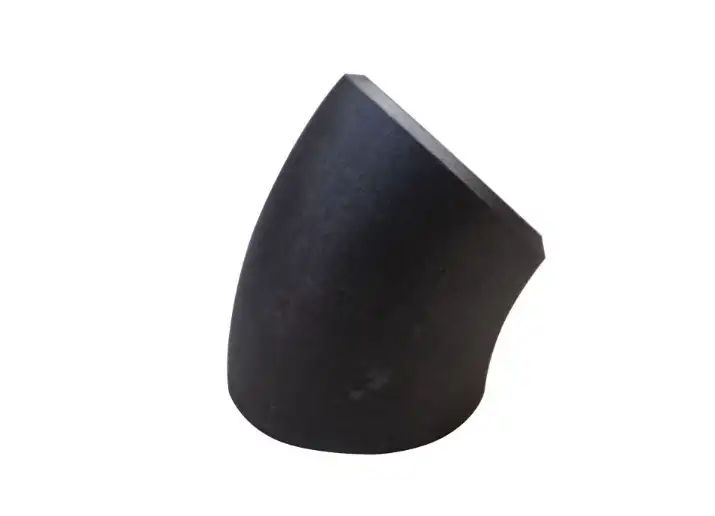
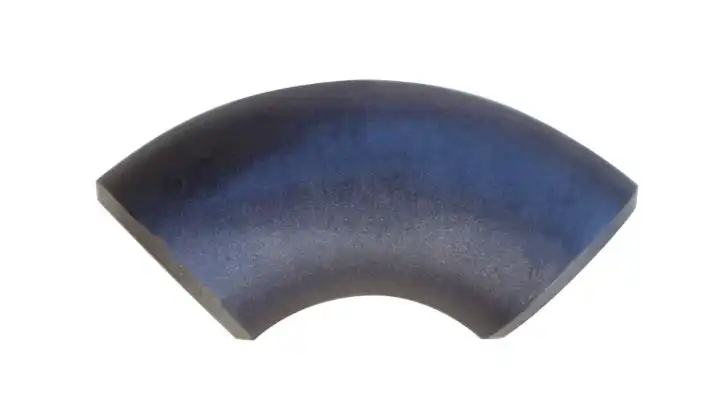
Short radius elbows are used to make small changes in direction in tight spaces with centerline bend radii equal to the nominal pipe diameter. Long radius elbows are designed with centerline radii of 1.5 times the nominal diameter to reduce flow resistance and pressure drop. A 45-degree short-radius arrangement is for installations that need smooth directional changes for Cost-effective carbon steel elbow chemical processing and shipbuilding applications.
Carbon steel elbows are popular across various industries due to their material durability, corrosion resistance, and cost efficiency. Rated for operating temperatures from -29°C to 427°C, these fittings are resistant to wear caused by particulate-laden fluids and provide decades of service with adequate maintenance. Carbon steel alternatives minimize initial procurement costs by 30-50% over stainless steel alternatives and meet performance criteria in non-corrosive settings.
Comparing Carbon Steel Elbows with Other Materials and Types
Material Selection: Carbon Steel Against Stainless Steel
Carbon steel elbows are far more economical compared to their stainless steel equivalents, with price differences of 40-60% depending on grade and requirements. The economic benefit of carbon steel makes it perfect for use in petroleum pipelines, power production systems, and construction projects where the exposure to corrosive elements is still small. Stainless steel is the answer where harsh chemicals, marine situations, or pharmaceutical-grade fluids need higher corrosion resistance.
Service life comparisons show that carbon steel can be used reliably for 20-30 years in controlled situations, and stainless steel can extend the life of the system to 40-50 years in corrosive conditions. Budget-savvy procurement teams will factor in the entire cost of ownership, including upfront investment, maintenance costs, and replacement cycles, to choose the best material choices.
Performance Characteristics of Manufacturing Methods
Seamless elbows cost 15-25% more than their welded counterparts but eliminate possible weak areas at weld joints. These fittings are most commonly used for high-pressure steam, natural gas transmission, and essential process services when the implications of failure merit the additional expense. Our seamless production employs hot forming technology that maintains material homogeneity during directional transitions.
Welded elbows offer cheap solutions for water distribution, drainage systems, and low-pressure applications. Reliable joints meeting strength criteria can be obtained today at lower prices using modern welding methods. Procurement managers consider pressure ratings, inspection needs, and criticality to operations while selecting building methods.
Forged Versus Fabricated Constructions
Compressive shaping improves the mechanical characteristics and grain structure of carbon steel elbows. This manufacturing method produces fittings that can endure tremendous pressures and temperature cycling in boiler systems and high-pressure reactors. Fabricated elbows can be made by cutting and welding sections of pipe to meet non-standard configurations at competitive prices.
Comparisons of strength demonstrate forged elbows provide 10-20% better tensile strength than fabricated equivalents, supporting their use in demanding applications. Material cost variances are usually in the 20-35% range depending on size, quality, and order quantities.
Schedule Ratings and Pressure Considerations
Schedule 40 elbows are generally used for medium-pressure applications up to 1000 PSI, serving water treatment plants, building mechanical systems, and general industrial pipes. Schedule 80 elbows are thicker-walled and can withstand pressures of 1500 PSI. This is important for steam distribution, chemical processing, and oil refining applications.
Wall thickness is directly related to pressure capacity and material costs for Cost-effective carbon steel elbows. Procurement specifications should be compatible with system operating parameters, neither over-specified to increase costs nor under-specified to endanger safety. Our technical staff advises the client on the selection of the right schedule depending upon pressure rating, temperature range, and fluid characteristics.
Price Factors and Cost-Effectiveness in Carbon Steel Elbow Procurement
Material Grade and Its Pricing Impact
Grades of carbon steel differ in composition, influencing performance and market price. ASTM A105 carbon steel is often specified for elbow forgings. It contains controlled amounts of carbon, manganese, and silicon to balance strength and weldability. This grade is used for temperature ranges from -29°C to 427°C and is suitable for most industrial applications with modest cost.
More carbon makes the steel harder and stronger in tension, but also more brittle and more difficult to weld. The lower carbon grades are easier to fabricate and at lower material costs but may require thicker walls to attain equal pressure ratings. Market prices change depending on the cost of raw materials, and carbon steel elbow prices can range from $5 to $150 per piece depending on the size and grade standards.
Size, Dimension, and Manufacturing Complexity
Elbow dimensions have a direct impact on material usage and complexity of production. Small diameter fittings ( 1/2 " - 2 " ) usually cost $ 5 - $ 20 per . Medium diameters ( 3 " - 8 " ) are $ 25 - $ 75 . Elbows with large diameters (10” and above) are more than $100 each as they are more costly in material and special forming equipment.
Now double that by specs for wall thickness. Schedule 80 fittings use 30-40% more material than Schedule 40 fittings, thus prices are in the same ballpark. Angles other than the typical 45 and 90 degrees are a tooling cost premium, which adds 15-25% to unit price.
Bulk Ordering and Minimum Order Quantities
Volume purchase offers important economies of scale cost reductions. For large orders, over 100 units, reductions of 10-15% are generally available, while commitments of over 500 units can cut prices per unit by 20-30%. MOQ varies from maker to manufacturer; however, it can be as little as 10 units for common configurations, and as high as 50 units for specialty demands.
Oudi carries a large inventory of standard sizes and schedules, allowing us to fulfill smaller orders without the penalty of a minimum order quantity (MOQ). We are set up for large volume contracts with a 16,000 ton yearly production capacity and competitive pricing structures that encourage long-term relationships. Consolidated ordering provides procurement teams with many projects the advantage of volume discounts, while still satisfying the requirements of varying specifications.
Lead Times and Delivery Considerations
Standard-stock products are shipped in 7-14 days to meet tight project timeframes without extra charges. Custom specs requiring special tooling or material increase lead times to 4-8 weeks and often need “rush” production at 10-20% cost premiums.
International shipping adds additional variables to the total landed expenses. Shipping containers from Chinese manufacturers to U.S. ports currently takes 25 to 35 days, with freight costs between $1,500 and $4,000 per container depending on destination and other market factors. We are located close to Tianjin Port (only 120 kilometers from our manufacturing site), which facilitates exports and lowers domestic transportation costs for international customers.
Negotiating Competitive Quotes
A good quotation negotiation starts with specs that are not open to interpretation. Accurate pricing and avoiding expensive misunderstandings require clear documentation of material grades, dimensions, connection types, and quality criteria. The procurement people will ask for quotes from several vendors. They will compare the pricing but also the payment conditions, inspection terms, warranty terms, etc.
We offer transparent pricing structures that detail the prices of materials, manufacturing, quality control, and shipping. Our sales staff works with procurement managers to discover possibilities to optimize costs through changes in specifications, timing of orders, or volume commitments that align with production schedules.
Procurement Best Practices and Supplier Selection Criteria
Certification Verification and Quality Assurance
Trustworthy suppliers maintain rigorous certification programs that validate quality management systems and manufacturing capabilities. ISO 9001:2000 certification demonstrates commitment to consistent quality control from raw material receipt through finished product delivery. Special equipment manufacturing licenses issued by national regulatory authorities confirm technical competency for producing pressure-bearing components.
At Oudi, our quality system encompasses comprehensive inspection protocols at every production stage for Cost-effective carbon steel elbows. Raw material verification includes chemical composition analysis and mechanical property testing. In-process monitoring tracks dimensional accuracy and surface finish. Final inspection employs nondestructive testing methods including ultrasonic examination and radiographic inspection when specified. These procedures ensure every elbow leaving our facility meets documented specifications and international standards.
Customer Reviews and Performance History
Supplier reputation emerges through documented performance across multiple projects and client relationships. References from existing customers provide insights into delivery reliability, quality consistency, and technical support responsiveness. Procurement managers seek suppliers serving similar industries and project types, validating capability to meet specific application requirements.
Our customer base spans over 300 clients across 40 countries, including major contractors in Europe, North America, Africa, Southeast Asia, and the Middle East. This geographic diversity demonstrates adaptability to varying technical standards, logistics requirements, and communication protocols. Projects completed in petroleum, chemical, natural gas, and water conservancy sectors validate our expertise in demanding industrial applications.
Domestic Versus International Sourcing
U.S. domestic suppliers offer proximity advantages including shorter lead times, simplified communication, and reduced logistics complexity. However, domestic manufacturing costs typically produce pricing 25-40% higher than Asian alternatives. International sourcing from Chinese manufacturers like Oudi delivers significant cost savings while maintaining quality standards through proper supplier selection and quality assurance protocols.
Logistics planning mitigates international sourcing challenges. Container consolidation reduces per-unit shipping costs, while advance ordering accommodates longer lead times without project delays. Quality inspection services at manufacturing facilities or destination ports verify final acceptance.
OEM and Custom Manufacturing Capabilities
Standard catalog items serve many applications efficiently, but complex projects often require customized solutions. OEM manufacturing capabilities enable suppliers to produce fittings matching unique specifications, including non-standard angles, special materials, or proprietary connection designs.
Our engineering team collaborates with clients to develop custom elbow configurations that address specific installation constraints or performance requirements. Advanced production equipment and experienced technicians transform detailed specifications into physical products that integrate seamlessly with overall piping systems. This flexibility supports EPC contractors managing large-scale industrial construction projects requiring tailored component solutions.
Supply Chain Management Strategies
Effective supply chain management balances inventory investment against project scheduling requirements. Just-in-time delivery minimizes storage costs but demands reliable supplier performance. Safety stock buffers protect against unexpected delays but tie up working capital in inventory.
Establishing partnerships with capable suppliers like Oudi creates supply chain stability through consistent quality, reliable delivery, and responsive communication. Our robust production capacity and inventory management systems support both spot purchases and blanket orders with scheduled releases, accommodating diverse procurement strategies across different project phases.
Installation, Maintenance, and Longevity Tips for Cost-Effectiveness
Proper Installation Procedures
Proper elbow installation starts with thorough preparation of pipe ends, making sure cuts are clean, square, and free of burrs and impurities. Butt weld elbows are beveled at a specific angle, generally 37.5 degrees for most applications. Proper alignment is critical for socket welds and threaded connections to prevent stress concentrations that may lead to failure.
Welding methods shall be in accordance with qualified weld technique specifications for carbon steel grades and thicknesses. The need for preheating depends on the material thickness and ambient temperature to prevent hydrogen cracking in the thicker parts. Post-weld heat treatment is used to reduce residual stresses in essential applications, therefore increasing service life and enhancing dimensional stability.
Alignment checking at installation eliminates generated stresses that promote fatigue. Proper support spacing distributes the weight and thermal expansion stresses evenly throughout piping systems. The installation is hydrostatically tested at 1.5 times the design pressure to verify the installation integrity before commissioning.
Corrosion Protection Strategies
Carbon steel has a tendency to oxidize and requires protection measures in most service situations. External coatings such as epoxy, polyethylene, or coal tar enamel protect the surfaces against air moisture and soil. Coating choice depends on operating temperatures, chemical exposure, and potential for mechanical wear.
Internal corrosion protection involves management of fluid chemistry, material selection, or sacrificial systems. Water treatment procedures keep pH and oxygen concentrations at appropriate levels. Cathodic protection uses impressed current or sacrificial anodes to redirect corrosive attack from pipe components.
We may apply factory coatings to our manufactured products before they ship, assuring consistent coverage and correct surface prep. This method cuts the cost of field application and enhances coating performance and lifetime.
Routine Maintenance and Inspection
Proactive maintenance programs find developing problems before failures happen. Visual inspection can identify exterior corrosion, coating failure, or mechanical damage that has to be corrected. Ultrasonic thickness measurements are used to monitor interior corrosion rates, guide replacement planning, and determine remaining life.
Leak detection around welded joints indicates deterioration of joints or poor installation. Thermal imaging detects hot patches that are signs of interior degradation or flow limitations. Vibration monitoring is used to identify flow-driven oscillations, which can lead to fatigue failures in direction-changing elbows.
Recording of inspection findings also produces a historical record that can be used for trend analysis and predictive maintenance programs. These data assist in arranging acquisition of replacement components to ensure that they are available before emergency situations occur.
Maximizing Service Life and Return on Investment
With proper specification, superior manufacture, competent installation, and meticulous maintenance, carbon steel elbows can provide decades of reliable service. Total cost of ownership estimates show investing in quality components and protective measures is economically viable against the premature replacement and expense of downtime.
Proper selection of materials and schedules for the service conditions of interest will prevent over-design (waste of resources) or under-design (reduction in service life). It strives for long-term value optimization by collaborating with skilled vendors offering technical assistance during procurement, installation, and operation stages.
Conclusions
Acquiring strategic carbon steel elbows is a complicated process that needs balancing numerous aspects, including material standards, production quality, supplier reliability, and total cost of ownership. Knowing how construction methods, material quality, and size issues affect not only the initial expense but long-term durability can lead to cost-effective choices that don’t compromise safety or reliability. Successful procurement relationships require a blend of competitive pricing, validated quality processes, rapid technical assistance, and proven international logistical capabilities that get components to projects when and when they’re needed.
FAQ
1. What is the typical service life of carbon steel elbows in industrial applications?
Carbon steel elbows properly specified for service conditions typically deliver 20-30 years of reliable performance in non-corrosive environments. Factors affecting longevity include operating temperatures, pressure cycling, fluid chemistry, and maintenance practices. Protective coatings and corrosion control programs extend service life in challenging environments. Regular inspection and thickness monitoring enable condition-based replacement planning that maximizes component utilization while maintaining safety margins.
2. Can carbon steel elbows be used in corrosive environments?
Carbon steel elbows serve in corrosive environments when equipped with appropriate protective measures. External coatings shield surfaces from atmospheric corrosion and soil contact. Internal protection through fluid treatment, corrosion inhibitors, or sacrificial systems controls chemical attack. Alternatively, upgrading to corrosion-resistant alloys or stainless steel provides inherent material resistance in severely corrosive applications. Cost-benefit analysis comparing protection systems against material upgrades determines optimal solutions for specific service conditions.
3. How do I choose between seamless and welded carbon steel elbows?
Seamless elbows suit high-pressure applications, critical services, and situations where weld seam elimination justifies 15-25% cost premiums. Welded elbows provide economical solutions for moderate pressures and non-critical applications. Decision factors include system pressure ratings, inspection requirements, operational consequences of potential failures, and budget constraints. Consulting with experienced suppliers like Oudi helps match construction methods to specific project requirements, optimizing the balance between performance assurance and cost management.
Partner with Oudi for Cost-Effective Carbon Steel Elbow Solutions
Oudi delivers comprehensive carbon steel elbow solutions backed by over two decades of manufacturing excellence since 1998. Our ISO 9001:2000 certified facility in Cangzhou produces 16,000 tons annually of American, Japanese, German, and British standard fittings that serve petroleum, chemical, natural gas, and water conservancy industries worldwide. Sourcing cost-effective carbon steel elbows from our manufacturer ensures access to complete product ranges—including seamless and welded constructions, multiple schedules, and custom specifications—supported by rigorous quality control from raw materials through final inspection. Our strategic location near Tianjin Port streamlines international logistics for clients across 40 countries who rely on our proven export expertise. Contact our technical team at oudi-04@oudiguandao.com to discuss your project requirements, receive detailed quotations, and discover how our manufacturing capabilities and competitive pricing structures optimize your piping component procurement strategy while maintaining uncompromising quality standards.
References
1. American Society for Testing and Materials. (2020). ASTM A234: Standard Specification for Piping Fittings of Wrought Carbon Steel and Alloy Steel for Moderate and High Temperature Service. West Conshohocken: ASTM International.
2. American Society of Mechanical Engineers. (2018). ASME B16.9: Factory-Made Wrought Buttwelding Fittings. New York: ASME Press.
3. Deutsches Institut für Normung. (2019). DIN 2605: Wrought Steel Butt Welding Pipe Fittings. Berlin: DIN Standards Committee.
4. Mohitpour, M., Golshan, H., & Murray, A. (2007). Pipeline Design and Construction: A Practical Approach (Third Edition). New York: ASME Press.
5. Nayyar, M. L. (2000). Piping Handbook (Seventh Edition). New York: McGraw-Hill Professional.
6. Smith, P. R., & Zappe, R. W. (2004). Valve Selection Handbook: Engineering Fundamentals for Selecting the Right Valve Design for Every Industrial Flow Application (Fifth Edition). Burlington: Gulf Professional Publishing.

Need help finding the right solution with our experts. Please contact us.

SINCE 1998 Your Reliable Pipeline Manufacturer



