Concentric Reducer Carbon Steel: How to Choose the Right Size?
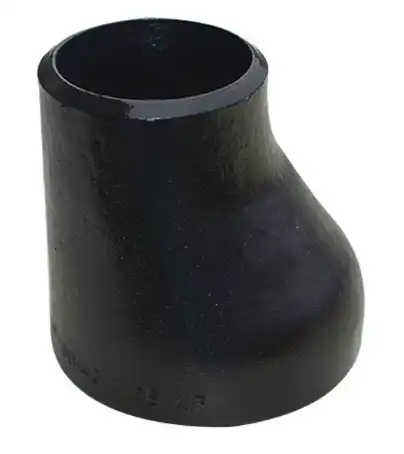
Choosing the right concentric reducer carbon steel fitting starts with understanding your pipeline's operational requirements. The selection hinges on accurately matching inlet and outlet diameters to your system's flow rate, pressure class, and installation orientation. A properly sized reducer maintains hydraulic efficiency while preventing turbulence that can erode pipe walls or compromise system integrity. Carbon steel variants conforming to ASTM A234 WPB standards offer exceptional strength-to-cost ratios, making them the preferred choice for vertical piping in petroleum, chemical processing, and power generation facilities where centerline alignment is critical.
Key Factors to Consider When Choosing the Right Size
Pipeline Operating Parameters
Changes in motion across the Concentric Reducer Carbon Steel are mainly controlled by the flow rate. Use the continuity equation (V = Q/A) to find the speed. The speed is found by dividing the flow rate (Q) by the cross-sectional area (A). If the flow rate stays the same at 500 GPM, a regulator going from an 8-inch (50.27 sq in) pipe to a 6-inch (28.27 sq in) pipe raises the speed by 78%. Too many sudden changes in speed, more than 15 feet per second for liquid fuels, speed up erosion and rust at the reducer's throat. This is the most common type of failure we see in the field. When choosing a pressure class, the maximum allowable working pressure (MAWP) and surge conditions must be taken into account. According to ASME B16.5 pressure-temperature charts, an ANSI Class 300 reducer can handle 740 psi at room temperature, but only 535 psi at 400°C. To work close to these limits, you need safety factors of 1.5 to 2.0, especially for services that go through cycles, like steam header branch connections, where thermal expansion stresses build up.
Dimensional Specifications
Three measures describe the shape of a reducer:
Large End Diameter: This should match the outside diameter (OD) of the pipe upstream, not the nominal size. ANSI B36.10 says that an 8-inch nominal pipe has an 8.625-inch OD, which means that the big end of the reducer must be the right size for a good butt-weld fit-up.Small End Diameter: This size is the same as the downstream pipe's OD. As per ASME B16.9, tolerance rules accept ±1% variation. This means that a 4-inch end (4.5-inch OD) can be anywhere from 4.455 to 4.545 inches long. Wall Thickness: Usually the same thickness all the way through the reducer body, chosen to match the thicker of the two lines that join. Our production options include tapered boring to match thinner downstream schedules if needed, but this adds 5 to 7 days to the lead time. Standardized tables show that the length of a reducer should be based on its size—an 8x6 reducer is about 8 inches across—but custom lengths can be made to fit space limitations in repair projects. For changes to remote platforms where vertical space was limited, we've made reducers that are as short as 4 inches.
Material Grade and Pressure Rating
Besides regular WPB, there are also specialized grades that are made for certain environments: ASTM A234 WPC: More silicon makes the material more resistant to scaling in high-temperature steam service above 450°C, which is common in superheater pipes in power plants. Low-Temperature Service: For low-temperature service, impact-tested WPB types stay flexible up to -29°C for LNG ports and cryogenic uses, but stainless steel options are often more cost-effective below -45°C.Sour Service: Hydrogen sulfide environments need to follow NACE MR0175, which limits the maximum hardness to 22 HRC to stop sulfide stress cracking. Fittings that are used with bad gas are normalized to 18–20 HRC by our heat treatment methods. This is proven by Rockwell testing of every piece. Pressure, class, and schedule selection work together. For a Class 600 application, the walls must be Schedule 80 or heavier to keep the pressure inside, while for a Class 150 service, the walls must be Schedule 40 unless the erosive slurries need thicker wear allowances.
Comparing Carbon Steel Concentric Reducers with Alternatives
Material Performance Trade-offs
Concentric Reducer Carbon Steels are used a lot in oil and gas infrastructure because they are strong for their weight and easy to make. But choosing a material comes with some trade-offs: Stainless Steel (ASTM A403 WP316): Stainless steel is better at resisting corrosion in chloride or acidic environments, like seawater cooling systems. The extra cost of the material is between 3.5 and 5 times that of carbon steel. This is acceptable when rust limits would otherwise require walls that are too thick. A 316L reducer gets rid of the need for internal coatings in marine saltwater pumping systems. This lowers the overall cost of ownership, even though it costs more to buy at first. Alloy Steel (ASTM A234 WP11/WP22): Chromium-molybdenum grades can handle temperatures up to 595°C in reformer pipes and thermal cracking units. The 2.5% chromium presence in WP11 makes it resistant to hydrogen attack and creep warping when it is subjected to high temperatures for a long time. These grades are made for refineries that process heavy crude, and carbon steel would break down from graphitization in 18 months. Carbon Steel Advantages: It is the most cost-effective material for use in fluids that don't corrode at room temperature to mild temperatures (up to 400°C). WPB is the most cost-effective choice for water distribution, compressed air systems, and dry natural gas transfer where rust is not a major issue because the material itself accounts for 40 to 50 percent of fitting costs.
Design Configuration Comparison
The choice between concentric and eccentric affects more than just the material: Concentric reducers keep the flow symmetric, which is very important in vertical directions. The even decrease in diameter spreads out changes in speed fairly, which stops the uneven shear forces that make vertical pump discharge columns vibrate. This symmetry also makes it easier to design support brackets because the centerline stays the same when figuring out where to put hangers. Eccentric configurations solve problems that happen horizontally, but they make things more complicated. The flat side orientation must be exactly what is needed (BOP for bottom-of-pipe drainage, TOP for air venting), and if it's not done right, the benefits will be lost. We've helped with retrofits where eccentric reducers put upside down caused dead zones where bacteria could grow in cooling water systems, which meant that whole pipeline segments had to be replaced.
Procurement and Supplier Insights for Carbon Steel Concentric Reducers
Supplier Qualification Criteria
Checking the certifications that make sure the Concentric Reducer Carbon Steels are made consistently is the first step in reliable sourcing. ISO 9001:2000 quality control systems make it possible to keep track of everything, from the heat numbers of the raw materials to the final hydraulic tests. At Oudi, we are certified up to the People's Republic of China Special Equipment Manufacturing License level, which lets us make pressure-bearing parts for Class I, II, and III services according to TSG Z0004 standards. Production capabilities determine delivery flexibility. Our modern CNC tools and annual capacity of 16,000 tons allow us to produce standard sizes in batches with lead times of 10 to 14 days. For pipeline building projects, our hot-forming presses can handle custom specs up to 60-inch diameters. Being able to make both seamless and welded versions in-house cuts down on delays caused by subcontracting, which adds 3–4 weeks to the schedule. Inspection infrastructure validates quality claims. Our facility maintains ultrasonic testing (UT) equipment for wall thickness verification, magnetic particle inspection (MPI) for surface crack detection, and hydrostatic test stands rated to 5,000 psi. We perform dimensional inspections per ASME B16.9 tolerances on 100% of production, with third-party witnessing available for clients requiring Lloyd's Register or Bureau Veritas validation.
Cost Structure and Pricing Variables
Lower prices are caused by several things: Size and Weight: The amount of material used goes up or down with the width and the thickness of the walls. Because of differences in steel tonnage, an 8x6 Schedule 40 reducer that weighs 12 pounds costs about 60% more than a 4x3 equivalent that weighs 4.5 pounds.Manufacturing Complexity: Standard dimensional ratios (which mean cutting the pipe size by one or two sizes) use well-known tools. Transitions that aren't common, like 12x4 reducers, need special molds and more shaping steps, which raises the base price by 15 to 20 percent. Volume and Certification: When you order more than 50 pieces, you can have dedicated production runs that lower the cost of each unit by 12 to 18%. On the other hand, documentation and lab time for material test reports (MTRs), impact testing, and PMI verification add $25 to $45 per piece. Logistics: We send goods from our factory in Cangzhou to the United States. Gulf Coast ports get between $180 and $240 per ton for 40-foot containers. Lead times for ocean freight are 35 to 42 days, but for urgent projects, air freight cuts the time to deliver to 5 to 7 days for 4 times the cost.
Custom Orders and Lead Time Management
Standard catalog items are sent out two weeks after a confirmed order. A step-by-step process is used for custom specifications: engineering review (2–3 days), tooling preparation (5-7 days), production (7–10 days), and inspection/testing (3-5 days). Rush orders that shorten this plan to 15 days cost 20% more, but they have saved clients whose projects were in danger because their main suppliers were late with supplies. Our experience exporting to Europe, Southeast Asia, Africa, and the Americas has helped us improve the paperwork needed to avoid delays at customs. We give full commercial invoice packages, certificates of origin, and mill test reports that are formatted to meet the needs of the destination country. For projects in North America, these could be ASTM compliance statements for projects in North America, or EN 10204 3.1 certificates for projects in the EU.
Installation, Maintenance, and Longevity Best Practices
Welding and Installation Protocols
Proper installation begins with fit-up preparation. The bevel angles on the ends of the Concentric Reducer Carbon Steel fittings must line up with the bevels on the pipes within a 1/16-inch gap. For walls less than 22mm, these angles are usually 37.5° ±2.5°. If the misalignment is worse than this, it causes stress concentrations that spread cracks when the load is cycled. Before full-penetration welding, we suggest tack-welding at four quadrant points to keep the line during thermal expansion. The steps for welding are based on qualified specifications in ASME Section IX. When the temperature outside drops below 0°C or the material is more than 25 mm thick, prepare WPB carbon steel to at least 95°C. To stop grain growth that makes the metal less tough, use low-hydrogen electrodes (E7018) or gas metal arc welding with ER70S-6 filler wire and keep the temperatures between passes below 260°C. For jobs above ANSI Class 300 or temperatures above 345°C, stress relief must be done at 595–650°C for one hour for every inch of thickness. Hydrostatic testing after installation makes sure the joint is solid. Put the pressure on to 1.5 times the design pressure for at least 30 minutes, and check the welds and reducer body for any signs of leaking or distortion. Our quality records have hydraulic test plans for every fitting, which give us a starting point for future maintenance checks.
Corrosion Protection and Inspection
Because carbon steel is easily oxidized, it needs to be protected. External coatings, like epoxy primers and polyurethane topcoats, can make something last longer in wet or marine settings, from 8–10 years without a coating to 20 years or more with the right application. Internal coatings like epoxy, cement mortar, or polyethylene stop corrosion in water service, but they cost an extra $35 to $60 per reducer and need to be installed carefully to avoid damage. How often routine inspections are done depends on how bad the service is. Every year, ultrasonic thickness readings should be taken at the reducer throat, where flow turbulence increases wear, to check for erosive slurries or high-velocity steam. Losses in thickness greater than 10% of the original wall cause replacement planning. Visual inspections from the outside every six months find coating failures before the steel below starts to corrode, especially at welds where galvanic action speeds up the attack. Integratiraisehodic protection works for both underground and underwater reducers. Steel surfaces are kept at safe potentials (-0.85V vs. copper-sulfate reference electrode) by sacrificial anodes or impressed current systems. This stops soil-side rust, which is what causes 40% of underground pipeline failures in our failure analysis database.
Troubleshooting Common Issues
Flow Disruption and Noise: Whistling or shaking is a sign of turbulence caused by a large difference in speed. Check to see if flow rates have gone above and beyond what was intended. For example, a change to the system that doubled output may have pushed speeds into erosion areas. Upsizing the reducer (accepting a smaller diameter reduction) or installing flow straighteners downstream to get rid of turbulence energy are two solutions. Leakage at Welds: Pinhole leaks that show up 6 to 18 months after installation are usually caused by welding that didn't go all the way through or not preheating enough, which leads to hydrogen cracking. An X-ray shows how bad the defect is, and to fix it, the defective weld metal has to be ground out, beveled again, and then welded again according to the right steps. Failures that keep happening at the same joint are a sign of leftover stress or problems with the material's chemistry that need to be looked into by metallurgists. Premature Erosion: Thickening in one area of the reducer's cone-shaped piece means particles are hitting it or creating cavities. This happens faster with slurry services. In oil wells, sand production can wear away 3 mm of wall thickness in 12 months. Some ways to reduce the damage are to use heavier schedules (doubling the wall thickness increases life by 3–4 times), put in upstream strainers to get rid of abrasive particles, or switch to materials that don't wear down easily, such as WP11 alloy steel or ceramic-lined versions.
Conclusion
To choose the right Concentric Reducer Carbon Steel fitting, you need to balance hydraulic calculations, material requirements, and the supplier's abilities. First, you need to figure out the flow rate, pressure class, and temperature range of your system. Then, you need to match these to dimensions and wall thickness plans that give you enough safety gaps. The choice of material (standard WPB, high-temperature WPC, or alloy grades) depends on the conditions of use and the risk of corrosion. Knowing the differences between concentric and eccentric configurations in terms of structure can help you avoid costly mistakes. When you work with qualified makers who can show you quality systems, output capacity, and technical support, you can turn buying things into a strategic partnership that improves the results of projects and the stability of operations.
FAQ
What pressure class options are available for carbon steel concentric reducers?
When paired with plates of the same class, Concentric Reducer Carbon Steels meet ANSI/ASME B16.9 standards and can handle pressures of 150, 300, 600, 900, 1500, and 2500 psi. The reducer doesn't have a class label on it; instead, the thickness of its walls (schedule) must be sufficient to maintain pressure at the specified temperatures. Schedule 40 is usually used for Class 150 services, Schedule 80 or heavier is needed for Class 300 services, and Schedule 160 is usually used for Class 600 applications. ASME B16.5 charts show that pressure rates drop as temperatures rise. For example, a Schedule 80 reducer that can handle 1,480 psi at 38°C can only handle 1,075 psi at 400°C.
Can I order custom sizes for unique pipeline requirements?
For non-standard diameter changes or unique length needs, custom sizing is available. Catalog items cover common reductions (8x6, 12x10, etc.), but projects sometimes need reductions that aren't what you'd expect, like 16x4 for connecting process equipment. Custom orders need to be looked at by engineers to make sure they can be made and that the structure is strong enough. For example, extreme circle ratios may need extra support or more than one reducer connected in series. Lead times can be up to 30 days, based on the need for tools, and for cost-effective production runs, the minimum or-0.85 Vantity is usually 10 to 20 pieces.
How do I choose between concentric and eccentric reducers?
This choice is based on orientation. For vertical pipe runs, specifying circular reducers keeps the structure symmetrical and makes support design easier when the centerlines are lined up. The transition with a uniform diameter handles changes in speed evenly without creating lateral thrust forces. When certain conditions call for it, only use eccentric reducers on horizontal pipes. Placing the flat side up keeps air pockets from forming in pump suction lines, which can lead to cavitation; placing the flat side down makes drainage easier in dead-end branches or keeps slurry settlement from blocking pipes. Putting eccentric reducers in straight lines doesn't help and makes construction harder. On the other hand, putting concentric reducers horizontally on pump suction creates practical risks.
Partner with Oudi for Reliable Concentric Reducer Carbon Steel Solutions
Since 1998, Cangzhou Oudi Pipe Manufacture Co., Ltd. has been making engineering-grade pipe fittings for projects in 40 countries that involve oil and gas, chemicals, power generation, and water infrastructure. Our factory is ISO 9001:2000 certified and makes 16,000 tons of ASTM A234 carbon steel, stainless steel, and alloy reducers every year that meet ANSI, DIN, JIS, and BS standards. We make sure that every Concentric Reducer Carbon Steel fitting we sell meets all of your project's technical requirements by inspecting it thoroughly using spectrography to confirm the material, ultrasound wall thickness testing, and hydraulic pressure validation. We are a reliable provider of Concentric Reducer Carbon Steel, and we use cutting-edge CNC equipment and our knowledge of metals to make sure that we can deliver both catalog items and custom designs quickly. Our engineering team offers sizing advice that improves hydraulic performance while keeping costs low, and our export paperwork processes get rid of delays in customs clearance that put building schedules at risk. Contact Oudi today at oudi-04@oudiguandao.com to talk about your pipeline needs. Our technical experts will give you detailed quotes and material certifications that are specific to your needs. Our products have been reliable in demanding industrial settings for 20 years.
References
1. American Society of Mechanical Engineers. (2018). ASME B16.9: Factory-Made Wrought Buttwelding Fittings. New York: ASME Press.
2. ASTM International. (2021). ASTM A234/A234M-21: Standard Specification for Piping Fittings of Wrought Carbon Steel and Alloy Steel for Moderate and High Temperature Service. West Conshohocken: ASTM International.
3. Nayyar, M. L. (2019). Piping Handbook (8th ed.). New York: McGraw-Hill Education.
4. Mohitpour, M., Golshan, H., & Murray, A. (2007). Pipeline Design & Construction: A Practical Approach (3rd ed.). New York: ASME Press.
5. Singh, R., & Rizvi, S. J. A. (2020). Failure Analysis of Piping Components in Petrochemical Industries. Materials Performance Journal, 59(4), 48-54.
6. Escoe, A. K. (2016). Mechanical Design of Process Systems: Volume 1 – Piping and Pressure Vessels (2nd ed.). Houston: Gulf Professional Publishing.

Need help finding the right solution with our experts. Please contact us.

SINCE 1998 Your Reliable Pipeline Manufacturer



