Concentric Reducer Carbon Steel ISO Certified Factory Solutions
When your industrial piping project demands precision and reliability, finding the right supplier for concentric reducer carbon steel components becomes critical to success. At Oudi, we understand that procurement managers across the oil, chemical, natural gas, and water conservancy sectors require more than just products—they need manufacturing partners who deliver certified quality, technical expertise, and consistent supply chain performance. Our ISO 9001-certified facility in Cangzhou has been engineering butt-weld pipe fittings since 1998, serving over 300 customers across 40 countries with an annual production capacity of 16,000 tons. This guide walks you through everything you need to know about selecting, procuring, and installing carbon steel concentric reducers that meet ASTM A234 WPB standards and international codes.
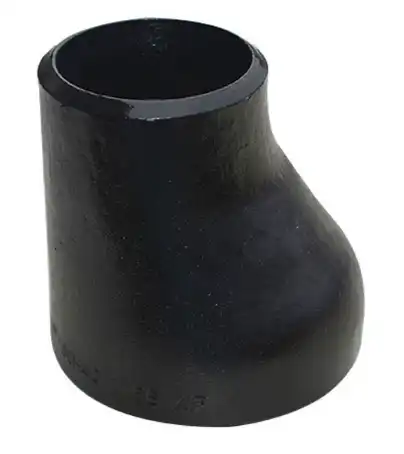
Understanding Carbon Steel Concentric Reducers: Specifications and Applications
What Defines a Carbon Steel Concentric Reducer?
What does a Concentric Reducer Carbon Steel do? It is a cone-shaped butt-weld fitting made of carbon steel that connects two pipes of different sizes while keeping their centerlines straight. Instead of moving the axis to avoid air traps like eccentric reducers do, concentric types make sure that the center of both the opening and the exit is the same, either vertically or horizontally. This symmetrical shape makes a smooth, controlled shift that reduces turbulence during fluid or gas flow. This is why it is essential in vertical pipeline layouts where structural balance is important.
Because they are made to ASTM A234 WPB/WPC standards, these reducers can handle the changes in pressure and thermal stresses that happen in big businesses. The material usually has no more than 0.30% carbon, which makes it easy to weld and strong enough to withstand a tensile strength of 60,000 psi. Our Oudi factory uses both seamless forming for high-pressure tasks and welded building for bigger widths, so we can make anything from 1/2" to 72" nominal sizes.
Core Functions in Industrial Piping Systems
Concentric Reducer Carbon Steel solves two very important engineering problems. When fluid moves from a pipe with a larger diameter to one with a smaller diameter, the speed increases proportionally. If there isn't a gradual taper, erosion damages the pipe wall. The conical shape spreads this change in speed over a longer path, which lowers the coefficient of friction and makes the system last longer. When there is a vertical pump discharge line, concentric reducers keep the axis straight. This stops the side forces that wear out support frames and flanged connections through vibration.
We've sold these parts to chemical processing plants in Singapore that needed normalised heat treatment at 595°C to make the parts flexible again after they had been cold formed. For shipbuilding projects in Greece, thick-wall Schedule 80 connections needed compound bevel angles that allowed for deep penetration welding on steam lines that were under a lot of pressure. These real-world examples show why our manufacturing processes must still include precise measurements and the ability to track materials.
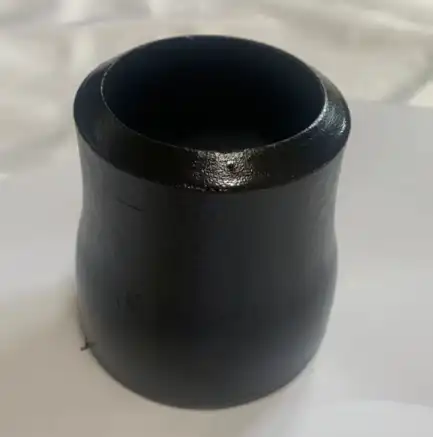
Material Properties and Performance Standards
The types of carbon steel we use, mostly ASTM A234 WPB, behave consistently at temperatures ranging from -29°C to 400°C. The tensile strength is more than 415 MPa, and the extension rates of around 30% make it flexible enough for heat expansion cycles. For environments that aren't sour, corrosion resistance is still good enough, but for fluids that contain H2S, we suggest coating systems or upgraded alloys in line with NACE MR0175 guidelines.
ASME B16.9 standards are used for dimensional compliance. The face-to-face length is equal to the major outside diameter. A 12" x 8" reducer keeps the cone's angle and length the same, no matter who makes it, so it can be used in global supply chains. The wall thickness usually fits the schedule of the bigger pipe, but in some cases, the smaller end may need to be "bored to match" for important reasons. Before shipping, our quality control team uses coordinate measuring machines and ultrasonic thickness gauges to make sure these parameters are correct.
Typical Industrial Applications
Operators of oil and gas pipelines use concentric reducers for vertical riser sections on offshore platforms. The symmetrical design of these reducers supports structural stresses without creating eccentric moments. They are used in gravity-fed clarifier systems at water treatment plants to keep the flow smooth as the sizes change, so that the sediment doesn't get stirred up. They are put on boiler feedwater lines by power plants to prevent water hammer during pump startup sequences. The gradual diameter change makes this possible.
Our customers include building projects that need HVAC pipe systems. Reducers are used to connect pieces of equipment whose ports are different sizes. They are put together with steam drum systems by boiler manufacturers, who also handle the change from big collection heads to smaller distribution manifolds. Concentric Reducer Carbon Steel is useful in these areas because they have a good balance of mechanical strength, weldability, and cost-effectiveness compared to other alloys.
Comparing Carbon Steel Concentric Reducers with Alternative Solutions
Carbon Steel vs. Stainless Steel and Aluminum
Choosing the right material for a piping system affects its lifecycle costs and how often it needs to be maintained. The tensile strength and pressure resistance of Concentric Reducer Carbon Steel are better than those made of 304 stainless steel, but they cost about 30% less. In chloride-rich environments, stainless grades are better at resisting corrosion, but carbon steel works well in dry gas service or with cathodic protection systems. We've sent carbon steel reducers to water conservation projects in Africa because the cost was too high for the small rust benefits of stainless steel ones.
Aluminum reducers are used in specialised situations, like cryogenic systems or aircraft setups that need to be light, but they aren't widely used in industry because they can't handle high pressures and don't expand and contract properly with carbon steel pipes. When welding aluminium, you need special filler metals and inert gas shielding, which makes installation in the field more difficult than with carbon steel, which can be done easily with SMAW or GTAW. Our expert team helps buying managers make these decisions based on real-world working conditions instead of general ranks of materials.
Concentric vs. Eccentric Reducer Design Considerations
Depending on how the pipe is orientated and the properties of the fluid, you can choose between Concentric Reducer Carbon Steel and eccentric reducers. Concentric reducers work best in vertical runs where air naturally rises and gravity makes sure that all the water drains away. The centred flow path helps spread stress evenly, which makes structural analysis easier for placing supports. If you have horizontal lines with one flat side that stops gas pockets from forming in liquid service (flat side up) or sediment buildup in gas service (flat side down), you need an eccentric reducer.
To keep cavitation damage from happening, pump suction lines need eccentric reducers with a flat top. Putting in a concentric reducer here makes an air trap at the crown, which keeps the pump impeller from getting enough air and lowers its performance. We've talked to EPC workers who made the mistake of specifying concentric units for horizontal uses, which caused problems with operation during testing. To account for the difference in dimensions, the center axis must be moved away by half the width difference, while the face-to-face length stays the same as with concentric versions.
Seamless vs. Welded Carbon Steel Reducers
The way something is made affects how much pressure it can handle and how prices are set. Seamless reducers are made from solid pipes that are shaped with hot or cold pressing dies that make the cone-shaped taper without any longitudinal welds. This method makes the walls the same thickness all the way through and gets rid of the weak spot that could be a weld joint. This makes seamless units better for high-pressure steam service above 2500 psi. Our seamless production line can handle sizes up to 24" in diameter, and lead times are between 4 and 6 weeks, depending on how many orders we get.
Welded reducers are good for larger diameters and lower-pressure applications where saving money is important. They are made by rolling a plate into cones and joining the longitudinal seam through submerged arc welding. After this, they are fully inspected by X-ray according to ASME Section V. The weld goes through the same heat treatment as the base material, which equalises any residual stresses and matches the mechanical properties. Welded reducers are about 40% cheaper than seamless ones, though wall thickness tolerances are a little wider because of the way they are formed. Procurement teams that need to balance cost and performance often choose welded reducers for nominal pressure ratings below 600 psi.
ISO Certified Manufacturing Process & Quality Assurance of Carbon Steel Concentric Reducers
Our Production Workflow at Oudi
When we buy raw materials, the mill test certificate is checked against the chemical composition limits set by ASTM A234. Steel coils or pipe sections are then sent to our 66,600-square-meter facility in Cangzhou, where spectral analysis confirms the carbon, manganese, phosphorus, and sulphur contents before production is allowed to begin. The forming stage uses hydraulic presses that can produce up to 800 tonnes of force and progressive die sets that are calibrated to keep the wall thickness uniformity within ±12.5% of the tolerance.
Following forming, Concentric Reducer Carbon Steel goes into continuous normalising furnaces at 910°C and is held there for temperature soak periods calculated by wall thickness. They are then air-cooled to restore the fine-grained ferrite-pearlite microstructure. This thermal cycle improves ductility and gets rid of work hardening from cold forming processes. Welded reducers go through post-weld heat treatment at 595°C minimum, meeting ASTM A234 requirements for stress relief.
Critical Certifications and Compliance Standards
Oudi has ISO 9001:2000 certification, which is checked every year by third-party registrars who check our quality management system from design control to final inspection. This certification shows that we can consistently deliver products that meet customer and regulatory requirements, which is what procurement managers in Europe and North America expect. Our Special Equipment Manufacturing License lets us make pressure-containing parts for dangerous service, which requires documented welding procedures, welder qualifications, and NDT operator certifications.
Product-specific compliance includes ASME B16.9 dimensional conformance and ASTM A234 material properties. European clients often need PED (Pressure Equipment Directive) marking for Category II or III piping assemblies, which we provide by having a notified body check our manufacturing controls. API 5L certification is used when reducers are integrated into line pipe systems for oil and gas transmission projects. These certifications aren't just paperwork; they show that our manufacturing process is disciplined and reliable.
Quality Control and Testing Protocols
We use calibrated CMM equipment that is traceable to national standards to check the outside diameters, wall thickness, face-to-face length, and concentricity. Tolerances are kept to the levels set out in ASME B16.9 Table 2, which says that a 12" NPS reducer can allow 1.6mm on the major diameter and 0.8mm on the face-to-face length. Ultrasonic testing is done on the whole wall thickness, and the minimum acceptable thickness is set at standard thickness minus 12.5%. This makes sure that the pressure numbers are valid for the whole batch.
Pressure testing is done according to what the customer wants, which is usually 1.5 times the design pressure using hydraulic methods. In our test bay, we have automatic manifolds that can test 50 reducers at the same time. These manifolds hold air for 30 seconds while they look for leaks or deformation. Some types of non-destructive testing are magnetic particle testing for finding surface cracks and liquid penetrant testing for checking welding seams. Critical service reducers must go through a radiographic examination. The films must be interpreted by ASNT Level II certified technicians, who must write down any linear or rounded indications that are too high by code standards.
Traceability is part of our quality assurance that goes beyond testing. There is a unique heat number for each production lot that connects produced reducers to certificates of raw materials, heat treatment charts, and inspection records. This package of paperwork comes with orders so that clients can meet their own quality auditing and legal requirements. When purchasing managers at European distributors or Middle Eastern EPC contractors ask for the ability to track materials, our systems send full records of the chain of custody within 24 hours.
How to Choose and Procure Carbon Steel Concentric Reducers for Your Projects
Critical Specification Parameters
To be accurate with dimensions, you must first be sure of the exact pipe sizes you are connecting. The nominal pipe size does not always match the actual outside diameter, and the schedule determines the wall thickness. A 10" Schedule 40 pipe has an outside diameter of 10.75" and a wall thickness of 0.365", so the matching Concentric Reducer Carbon Steel needs to fit these exact measurements. Check to see if your system uses ASME B36.10M (North American) or ISO standards, as European pipe schedules are slightly different. We've solved many sizing problems by asking customers to give us actual OD measurements instead of nominal callouts.
You need to know both the design pressure and the temperature to do pressure rating calculations. Carbon steel reducers follow the same pressure-temperature curves as ASME B16.9 fittings, with allowable stress decreasing as temperature rises. For example, a WPB reducer rated for 2000 psi at 100°F drops to 1425 psi at 400°F because the material strength decreases. Our engineering team can do these calculations for you if you give them the operating parameters, making sure that the chosen wall schedules keep adequate safety factors as required by the ASME B31.3 piping code.
It's not enough to just use basic carbon steel when choosing a material grade. For example, standard ASTM A234 WPB is fine for most general use, but for low-temperature applications below -29°C, you need the impact-tested WPL6 grade with guaranteed Charpy V-notch toughness. For high-temperature steam service above 400°C, WP11 or WP22 alloy steel reducers with chromium and molybdenum for creep resistance are better. For sour gas service, NACE MR0175 says that the steel must have hardness limits below 22 HRC to prevent sulfide stress cracking.
Evaluating ISO-Certified Factory Capabilities
When evaluating suppliers, ask for copies of the actual ISO audit reports instead of just images of the certificates. Look at the nonconformance findings and corrective actions to see how the factory handles quality issues. We are happy to share our audit history with potential clients, which shows that we are always getting better at things like process control and calibration management.
Lead times and price options are affected by production capacity. Oudi's annual capacity of 16,000 tonnes lets us handle large orders without pushing back delivery dates for current customers. Smaller manufacturers may offer lower unit prices, but they can't meet urgent project deadlines when all of their production slots are taken. Also, ask about equipment capabilities—our 800-ton hydraulic presses can handle reducers up to 36" seamless, while competitors with smaller presses have to weld larger sizes, which lowers quality and costs.
Support after the sale is what sets trusted providers apart from generic ones. We keep technical staff who speak English available by email at oudi-04@oudiguandao.com to answer questions about installation or settle differences in specifications. Instead of general compliance statements, our paperwork includes rules for the welding process, certifications for the heat treatment process, and reports on dimensional inspections. Our clients in North and South America like how quick we are across time zones, and they often get expert answers the same business day.
Procurement Strategies and Pricing Considerations
When you order in bulk, you can save a lot of money by buying more of the materials you need and planning your production schedule more efficiently. It is about 18% cheaper to buy 500 reducers of different sizes all at once than to buy the same number of reducers in five separate orders. We work with buying managers to combine needs from different stages of a project. We store finished goods so that they can be delivered in stages, which keeps just-in-time inventory without charging more.
Minimum order quantities are based on how much a product can be made economically, not on sales rules. For seamless reducers, the die setup and press configuration have to be different for each size, which makes ordering just one piece not cost-effective. Our normal MOQ is 50 pieces per size, which balances the cost of tools against the cost of keeping inventory. However, we can handle smaller orders for unusual specs at a different price. Welded reducers give you more options, and you only need to buy 10 of them in standard sizes so that they can be set up quickly.
When planning for supply chain stability, you should include backup wait times and different ways to get the goods you need. We suggest making framework deals that spell out prices and delivery times and set off call-off orders as the needs of the project become clear. This method locks in good prices during times of low demand and makes sure that capacity is used during times of high construction demand. As a company that has worked on long-term infrastructure projects in Africa and the Middle East, we know that when project schedules include liquidated damages clauses, clear delivery windows are more important than small price differences.
Installation Tips and Best Practices for Carbon Steel Concentric Reducers
Pre-Installation Verification Steps
Before you start welding, make sure the pipe pieces are the right size by dry-fitting the Concentric Reducer Carbon Steel between them. Make sure that the bevel angles on the reducer and the pipe next to it are the same. If they are not, the root gaps will be uneven, which can cause welding to fail or burn through. Check the orientation of the reducer and make sure that the larger end connects to the pipe upstream during expansion transitions. Even though this seems like a no-brainer, we've heard of field crews installing reducers backwards, which causes extra noise and pressure loss.
To prepare the surface, mill scale, rust, and other impurities must be removed up to two inches from the weld joint. Get the metal as clean as possible by wire brushing or grinding it. Surface oxides make the arc less stable and add slag to the joint metal. It's just as important to keep the inside of the pipe clean—flush it to get rid of any building debris that might get stuck in the reducer taper and cause corrosion or flow restriction while it's working. During installation, welder spatter has fallen into reducers and caused downstream pump seals to become loose and break.
Protection against corrosion should cover the whole outside. Use primer coats that are compatible with the final paint system to make sure that the conical part is covered, since spraying misses that area because of its shape. When applying internal coats for water service, you have to be careful not to build up too much thickness, which changes how the water flows. For the best rust protection, marine clients often ask for hot-dip galvanising or fusion-bonded epoxy, which are applied at our plant under controlled conditions instead of field-applied coatings that can peel off and fail at the edges.
Alignment and Welding Procedures
When things are properly aligned, there is no high-low misalignment, which can cause stress concentrations and fatigue crack start sites. To keep concentricity within the ASME B31.3 limits of 1.6 mm shift, use external clamps or internal lineup tools. Tack weld at four points in each quadrant, making sure there is no angular distortion before taking out the alignment fixtures. When compared to eccentric reducers, which need to be carefully orientated to keep the flat-side position, the Concentric Reducer Carbon Steel design makes this easier.
Not only must the welding methods match the reducer standard, but they must also match the pipe material and wall thickness. To make sure there is enough heat input, a 3/8" wall reducer joining a 1/2" wall pipe needs a process that is approved for the bigger size. For important work, we suggest GTAW root passes because they offer better penetration control and a lower chance of defects. For productivity, we suggest SMAW or FCAW fill and cap runs. The amount of heat needed depends on the carbon equivalent and the temperature outside. For example, ASTM A234 WPB usually needs 150°F of heat when the thickness is more than 3/4" or the temperature outside goes below 32°F.
Post-weld heat treatment is needed in some situations. ASME B31.3 says it has to be done when joining P-No. 1 Group 2 materials that are more than 1.25" thick or when the thickness is in lethal service. Using ceramic heating blankets for localised PWHT works for field joints, keeping the soak temperature between 1100°F and 1200°F across a heated band width that is twice the thickness of the wall. We tell you where to put the thermocouples and how fast to heat or cool them so you don't have to try things out in the field and see what works.
Post-Installation Testing and Commissioning
Before the weld is put into service, it is tested for stability under pressure. The best tests are still hydrostatic tests with water at 1.5 times the design pressure for 30 minutes. However, systems that can't handle internal moisture need pneumatic tests with air. When doing pneumatic tests, make sure the pressure doesn't go above 1.25 times the design pressure and that no one is in the test area. If there are any problems, the stored energy in the compressed gas could cause a catastrophic failure. When fixes are still possible, we tell our clients to do these tests before putting up insulation or covering pipes.
After the pressure test, a visual check should show that there were no leaks, distortions, or cracks in the weld. Check for stress corrosion patterns that spread out from the weld heat-affected zone. This is especially important for reducers that are tested by cycling pressure quickly. Any sign of distortion means that the walls aren't thick enough or there are problems with the material that need to be looked into before the system goes into service.
Fixing common problems saves a lot of money on repairs. Misalignment between the reducer and the pipe is usually caused by a bad fit rather than a problem with the manufacturing process. Use a machinist's square to make sure the pipe ends are square before blaming the fitting. Leakage at the weld toe usually means that the joining isn't complete or that the area wasn't cleaned well enough, which means that the weld needs to be taken out and prepared again. When you join different grades of steel without choosing the right filler metal, you can run into material compatibility issues. Instead of thinking that all carbon steels weld the same, check out ASME Section IX for a list of allowed combos.
Conclusion
Concentric Reducer Carbon Steel fulfills critical roles in vertical piping systems where symmetrical flow transitions and centerline alignment drive operational reliability. Understanding the distinctions between seamless and welded construction, recognizing when concentric designs outperform eccentric alternatives, and verifying supplier certifications separate successful procurement from costly missteps. ISO 9001-certified manufacturers bring documented quality systems, traceability, and technical support that commodity suppliers cannot match, directly impacting your project timelines and lifecycle costs. As industrial sectors worldwide demand higher performance standards and regulatory compliance, partnering with established manufacturers offering comprehensive testing, customization capabilities, and proven export experience becomes essential to competitive advantage and operational success.
FAQ
1. When should I use a concentric reducer instead of an eccentric reducer in my piping system?
For vertical pipe runs, choose Concentric Reducer Carbon Steel because its uniform design keeps the structure balanced and makes centerline placement easier for support engineers. The cone shape makes sure that the stress is spread out evenly during thermal expansion, which stops the irregular moments that make it hard to figure out how far apart the hangers should be.
2. How does ISO 9001 certification affect the quality of carbon steel reducers I purchase?
With ISO 9001 certification, factory processes are written down and have clear inspection spots, tracking systems, and corrective action procedures. Certified factories like Oudi have been checked by a third party to make sure they consistently produce conforming products. This lowers the chance that you'll receive parts that don't meet specifications, which can cause projects to be delayed.
3. Can I order custom-sized concentric reducers from an ISO-certified factory?
Customising sizes is one of the main things that qualified makers who have flexible tools can do. Oudi makes Concentric Reducer Carbon Steel with stated diameters ranging from 1/2" to 72" and can be put together in any way. They can also accommodate non-standard size pairs like 18" x 11" that aren't in their catalogue. You can change the wall thickness from Schedule 10 to XXH, and there are also values in between that match your pressure calculations.
Partner with Oudi: Your Trusted Carbon Steel Reducer Manufacturer
Selecting the right Concentric Reducer Carbon Steel supplier demands more than comparing price sheets—it requires evaluating manufacturing depth, certification authenticity, and long-term partnership potential. Our Cangzhou facility has served the petroleum, chemical, natural gas, and water conservancy industries since 1998, building expertise through real-world problem-solving across 40 countries and 300+ client relationships. The ISO 9001 quality system we've maintained for over two decades ensures every reducer leaving our 16,000-ton annual production capacity meets ASTM A234 and ASME B16.9 standards with complete material traceability.
We invite procurement managers and project engineers to experience the Oudi difference. Request detailed specification sheets showing dimensional tolerances, mechanical properties, and available size ranges tailored to your application. Our technical team responds to inquiries at oudi-04@oudiguandao.com within one business day, providing not just quotations but engineering guidance on material selection and installation best practices. For critical projects requiring quality verification, we supply test samples with full mill certificates and inspection reports before you commit to production orders.
Whether you're sourcing 50 reducers for a single project or establishing framework agreements for multi-year infrastructure programs, our bulk order pricing and flexible delivery scheduling optimize your supply chain costs and inventory management. Download our product catalog to review the complete range of carbon steel, stainless steel, and alloy steel pipe fittings complementing our reducer offerings, enabling single-source procurement that simplifies vendor management and consolidates freight costs.
References
1. American Society of Mechanical Engineers. (2020). ASME B16.9: Factory-Made Wrought Butt-Welding Fittings. ASME International, New York.
2. ASTM International. (2021). ASTM A234/A234M: Standard Specification for Piping Fittings of Wrought Carbon Steel and Alloy Steel for Moderate and High Temperature Service. ASTM International, West Conshohocken, PA.
3. Nayyar, M.L. (2019). Piping Handbook, 8th Edition. McGraw-Hill Education, New York.
4. International Organization for Standardization. (2015). ISO 9001:2015 Quality Management Systems – Requirements. ISO, Geneva, Switzerland.
5. Becht, C. (2018). Process Piping: The Complete Guide to ASME B31.3, 4th Edition. ASME Press, New York.
6. Mohitpour, M., Golshan, H., and Murray, A. (2007). Pipeline Design & Construction: A Practical Approach, 3rd Edition. ASME Press, New York.

Need help finding the right solution with our experts. Please contact us.

SINCE 1998 Your Reliable Pipeline Manufacturer



